An ancient royal cemetery, a murdered king, a teenage heir, dazzling gold treasures, and enough scholarly disagreement to keep archaeologists arguing through several coffee breaks: the royal tombs at Aigai have everything a historical mystery needs.
The headline that Alexander the Great’s father and son were found in an ancient tomb sounds wonderfully decisive. The reality is more complicatedand more interesting. The two relatives were not buried together, and the tombs were not discovered yesterday. They were excavated beneath the Great Tumulus at Vergina, Greece, during the 1970s. What has changed is how researchers interpret the bones, grave goods, injuries, paintings, and historical records associated with them.
Tomb III is widely identified as the resting place of Alexander IV, the posthumous son of Alexander the Great. The location of Philip II, Alexander’s father, remains the subject of a long-running dispute involving Tombs I and II. A major 2023 review argued that Philip was buried in Tomb I, but scientific testing published in 2025 concluded that the adult man in Tomb I was too young and died too early to be the famous Macedonian king. In other words, the son appears easier to place than the father. Archaeology occasionally enjoys making family reunions administratively difficult.
What Was Discovered at the Royal Tombs of Aigai?
Aigai, located near the modern village of Vergina in northern Greece, was the original royal capital of ancient Macedonia. Even after political power shifted to Pella, Macedonian kings continued to use Aigai for ceremonies, burials, and other events tied to the dynasty.
The archaeological site contains the remains of a monumental palace, sanctuaries, a theater, city defenses, and a sprawling necropolis with hundreds of burial mounds. UNESCO recognizes Aigai as an exceptional record of the transition from the classical Greek city-state to the larger monarchies of the Hellenistic era. It was also the place where Philip II was assassinated and Alexander was proclaimed king in 336 B.C.
Greek archaeologist Manolis Andronikos led the excavations that brought the site international fame. In 1977, his team uncovered an unlooted chamber tomb containing cremated remains, a golden burial chest known as a larnax, an elaborate wreath, weapons, armor, silver vessels, and other objects suited to a royal funeral. This structure became known as Tomb II.
Nearby Tomb I had been robbed in antiquity but retained an extraordinary wall painting showing Hades abducting Persephone. Tomb III, excavated in 1978, was also undisturbed and contained the cremated remains of an adolescent along with luxurious royal grave goods. The tombs offered an unusually intimate look at the Macedonian court during the generation of Philip and Alexander.
A Quick Guide to the Three Main Tombs
Tomb I, often called the Tomb of Persephone, is a simple cist grave decorated with a celebrated mythological painting. It contained mixed skeletal remains belonging to adults, infants, and animals. Because the tomb was looted and disturbed, interpreting its occupants has been particularly challenging.
Tomb II is a monumental, two-chambered structure filled with royal treasures. Andronikos identified its male occupant as Philip II. Some later researchers instead proposed Philip III Arrhidaeus, Alexander the Great’s half-brother and successor.
Tomb III, traditionally called the Tomb of the Prince, held the remains of a teenage boy. Its date, royal character, and adolescent occupant have led most specialists to associate it with Alexander IV.
Philip II: The Father Behind Alexander’s Empire
Philip II is often introduced simply as Alexander the Great’s father, which is a little like calling a master architect “the guy whose son moved into the building.” Alexander’s victories depended heavily on the political alliances, military organization, territorial expansion, and financial resources Philip had already assembled.
When Philip became king in 359 B.C., Macedonia faced foreign invasions, internal rivals, and political instability. He reorganized the army around the Macedonian phalanx, equipped infantrymen with long pikes called sarissas, strengthened the cavalry, and combined different troop types with unusual effectiveness. He also used marriages, diplomacy, bribery, threats, and direct conquestsometimes all before lunchto expand Macedonian influence.
Philip defeated a coalition led by Athens and Thebes at the Battle of Chaeronea in 338 B.C. His victory made Macedonia the dominant power in Greece and prepared the way for a campaign against the Persian Empire. Before he could lead that invasion, however, he was assassinated by a member of his bodyguard during a royal wedding celebration at Aigai in 336 B.C. His 20-year-old son Alexander inherited both the throne and an exceptionally powerful military machine.
Alexander IV: The Conqueror’s Unfortunate Son
Alexander the Great died in Babylon in 323 B.C. without leaving an adult heir. His wife Roxana was pregnant, and their son, Alexander IV, was born after his father’s death. The infant was recognized as a joint king alongside Philip III Arrhidaeus, Alexander’s half-brother.
Being named king sounds impressive until one remembers that Alexander IV was a baby surrounded by ambitious generals with armies. The Macedonian Empire quickly fragmented as Alexander’s commanders fought for territory and authority. The child king became a political symbol rather than an independent ruler.
Roxana and Alexander IV eventually fell under the control of Cassander, one of the major contenders for power in Macedonia. Around 310 or 309 B.C., Cassander ordered their deaths, removing the most legitimate surviving heir to Alexander’s dynasty. Alexander IV was probably in his early teens.
The adolescent remains found in Tomb III fit this historical profile. The tomb’s construction, rich furnishings, and chronological position also support its identification as Alexander IV’s burial place. Unlike the debate over Philip II, the identification of Tomb III has attracted comparatively broad agreement.
Why a 2023 Study Put Philip II in Tomb I
A comprehensive review published in late 2023 attempted to settle the identities of the royal tombs by combining skeletal evidence with historical accounts. Its authors concluded that Tomb I held Philip II, his young wife Cleopatra Eurydice, and their newborn child.
The argument centered on several clues. Ancient writers reported that Philip suffered a serious leg injury that left him lame. The male skeleton in Tomb I included a fused knee joint with evidence of penetrating trauma, which researchers connected to the king’s documented wound.
The presence of a young woman and an infant appeared to strengthen the theory. After Philip’s assassination, Cleopatra Eurydice and her child were eliminated during the violent struggle to secure Alexander’s succession. A tomb containing an injured adult man, a young woman, and a newborn therefore seemed to match a disturbingly specific chapter of Macedonian history.
Under this reconstruction, Tomb II belonged not to Philip II but to Philip III Arrhidaeus and his wife Adea Eurydice. Because Philip III inherited royal property after Alexander’s death, some of the exceptional objects in Tomb II could theoretically have included possessions once associated with Alexander himself. Tomb III remained assigned to Alexander IV.
How the 2025 Evidence Challenged That Identification
The 2023 interpretation attracted global headlines, but archaeology rarely rewards the word “conclusive” for long. A study published in the Journal of Archaeological Science in 2025 presented new osteological and radiocarbon evidence from Tomb I.
The researchers estimated that the adult man was approximately 25 to 35 years old when he died. Philip II was about 46 at the time of his assassination. The adult woman was estimated to have been roughly 18 to 25 years old, while radiocarbon results placed the adults’ deaths between approximately 388 and 356 B.C.before Philip’s murder in 336 B.C.
The study also identified remains from at least six infants. Those bones did not represent a single newborn buried with the adult couple. Several were deposited centuries later, during the period of Roman control. This suggests that Tomb I experienced a more complicated history of disturbance or reuse than earlier reconstructions allowed.
According to the 2025 analysis, the Tomb I adults cannot be Philip II and Cleopatra Eurydice. The man remains an unidentified high-status Macedonian whose injured knee may have resulted from trauma, disease, or another condition unrelated to Philip. A famous wound is tempting evidence, but a limp alone is not an ancient identification card.
So Where Is Alexander the Great’s Father Buried?
The new testing of Tomb I does not mean Philip II vanished from Aigai. Instead, it strengthens the traditional interpretation that he was buried in Tomb IIthe unlooted chamber originally identified by Andronikos.
Several pieces of evidence support that view. The adult male in Tomb II was cremated with extraordinary royal ceremony. His grave included a gold larnax, a partially burned oak wreath, armor, weapons, ceremonial equipment, and a painted hunting scene that may portray Philip and the young Alexander.
Some examinations have placed the man’s age near Philip’s age at death and identified skeletal changes consistent with an active life spent riding and fighting. The timing of the tomb, the scale of the funeral, and the political importance of Aigai also fit the burial of a king whose death immediately placed Alexander on the throne.
Nevertheless, Tomb II contains no surviving inscription that says, in effect, “Philip sleeps here; scholarly debate prohibited.” Cremation damaged the bones, researchers disagree about certain injuries and ages, and the identity of the woman in the adjoining chamber remains uncertain. Scientific caution is therefore essential. Many scholars, the site’s official interpretation, and UNESCO continue to associate the grand unlooted tomb with Philip II, but the discussion has not disappeared.
Why Tomb III Is More Convincingly Linked to Alexander IV
Tomb III presents a simpler historical match. Its occupant was an adolescent, its grave goods indicate royal status, and its construction belongs to the appropriate period. Alexander IV was the most prominent young Macedonian royal known to have died at that time.
The burial also reflects the political usefulness of royal funerals. Cassander had reason to eliminate Alexander’s heir quietly, but he also had reason to preserve appearances afterward. A respectable burial could acknowledge the boy’s rank while ensuring that he would never grow old enough to challenge Cassander’s rule.
There is still no engraved nameplate, and responsible historians avoid claiming mathematical certainty. Even so, the combination of biological age, chronology, location, and royal context makes Alexander IV the strongest candidate for Tomb III.
The Tombs Do Not Include Alexander the Great Himself
One easy misunderstanding deserves correction: neither Tomb I, Tomb II, nor Tomb III is believed to be the grave of Alexander the Great.
After Alexander died in Babylon, his embalmed body was transported toward Egypt. Ancient accounts indicate that it was eventually displayed in Alexandria, where Roman leaders reportedly visited it. The tomb later disappeared amid changes to the city, natural disasters, warfare, rising sea levels, and centuries of rebuilding.
Its location remains one of archaeology’s most famous unsolved mysteries. The royal tombs at Aigai belong to Alexander’s family and dynasty, not to the conqueror himself. Confusing Alexander III with his son Alexander IV is understandable, especially when history gives several relatives nearly identical names and expects everyone to keep smiling.
How Archaeologists Identify People Without Names
Skeletal Evidence
Bones can reveal estimated age, biological sex, stature, disease, habitual activity, and certain injuries. Researchers then compare those findings with descriptions preserved in ancient texts. The difficulty is that many skeletal conditions have multiple causes, while cremation can warp, fragment, and shrink bones.
Radiocarbon Dating
Radiocarbon testing can establish whether remains belong to the correct century. In Tomb I, it became especially important because the new dates did not align with Philip II’s known death in 336 B.C.
Architecture and Grave Goods
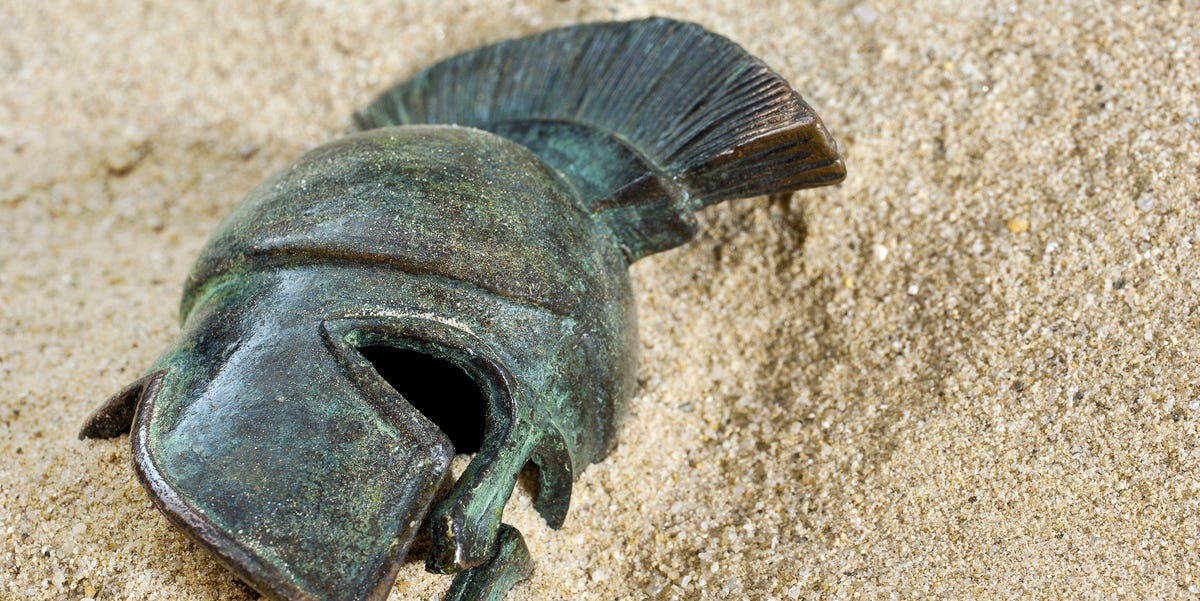
Tomb design, pottery, weapons, textiles, paintings, and burial vessels help date a grave and indicate the occupant’s social position. However, valuable possessions can be inherited, reused, transferred, or placed in a tomb for symbolic reasons. A royal helmet does not automatically identify the skull beside it.
Historical Context
Researchers compare archaeological evidence with accounts of royal marriages, assassinations, injuries, funerals, and political events. Ancient authors are valuable but not flawless. They wrote for particular audiences, sometimes long after the events, and were perfectly capable of repeating gossip with impressive confidence.
Scientific Skepticism
The changing interpretation of the Vergina tombs demonstrates how scholarship is supposed to work. A theory is proposed, evidence is reviewed, new methods are applied, and conclusions are revised. Changing an identification is not evidence that archaeology has failed. It is evidence that archaeology is still doing its job.
Why the Royal Tomb Discovery Still Matters
Whether Philip II occupies Tomb I or Tomb II, the Great Tumulus remains one of the most significant archaeological discoveries associated with ancient Macedonia. Its frescoes preserve rare examples of large-scale Greek painting. Its metalwork reveals extraordinary craftsmanship. Its weapons and ceremonial objects illuminate royal identity, warfare, religion, and funeral practice.
The tombs also restore Philip II to his proper historical importance. Alexander conquered the Persian Empire, but Philip created the state and army that made the campaign possible. Alexander IV’s probable tomb, meanwhile, exposes the grim human cost of the empire’s collapse. The boy inherited the world’s most intimidating family name and almost none of its protection.
The best-supported summary is therefore more measured than the viral headline. Alexander the Great’s son was probably buried in Tomb III. His father was almost certainly buried somewhere in the same royal complex, with Tomb II currently the stronger candidate after the 2025 rejection of Tomb I. The family has been found, but the seating chart remains under review.
Conclusion: A Discovery With an Ongoing Debate
The royal tombs of Aigai connect three generations of Macedonian history: Philip II, who built a regional superpower; Alexander the Great, who carried its armies across Asia; and Alexander IV, whose murder helped end the dynasty.
Recent studies have not produced a single uncontested answer about every burial. Instead, they have refined the question. The 2023 claim that Tomb I contained Philip II drew attention to intriguing injuries and family circumstances, while the 2025 scientific results showed why biological age and radiocarbon dating must outweigh an attractive historical match.
That tension makes the story valuable. Ancient history is not a completed book waiting quietly on a shelf. It is a reconstruction assembled from damaged bones, scattered objects, ruined buildings, imperfect texts, and experts who occasionally disagree with the enthusiasm of rival sports fans.
A Visitor’s Experience: Encountering the Tombs at Aigai
Visiting the royal tombs of Aigai is unlike walking through a conventional museum filled with objects removed from their original surroundings. The Museum of the Royal Tombs was constructed around the burial complex, allowing visitors to enter a modern shelter shaped like the ancient mound and approach the monuments in place.
The transition from daylight to the museum’s dim interior immediately changes the atmosphere. The subdued lighting protects vulnerable artifacts, but it also creates a sense of entering a space intentionally separated from everyday life. Instead of encountering a golden wreath under the bright lights of a general gallery, visitors see it near the tomb, funeral vessels, weapons, and remains with which it was associated.
The effect is powerful because the objects are not merely luxurious. They were part of carefully staged royal funerals. A gold larnax was a container for cremated bones. A wreath was not simply decorative jewelry; it communicated rank, victory, and heroic status. Armor could present the dead as a warrior even after death. Silver drinking vessels evoked elite banquets and the social world of the Macedonian court.
The painted tomb façades are equally important. Ancient Greek sculpture survives in abundance, but monumental painting is far rarer. The hunting frieze connected with Tomb II offers a glimpse of royal ideology in action: mounted nobles, dangerous animals, coordinated movement, and a court presenting itself as heroic, disciplined, and worthy of rule.
Tomb I creates a different emotional response. Its Persephone painting shows the god of the underworld carrying away the young goddess. The subject would have been immediately connected with death, separation, and the possibility of return. Even without knowing the tomb’s occupant, a visitor can understand why the image belonged in a burial chamber. It transforms myth into a visual language for grief.
The most useful preparation for the experience is learning the tomb numbers beforehand. Tomb II is traditionally linked to Philip II, Tomb III to Alexander IV, and Tomb I is the center of the recent scientific dispute. Without that simple map, the repeated Philips, Alexanders, Cleopatras, and Eurydices can begin to resemble an ancient customer-service queue where everyone has selected the same name.
Seeing the tombs also changes how the identification debate feels. Online headlines make the disagreement sound like a contest with an immediate winner. At the site, the limitations become more understandable. There are no convenient inscriptions naming every occupant. Bones were cremated, graves were disturbed, objects could be inherited, and several members of the royal family died within a relatively short period.
A thoughtful visitor therefore experiences two histories at once. The first is the ancient story of kingship, conquest, assassination, and dynastic collapse. The second is the modern story of excavation and interpretation: Andronikos uncovering an intact royal tomb, conservators protecting its paintings, anthropologists examining fragmented remains, and scientists using newer methods to test older conclusions.
The nearby palace deepens that experience. This was the political and ceremonial environment Philip created and the place where Alexander became king. Walking between the palace landscape and the royal cemetery makes the dynasty feel less like a list of dates and more like a community of real people operating within a specific setting.
The strongest impression is not that every mystery has been solved. It is that physical evidence can bring famous historical figures remarkably close while still refusing to answer every question. Visitors leave having seen the wealth of the Macedonian court, the vulnerability of its rulers, and the patience required to reconstruct the past honestly. That combinationwonder mixed with uncertaintyis precisely what makes Aigai unforgettable.