Note: This article discusses a viral unidentified anomalous phenomenon claim using cautious, evidence-based language. The object described has not been confirmed to be extraterrestrial, and current public government reporting has not verified alien technology in UAP cases.
A strange metallic sphere, mysterious inscriptions, rumors of alien craftsmanship, and a phrase about the “origin of birth” that sounds like it escaped from a sci-fi prophecy generatorwhat more could the internet ask for? When reports surfaced about a round object allegedly recovered after being seen over Buga, Colombia, the story quickly became one of those viral UFO mysteries that practically writes its own dramatic soundtrack.
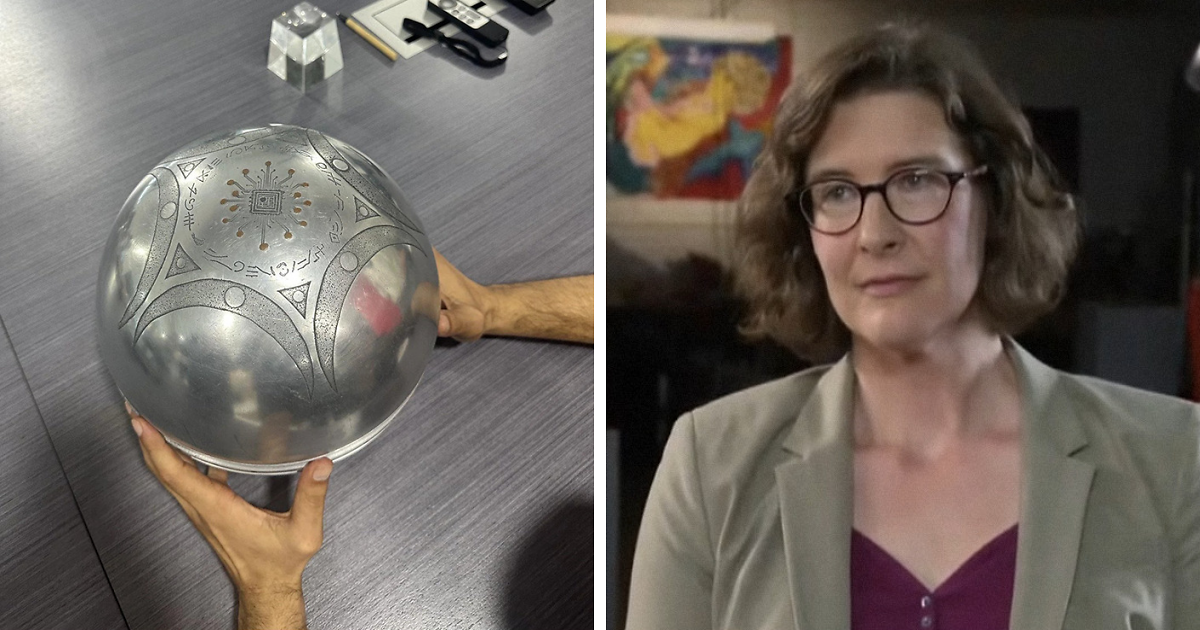
The object was described as a metallic orb with no obvious welds, unusual internal structures seen in X-ray images, and symbols that some observers claimed resembled ancient writing systems. Then came the most headline-friendly detail: an AI-assisted interpretation of the markings reportedly produced a message about “the origin of birth through union and energy,” along with references to transformation, consciousness, and the Earth. In other words, the sphere did not arrive with a simple “hello.” It arrived with what sounded like a cosmic wellness retreat flyer.
But once scientists and researchers began weighing in, the story became less about little green visitors and more about a bigger question: how do we investigate extraordinary claims without turning curiosity into chaos?
The Viral UFO Orb Story: What Was Reportedly Found?
According to viral reports, the object was seen in March 2025 over Buga, a city in western Colombia, before being recovered and examined by people connected to UFO research circles. The sphere was described as compact, metallic, cold to the touch, and surprisingly smooth. Some accounts claimed it had no visible seams, welds, or jointsdetails that fueled speculation that it might not have been manufactured using ordinary methods.
Researchers associated with the object reportedly released X-ray-style images that appeared to show a layered internal structure. Those claims included descriptions of several metal-like outer layers, smaller spheres arranged inside, and a dense central component. Because humans are wonderfully predictable, the internet immediately split into three teams: “aliens,” “hoax,” and “I need coffee before I decide.”
The markings on the outside made the story even more irresistible. Some observers said the symbols looked similar to runes, Ogham, or Mesopotamian-style characters. An AI-assisted interpretation allegedly produced a poetic message about birth, energy, unity, transformation, and consciousness. That translation has not been scientifically validated, but it gave the story its most viral phrase: “origin of birth.”
Why Scientists Are Urging Caution
When scientists “break their silence” on a UFO story, the most responsible ones usually do not start with, “Pack your bags, we’re moving to Mars.” They start with questions: Where was the object found? Who handled it? Was the chain of custody preserved? What material is it made of? Can independent labs repeat the tests? Are there contamination risks? Are the images complete? Is there a mundane explanation hiding behind the smoke machine?
That is the key difference between a viral mystery and a scientific finding. A viral mystery needs surprise. A scientific finding needs evidence that survives being poked, scanned, tested, doubted, and poked again by people who are professionally trained to ruin fun in the name of accuracy.
For the Colombia sphere, public information remains limited and uneven. Some claims are dramatic, but dramatic claims are not the same as verified results. A sphere with unusual construction could be an art object, industrial component, prank, experimental device, misidentified debris, or something else entirely. Until independent material analysis, metallurgical testing, isotope studies, and documentation are available, the honest answer is not “alien spacecraft.” It is “unconfirmed object with unusual claims attached.”
UFO vs. UAP: Why the Language Changed
For decades, the word “UFO” has carried a pop-culture backpack stuffed with flying saucers, secret bases, glowing beams, and suspiciously well-lit desert highways. Today, scientists and government agencies often use the term UAP, or unidentified anomalous phenomena, because it is broader and less loaded.
A UAP does not mean an alien vehicle. It means something was observed and not immediately identified. That “something” could be a drone, balloon, aircraft, satellite, weather event, sensor artifact, atmospheric phenomenon, or a genuine unknown that requires more data. In science, “unidentified” is not a conclusion. It is the beginning of the homework.
This distinction matters because the public often jumps from “unidentified” to “extraterrestrial.” That leap is exciting, but it is not evidence-based. A blurry object in the sky is not automatically from another civilization. Sometimes it is a balloon. Sometimes it is a bird. Sometimes it is a bird filmed by a camera that appears to have been emotionally overwhelmed.
What Official UAP Research Actually Says
NASA’s independent UAP study emphasized that the topic deserves a rigorous, data-driven approach. The agency did not claim that UAP are alien spacecraft. Instead, it focused on how better sensors, standardized reporting, and transparent analysis could help separate real anomalies from bad data.
The U.S. Department of Defense and the Office of the Director of National Intelligence have also reported on UAP cases. Their public findings have repeatedly stated that many reports can be explained by ordinary objects or limited data, while some remain unresolved because the available information is not good enough to make a firm identification. Importantly, official public reports have not confirmed extraterrestrial beings, alien vehicles, or recovered off-world technology.
That may sound disappointing if you were hoping the next paragraph would announce a galactic welcome committee. But it is also what makes the topic scientifically interesting. Good science does not need to kill curiosity. It simply asks curiosity to bring receipts.
The “Origin Of Birth” Message: Translation Or Projection?
The most sensational part of the sphere story is the alleged inscription. A message about “origin of birth,” “union,” “energy,” “transformation,” and “consciousness” has the kind of mystical tone that grabs attention instantly. It also raises a serious question: how reliable is that interpretation?
AI tools can identify patterns, compare symbols, and suggest possible readings, but they can also produce confident nonsense when the input is ambiguous. If the markings are decorative, damaged, invented, or drawn from mixed writing systems, an AI may still try to create a coherent phrase. That does not mean the phrase was intentionally written by the object’s maker. It means the tool found a patternor invented one that sounded meaningful.
This is especially important with ancient scripts. Real translation requires context, grammar, known symbol sets, expert review, and comparison with established inscriptions. A few strange-looking markings on a metal sphere do not become a confirmed message from non-human intelligence just because software produces a poetic sentence. Otherwise, every scratched frying pan in America is one update away from becoming a prophecy.
Could The Sphere Be A Hoax?
Yes, it could be. That does not mean it is definitely fake, but hoaxes are part of UFO history. Unusual objects, staged discoveries, misunderstood artifacts, and exaggerated claims have appeared many times before. Some are created for attention. Some are art projects. Some begin as jokes and grow legs once social media feeds them protein powder.
The Colombia sphere story has several features that invite skepticism: limited independent access, dramatic claims, unusual inscriptions, and a public narrative shaped largely by viral posts and UFO-focused commentary. A hoax or art object would not be shocking. But neither should skeptics dismiss the need for proper testing. The best response is not mockery; it is method.
A serious investigation would document the object’s discovery, preserve the chain of custody, test the material composition, inspect manufacturing marks under microscopy, compare isotopic ratios, and allow multiple independent labs to review the evidence. If the object is ordinary, testing can show that. If it is unusual, testing can show that too.
What Would Count As Strong Evidence?
Extraordinary claims require extraordinary evidence, and in this case, strong evidence would need to go far beyond interesting photos. Scientists would want clear documentation of the object’s fall or landing, reliable witness accounts, high-resolution imaging, controlled laboratory analysis, and results that can be repeated independently.
Material analysis would be especially important. If the sphere were made of known alloys, industrial metals, or common manufacturing materials, that would point toward a human origin. If it contained unusual isotopic ratios or manufacturing methods beyond known technology, that would be much more interestingbut still not automatically alien. Science moves step by step, not by dramatic zoom-in.
Researchers would also examine whether the internal structure serves a function. Are the smaller spheres mechanical components, decorative inserts, balancing elements, or something else? Does the central feature contain circuitry? Are there signs of machining, casting, 3D printing, welding, polishing, corrosion, or environmental exposure? Each answer narrows the mystery.
Why People Want UFO Stories To Be True
UFO stories hit a very specific human button. They combine wonder, fear, rebellion, mystery, and the delicious possibility that reality is much stranger than the weekly grocery bill suggests. When a story includes strange symbols and a phrase like “origin of birth,” it taps into something deeper than curiosity. It feels like a clue.
People are drawn to the idea that a hidden intelligence might be trying to communicate. It makes the universe feel alive. It also turns ordinary life into the opening scene of something bigger. One minute you are scrolling on your phone; the next, you are wondering whether an orb in Colombia contains a message about consciousness and cosmic transformation. That is quite a jump for a Tuesday.
Still, the emotional appeal of a story does not prove it. Humans are meaning-making machines. We see faces in clouds, patterns in randomness, and sometimes messages in scratches. That tendency is not foolish; it is part of how our brains work. But it means we need careful methods when the stakes are high.
Scientists Are Not “Debunking” CuriosityThey Are Protecting It
There is a common misconception that skepticism means refusing to believe anything interesting. In reality, skepticism is how interesting things survive. A claim that cannot handle basic questions is not being silenced; it is being tested.
Scientists who urge caution about the sphere are not saying the public should stop wondering. They are saying wonder works best when paired with evidence. That is how astronomy found exoplanets, how astrobiology studies possible biosignatures, and how SETI searches for technosignatures. The serious search for life beyond Earth is real, active, and fascinating. It simply does not rely on viral captions as its main instrument.
The universe is enormous. Scientists already study Mars, icy moons, exoplanet atmospheres, microbial life, organic chemistry, and radio signals because the possibility of life elsewhere is scientifically reasonable. The leap from “life may exist elsewhere” to “this specific orb is alien technology” is where evidence must do the heavy lifting.
The Role Of Social Media In The UFO Mystery Machine
Social media is perfect for UFO stories because it rewards speed, emotion, and mystery. A short video of an object in the sky can travel farther than a careful report explaining why the object might be a balloon. A dramatic headline can outrun a laboratory test. A mysterious translation can become folklore before experts even know the object exists.
This does not mean every viral UFO story is worthless. Public attention can sometimes push institutions to be more transparent. Witnesses may come forward. More footage may surface. Researchers may feel pressure to release data. But viral attention can also distort the story, turning uncertainty into certainty and speculation into “what they don’t want you to know.”
The Colombia sphere is a textbook example of how quickly a mystery can become a myth. The object may be interesting. The claims may deserve testing. But the online version of the story has already grown dramatic wings, put on sunglasses, and flown directly into the algorithm.
What The Public Should Watch For Next
The next meaningful development would not be another blurry image or a louder claim. It would be independent testing. Ideally, multiple qualified laboratories would examine the sphere and publish detailed results. Those results would include material composition, structural imaging, manufacturing analysis, and a clear explanation of the markings.
Experts in ancient writing systems would need to evaluate the alleged inscription. Metallurgists would need to examine the materials. Engineers would need to assess whether the internal layout has a practical function. Physicists and chemists could help determine whether any properties are genuinely unusual or simply unfamiliar to non-specialists.
Until then, the story belongs in the category of intriguing but unverified UAP claims. That is not boring. In fact, it is the most honest place for it. A mystery does not become less interesting because we refuse to slap an alien sticker on it too early.
Experiences Related To The “Origin Of Birth” UFO Mystery
Anyone who has followed UFO stories for more than five minutes knows the experience is a strange emotional roller coaster. First comes the headline. Your brain says, “Absolutely not.” Your hand clicks anyway. Then come the images: a metallic sphere, ancient-looking symbols, an X-ray scan, a dramatic quote, and suddenly you are leaning closer to the screen like a detective in a movie who has just discovered the villain’s secret map.
The “origin of birth” story feels especially powerful because it mixes technology with mythology. A metal orb sounds futuristic. Mysterious writing sounds ancient. A message about consciousness sounds spiritual. Put them together and the human imagination starts cooking like it just won a reality show.
One common experience with stories like this is the tug-of-war between wanting to believe and wanting to be reasonable. On one side, the idea of a non-human message is thrilling. It suggests we are part of a larger conversation. On the other side, experience tells us that the internet has a long history of turning ordinary objects into extraordinary legends. The healthy response is to hold both feelings at once: curiosity without surrendering judgment.
Another relatable experience is noticing how quickly people form teams. Some commenters immediately call it alien technology. Others instantly call it fake. A third group wants more data. The third group may not get the most dramatic memes, but they are usually the closest to a scientific mindset. They ask: Who tested it? What methods were used? Can the results be repeated? Was the object secured? Could the symbols have been added later?
For writers, readers, and science fans, the best part of a UFO mystery is not necessarily the possibility of aliens. It is the reminder that wonder still exists. Modern life can feel overexplained. We have apps for everything, maps for everywhere, and notifications for events we did not ask to attend. Then a strange object appears in a viral story and, for a moment, the world feels less settled.
The trick is not to let wonder become gullibility. A person can enjoy the mystery of the sphere while admitting that the evidence is incomplete. You can say, “That is fascinating,” without saying, “That is definitely from another galaxy.” In fact, that balance makes the experience better. It keeps the door open without removing the hinges.
Stories like the Colombia orb also teach a useful lesson about media literacy. A dramatic headline is designed to pull emotion forward before analysis catches up. Words like “ominous,” “scientists,” “break silence,” and “origin of birth” create a sense of urgency. They make the reader feel that something enormous has already been revealed. But careful reading shows that many pieces remain uncertain.
The most valuable experience, then, is learning how to stay curious in a smarter way. Save the wonder. Keep the questions. Respect the possibility that the universe may surprise us. But ask for the lab results before announcing first contact at dinner. Your family will thank you, and so will science.
Conclusion: A Mystery Worth Studying, Not Worshiping
The metallic sphere reportedly found after sightings over Buga, Colombia, has all the ingredients of a viral UFO legend: a strange shape, mysterious markings, unusual scans, and a phrase about the “origin of birth” that sounds like it belongs on an interstellar stone tablet. But the scientific response is more grounded than the headline suggests.
Researchers and experts are right to ask for independent testing, stronger evidence, and careful interpretation. The object may turn out to be human-made, misunderstood, artistic, industrial, or something genuinely unusual. At this stage, no public evidence confirms it as extraterrestrial technology. The smartest position is open-minded caution.
That does not make the story dull. It makes it useful. UFO and UAP stories remind us that mystery still has a place in modern life, but they also remind us that mystery deserves discipline. The universe may be full of surprises. To recognize the real ones, we need more than viral wonder. We need evidence, patience, and the courage to say, “We do not know yet.”