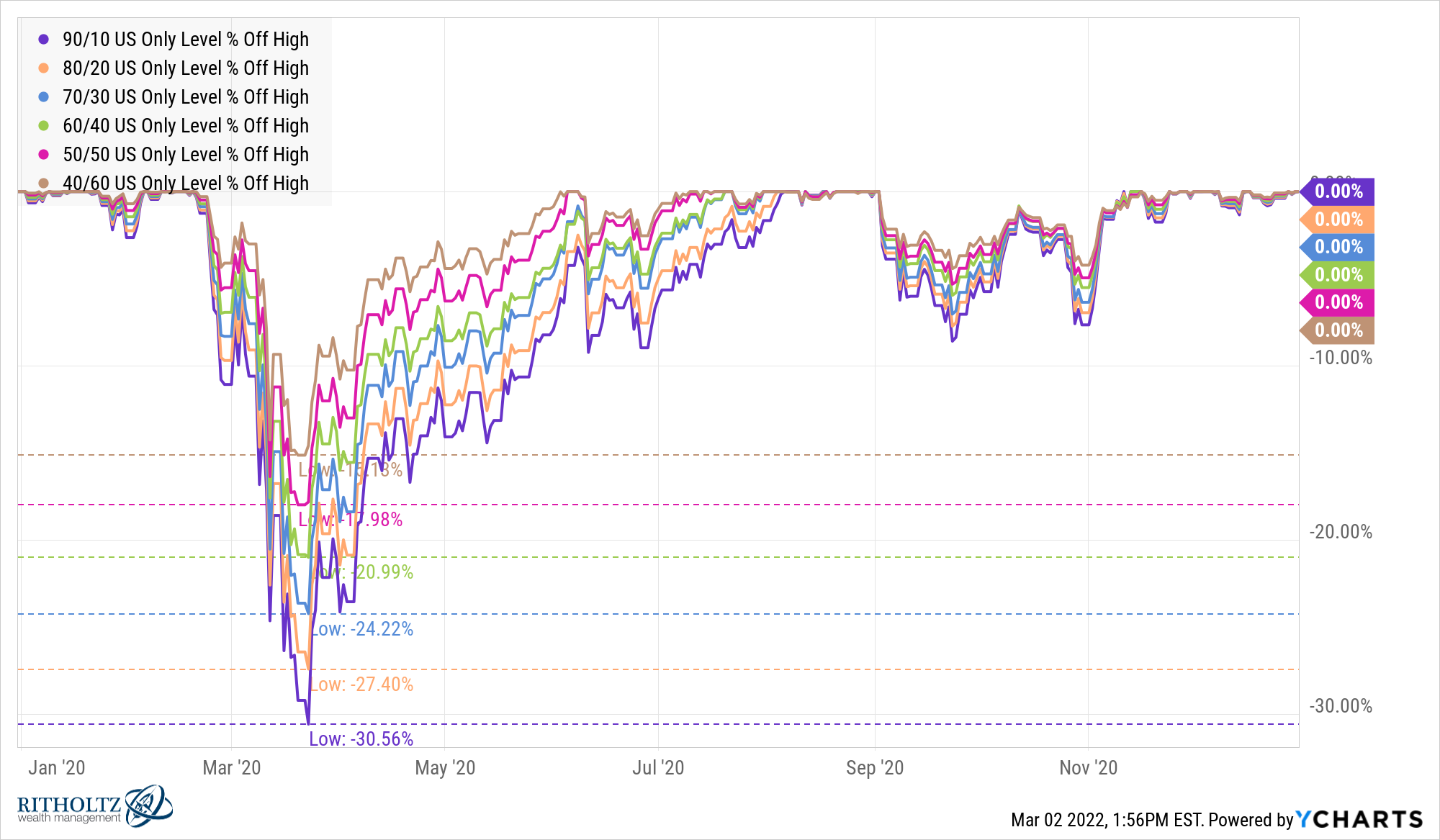
Markets have a flair for drama. One week your portfolio looks like it has been drinking green smoothies and doing sunrise yoga. The next week, it acts like it read one scary headline and hid under the bed. That up-and-down movement is called volatility, and while it is a normal part of investing, too much of it can make even patient investors feel like they are riding a roller coaster designed by a caffeinated squirrel.
The good news is that you do not need a crystal ball, a Wall Street badge, or a secret handshake to build a less volatile portfolio. You need a plan. More specifically, you need a smart mix of assets, broad diversification, a cash-and-bond cushion, and a repeatable rebalancing habit that keeps your investments from drifting into chaos.
A less volatile investment portfolio does not mean a risk-free portfolio. No portfolio can promise that. It means building one that is better prepared for market swings, less dependent on a single asset class, and easier to stick with when the financial weather turns cranky. The goal is not to avoid every bump. The goal is to avoid being launched into the emotional air every time the market hits a pothole.
Below are four practical ways to reduce portfolio volatility while still giving your money a chance to grow over time.
What Does Portfolio Volatility Really Mean?
Portfolio volatility describes how much the value of your investments moves up and down over time. A portfolio made mostly of growth stocks, small-cap stocks, or concentrated positions may rise quickly in strong markets, but it may also fall sharply when investors get nervous. A more balanced portfolio usually moves more moderately because different parts of it respond differently to changing economic conditions.
Think of volatility like the temperature in your financial kitchen. A little heat helps cook dinner. Too much heat burns the lasagna, sets off the smoke alarm, and makes everyone order pizza. Investing works the same way. Some risk is necessary for long-term return potential, but excessive volatility can tempt investors into poorly timed decisions, such as selling after a decline or chasing whatever just performed well.
Creating a less volatile portfolio is not about being timid. It is about being intentional.
1. Start With the Right Asset Allocation
Asset allocation is the foundation of portfolio construction. It means deciding how much of your portfolio belongs in major asset classes such as stocks, bonds, cash, real estate, and other investments. This decision matters because asset allocation often drives more of your portfolio’s risk profile than the individual securities you choose.
If your entire portfolio is invested in stocks, you may enjoy strong growth during bull markets, but you also accept the possibility of steep drawdowns. If your portfolio is mostly cash, it may feel calm, but inflation can quietly chew away at your purchasing power like a tiny financial termite. A less volatile portfolio usually sits somewhere in the middle, based on your time horizon, goals, income needs, and risk tolerance.
Match Your Allocation to Your Time Horizon
Your time horizon is the amount of time before you need the money. If you are investing for retirement 25 years from now, you may be able to tolerate more stock exposure because you have time to recover from market downturns. If you need the money in two years for a home purchase, college tuition, or a business expense, a stock-heavy portfolio may be too jumpy for that goal.
For example, a younger investor saving for retirement might use a growth-oriented allocation, such as 80% stocks and 20% bonds. A mid-career investor may prefer a balanced allocation, such as 60% stocks and 40% bonds. A retiree who needs stable withdrawals may choose a more conservative mix, perhaps 40% stocks, 50% bonds, and 10% cash. These are examples, not universal prescriptions. The best portfolio is the one that fits both your math and your stomach.
Do Not Let a Bull Market Choose Your Risk Level
One common mistake is allowing a rising market to make your portfolio more aggressive without realizing it. Suppose you began with a 60/40 stock-bond portfolio. After a strong stock market run, your portfolio might become 75% stocks and 25% bonds. That may feel wonderful while stocks are climbing, but it also means your portfolio is now more exposed to a market downturn.
A less volatile portfolio begins with a written target allocation. This target acts like a financial thermostat. When the room gets too hot, you cool it down. When it gets too cold, you warm it up. Without a target, investors often make emotional decisions based on headlines, social media, or the neighbor who suddenly became an “expert” after buying one trendy stock.
2. Diversify Across and Within Asset Classes
Diversification is the investing version of not putting all your eggs in one basket. It sounds simple because it is simple. It is also powerful because different investments do not always move in the same direction at the same time. When one part of your portfolio struggles, another part may hold steady or even rise.
However, true diversification is more than owning a lot of investments. Owning ten technology stocks is not the same as being diversified. That is just having ten tickets on the same roller coaster. A genuinely diversified portfolio spreads risk across asset classes, sectors, regions, company sizes, and bond types.
Diversify Your Stock Exposure
Stocks can be diversified in several ways. You can own large-cap, mid-cap, and small-cap companies. You can include both growth and value stocks. You can spread exposure across sectors such as technology, health care, consumer staples, financials, industrials, and utilities. You can also include international stocks, which may perform differently from U.S. stocks depending on currency movements, interest rates, valuations, and regional economic trends.
Broad index funds and exchange-traded funds can make this easier. Instead of trying to pick dozens of individual winners, an investor can use low-cost funds that hold hundreds or thousands of securities. That does not eliminate risk, but it reduces the chance that one company’s bad earnings report turns your entire portfolio into a sad trombone solo.
Diversify Your Bond Exposure
Bonds can also be diversified. A portfolio can include U.S. Treasury bonds, investment-grade corporate bonds, municipal bonds, Treasury Inflation-Protected Securities, short-term bonds, intermediate-term bonds, and high-quality bond funds. Each type has its own risks, including interest rate risk, credit risk, inflation risk, and liquidity risk.
For a less volatile portfolio, quality matters. Lower-rated bonds may offer higher yields, but they can behave more like stocks during periods of market stress. Shorter-duration bonds may be less sensitive to interest rate changes, while longer-duration bonds can swing more sharply when rates move. The goal is to choose bonds that support your portfolio’s stability rather than sneak in extra drama wearing a conservative-looking suit.
Watch Out for Concentration Risk
Concentration risk happens when too much of your wealth depends on one investment, one company, one industry, or one economic theme. This is common among employees who hold large amounts of employer stock, investors who chased a hot sector, or people who inherited a concentrated position and never reviewed it.
A concentrated portfolio can feel brilliant when the favorite holding rises. Unfortunately, it can feel much less brilliant when that same holding falls. A less volatile portfolio usually limits single-stock exposure and avoids letting one sector dominate the entire account. If one position has grown far beyond its intended size, trimming it may feel emotionally difficult, but risk management is not about proving loyalty to a stock. Stocks do not send thank-you cards.
3. Use Bonds, Cash, and Defensive Assets as Shock Absorbers
Stocks are often the engine of long-term growth, but engines need brakes, tires, and suspension. Bonds, cash, and certain defensive assets can help reduce portfolio volatility by providing income, liquidity, and a cushion during market stress.
Cash is not exciting. Nobody brags at a party, “My money market fund changed my life.” Still, cash has a job. It can cover near-term expenses, emergency needs, and planned withdrawals so you are not forced to sell stocks during a downturn. For retirees or investors drawing from a portfolio, a cash bucket can be especially helpful. It gives the stock portion time to recover after market declines.
Build a Practical Cash Reserve
A cash reserve should be based on your actual needs. Emergency savings are usually separate from long-term investments. For a working household, that might mean several months of essential expenses in a savings account, money market fund, or other liquid vehicle. For retirees, it might mean keeping one to three years of planned withdrawals in cash or short-term bonds, depending on comfort level and income sources.
The trade-off is that too much cash can reduce long-term growth potential. Cash may feel safe because the balance does not bounce around like stocks, but inflation can reduce its real value over time. The trick is to hold enough cash to sleep well, not so much that your long-term plan naps through opportunity.
Choose Bonds With a Clear Purpose
Bonds can play several roles in a portfolio. They may generate income, reduce overall volatility, preserve capital, or provide liquidity for future spending. But not all bonds behave the same way. Long-term bonds may be more sensitive to interest rate changes. High-yield bonds may offer more income but can decline when credit conditions weaken. International bonds may add diversification but can introduce currency risk unless hedged.
For investors seeking lower volatility, high-quality short- and intermediate-term bonds are often useful building blocks. Treasury securities, investment-grade bond funds, and laddered bonds can help create more predictable income. Treasury Inflation-Protected Securities may also help investors concerned about inflation, though their market values can still fluctuate.
Consider Defensive Equity and Alternative Strategies Carefully
Some investors use dividend-focused funds, low-volatility stock funds, real estate investment trusts, commodities, or liquid alternative strategies to diversify beyond a traditional stock-bond mix. These tools can be helpful in the right context, but they are not magic umbrellas. Some may carry higher fees, tax complexity, liquidity constraints, or hidden risks.
The key question is simple: What job does this investment perform in the portfolio? If the answer is “I saw it mentioned online and it sounded fancy,” that is not a strategy. That is financial seasoning. A little may be fine, but too much can ruin the soup.
4. Rebalance Regularly and Manage Investor Behavior
Rebalancing means bringing your portfolio back to its target allocation. If stocks rise and become too large a portion of your portfolio, rebalancing may involve selling some stocks and buying bonds or cash equivalents. If stocks fall and bonds become too large, rebalancing may involve buying stocks while they are cheaper. This sounds easy until markets are yelling, which is why rules help.
A rebalancing strategy can reduce portfolio volatility by preventing your risk exposure from drifting too far from your plan. It can also create a disciplined process for buying low and selling high, or at least buying lower and selling higher, which is close enough for polite financial conversation.
Use Calendar-Based or Threshold-Based Rebalancing
There are two common approaches. Calendar-based rebalancing means reviewing your portfolio on a regular schedule, such as quarterly, semiannually, or annually. Threshold-based rebalancing means making changes when an asset class moves a certain amount away from its target, such as five percentage points.
For example, if your target is 60% stocks and 40% bonds, you might rebalance when stocks rise above 65% or fall below 55%. This avoids unnecessary trading while still keeping risk under control. Many investors combine both methods by checking once or twice per year and acting only if the portfolio has drifted meaningfully.
Rebalance Tax-Smartly
Taxes matter. In retirement accounts, rebalancing is usually simpler because buying and selling generally does not trigger current capital gains taxes. In taxable accounts, selling appreciated investments may create tax consequences. Investors can often rebalance more tax-efficiently by directing new contributions toward underweighted assets, using dividends and interest to buy lagging asset classes, or harvesting losses where appropriate.
The best rebalancing strategy is one you can follow consistently. A complicated plan that requires 47 tabs, three calculators, and a motivational playlist may not survive real life. Simple usually wins.
Control the Biggest Source of Volatility: Yourself
The market is volatile, but investor behavior can be even more volatile. Fear encourages selling after losses. Greed encourages buying after big gains. Both can damage returns and increase stress. A written investment policy can help. It should outline your target allocation, rebalancing rules, contribution schedule, withdrawal strategy, and reasons for owning each major investment.
When markets fall, the policy becomes your adult supervision. It reminds you that the portfolio was built for rough weather, not just sunny days. It also keeps you from making major decisions while emotionally dressed as a raccoon trapped in a garage.
A Simple Example of a Less Volatile Portfolio
Imagine two investors, Alex and Jamie. Alex owns 95% stocks, mostly in technology companies, plus a little cash. Jamie owns 60% diversified global stocks, 30% high-quality bonds, and 10% cash or short-term reserves. During a strong tech rally, Alex may outperform Jamie by a lot. Alex may also begin using phrases like “new paradigm,” which is often when the financial soundtrack turns ominous.
Then a market correction arrives. Technology stocks fall sharply. Alex’s portfolio drops more because it is concentrated in the same type of risk. Jamie’s portfolio still declines, but the bond and cash portions help soften the blow. Jamie may not win every year, but Jamie is more likely to stay invested because the ride is smoother.
This is the practical purpose of building a less volatile portfolio. It is not about winning every short-term performance contest. It is about increasing the odds that you can remain invested long enough for your plan to work.
Common Mistakes That Make Portfolios More Volatile
Chasing Recent Winners
Investors often buy what has recently performed well. Unfortunately, yesterday’s winner may already be expensive by the time everyone notices. Chasing performance can lead to buying high, selling low, and wondering why investing feels like paying for a gym membership you never use.
Ignoring Fees
High fees can quietly reduce returns, especially in funds that do not provide enough diversification or risk control to justify the cost. Lower-cost index funds and ETFs are often useful tools for building broad exposure efficiently.
Owning Too Many Overlapping Funds
More funds do not automatically mean more diversification. Five large-cap growth funds may own many of the same companies. That creates overlap, not balance. Review what your funds actually hold so you understand your true exposure.
Taking Too Little Risk
A less volatile portfolio should not become a no-growth portfolio. Investors with long time horizons still need enough growth exposure to outpace inflation and meet future goals. Reducing volatility is helpful, but hiding entirely in cash may create a different risk: not having enough money later.
Experience-Based Lessons: What Building a Less Volatile Portfolio Feels Like in Real Life
In real life, creating a less volatile portfolio feels less like making one heroic decision and more like developing a calm routine. The first experience many investors have is discovering that their “diversified” portfolio is not as diversified as they thought. They may own several funds, but after looking under the hood, they find the same large technology stocks repeated again and again. It is like opening five different cereal boxes and finding cornflakes in all of them. The labels are different, but breakfast is basically the same.
A useful experience is doing a simple portfolio audit. Write down every investment you own, then group each one by asset class, sector, region, and purpose. This exercise can be surprisingly revealing. You may notice that your retirement account, brokerage account, and old workplace plan all hold similar stock funds. You may discover that your “safe” bond fund has more interest rate risk than expected. You may also find cash sitting around without a job, or worse, no cash available for emergencies at all.
Another real-world lesson is that volatility feels different depending on whether you have a plan. A 15% market decline with no plan feels like financial thunder. A 15% market decline with a target allocation, cash reserve, and rebalancing rule still feels unpleasant, but it becomes manageable. You can look at the plan and say, “This is uncomfortable, but it is not unexpected.” That sentence alone can prevent expensive mistakes.
Many investors also learn that rebalancing is emotionally backward. It often asks you to trim what feels successful and buy what feels disappointing. When stocks are soaring, selling some shares to restore balance can feel like leaving a great party early. When stocks are falling, buying more can feel like walking into a room where everyone else is running out. Yet this is exactly why a rule-based system helps. It removes the need to feel brave at the perfect moment.
Cash is another area where experience changes perspective. In theory, investors know cash has lower return potential. In practice, a cash reserve can provide enormous emotional value. During a downturn, cash can pay bills, fund withdrawals, or cover emergencies without forcing sales of long-term investments. It is not the star of the portfolio, but it is the backup generator when the lights flicker.
Finally, investors often discover that a less volatile portfolio improves decision quality. When your portfolio is too aggressive, every headline feels personal. Interest rate news, inflation reports, earnings announcements, elections, oil prices, and celebrity tweets can all seem like reasons to panic. A balanced portfolio creates distance. It lets you observe market noise without feeling required to react to all of it.
The real victory is not building a portfolio that never falls. That portfolio does not exist. The real victory is building one that fits your life well enough that you can hold it through ordinary chaos. A less volatile portfolio gives you a better chance to stay invested, keep contributing, rebalance when needed, and avoid turning temporary market declines into permanent financial mistakes.
Conclusion: Calm Is a Portfolio Feature
Creating a less volatile portfolio is not about predicting the next market dip. It is about preparing for the fact that market dips are normal. The four core steps are straightforward: choose an asset allocation that matches your goals, diversify across and within asset classes, use bonds and cash as shock absorbers, and rebalance with discipline.
The best portfolio is not always the one with the highest return in a hot market. It is the one you can live with in a cold market. A portfolio that helps you stay calm, avoid emotional selling, and keep moving toward your goals may be far more valuable than one that looks impressive only when everything is going up.
Volatility will never disappear. Markets will continue to surprise investors, economists, analysts, and that one friend who says “trust me” before giving stock tips. But with a thoughtful plan, you can reduce unnecessary turbulence and build a portfolio that behaves less like a carnival ride and more like a sturdy vehicle built for a long road trip.