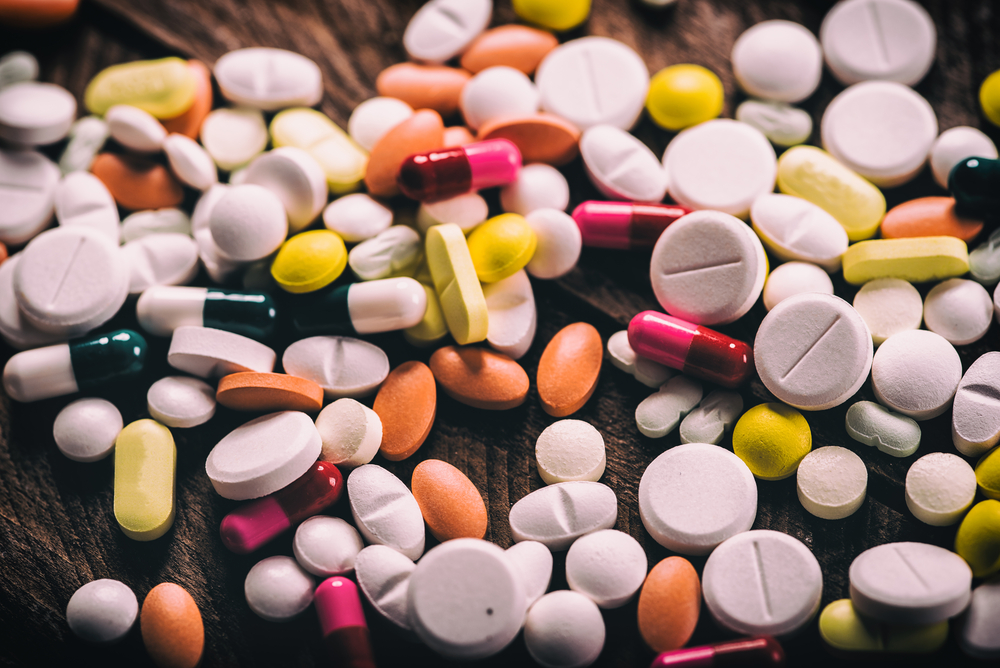
The opioid overdose crisis didn’t start with one villain twirling a mustache over a bottle of pills. It started the way a lot of big American problems start: with good intentions, bad incentives, slick messaging, and a system that confused “treat pain compassionately” with “hand out powerful opioids like they’re breath mints at a dinner party.”
And thenjust when the country began tightening prescription practicesillicit fentanyl barged in like a wrecking ball, turning a slow-moving disaster into a high-speed collision. If you’ve ever wondered, “How did we get tricked into this?” and “What can we actually do now?” you’re in the right place.
The quick summary: we were duped by a perfect storm
We were “duped” because multiple forces lined up at once: pharmaceutical marketing that minimized addiction risk, healthcare systems that rewarded quick pain relief, well-meaning professional campaigns that oversimplified pain treatment, weak guardrails in the drug supply chain, and a cultural moment where suffering (rightfully) stopped being ignoredyet the chosen fix was dangerously narrow.
The result: a surge in opioid prescribing, more people exposed to dependence, more diversion and misuse, andover timemore people developing opioid use disorder (OUD). Then the drug supply shifted to fentanyl, which is far more potent and far less predictable than heroin or most prescription opioids. That combination has been catastrophic.
How we got duped: the story in three acts
Act 1: “Pain is undertreated” becomes “opioids are the answer”
In the 1990s and early 2000s, a real problem drove a real push: many patients were suffering, and pain was often dismissed. Advocacy and professional efforts pushed clinicians to take pain seriouslysometimes framed as treating pain like a “fifth vital sign.” The goal was empathy and better care. Unfortunately, this cultural shift collided with aggressive pharmaceutical promotion of opioid products.
In practice, “treat pain better” sometimes turned into “treat pain faster.” Opioids were framed as a safe, humane solution for many types of paineven long-term, non-cancer painwithout strong evidence that long-term opioid therapy reliably improves function for most people. When a medical system is understaffed and overbooked, a prescription can feel like the fastest tool in the drawer.
Act 2: Marketing and misinformation“low risk,” “rare addiction,” “trust us”
This is where the “dupe” factor spikes. Pharmaceutical marketing leaned hard on reassuring claims, selective evidence, and messaging that downplayed the likelihood of addiction. Sales reps encouraged higher prescribing, higher doses, and broader use. Some campaigns implied that concerns about addiction were overblown or outdatedlike worrying about dial-up internet in a fiber-optic world.
Meanwhile, many clinicians genuinely wanted to help. They were taught to treat pain more assertively and were handed talking points that made opioids sound safer than they are. Over time, “addiction is rare” became a kind of urban legend in white coatsrepeated often enough that it started to feel like fact.
The tragedy is that dependence and addiction aren’t moral failures; they’re predictable risks of repeated exposure to potent opioidsespecially at higher doses or longer durations. When risk is minimized, informed consent becomes a mirage: patients can’t weigh tradeoffs they were never fully told about.
Act 3: The supply chain looked away, and pill mills moved in
Even when prescribing is appropriate, systems need guardrails. But for years, oversight lagged behind. In some places, “pill mills” flourished. Large volumes of opioids moved through communities with minimal friction, and diversion became easier. Some patients who started with legitimate prescriptions found themselves dependent; others obtained pills through informal networks; and some transitioned to heroin when pills became harder to get or too expensive.
This is also where accountability gets complicated. It wasn’t only prescribers. It wasn’t only manufacturers. It wasn’t only distributors or pharmacies. It was a chain of decisions and incentives that collectively made high-volume opioid flow feel “normal,” until the body count made it impossible to ignore.
Then fentanyl changed everything
If the first wave of the crisis was heavily tied to prescription opioids, the later waves became increasingly tied to illicit opioidsespecially fentanyl and its analogs. Illicitly made fentanyl is extremely potent, often mixed into or pressed into counterfeit pills, and frequently shows up in drugs people did not intend to take as opioids.
That’s why overdose risk now isn’t just about “using too much.” It’s also about unpredictability: potency varies from batch to batch, pill to pill, and sometimes speck to speck. People may think they’re buying a familiar drug and unknowingly get fentanyl instead. In a world like that, prevention has to look differentmore like seatbelts and smoke alarms, not just lectures.
Where we are now: what the data says (and why it matters)
Overdose deaths surged for years, driven largely by synthetic opioids. Recent federal reporting has shown a meaningful decline from the peakan encouraging sign that interventions can workbut the crisis remains massive and uneven across communities.
- Overdose deaths increased dramatically from 1999 through 2023, and in 2023 there were about 105,000 overdose deaths in the U.S., with roughly three out of four involving opioids.
- Synthetic opioids (primarily illicit fentanyl) are involved in a large share of overdose deaths, and polysubstance overdoses (opioids plus stimulants like methamphetamine or cocaine) are a growing reality.
- Provisional federal estimates released in early 2026 projected about 72,108 overdose deaths for the 12 months ending September 2025down sharply compared with the prior yearbut “down” is not the same as “solved.”
Translation: we can’t treat today’s overdose crisis as if it’s still 2003 and only about pain clinics. We need a two-lane response: smarter pain care and prescribing and robust overdose prevention and treatment access for a fentanyl-dominated, polysubstance world.
What we can do: practical steps that actually move the needle
1) Make overdose reversal as normal as fire extinguishers
Naloxone reverses opioid overdoses and saves lives. The more widely it’s availableand the less shame attached to carrying itthe more lives are saved. Over-the-counter availability and broader community distribution help reduce delays and barriers.
What you can do:
- Keep naloxone in homes where opioids are used (prescribed or otherwise) and in community spaces.
- Learn the basics: recognize slowed breathing, unresponsiveness, bluish lips, and call 911 while administering naloxone.
- Support local programs that distribute naloxone widely (libraries, shelters, outreach teams, campuses).
2) Treat opioid use disorder like the medical condition it is
Medication treatment for opioid use disorder (often called MOUD) is one of the strongest tools we have. Medications like buprenorphine and methadone are associated with reduced mortality and improved retention in care compared with no medication. Yet access barriers, stigma, and inconsistent availability keep too many people from receiving these treatments.
What you can do:
- If you or someone you love needs help, ask specifically about buprenorphine or methadonenot just “detox.” Detox alone often isn’t enough.
- Advocate for treatment access in your community: more providers, easier entry, fewer arbitrary hurdles.
- Use non-stigmatizing language: “a person with OUD,” not “addict.” Language shapes policy and care.
3) Make the drug supply less lethal (even when we can’t make it safe)
In a fentanyl-dominated market, harm reduction is not “giving up.” It’s the public health equivalent of installing guardrails on a cliff road. Fentanyl test strips are one example: they can help people detect fentanyl in drugs and change behavior (like using less, using with someone present, or carrying naloxone). Syringe service programs can reduce infectious disease transmission and connect people to care.
What you can do:
- Support access to fentanyl test strips and drug-checking education.
- Back evidence-based harm reduction programs in your city or county.
- Encourage “never use alone” practices and overdose safety planning.
4) Improve pain care without swinging the pendulum into cruelty
Better prescribing doesn’t mean abandoning pain patients. It means using opioids more carefully, for the shortest reasonable duration at the lowest effective dose, and prioritizing therapies that improve function and quality of life. Updated clinical guidance emphasizes patient-centered decisions, individualized assessment, and avoiding abrupt tapers that can cause harm.
What you can do (as a patient or family member):
- Ask about non-opioid options first (physical therapy, anti-inflammatories, nerve pain meds, behavioral pain coping strategies, injections when appropriate).
- If opioids are prescribed, ask: “What’s the goal? How long? What are the risks? What’s the plan to stop or reassess?”
- Store opioids locked up and dispose of leftovers properly (drug take-back programs are ideal).
What clinicians and health systems can do:
- Follow evidence-based prescribing guidance and build time for shared decision-making.
- Use prescription drug monitoring tools responsibly and avoid treating them like a “gotcha” device.
- Co-prescribe naloxone when risk is elevated (history of overdose, high doses, mixing sedatives, etc.).
- Expand pain management access so opioids aren’t the default because nothing else is covered or available.
5) Track where opioid settlement money goesand demand results
Billions of dollars from opioid-related settlements are flowing to states and local governments over many years. Those funds are intended for “abatement”: preventing overdoses, expanding treatment, supporting recovery, and strengthening public health responses. The opportunity is enormousbut so is the risk of waste, politics, and spending that looks tough without saving lives.
What you can do:
- Look up your state or county’s opioid settlement spending reports and attend public meetings when possible.
- Push for investments with evidence: MOUD expansion, naloxone distribution, housing supports, peer recovery services, and data-driven outreach.
- Ask for measurable outcomes, not just press releases.
6) Build “off-ramps” everywhere: emergency departments, jails, shelters, and schools
Overdose prevention works best when help is easy to access at the exact moments people touch systems: after a nonfatal overdose, during an ER visit, when leaving incarceration, when entering shelter, or when a school counselor sees warning signs. Those are high-risk transition pointsand high-opportunity ones.
- Emergency departments can start buprenorphine and connect people to follow-up care.
- Jails and prisons can offer MOUD and overdose education before release.
- Shelters can distribute naloxone and link residents to treatment and mental health support.
- Schools can teach evidence-based prevention and strengthen mental health supports (without shame-based scare tactics).
So… who “duped” us, exactly?
If you’re hoping for a single culprit, the honest answer is: the crisis was built by a system, not one person. But some players absolutely pushed the story in the wrong directionespecially when profit met persuasion. The “dupe” was the repeated message that broad, long-term opioid prescribing was safe and low-risk, and that addiction concerns were overhyped. Add weak oversight and strong market incentives, and you get a national exposure event.
The good news is that systems can change. We’ve already seen declines in overdose deaths when communities scale up naloxone, expand treatment, and adapt to the realities of fentanyl. The playbook is not a mysteryit just requires political will, sustained funding, and a willingness to treat this like a public health emergency instead of a morality tale.
Conclusion: what success actually looks like
Success won’t be one magical law or one celebrity PSA. It will be a steady, boring (and therefore powerful) stack of actions: smarter pain care, faster and easier access to evidence-based treatment, widespread naloxone, practical harm reduction, and accountable spending of settlement dollars. In other words: fewer preventable deaths, more second chances, and a healthcare system that doesn’t confuse compassion with overprescribing.
Experiences: what this crisis feels like in real life (and what people learn the hard way)
People often describe the opioid crisis as a statisticbars on a chart, lines climbing and falling, headlines that blur together. But in real life, it’s a series of moments that don’t feel historic until later. A common story starts with something ordinary: a back injury from lifting a box, dental surgery, a knee problem that turns every staircase into a personal enemy. The prescription helpsat first. Pain goes quiet. Sleep returns. The person feels like themselves again, and nobody wants to ask too many questions when something finally works. It’s hard to be skeptical when you’re relieved.
Then the “fine print” shows up. Maybe it’s the first time the refill runs out and the body doesn’t just miss the medicationit panics without it. People describe sweating, stomach cramps, restless legs, anxiety that feels like a live wire, and a mood crash that seems out of proportion to the original injury. A lot of folks don’t even recognize it as withdrawal. They think they’re getting sick, or their pain is “coming back worse,” or they’re weak. That’s one of the cruel tricks of dependence: it disguises itself as a character flaw.
Families often talk about confusion first, not anger. “Why is Dad so irritable?” “Why is my sister running out early?” “Why are there secrets now?” Many people with OUD become experts at hiding it because shame is heavy, and because the brain’s priority system has been hijacked: avoiding withdrawal becomes as urgent as oxygen. Loved ones describe the emotional whiplash of trying to help while feeling lied to, and the exhaustion of living in a constant state of alertcounting pills, watching bank accounts, scanning the room for clues. It’s not dramatic in a movie way; it’s draining in a slow-leak way.
Clinicians and first responders often describe a different kind of heartbreak: seeing the same patients cycle through overdoses, revivals, brief attempts at treatment, and then another crisis. They’ll tell you that naloxone is miraculousand also frustratingbecause it saves a life in minutes, but it can’t magically build housing, stability, trauma care, or an available treatment appointment the next day. Still, many also describe the moments that keep them going: the person who accepts buprenorphine in the emergency department, the parent who carries naloxone and uses it in time, the friend who stays on the phone because “don’t use alone” wasn’t just a sloganit was a plan.
People in recovery often describe learning a set of practical truths that sound simple but are hard-won: relapse isn’t a moral collapse; it’s a risk that changes with stress, isolation, and exposure. Treatment isn’t one “perfect” program; it’s often a combination of medication, counseling, support, and safe relationships. The most repeated surprise is that medication treatment can feel like getting your brain backnot euphoric, not sedating, just steady. Many say the turning point wasn’t a lecture. It was access: a clinic that didn’t make them beg, a provider who treated them like a person, a peer who didn’t flinch at the truth, a family member who learned boundaries without withdrawing love.
Across these experiences, one theme repeats: the crisis grows in silence and shrinks in connection. When communities treat overdose prevention like basic safety (naloxone, test strips, education), and treat OUD like healthcare (medication, follow-up, respect), outcomes improve. The “dupe” was thinking the solution could be simple. The reality is more complexbut also more hopeful: we already know many of the steps that save lives, and we can choose to scale them.