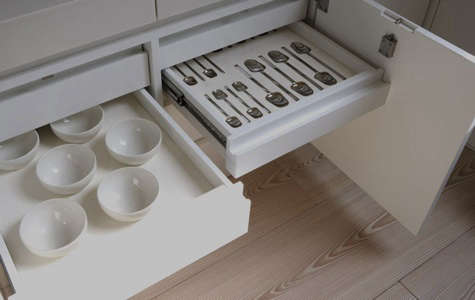
Some flatware tries very hard to impress you. It arrives with flourishes, decorative handles, curves that look like they took a wrong turn at Versailles, and enough visual drama to upstage the roast chicken. John Pawson flatware does the opposite. It walks into the dining room quietly, sits down with perfect posture, and somehow makes everything else look a little more thoughtful.
Designed by British architectural designer John Pawson for When Objects Work, this cutlery collection is a study in restraint, proportion, and everyday usefulness. It is minimalist, yes, but not in the cold “please don’t touch anything” way. The pieces are meant to be used, washed, set out again, and enjoyed with real food by real people who occasionally drop a fork. The genius is that every line feels deliberate. Nothing shouts. Nothing fidgets. Nothing says, “Look at me, I am a spoon.” It simply does the job beautifully.
For anyone searching for John Pawson flatware, minimalist cutlery, architect-designed flatware, or 18/10 stainless steel silverware, this guide explains what makes the collection distinctive, how it fits into modern table settings, what to consider before buying, and why a fork with fewer visual distractions can still start a very lively dinner conversation.
What Is John Pawson Flatware?
John Pawson flatware is a stainless steel cutlery collection created for the Belgian design company When Objects Work. The line includes essential dining pieces such as a knife, spoon, teaspoon, and fork options, including three-prong and five-prong fork versions. The official collection is associated with 2005 and is made in mirror stainless steel, with design details that reflect Pawson’s broader architectural language: reduction, precision, balance, and calm.
The collection is often described as “minimum cutlery,” but that does not mean basic. It means every piece has been edited until only the necessary remains. The knife, fork, and spoon share a consistent handle language, giving the table a unified rhythm. The silhouettes are slim, clean, and architectural. Even the fork prongs feel intentional, with the three-prong option recalling older Georgian simplicity while the five-prong version offers a more familiar modern dining experience.
The result is flatware that feels less like table decoration and more like table architecture. You do not simply place it beside a plate; you compose it into the setting.
The Story Behind the Design
The origins of John Pawson flatware are closely connected to the Abbey of Our Lady of Nový Dvůr in Bohemia, a Cistercian monastery designed by Pawson. The tableware began with the practical idea of creating suitable implements and vessels for the monks’ refectory. That background matters because it explains the mood of the design. This is not luxury born from excess. It is refinement born from discipline.
A monastic dining room does not need fussy decoration. It needs objects that support ritual, repetition, order, and quiet use. Pawson translated that atmosphere into cutlery that looks simple at first glance but becomes more interesting the longer you study it. The pieces are not stripped down for fashion. They are stripped down because anything unnecessary would interrupt the experience.
That is the central charm of John Pawson flatware: it treats eating as a daily ritual worth designing well. Breakfast toast gets the same respect as a formal dinner. Soup becomes an event. Even reheated leftovers may feel slightly more dignified, though the microwave still knows what it did.
Who Is John Pawson?
John Pawson is widely known for minimalist architecture and design. His work spans homes, religious spaces, stores, galleries, furniture, tableware, and objects. He is often associated with visual clarity, exact proportions, carefully chosen materials, and the discipline of removing anything that does not serve the whole.
In architecture, Pawson’s spaces tend to use light, volume, texture, and proportion rather than ornament. In flatware, the same principles become smaller but no less demanding. A building may use stone, plaster, glass, and daylight. A spoon has far fewer tools available. That makes the details even more important. The handle width, bowl shape, prong length, surface finish, and balance all have to carry the design.
This is why the flatware appeals not only to design collectors but also to people who appreciate quiet quality. It is not a novelty object. It is a functional object refined until it feels almost inevitable.
Design Details That Make It Different
1. A Unified Handle Form
One of the most distinctive features of John Pawson flatware is the shared handle shape across the knife, fork, and spoon. Many flatware sets treat each piece as a separate little sculpture. Pawson’s approach is more architectural. The repeated handle form creates continuity, like a row of columns or a calm sequence of doorways.
This unity gives the table a clean and deliberate look. When placed beside simple dinnerware, the flatware appears almost graphic: lines, planes, reflections, and negative space all working together.
2. Mirror Stainless Steel
The collection is made in mirror stainless steel, a finish that catches light and reflects its surroundings. In a minimalist setting, that reflection matters. The flatware does not add color or pattern; instead, it borrows from the table, the plate, the room, and the meal.
A mirror finish also adds a formal quality. It can look elegant beside white porcelain, warm beside linen, and surprisingly dramatic against matte black stoneware. The finish is restrained, but it is not shy. Think of it as the dinner guest who speaks softly but somehow everyone listens.
3. 18/10 Stainless Steel Quality
Retail descriptions commonly identify the pieces as 18/10 stainless steel, a popular high-quality flatware material. In practical terms, 18/10 stainless steel is valued for its resistance to corrosion, its polished appearance, and its suitability for repeated dining use. It is the kind of material choice that supports the collection’s larger promise: beauty without fragility.
Good flatware should not require a lifestyle contract. You should be able to use it often, wash it properly, and enjoy it without treating every meal like a museum shift.
4. Three-Prong and Five-Prong Fork Options
The availability of both three-prong and five-prong forks gives the collection a subtle but meaningful choice. The three-prong fork feels more distinctive and historic, with a spare profile that suits Pawson’s reductionist language. The five-prong fork feels more familiar for everyday users who prefer a conventional dining feel.
Neither option is “better” in every situation. The three-prong fork is the design purist’s pick. The five-prong fork is the comfort-minded minimalist’s pick. Both say, “I have opinions about forks,” which is a sentence you may not have expected to say today.
Why Minimalist Flatware Works So Well
Minimalist flatware succeeds when it disappears just enough. It should support the food, the table, and the ritual of eating without demanding applause. John Pawson flatware does this through proportion rather than decoration. The pieces look calm because their relationships are carefully controlled: length to width, handle to head, shine to shadow, object to hand.
This restraint makes the flatware unusually versatile. It can work in a spare modern apartment, a warm farmhouse kitchen, a design-focused dining room, or a small city table where every visible object has to earn its rent. It pairs naturally with white plates, handmade ceramics, wood boards, linen napkins, glass carafes, and simple serving pieces.
It also makes food look better. A clean utensil shape gives the eye less clutter to process. The salad looks greener. The pasta looks more composed. The cake looks like it has a gallery opening at seven.
How to Style John Pawson Flatware
For a Minimalist Table
Pair the flatware with white or ivory plates, clear glassware, and neutral linen. Keep the centerpiece low and simple: a ceramic bowl, a branch, a few seasonal fruits, or nothing at all. Pawson’s work rewards restraint. If the table starts looking like a craft store had a parade, edit.
For a Warm Modern Table
Use the mirror stainless steel against natural textures. Try oak, walnut, stoneware, woven placemats, or washed linen. The polished finish becomes more approachable when placed beside materials with grain and irregularity. This combination keeps the setting from feeling too severe.
For Entertaining
John Pawson flatware is ideal for dinner parties where the goal is elegant but not theatrical. Use simple dinner plates, one good glass for water, one good glass for wine, and a cloth napkin. Let the proportions do the work. Guests may not immediately announce, “Ah, yes, architectural cutlery,” but they will sense that the table feels considered.
Buying Considerations
Before purchasing John Pawson flatware, consider how you actually eat. Do you host often? Do you prefer heavier utensils or lighter ones? Do you like a mirror finish, or do fingerprints make you emotionally unavailable? Do you want the distinctive three-prong fork, or would the five-prong version suit your household better?
The collection is typically positioned as premium design flatware, so it makes sense to buy thoughtfully. Some retailers sell individual pieces, while others offer place-setting sets. If you are building slowly, start with the pieces you use most: dinner fork, dinner knife, spoon, and teaspoon. If you entertain regularly, consider enough place settings for six or eight.
Because availability can vary, it is wise to check specialist design retailers, tabletop stores, and authorized sellers of When Objects Work products. For collectors, condition matters. Look for clear product descriptions, material details, and return policies, especially when buying online.
Care and Maintenance
Although John Pawson flatware is designed for use, proper care helps preserve its finish. Wash pieces soon after meals, especially after contact with acidic foods, salt, eggs, or sauces. If using a dishwasher, avoid overcrowding the basket so pieces do not rub aggressively against each other. Drying promptly helps reduce water spots on mirror stainless steel.
For handwashing, use mild dish soap and a soft sponge. Avoid abrasive pads, harsh powders, or dramatic scrubbing performances. Stainless steel is strong, but mirror finishes appreciate good manners. If water spots appear, a soft cloth can bring back the shine.
John Pawson Flatware vs. Ordinary Silverware
Ordinary silverware is often chosen as a background item. It is there because forks are socially useful and eating spaghetti with your hands is frowned upon in most zip codes. John Pawson flatware asks for a little more attention. Not loud attention, but the kind you give to a well-made chair, a balanced pen, or a door handle that feels perfect every time you use it.
The difference is not only appearance. It is intention. Many flatware sets follow trends: hammered texture, antique curves, black coating, gold plating, oversized handles. Pawson’s design follows a principle. It asks what is necessary, what can be removed, and what remains when proportion is treated as the decoration.
That makes the collection timeless rather than trendy. It does not rely on a fashionable color or seasonal finish. Its personality comes from form.
Who Should Choose John Pawson Flatware?
John Pawson flatware is a strong choice for design lovers, architects, minimalists, collectors of modern tableware, and anyone who prefers quiet luxury over decorative noise. It is also ideal for people who want everyday objects to feel intentional. If you believe a spoon can improve breakfast simply by being beautifully made, you are the target audience.
It may not be right for everyone. If you love ornate handles, vintage floral patterns, heavy embellishment, or colorful finishes, this collection may feel too restrained. That is fine. Minimalism is not a moral achievement; it is a design preference. There is room in the world for both Pawson flatware and a gravy boat shaped like a goose.
Experience: Living With John Pawson Flatware
The first thing you notice about John Pawson flatware is how little it tries to seduce you. There is no decorative wink, no engraved flourish, no fancy handle pretending to be jewelry. At first, the pieces may even seem almost too quiet. Then you set them beside a plate, and the point becomes clear. They make the table feel calmer.
Using this style of flatware changes the pace of a meal in small ways. The knife looks precise before it cuts. The spoon feels like a complete shape, not just a bowl attached to a handle. The fork, especially the three-prong version, has a slightly ceremonial quality. You become more aware of placement, spacing, and proportion. Suddenly, setting the table is not a chore performed five minutes before guests arrive; it is part of the meal itself.
In everyday use, the flatware works best when the rest of the table is allowed to breathe. A simple white plate makes the mirror stainless steel look crisp. A handmade ceramic plate makes it look warmer and more human. Linen softens it. Wood grounds it. Glass adds clarity. The pieces adapt, but they do not disappear completely. They remain present in that very Pawson-like way: quiet, exact, and slightly demanding of your better self.
There is also a funny emotional side to owning highly considered flatware. You may start judging your junk drawer. You may wonder why your spatula looks like it was designed during a committee argument. You may begin spacing napkins with alarming seriousness. This is the danger of good design: once one object behaves beautifully, the rest of the house is put on notice.
For dinner parties, John Pawson flatware creates an atmosphere before the first course arrives. Guests may pick up a fork and pause for a second. That pause is the compliment. It means the object has crossed the line from invisible utility into tactile experience. It does not need to be explained, though design-minded guests will appreciate the story: architect, monastery, refectory, reduction, stainless steel, perfect proportions. If that sounds too serious, serve fries. The contrast is delightful.
The mirror finish does ask for some care. Water spots can appear if pieces are left to air-dry carelessly, and fingerprints are part of the bargain. But this is not a flaw so much as a reminder that beautiful everyday objects live in the real world. They are handled, washed, dried, stacked, and used again. Over time, the pleasure comes not from keeping them untouched, but from letting them become part of the rhythm of the table.
The best experience of John Pawson flatware is not visual; it is cumulative. After weeks of use, ordinary meals feel a little more composed. A weekday salad looks intentional. A bowl of soup feels less like lunch and more like a pause. Even toast feels upgraded, which is impressive because toast has historically been doing its best with very limited support.
Ultimately, this flatware is for people who enjoy the poetry of useful things. It proves that minimalism does not have to be empty or severe. It can be warm, tactile, disciplined, and quietly generous. John Pawson flatware does not ask you to live like a monk. It simply borrows a little monastic clarity and brings it to the dinner table, where it pairs surprisingly well with pasta, roast vegetables, birthday cake, and the occasional midnight snack eaten over the sink.
Conclusion
John Pawson flatware is more than a set of knives, forks, and spoons. It is a compact lesson in how design can elevate ordinary rituals. Created for When Objects Work and rooted in Pawson’s disciplined approach to simplicity, the collection turns stainless steel into something thoughtful, balanced, and quietly memorable.
Its appeal lies in what it refuses to do. It refuses to decorate for decoration’s sake. It refuses to chase trends. It refuses to make the table busier than it needs to be. Instead, it offers proportion, clarity, and usefulness. For some people, that may sound too restrained. For others, it is exactly the point.
If you want flatware that blends into almost any modern table while still rewarding close attention, John Pawson flatware is worth serious consideration. It is minimalist without being dull, refined without being precious, and practical without becoming ordinary. In other words, it is the rare spoon that may actually deserve a moment of silence before dessert.