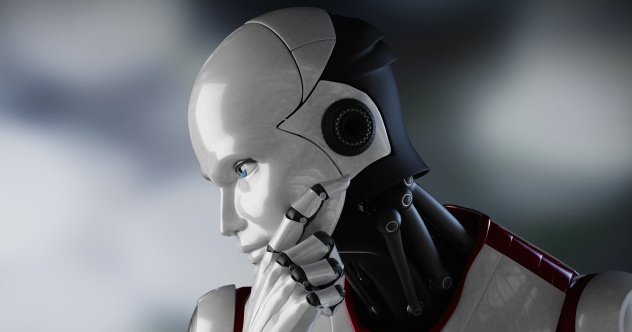
Artificial intelligence has officially moved out of the “cool party trick” phase and into the “please don’t let this thing manage nuclear codes, my bank account, and my toaster at the same time” era. AI can write code, detect cancer patterns, create realistic videos, summarize legal documents, help scientists design materials, and turn a vague prompt into a polished image faster than most humans can find their charger.
That is remarkable. It is also a little scary.
The latest developments in artificial intelligence are not just about smarter chatbots. We are watching AI systems become more autonomous, more persuasive, more realistic, and more deeply embedded in daily life. The same technology that can help a doctor read scans may also generate convincing medical misinformation. The same voice-cloning tool that helps a person with speech loss communicate may also help scammers impersonate a family member. AI is not evil, but it is powerfuland power without guardrails is basically a raccoon in a chemistry lab.
This article explores ten remarkable but scary AI developments shaping the future of technology, work, privacy, security, health care, and society.
1. Hyper-Realistic Deepfakes Are Getting Harder to Spot
Deepfakes used to look like a wax museum figure trying to pass a driver’s license photo. Not anymore. Today’s AI-generated images, voices, and videos can be shockingly realistic. With only a few seconds of audio, some tools can imitate a person’s tone, rhythm, accent, and emotional style. Video generation is improving too, making fake interviews, fake public statements, fake evidence, and fake “caught on camera” clips more convincing.
Why It’s Remarkable
Generative AI can help filmmakers, educators, marketers, accessibility designers, and game developers create content faster and cheaper. Small creators can produce studio-like visuals without owning a warehouse full of cameras, lights, and people yelling “quiet on set.”
Why It’s Scary
Deepfakes attack trust itself. If anyone can make a realistic video of anyone saying anything, then the public may start doubting real evidence and believing fake evidence. This is sometimes called the “liar’s dividend”: when fake media becomes common, guilty people can dismiss real recordings as fake.
The danger is not only political. Deepfake scams can target families, students, businesses, and older adults. A cloned voice asking for emergency money can feel much more convincing than a suspicious email from “Prince Bank Account Help Desk.” AI makes fraud personal.
2. AI Voice Cloning Is Supercharging Scams
Voice cloning is one of the most unsettling artificial intelligence developments because it feels intimate. A fake email is one thing. Hearing what sounds like your parent, child, boss, teacher, or best friend is another. Scammers can use AI-generated voices in fake emergency calls, fake executive requests, fake customer support, and social engineering attacks.
Why It’s Remarkable
Voice AI has positive uses. It can help restore speech for people who have lost their natural voice, localize educational content, create audio versions of text, and make digital assistants more natural. Used responsibly, voice synthesis can be life-changing.
Why It’s Scary
The human brain is wired to trust familiar voices. That makes voice cloning a perfect tool for emotional manipulation. A scammer does not need to defeat your password if they can panic you into sending money or revealing information. The scary part is that the technology does not have to be perfect. In a stressful moment, “close enough” may be enough.
A practical lesson is already emerging: families and businesses need verification habits. A private safe word, a callback rule, or a second-channel confirmation can stop a fake voice from becoming a very real disaster.
3. Autonomous AI Agents Can Take Action, Not Just Talk
Early chatbots mostly answered questions. Newer AI agents can plan tasks, use software, browse databases, write code, schedule meetings, send messages, analyze files, and sometimes trigger actions across multiple systems. In plain English, AI is moving from “assistant who gives advice” to “assistant who does things.”
Why It’s Remarkable
AI agents could save huge amounts of time. Imagine an agent that handles routine paperwork, compares invoices, organizes research, drafts reports, checks software bugs, and books appointments. For businesses, agentic AI could become a productivity engine. For individuals, it could feel like having a tiny operations team living inside a laptop, minus the coffee budget.
Why It’s Scary
Autonomy increases risk. If an AI system misunderstands a goal, follows a malicious instruction, accesses sensitive data, or takes an action too quickly, the damage may happen before a human notices. Traditional software follows fixed rules. AI agents interpret context, and interpretation can go sideways.
Security researchers worry about prompt injection, where hidden instructions trick an AI agent into doing something unintended. For example, an agent reading a document, email, or webpage could encounter malicious text designed to manipulate its behavior. That is not magic. It is the digital version of putting a fake “Authorized Staff Only” badge on a raccoon and letting it into the kitchen.
4. AI-Powered Cyberattacks Are Getting Faster
Cybercriminals have always loved automation. AI gives them a turbo button. Generative AI can help attackers write more convincing phishing messages, translate scams into many languages, summarize stolen data, scan code for weaknesses, and create personalized lures at scale.
Why It’s Remarkable
AI is also strengthening cybersecurity. It can detect unusual behavior, analyze malware, monitor networks, prioritize vulnerabilities, and help defenders respond faster. In the right hands, AI can be a shield.
Why It’s Scary
In the wrong hands, AI can be a crowbar with spellcheck. Attackers no longer need perfect English or deep technical expertise to create convincing scams. They can use AI to customize messages based on public information, making phishing attempts feel personal and legitimate.
The cybersecurity race is becoming machine-speed. If attackers use AI to find and exploit weaknesses faster, organizations must patch systems faster, train employees better, and treat data security as a daily habitnot a dusty policy PDF nobody has opened since 2017.
5. AI Hallucinations Can Sound Confidently Wrong
One of the strangest AI risks is not that systems always fail. It is that they can fail beautifully. Large language models may generate incorrect facts, fake citations, imaginary legal cases, flawed code, or misleading summaries while sounding calm, polished, and certain.
Why It’s Remarkable
AI can summarize complex documents, explain difficult concepts, draft emails, brainstorm ideas, and assist with research. It can make knowledge more accessible and help people move faster through information-heavy tasks.
Why It’s Scary
Confidence is persuasive. A messy answer makes people suspicious. A smooth answer makes people relax. That is where hallucinations become dangerous. In schoolwork, business, law, science, and health care, a convincing falsehood can spread quickly if nobody verifies it.
The risk grows when AI-generated content is reused by other systems. A fake statistic in one report can be copied into a presentation, scraped into a dataset, summarized into another article, and eventually return wearing a suit and calling itself “industry consensus.” The internet already had a misinformation problem. AI gave it a high-speed blender.
6. AI in Health Care Is Powerful but Risky
AI is rapidly entering health care through medical imaging, documentation tools, triage support, drug discovery, hospital operations, and patient-facing chatbots. Some AI-enabled medical tools can help clinicians spot patterns that are easy to miss. That is genuinely exciting.
Why It’s Remarkable
Artificial intelligence could help reduce administrative burden, speed up diagnosis, improve image analysis, support remote care, and personalize treatment. Doctors are drowning in paperwork, and AI scribes or decision-support tools may help give them more time with patients.
Why It’s Scary
Health is not a low-stakes chatbot game. If an AI tool gives incomplete, outdated, biased, or fabricated medical advice, real people can be harmed. AI systems may miss context, misunderstand symptoms, or present risky suggestions in a friendly tone. Even when an AI tool is usually accurate, “usually” is not a comforting word when your body is the spreadsheet.
The safest future is not AI replacing doctors. It is AI supporting trained professionals with transparency, testing, monitoring, and human judgment. In medicine, the best AI should behave less like a genius oracle and more like a careful assistant who knows when to say, “A qualified clinician needs to check this.”
7. AI Surveillance Can Make Privacy Feel Extinct
AI can analyze faces, voices, walking patterns, license plates, online behavior, shopping habits, workplace activity, and social media posts. The more data it receives, the more patterns it can infer. Sometimes those patterns are useful. Sometimes they are creepy enough to make your browser history sweat.
Why It’s Remarkable
AI surveillance tools can help find missing people, detect fraud, improve security, manage traffic, and analyze large amounts of footage quickly. In limited, accountable settings, AI can support public safety and operational efficiency.
Why It’s Scary
Surveillance becomes dangerous when it is inaccurate, biased, secretive, or overused. Facial recognition systems have raised concerns about misidentification and unequal error rates. Workplace monitoring tools can turn employees into data points, scoring productivity without understanding context. Schools, stores, cities, and platforms may collect more information than people realize.
The scary question is not only “Can AI identify me?” It is “Who gets to decide what that identification means?” Privacy is not just hiding secrets. It is having room to think, learn, make mistakes, and live without feeling watched by a spreadsheet with binoculars.
8. AI Is Changing Jobs Faster Than Workers Can Adapt
AI is already affecting writing, design, programming, customer service, marketing, finance, education, logistics, and administration. Some workers use AI as a helpful tool. Others fear it will reduce wages, eliminate entry-level roles, or turn work into constant algorithmic measurement.
Why It’s Remarkable
Used well, AI can remove repetitive tasks, help small businesses compete, support workers with disabilities, accelerate research, and create new categories of jobs. Many people are already using AI to draft, analyze, translate, brainstorm, and automate routine work.
Why It’s Scary
The benefits may not be shared evenly. Workers may face pressure to produce more in less time, while companies reduce training opportunities or cut junior positions. AI can also intensify surveillance, ranking employees by metrics that may not capture real value.
The future of work will not be as simple as “robots take everything” or “nothing changes.” The real story is messier: some tasks disappear, some jobs transform, some new roles appear, and some people get squeezed in the middle. The scariest outcome is not AI doing work. It is organizations using AI as an excuse to treat humans like outdated software.
9. AI Systems Are Hungry for Data, Energy, and Infrastructure
Modern AI runs on enormous amounts of data and computing power. Training and operating advanced models requires data centers, chips, electricity, cooling systems, and networks. Behind every smooth AI answer is a very serious stack of hardware doing mathematical gymnastics.
Why It’s Remarkable
This infrastructure enables breakthroughs in science, logistics, language translation, accessibility, creative tools, and business automation. AI can help optimize energy grids, design better materials, and speed up research in climate and medicine.
Why It’s Scary
The resource demands are rising quickly. Data centers can strain local power grids and water systems, especially when growth outpaces planning. There are also privacy concerns: AI models are trained on vast datasets, and users may not always understand how their information is stored, processed, or reused.
There is a simple rule for the AI era: data is not confetti. It should not be thrown everywhere just because the party is exciting. Companies need clear consent, strong security, and honest explanations about how user data is handled.
10. Frontier AI Is Becoming Harder to Understand and Control
The most advanced AI models are increasingly complex. Researchers can evaluate outputs, test behavior, and apply safeguards, but they still do not fully understand every internal process that leads to a model’s answer. This is often called the interpretability problem.
Why It’s Remarkable
Frontier AI can solve coding problems, reason through complex questions, generate scientific hypotheses, support advanced research, and assist with creative work. These systems are becoming general-purpose tools rather than single-task machines.
Why It’s Scary
When systems become more capable than they are understandable, governance gets harder. Safety testing may miss rare failure modes. A model may behave well in evaluation but fail in real-world conditions. If future AI systems become more autonomous, more connected to tools, and more capable of long-term planning, small errors could scale into serious consequences.
This does not mean science fiction doom is guaranteed. It means humility is necessary. The people building advanced AI should not treat safety like a decorative helmet worn only for press photos. Testing, transparency, independent audits, security controls, and public accountability must grow with capability.
How to Think About AI Without Panicking
It is easy to swing between two bad reactions: worshiping AI as a digital wizard or fearing it as a glowing-eyed monster hiding inside the Wi-Fi. Neither view is useful. Artificial intelligence is a tool, an industry, a research field, and a social force. It reflects human choices: what we build, what we reward, what we regulate, and what we ignore.
The best approach is practical caution. Use AI, but verify important outputs. Enjoy the convenience, but protect personal information. Let AI help with drafts, summaries, coding, and planning, but do not hand it unchecked authority over money, health, safety, or identity. In other words, treat AI like a brilliant intern with no life experience: useful, fast, occasionally dazzling, and absolutely not ready to run the whole company alone.
Experience-Based Reflections on These AI Developments
Anyone who has used AI tools regularly has probably felt the strange mix of amazement and suspicion. One minute, AI helps turn a messy idea into a clean outline. The next minute, it confidently invents a detail that sounds so believable you almost thank it for lying with such good posture.
A common experience is using AI for writing. It can help brainstorm headlines, organize sections, simplify difficult explanations, and turn a blank page into something less terrifying. That is genuinely useful. The scary part appears when the text sounds complete before it is truly checked. A polished paragraph can hide weak logic, outdated information, or a made-up claim. Good AI-assisted writing still needs human judgment, research, editing, and a healthy disrespect for anything that sounds too smooth.
Another everyday experience is using AI search or chatbot tools for quick answers. They are convenient, especially when a traditional search engine gives ten blue links and three ads that seem to know too much about your socks. But quick answers can make people lazy about verification. When the topic is harmlesslike asking for a dinner ideathat is fine. If the topic involves health, money, law, safety, or someone’s reputation, the answer deserves extra checking.
In workplaces, AI can feel like both a helper and a warning sign. It can summarize meetings, draft emails, analyze spreadsheets, and speed up repetitive tasks. But workers may also worry that every efficiency gain becomes a new expectation: more output, faster deadlines, fewer people, and less patience for human limits. The problem is not the tool itself. The problem is how organizations choose to use it. AI should remove drudgery, not remove dignity.
Deepfakes and voice cloning create a different kind of personal anxiety. Many people now understand that a message, image, or voice recording may not be trustworthy just because it feels real. That changes basic habits. We may need to verify urgent requests, pause before sharing shocking clips, and teach children and adults that “seeing is believing” has expired as a security policy.
The biggest lesson from living with AI is that convenience is seductive. People adopt tools when they save time, not when they come with a 90-page safety manual. That is why responsible design matters. Users should not have to become cybersecurity experts, copyright lawyers, data privacy analysts, and machine learning researchers just to use a homework helper or office assistant.
At the same time, fear should not freeze progress. AI can help people learn, create, communicate, diagnose, protect systems, and solve problems that once seemed too large. The future does not need to be anti-AI. It needs to be pro-human. That means building AI systems that are tested, explainable where possible, privacy-conscious, secure, and accountable. It also means keeping humans in charge of decisions that affect real lives.
The remarkable and scary truth is this: AI is not coming someday. It is already here, quietly joining our schools, offices, hospitals, phones, cars, homes, and news feeds. The question is not whether we will use artificial intelligence. We already do. The question is whether we will use it wiselyor whether we will keep pressing “accept terms” while the future updates itself in the background.
Conclusion
Artificial intelligence is one of the most powerful technologies of our time because it can multiply human ability. It can help us write, discover, design, diagnose, translate, secure, and imagine. But the same force can also multiply human mistakes, scams, bias, surveillance, misinformation, and cyber threats.
The ten developments above show why AI deserves both excitement and caution. Deepfakes challenge truth. Voice cloning challenges trust. AI agents challenge control. AI-powered cyberattacks challenge security. Hallucinations challenge knowledge. Health care AI challenges safety. Surveillance challenges privacy. Workplace AI challenges fairness. Data-hungry models challenge sustainability. Frontier AI challenges our ability to govern what we barely understand.
The smartest response is not panic. It is responsibility. AI should be powerful, but not reckless. Fast, but not careless. Helpful, but not blindly trusted. The future of artificial intelligence will not be shaped by machines alone. It will be shaped by the rules, values, habits, and courage of the humans using them.
Note: This article is written in original American English for web publication and is based on real, current information from reputable public sources on artificial intelligence, cybersecurity, health technology, privacy, labor trends, and AI safety.