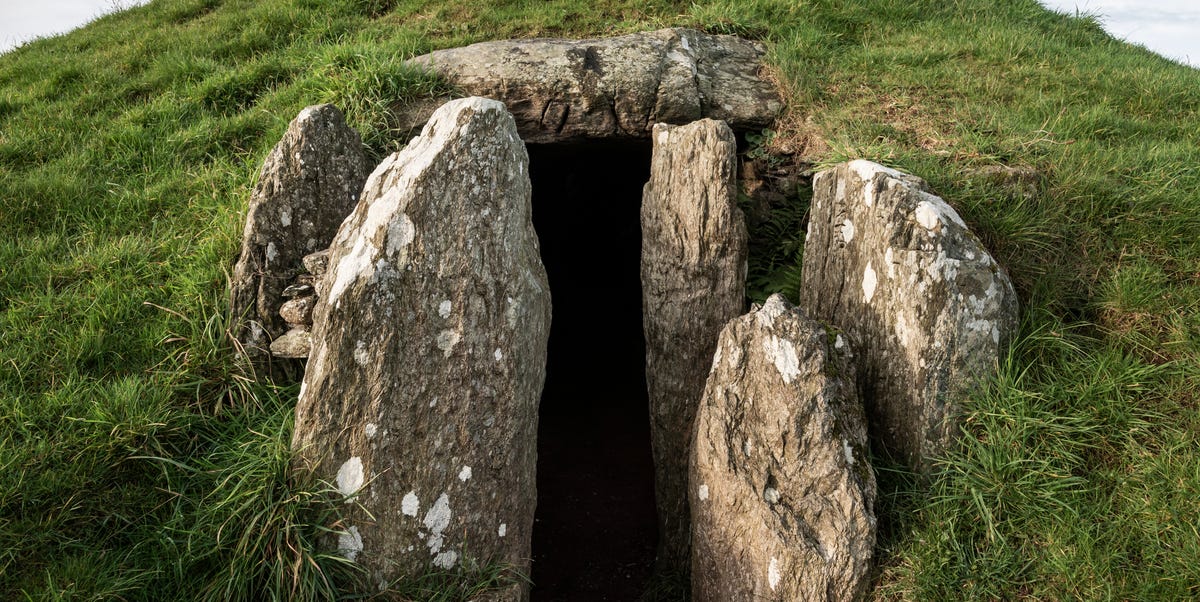
Every now and then, archaeology politely reminds us that ancient people were not sitting around in caves waiting for Wi-Fi. They built monumental stone tombs, moved exotic materials across long distances, designed complex burial spaces, and apparently had a better sense of dramatic presentation than most modern storage units. The latest reminder comes from southern Spain, where experts uncovered a 5,000-year-old treasure-filled tomb that is rewriting what we know about prehistoric communities in Andalusia.
The discovery is known as Dolmen I of the La Lentejuela necropolis, located near Teba in Málaga. At roughly 13 meters long, or about 43 feet, this ancient stone tomb is not exactly subtle. It is a monumental megalithic structure built with upright stone slabs, internal compartments, and burial spaces that held human remains along with carefully chosen grave goods. Inside, archaeologists documented prestigious objects made from ivory, amber, marine shells, and flint, including arrowheads, large blades, and a rare halberd-like weapon.
That is the kind of find that makes archaeologists reach for their notebooks, their cameras, and possibly a very strong coffee. More importantly, it offers a rare look into how people of the third millennium B.C.E. treated death, memory, trade, status, and sacred space. This was not simply a hole in the ground. It was a statement in stone.
What Exactly Did Experts Find?
The tomb is a dolmen, a type of prehistoric megalithic monument generally made with large upright stones supporting horizontal capstones. Many dolmens were used as burial chambers, often covered by a mound of earth or smaller stones. In simple terms, imagine an ancient stone room built to last longer than empires, languages, family recipes, and most modern kitchen appliances.
Dolmen I at La Lentejuela stands out because of its size, preservation, and architectural complexity. The structure measures about 43 feet long and includes multiple internal compartments. Its walls were made with tall vertical slabs known as orthostats, while large horizontal stones once covered the top. The entire monument would have been covered by a tumulus of sand and stones, giving it a powerful presence in the landscape.
Inside, archaeologists found multiple ossuaries, or deposits of human bones, showing that the tomb served as a collective burial place. This matters because collective burial suggests a community-based relationship with ancestors. The dead were not always treated as isolated individuals. They could remain part of a shared social and spiritual identity, gathered together in a place that people returned to over time.
The “Treasure” Was More Than Shiny Stuff
When modern readers see the phrase “treasure-filled tomb,” it is tempting to picture gold masks, glittering crowns, or something a movie villain would steal while muttering about destiny. The La Lentejuela tomb is different. Its treasures are not valuable because they belong in a dragon’s hoard. They are valuable because they reveal how prehistoric people lived, traveled, traded, mourned, and communicated status.
Ivory, Amber, and Marine Shells
Among the most fascinating finds were objects made from ivory, amber, and seashells. These materials were not ordinary local pebbles picked up on a lazy afternoon. Their presence in an inland area of Andalusia points to long-distance exchange networks. Marine shells connect the tomb to the symbolic world of the sea, while amber and ivory suggest access to rare materials that carried prestige.
In prehistoric societies, exotic materials often did more than decorate. They told stories. A shell placed in a tomb could represent travel, contact, identity, memory, or the mysterious power of distant places. Amber, with its warm glow and unusual texture, may have seemed almost magical. Ivory required access to animals and routes far beyond the local landscape. Together, these objects hint that the community connected to wider social worlds than we might expect from a 5,000-year-old farming society.
Flint Tools and Prehistoric Weapons
The tomb also contained sophisticated flint pieces, including arrowheads and large blades. Flint tools required skill to produce, and finely made pieces could carry practical, symbolic, or ceremonial meaning. A weapon in a tomb was not necessarily placed there because the deceased planned to hunt in the afterlife like an extremely organized camper. It may have represented identity, power, protection, or social role.
One of the most striking discoveries was an exceptional halberd, a weapon form associated with status and authority in prehistoric Europe. A halberd-like object would not have been casual pocket gear. Its inclusion suggests that at least some individuals associated with the tomb held elevated positions, whether as leaders, warriors, ritual specialists, or members of influential lineages.
Why This 5,000-Year-Old Tomb Matters
The discovery matters because it gives researchers a rare combination: monumental architecture, well-preserved burial contexts, human remains, and prestige goods. Any one of those would be useful. Together, they create a prehistoric information buffet, and unlike a real buffet, everything on it is scientifically valuable.
A Window Into Funerary Beliefs
The tomb helps archaeologists study how ancient communities understood death. The careful construction of the dolmen, the arrangement of internal spaces, and the placement of grave goods all suggest that burial was not a quick practical task. It was a ritual process. The living invested time, labor, and precious materials into the dead, showing that memory and ancestry were central to their worldview.
Collective burial also raises questions about belonging. Who was allowed inside? Were the buried individuals related by blood, status, ritual role, or community identity? Did the tomb represent a family, a clan, or a wider social group? Future analysis of bones, DNA, isotopes, and artifacts may help answer these questions.
Evidence of Long-Distance Exchange
The exotic materials are especially important for understanding prehistoric trade. A community near Teba did not need marine shells for survival, yet people acquired them and placed them in a tomb. That means the shells mattered. The same applies to amber and ivory. These materials point to exchange networks that connected inland communities with coastal zones and perhaps with broader Mediterranean routes.
This challenges the outdated idea that prehistoric people lived in tiny isolated worlds. They may not have had maps with “You Are Here” stickers, but they clearly had routes, relationships, and systems of exchange. Objects moved. Ideas moved. Rituals moved. Prestige moved too, probably with plenty of human drama attached.
A Clue to Social Hierarchy
Grave goods can reveal social differences. When certain people are buried with rare or labor-intensive objects, archaeologists ask whether those goods reflect rank, achievement, ancestry, gender, age, ritual power, or group identity. The La Lentejuela tomb does not provide a simple answer, but it does suggest a society capable of organizing labor, managing symbolic objects, and creating monumental spaces that communicated importance.
Building a 43-foot stone tomb required planning. People had to select stones, move them, position them, shape the burial space, and maintain the monument. That kind of project does not happen because someone woke up on a Tuesday and said, “Let’s make a giant stone tomb before lunch.” It required coordination, shared beliefs, and a community willing to invest effort in the dead.
The Architecture: A Monument Built to Be Remembered
The architecture of Dolmen I is one of the reasons experts are excited. Its internal compartmentalization is complex, and its preservation is exceptional for Andalusia. This allows researchers to study not only what was placed inside, but how the space itself was designed.
In megalithic monuments, architecture often carries meaning. A passage, chamber, entrance, mound, or stone alignment may shape how people moved through the site. The physical journey into the tomb could have mirrored a symbolic journey between the world of the living and the world of the ancestors.
Dolmens across Europe sometimes served more than one purpose. They could be burial places, ritual centers, territorial markers, or symbols of community identity. Some megalithic monuments also appear to reflect astronomical interests, though each site must be studied carefully before making claims. Nobody needs a prehistoric conspiracy theory wearing a fake mustache. What matters is evidence.
La Lentejuela and the Megalithic Landscape of Southern Spain
La Lentejuela is part of a broader megalithic landscape in southern Iberia. The region is already famous for prehistoric monuments, including major dolmen complexes around Antequera and Ronda. These sites show that southern Spain was an important center of megalithic activity during Late Prehistory.
The La Lentejuela necropolis includes multiple megalithic structures, and research at the site has been carried out across several excavation campaigns. The project has focused on architecture, chronology, society, economy, and ritual practices. In other words, archaeologists are not just asking, “What cool objects were found?” They are asking, “How did this society work?”
That distinction is important. Treasure may attract public attention, but context creates knowledge. A shell in a museum case is interesting. A shell found in a specific tomb chamber, associated with human remains, architecture, and other grave goods, becomes evidence for social behavior. Archaeology is not about collecting old things. It is about reconstructing human stories from fragile traces.
What Researchers May Study Next
The discovery is not the end of the story. It is the beginning of a long research process. Archaeologists may use radiocarbon dating to refine the timeline of the burials. They may conduct isotopic studies to learn about diet and mobility. DNA analysis could help determine biological relationships among the people buried there. Microscopic studies of tools may reveal how they were made or used.
Material analysis can also identify where amber, ivory, and shells came from. If researchers can trace these objects to specific regions, they can map prehistoric exchange networks more accurately. That would turn the tomb into a kind of ancient address book, except written in minerals, bones, and shells instead of questionable handwriting.
Future work may also examine how the tomb changed over time. Was it used continuously? Were burials added in phases? Did later generations reopen the monument? Did rituals shift across centuries? These questions can help archaeologists understand how memory worked in prehistoric communities.
Why the Public Loves Discoveries Like This
Stories about ancient tombs capture public imagination because they combine mystery, beauty, and human emotion. A tomb is not just an archaeological site. It is a meeting point between past and present. We see the care ancient people gave to their dead, and we recognize something familiar. The materials are ancient, but the feelings are not.
People have always tried to make meaning out of death. We build cemeteries, save photographs, keep heirlooms, tell stories, and visit graves. The community that built Dolmen I did something similar in its own world. They used stone, shells, amber, ivory, tools, and ritual space to create memory.
That is why this tomb is more than a headline. It reminds us that prehistoric people were thoughtful, connected, skilled, and symbolic. They were not background characters in the opening chapter of civilization. They were fully human communities with complex beliefs and impressive technical abilities.
Experiences Related to a 5,000-Year-Old Treasure-Filled Tomb
To understand a discovery like this, imagine visiting a prehistoric site in southern Spain on a bright morning, when the stones are warm and the landscape looks quiet enough to keep secrets. There is no orchestra playing in the background, no dramatic dust cloud, and no one in a fedora sprinting away from a rolling boulder. Real archaeology is slower, quieter, and in many ways more powerful.
The first experience is scale. Reading that a dolmen is 43 feet long is useful, but standing near a megalithic structure changes the feeling completely. You start to picture people without cranes, trucks, steel cables, or energy drinks moving heavy stones into place. Suddenly, “prehistoric” no longer sounds simple. It sounds ambitious.
The second experience is patience. Archaeological discovery is not usually a single magical moment. It is careful brushing, measuring, photographing, mapping, labeling, comparing, and waiting for lab results. The treasure is not yanked from the ground with a triumphant shout. It is documented with the discipline of people who know that one careless move can destroy information that survived for five millennia.
The third experience is humility. A marine shell in an inland tomb may look small, but it carries a huge message. Someone valued it. Someone transported it. Someone chose to place it with the dead. That tiny object can change how we think about trade, symbolism, and emotion in the ancient world. It is a reminder that history often turns on details small enough to fit in your palm.
The fourth experience is connection. Modern visitors may not share the same beliefs as the people who built Dolmen I, but they can understand the desire to remember loved ones. Every culture creates bridges between the living and the dead. Some use flowers. Some use photographs. Some build stone monuments that survive 5,000 years and make future humans whisper, “Well, that was impressive.”
The fifth experience is responsibility. Sites like La Lentejuela are not just tourist curiosities. They are fragile archives. Once damaged, context cannot be replaced. Visitors, readers, museums, schools, and local communities all play a role in protecting archaeological heritage. Respecting a tomb means more than admiring its treasures. It means understanding that the real treasure is knowledge.
For anyone fascinated by this discovery, the best experience is to look beyond the shiny headline. Ask what the objects meant, how the stones were moved, who was buried there, what routes connected distant communities, and why the dead were honored with such care. That is where archaeology becomes more than old stuff in the ground. It becomes a conversation with people who lived before writing, before cities as we know them, and long before anyone could post a blurry vacation photo with the caption “ancient vibes.”
Conclusion: A Tomb That Turns Stone Into Story
The 5,000-year-old treasure-filled tomb at La Lentejuela is one of those discoveries that makes the ancient past feel startlingly close. Its stones speak of engineering. Its ossuaries speak of collective memory. Its ivory, amber, shells, and flint tools speak of exchange, identity, and ritual. Together, they reveal a prehistoric community that was far more connected and sophisticated than old stereotypes allow.
As research continues, Dolmen I may answer questions about ancestry, trade, social hierarchy, and belief in third-millennium B.C.E. Iberia. It may also raise new mysteries, because archaeology enjoys keeping humans humble. But one thing is already clear: this was not merely a tomb full of objects. It was a monument full of meaning.
The real treasure is not just what experts found inside. It is what the discovery helps us understand about people who lived 5,000 years ago and still managed to leave a message powerful enough to reach us today.