Note: This article is based on synthesized information from reputable U.S. conservation, wildlife, science, and research organizations. No direct source links are included by request.
The Tiny Masked Predator With a Giant Conservation Story
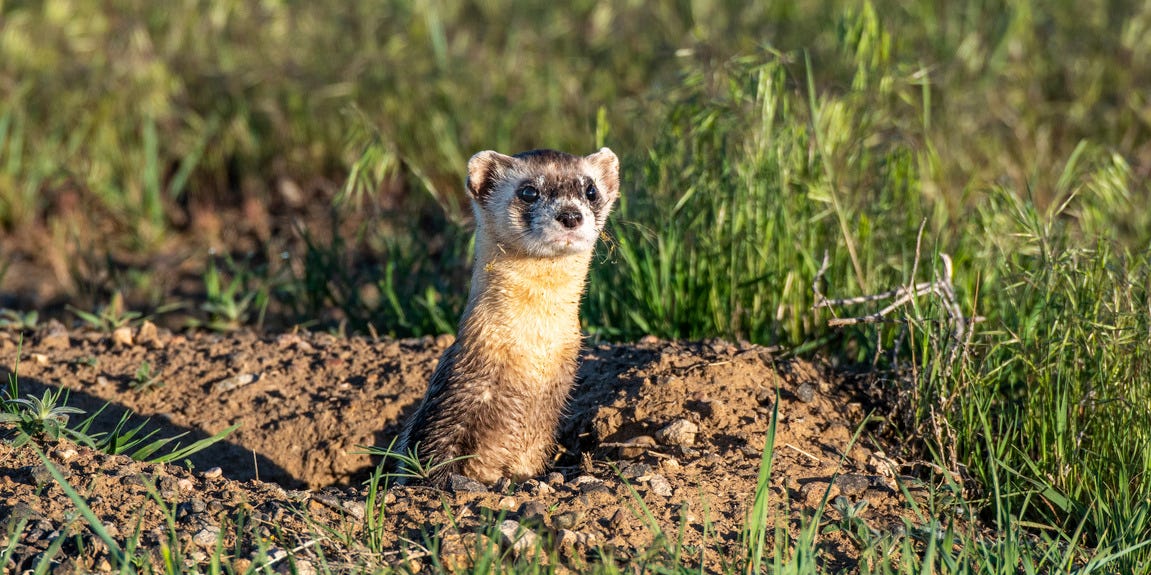
The black-footed ferret is not exactly the animal most people expect to find at the center of a scientific breakthrough. It is small, nocturnal, noodle-shaped, and dressed like a tiny prairie bandit with black feet, a black-tipped tail, and a dark mask across its eyes. Yet this endangered species has become one of the most important examples of how cloning, genetics, captive breeding, and old-fashioned conservation grit can work together.
The story of scientists cloning the black-footed ferret is not a science-fiction stunt. It is a real conservation effort designed to solve a very real problem: the species survived a near-extinction event, but its modern population came from only a handful of founders. That means black-footed ferrets today have limited genetic diversity, which can make it harder for them to resist disease, adapt to changing environments, and build stable wild populations.
In 2020, scientists made history when Elizabeth Ann, the first cloned black-footed ferret and the first cloned native endangered species in the United States, was born. She was created from preserved cells belonging to a female ferret named Willa, who lived in the 1980s and had no living descendants. In plain English: scientists reached into a genetic time capsule and brought back DNA that had been missing from the species’ living population for decades. Not bad for an animal that spends most of its time in prairie dog tunnels.
Why Black-Footed Ferrets Needed Help in the First Place
Black-footed ferrets once lived across the Great Plains, closely following the range of prairie dogs. That relationship is not casual. Prairie dogs are the ferret’s main food source, and their burrows provide shelter. In the wild, black-footed ferrets depend so heavily on prairie dog colonies that losing prairie dogs is like removing the grocery store, apartment complex, and neighborhood road system all at once.
During the 20th century, prairie dog colonies declined sharply because of habitat conversion, poisoning campaigns, disease, and agricultural pressure. As prairie dogs disappeared, black-footed ferrets followed them toward the edge. The species was believed extinct more than once. Then, in 1981, a ranch dog named Shep brought a dead black-footed ferret to a family near Meeteetse, Wyoming. It was an odd and unfortunate delivery, but it led researchers to the last known wild population.
That rediscovery launched one of America’s most famous endangered species recovery programs. Wildlife biologists captured the remaining ferrets and began a captive breeding effort. The program worked well enough to produce animals for reintroduction, but it came with a genetic bottleneck. Today’s black-footed ferrets descend from a very small number of founders, which means the species carries less genetic variation than conservationists would like.
Meet Willa: The Ferret Who Became a Genetic Time Capsule
Willa was one of the wild black-footed ferrets captured during the early recovery period. She died in the 1980s without leaving offspring, which would normally mean her genetic contribution vanished. Fortunately, tissue samples from Willa were preserved at the San Diego Zoo Wildlife Alliance’s Frozen Zoo, a biobank that stores living cells and genetic material from endangered and rare species.
That decision turned out to be a conservation jackpot. Decades later, genomic research showed that Willa carried genetic variation not represented in the living black-footed ferret population. In fact, her preserved cells contained far more unique genetic variation than the average modern ferret. For a species struggling with limited genetic diversity, Willa’s DNA was not just old material in a freezer. It was a missing chapter in the species’ survival manual.
Scientists from organizations including the U.S. Fish and Wildlife Service, Revive & Restore, the Smithsonian’s National Zoo and Conservation Biology Institute, San Diego Zoo Wildlife Alliance, ViaGen Pets & Equine, and other conservation partners collaborated to use Willa’s preserved cells in a cloning project. The goal was not to create a celebrity ferret, although Elizabeth Ann certainly became one. The goal was to restore lost genetic diversity to the species.
How Scientists Cloned the Black-Footed Ferret
The cloning process used a technique similar in concept to the method that produced Dolly the sheep. Scientists took genetic material from Willa’s preserved cells and used it to create an embryo. That embryo was then carried by a domestic ferret surrogate. On December 10, 2020, Elizabeth Ann was born at the National Black-footed Ferret Conservation Center in Colorado.
Elizabeth Ann was genetically identical to Willa, which made her different from every living black-footed ferret in the modern recovery population. Her birth proved that cells stored for more than 30 years could still help conservationists recover valuable genetic variation. It also showed that cloning could be used not as a replacement for habitat protection or captive breeding, but as an additional tool in the endangered species toolbox.
That distinction matters. Cloning alone cannot save a species if its habitat disappears, its food source collapses, or disease runs wild. A cloned ferret still needs prairie dog colonies, safe release sites, disease management, and long-term monitoring. Cloning is not a magic wand. It is more like a highly specialized wrench: incredibly useful when the problem is genetic, but not designed to fix every leak in the conservation plumbing.
Elizabeth Ann, Antonia, Noreen, and the Next Chapter
Elizabeth Ann’s birth was a milestone, but her ability to contribute genetically depended on whether she could reproduce. Unfortunately, she did not produce offspring. That did not make the project a failure. In science, one breakthrough often opens the door to the next attempt. Researchers continued refining the work, and two more clones from Willa’s preserved cells, Antonia and Noreen, were born in 2023 and publicly announced in 2024.
Antonia became especially important when she successfully produced offspring after mating with a male black-footed ferret. This marked the first time a cloned U.S. endangered species produced young. Her kits represented the real conservation prize: not just a cloned animal, but cloned genetics moving into the breeding population. In other words, Willa’s lost genetic legacy finally started walking, eating, playing, and hopefully someday helping future wild ferrets survive.
By 2025, additional kits carrying the cloned lineage were born through the breeding program. These offspring are not simply cute news items, though they are admittedly very cute in the way only small carnivores with sleep-deprived-parent energy can be. They are living evidence that cloning can help restore genetic variation that would otherwise remain frozen in storage.
Why Genetic Diversity Matters So Much
Genetic diversity is a species’ biological insurance policy. A population with more genetic variation has a better chance of handling disease, reproductive challenges, environmental shifts, and random bad luck. A population with too little variation can become vulnerable to inherited health problems and reduced fertility.
For black-footed ferrets, this issue is especially serious because they face sylvatic plague, a flea-borne disease that affects prairie dogs and ferrets. Prairie dog colonies can be devastated by plague outbreaks, and black-footed ferrets can be hit directly or indirectly when their prey disappears. Conservationists use vaccination, flea control, monitoring, and habitat management to reduce the threat, but genetic health still matters.
Adding Willa’s genes to the population could improve the long-term resilience of the species. It does not guarantee immunity to disease, and it does not mean every future ferret will suddenly become a superhero in a burrow. But it increases the range of genetic possibilities available to conservation managers, and that can be extremely valuable for a species recovering from a narrow founder base.
Cloning Is Not a Shortcut Around Habitat Protection
One of the biggest misunderstandings about endangered species cloning is the idea that technology can replace traditional conservation. It cannot. Scientists can clone a black-footed ferret, but they cannot clone a healthy Great Plains ecosystem overnight. A ferret without prairie dogs is like a chef without a kitchen. Technically still a chef, but dinner is going to be complicated.
Black-footed ferret recovery still depends on prairie dog conservation, landowner partnerships, tribal conservation programs, public land management, disease control, captive breeding, and careful reintroduction. Many reintroduced ferret populations require ongoing human support. Conservation teams monitor burrows, vaccinate animals, dust prairie dog colonies for fleas, and track survival after release.
That is why cloning should be seen as a complement, not a replacement. It can help restore lost genes, but it cannot solve habitat fragmentation, plague outbreaks, or conflicts over prairie dog management by itself. The strongest conservation plan is layered: protect habitat, manage disease, maintain breeding programs, preserve genetic material, and use advanced reproductive technology when it offers a clear benefit.
The Role of Frozen Zoos and Biobanks
The black-footed ferret cloning story also proves the value of biobanking. When Willa’s cells were preserved in 1988, no one knew exactly how useful they would become. The technology needed to clone her did not yet exist in the practical conservation form used decades later. Still, scientists saved the material because they understood a simple truth: future tools are only useful if future scientists have something to work with.
Frozen zoos store living cells, sperm, eggs, embryos, tissues, and other biological materials from wildlife species. These collections may help future researchers study disease, increase genetic diversity, support assisted reproduction, or even rescue lineages that would otherwise be lost. In the case of the black-footed ferret, a frozen cell line became a bridge between the 1980s and the 2020s.
This is one reason many conservationists now argue that genetic preservation should become standard practice for endangered species. Saving habitat remains the priority, but saving cells can buy future options. It is a little like backing up important files before your laptop makes that suspicious clicking noise. You hope you never need the backup, but if disaster arrives, you will be very glad someone was responsible.
Ethical Questions Around Cloning Endangered Species
Cloning endangered species raises fair questions. Should conservation money go toward advanced biotechnology when habitat protection is still underfunded? Could cloning distract the public from the harder work of ecosystem recovery? How do scientists decide which species receive this kind of intervention?
Those concerns deserve serious discussion. Responsible conservation cloning should be tied to clear biological goals, not flashy headlines. In the black-footed ferret’s case, the purpose is specific: increase genetic diversity in a species that survived through a narrow genetic bottleneck. The project is also embedded within a long-running recovery program, not floating around as a stand-alone experiment.
Ethically, the strongest argument for this work is that humans helped create the crisis. Habitat loss, prairie dog destruction, and introduced disease pushed black-footed ferrets toward extinction. If science can safely help repair some of that damage, it is reasonable to consider using it. The key is humility. Cloning should serve conservation, not turn wildlife into a laboratory trophy collection.
What This Means for the Future of Conservation
The black-footed ferret cloning project may influence how scientists approach other endangered species with limited genetic diversity. It shows that preserved cells can be used decades later, that cloning can revive lost genetic lines, and that cloned animals can potentially reproduce and pass those genes into a living population.
Still, each species is different. Cloning is easier for some animals than others because reproductive biology varies widely. A technique that works for ferrets may not translate neatly to birds, amphibians, reptiles, or large mammals. Success also depends on having preserved cells, suitable surrogates, expert veterinary care, and a conservation plan for the animals after birth.
The most realistic future is not a world where cloning replaces conservation biology. It is a world where cloning becomes one part of a broader strategy. For species with frozen cell lines and dangerous levels of inbreeding, it may help restore genetic options. For species losing habitat faster than they can reproduce, cloning alone will not be enough. The message from the black-footed ferret is hopeful, but it is not a permission slip to ignore ecosystems.
Lessons From the Black-Footed Ferret Comeback
The black-footed ferret’s journey teaches several important lessons. First, extinction is not always a clean line. A species may vanish from sight, then return through a rediscovery, a breeding program, or a scientific breakthrough. Second, small decisions can matter decades later. The choice to preserve Willa’s cells in the 1980s created an opportunity that scientists used more than 30 years later.
Third, conservation is rarely glamorous on a daily basis. Behind every cloning headline are years of animal care, paperwork, field monitoring, veterinary exams, genetic analysis, prairie dog surveys, and people working in places where the weather does not care about your schedule. The cloned ferret may get the spotlight, but the recovery program is powered by a large network of patient experts.
Finally, the story reminds us that endangered species recovery is not only about numbers. It is about restoring possibilities. Every new genetic line gives conservationists more options. Every protected prairie dog colony gives ferrets more room to live. Every kit born in a breeding facility may become part of a larger plan to return a native predator to the grasslands.
Experience-Based Reflections: What This Story Feels Like Beyond the Lab
When people first hear that scientists cloned an endangered black-footed ferret, the reaction is often a mix of amazement, confusion, and one very reasonable question: “Wait, we can do that?” The answer is yes, but the more interesting answer is that cloning only becomes meaningful when it connects to a real conservation need. Elizabeth Ann was not created for novelty. She was created because her genetic identity carried something valuable that living ferrets had lost.
Thinking about this story from a human experience perspective, it changes the way we understand conservation. Many people imagine saving endangered species as a matter of protecting forests, stopping poachers, or rescuing animals from danger. Those things absolutely matter. But the black-footed ferret shows another layer: sometimes saving a species also means saving its genetic memory. A tiny tissue sample stored in liquid nitrogen can become a doorway back to diversity.
There is also something emotionally powerful about Willa’s role. She died decades ago without offspring, which sounds like the end of her line. Yet because scientists preserved her cells, her genes are now part of the recovery conversation again. In a strange but beautiful way, conservation turned “too late” into “not quite.” That is the kind of plot twist nature documentaries wish they could write, except this one came with lab coats, cryogenic storage, and a lot of careful paperwork.
For readers, the black-footed ferret story can also make endangered species feel less abstract. Biodiversity loss is often discussed in huge numbers, and huge numbers can become emotionally blurry. But one ferret named Willa, one clone named Elizabeth Ann, and one breeding milestone involving Antonia make the issue easier to grasp. Conservation becomes personal. It becomes a story of individuals, not just population charts.
The project also offers a useful lesson about patience. People love dramatic breakthroughs, but the black-footed ferret recovery effort did not happen overnight. The species was rediscovered in 1981. Captive breeding took years. Willa’s cells sat preserved for decades. Elizabeth Ann was born in 2020. More clones followed in 2023. Offspring came later. Real conservation is not a movie montage. It is a long, stubborn process that requires funding, expertise, cooperation, and the ability to keep going even when progress is slow.
Another experience worth noting is the balance between wonder and caution. It is easy to get excited and imagine cloning as a grand solution for endangered wildlife. But the black-footed ferret reminds us to stay grounded. Cloning can help restore lost genes, but it cannot create prairie dog colonies, stop plague, or rebuild grasslands by itself. The technology is impressive, but the ecosystem still has to function. A cloned ferret still needs dinner, shelter, mates, and a safe place to be a ferret.
For students, science lovers, wildlife advocates, and everyday readers, this topic is inspiring because it shows that innovation and conservation do not have to be enemies. Advanced biotechnology can support traditional wildlife recovery when used responsibly. The best results come when geneticists, field biologists, veterinarians, animal keepers, land managers, and conservation organizations work as one team. No single hero saves the ferret. It takes a crowd, which is fitting, because prairie ecosystems are also built from relationships.
In the end, the cloned black-footed ferret is more than a scientific first. It is a reminder that hope in conservation is often practical, not magical. Hope looks like a frozen cell line. Hope looks like a carefully monitored breeding center. Hope looks like prairie dog habitat protected against the odds. And yes, sometimes hope looks like a black-footed ferret kit blinking at the world as if it has no idea it just walked into the history books.
Conclusion: A Small Ferret, a Big Scientific Doorway
The cloning of the black-footed ferret is one of the most important conservation science stories of the 21st century. It combines the urgency of endangered species recovery with the promise of modern biotechnology. Elizabeth Ann proved that preserved cells from the past could create a living animal in the present. Antonia and Noreen expanded that promise, and the birth of offspring carrying Willa’s genetics showed that cloning can potentially restore lost diversity to a real breeding population.
But the future of the black-footed ferret will not be decided by cloning alone. It will depend on prairie dog conservation, disease management, habitat protection, captive breeding, genetic planning, and public support. The best way to understand this achievement is not as a shortcut, but as a new tool in a very full conservation toolbox.
For a species once considered gone, the black-footed ferret has become a symbol of second chances. Its story says that science can surprise us, preparation matters, and even a small masked predator from the prairie can teach the world something enormous about survival.