Note: This article is based on current interior design reporting, tile-industry trend forecasts, and practical renovation guidance from reputable U.S. home, design, real estate, and materials sources.
For years, tile behaved itself. It stayed politely on the bathroom floor, climbed halfway up a shower wall, or sat behind the kitchen sink like a well-trained backsplash. Then 2025 arrived, and tile apparently looked around and said, “Why stop there?” That, in one glossy, grout-lined sentence, is the spirit of tile drenching, one of the biggest design trends of 2025.
Tile drenching is the practice of covering multiple surfaces in a room with tilewalls, floors, shower surrounds, niches, sometimes even ceilingsto create a seamless, immersive, high-impact look. Think of it as color drenching’s more durable, water-resistant cousin. Instead of painting the walls, trim, doors, and ceiling in one enveloping shade, tile drenching wraps a room in texture, tone, pattern, or stone-like movement. It is dramatic, practical, and just fancy enough to make guests ask, “Wait, is this a bathroom or a boutique hotel?”
The trend is especially popular in bathrooms, but it is not limited to them. Designers are using tile-drenched treatments in powder rooms, kitchens, mudrooms, laundry rooms, entries, wet bars, and even fireplaces. In 2025, the home is becoming more personal, more tactile, and more expressive. Tile drenching fits that mood perfectly because it delivers atmosphere without relying on clutter. It is maximalist, but organized. Bold, but not chaotic. Basically, it is the friend who wears a monochrome outfit and somehow looks cooler than everyone else.
What Is Tile Drenching?
Tile drenching means extending tile beyond its usual boundaries to create a fully wrapped, visually cohesive space. In a traditional bathroom, tile may be used only on the floor, in the shower, or as a small backsplash. In a tile-drenched bathroom, the same tileor a carefully coordinated family of tilescan continue from floor to wall, from shower to vanity wall, or even overhead.
The most classic version uses one tile throughout the room. For example, a warm limestone-look porcelain tile may run across the floor, climb the walls, continue into the shower, and wrap the tub surround. The result feels calm, expensive, and intentional. Another version mixes tiles within the same color story: large-format matte tiles on the walls, small mosaic tiles on the shower floor, and a textured accent tile in the niche. This keeps the “drenched” feeling while adding grip, movement, and personality.
The important word here is continuity. Tile drenching is not about randomly tiling every surface because you got overly enthusiastic at the showroom. It is about creating flow. When done well, the eye travels through the room without getting chopped up by abrupt material changes. Small rooms can feel larger. Large rooms can feel calmer. Awkward rooms can feel designed instead of accidentally assembled during a three-week sale at the hardware store.
Why Tile Drenching Is Trending in 2025
Several design shifts are pushing tile drenching into the spotlight. First, homeowners are moving away from plain, white, clinical interiors. The all-white bathroom had a long run, and to be fair, it did look cleansometimes so clean it felt like a dentist’s office with better towels. In 2025, people want warmth, mood, craft, and texture.
Second, wellness-focused design continues to influence bathrooms. Homeowners are turning bathrooms into spa-like retreats instead of purely functional spaces. A tile-drenched room creates a cocooning effect. The surfaces feel unified, calm, and intentional, which supports the idea of the bathroom as a private escape rather than a place where you simply brush your teeth while wondering why your phone has 47 notifications.
Third, tile technology has improved. Porcelain and ceramic tiles now mimic marble, travertine, limestone, concrete, zellige, handmade clay, and even textile-like patterns with impressive realism. Large-format tiles reduce grout lines, textured finishes add depth, and matte surfaces can make a room feel soft rather than shiny and cold. That means designers can create a rich, enveloping effect without relying only on expensive stone slabs.
Finally, tile drenching is practical. In wet spaces, tile is easier to clean than painted drywall and more resistant to moisture when properly installed. Bathrooms, mudrooms, laundry rooms, and sculleries all benefit from durable surfaces. In other words, tile drenching is not just pretty; it is wearing sensible shoes under the designer outfit.
Tile Drenching vs. Color Drenching
Tile drenching borrows its confidence from color drenching, the paint trend that covers walls, trim, doors, and ceilings in one dominant color. Both trends are about immersion. Both reduce visual clutter. Both make a room feel like it has a point of view.
The difference is commitment. Paint can be changed over a weekend with a roller, a playlist, and a mild amount of regret. Tile is a bigger decision. It requires materials, skilled labor, waterproofing, layout planning, and a budget that deserves respect. That commitment is exactly why tile drenching feels so luxurious. It looks permanent in the best way, like the room was designed from the beginning instead of updated in nervous little pieces.
Color drenching is often about tone. Tile drenching is about tone plus material. It brings in texture, light reflection, grout lines, veining, pattern, and scale. A green painted bathroom and a green tile-drenched bathroom may share a color, but the tiled one has extra dimension. It changes throughout the day as light hits the surface. It can feel earthy, glossy, rustic, sleek, handmade, or architectural depending on the tile selection.
Best Rooms for Tile Drenching
Bathrooms
Bathrooms are the natural home of tile drenching. They already need moisture-resistant surfaces, so extending tile from the shower into the rest of the room makes both aesthetic and functional sense. A small powder room can become a jewel box with deep green zellige-style tile. A primary bath can feel like a spa with beige limestone-look porcelain across the floors and walls. A guest bath can get instant personality with blue ceramic tile used in a consistent, wraparound layout.
Kitchens
In kitchens, tile drenching usually appears as a full-height backsplash that continues around the cooking zone, up to open shelving, or even behind the hood. Some designers extend tile from the countertop to the ceiling for a cleaner, more architectural look. This is especially effective with handmade-look tiles, square tiles, soft neutrals, or dramatic marble-look porcelain. It gives the kitchen a custom feeling without requiring every cabinet to perform a magic trick.
Mudrooms and Laundry Rooms
Mudrooms and laundry rooms are ideal candidates because they work hard. Shoes, wet umbrellas, pet paws, sports gear, and laundry chaos all pass through these areas. Tile on the floor and lower walls can protect surfaces while making the space feel finished. A tile-drenched mudroom in terracotta, slate-look porcelain, or warm greige can look charming while quietly surviving real life.
Fireplaces and Feature Walls
Tile drenching can also turn a fireplace into a sculptural focal point. Instead of using a small tile surround, designers are taking tile from floor to ceiling, sometimes wrapping the entire chimney breast. This works beautifully with fluted tile, handmade ceramic, stone-look porcelain, or simple rectangular tile in a stacked layout.
Best Tile Styles for the Drenched Look
The right tile depends on the mood you want. For a spa-like look, choose warm neutrals, stone-look porcelain, honed finishes, travertine tones, soft beige, mushroom, sand, clay, or warm gray. These shades create a calm envelope and tend to age well.
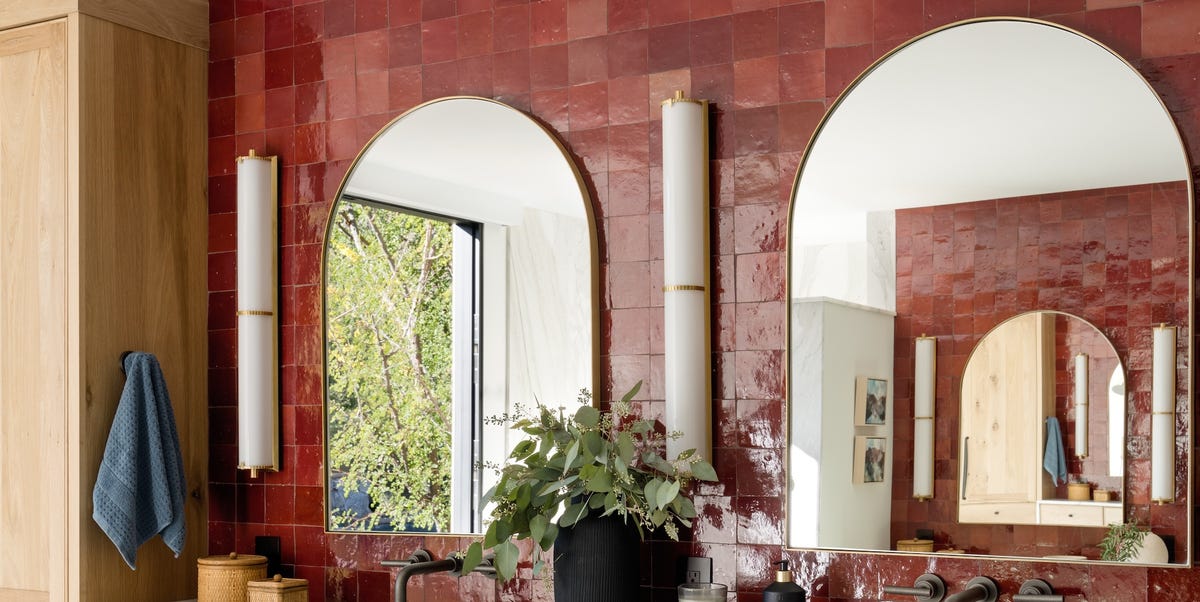
For a bolder design, try deep green, oxblood, navy, chocolate brown, charcoal, or burgundy. These colors work especially well in powder rooms and moody bathrooms where drama is welcome. A small room can handle a strong personality; in fact, it often benefits from one. A tiny powder room in a saturated tile is like a pocket-sized opera. Nobody asked for subtle, and that is the point.
Handmade-look tile is another major 2025 favorite. Slightly uneven edges, tonal variation, and glossy surfaces create movement. Zellige-inspired tile, square ceramic tile, and glazed clay-look options all bring a crafted feeling to tile drenching. The key is to let the irregularity be the charm. If every tile looks a little different, congratulationsyou have texture, not a problem.
Large-format porcelain tile is the sleek option. It reduces grout lines and makes a space feel more expansive. It is excellent for modern bathrooms, wet rooms, and minimalist designs. Marble-look and limestone-look large-format tiles are especially popular because they offer the drama of stone with easier maintenance.
Mosaics still have a place, but they should be used thoughtfully. Small mosaics can become visually busy if they cover every wall and floor. They are best used on shower floors for slip resistance, in niches, or as a controlled accent within a larger drenched scheme.
How to Make Tile Drenching Look Expensive
The most luxurious tile-drenched rooms share one trait: restraint. That may sound funny for a trend that involves covering everything in tile, but restraint is what separates “high-end spa” from “sample board exploded.”
Start with a tight color palette. You can use one tile everywhere or combine two to three related tiles. For example, pair a warm ivory wall tile with a slightly darker beige floor tile and a small mosaic in the same family for the shower floor. This creates depth without visual chaos.
Pay attention to grout. Grout color can make or break tile drenching. Matching grout creates a seamless effect, while contrasting grout emphasizes pattern. Neither is wrong, but the choice should be deliberate. If you want calm, choose grout close to the tile color. If you want graphic impact, contrast can be beautifuljust remember that every grout line becomes part of the design.
Use lighting generously. Tile reflects light differently than paint, and a room covered in tile can feel cold if the lighting is harsh. Layered lighting makes the difference. Consider wall sconces, backlit mirrors, LED strips under floating vanities, warm ceiling lights, or accent lighting that grazes textured tile. Good lighting turns tile drenching from “nice renovation” into “please excuse me while I take 19 photos of this sink.”
Balance hard surfaces with softer materials. Add wood vanities, linen shower curtains, woven baskets, warm metals, or plush towels. Tile may be the star, but the supporting cast matters. Without warmth, a tile-drenched room can feel echoey. With the right textures, it feels serene and layered.
Common Tile Drenching Mistakes to Avoid
The first mistake is choosing a tile that is too trendy for your tolerance level. If you love cobalt blue, wonderful. If you only like cobalt blue because you saw it in a dramatic bathroom online at 1:13 a.m., pause. Tile lasts longer than a mood board. Choose a color and material you can imagine living with after the trend cycle moves on.
The second mistake is ignoring slip resistance. Floors, especially shower floors and wet-room areas, need appropriate finishes. Polished tile may look glamorous, but it can become slippery when wet. Matte, honed, textured, or slip-rated surfaces are better for floors. Save the high-gloss drama for walls unless a professional confirms it is suitable underfoot.
The third mistake is poor planning around edges, corners, and transitions. Tile drenching puts every line on display. Niches, drains, thresholds, window returns, and ceiling edges need careful layout. A good installer is not optional; they are the person standing between you and a daily view of one awkward sliver tile that haunts your breakfast.
The fourth mistake is forgetting maintenance. Natural stone can be stunning, but some stones need sealing and special cleaning. Porcelain is generally easier to maintain. Glossy tile may show water spots. Dark grout can fade. Light grout can stain. None of these are deal-breakers, but they should influence your decision before installation, not after the first splashy hand-washing incident.
Budget-Friendly Ways to Try Tile Drenching
Tile drenching can be expensive because it uses more material and labor than a standard tile application. However, there are ways to get the look without tiling every square inch of your home like a glamorous swimming pool.
One option is to drench only the shower enclosure. Use the same tile on the shower walls, ceiling, niche, and curb, then coordinate the bathroom floor with a simpler tile. This delivers the immersive effect in the wettest zone while controlling cost.
Another option is a powder room. Because powder rooms are small and do not require the same waterproofing complexity as full wet rooms, they are excellent places to use bolder tile. A floor-to-ceiling tile treatment behind the sink can create a huge visual impact with less square footage.
You can also tile one architectural zone. In a kitchen, run backsplash tile from countertop to ceiling and around the range hood. In a laundry room, tile the floor and continue tile halfway up the wall with a matching or complementary paint above. In an entry, use durable floor tile and repeat it on a bench wall or niche.
Finally, choose smart materials. Porcelain tile can mimic stone beautifully at a lower maintenance level. Ceramic tile can offer handmade charm without the price of imported artisan tile. Larger tiles may reduce grout work, though installation still requires precision. The best budget choice is not always the cheapest tile; it is the tile that gives you the look, durability, and installation efficiency you need.
Color Ideas for a 2025 Tile-Drenched Room
Warm stone neutrals: Beige, sand, limestone, taupe, and greige are perfect for spa-like bathrooms. They feel timeless and soft, especially with brushed brass or warm nickel fixtures.
Earthy greens: Sage, olive, moss, and deep forest green connect tile drenching with biophilic design. Green tile works beautifully with wood, cream, clay, and aged brass.
Moody blues: Navy, slate blue, and blue-gray create a calm, water-inspired atmosphere. These colors are strong enough to feel designed but familiar enough to remain livable.
Terracotta and clay: Warm reddish-brown and baked-earth tones bring Mediterranean charm. They are especially appealing in kitchens, mudrooms, and rustic-modern bathrooms.
Chocolate and burgundy: Dark, rich colors are rising in interiors because they create depth and coziness. In tile drenching, they can make a small powder room feel incredibly chic.
Is Tile Drenching Timeless or Just Trendy?
The phrase “tile drenching” is trendy, but the idea is not entirely new. Historic baths, hammams, Mediterranean homes, Art Deco bathrooms, and tiled wet rooms have used enveloping tile for generations. What feels new in 2025 is the broader adoption of the look in residential interiors, along with modern materials and bolder styling.
Whether it becomes timeless depends on execution. A neutral limestone-look bathroom with thoughtful lighting and quality installation will likely age well. A neon checkerboard ceiling with seven grout colors may be harder to explain to future buyers, though it will certainly have confidence. As with most trends, longevity comes from choosing materials that suit the architecture, the homeowner’s taste, and the room’s function.
Tile drenching is strongest when it solves both a design problem and a practical problem. In a small bathroom, it can reduce visual breaks and make the space feel larger. In a wet room, it can support waterproofing and durability. In a mudroom, it can handle mess while looking polished. When a trend works hard and looks good, it has a better chance of surviving beyond its hashtag moment.
Real-Life Experience: What Tile Drenching Feels Like in a Home
Living with a tile-drenched space is different from simply admiring one online. Photos capture the drama, but daily use reveals the details. The first thing most people notice is how calm the room feels when the tile is chosen well. In a bathroom where the same warm stone-look tile moves from floor to wall and into the shower, there is no visual stutter. The room feels larger because the eye is not constantly stopping at material changes. It is the design equivalent of lowering the volume on background noise.
That continuity is especially helpful in small bathrooms. A compact bath with separate flooring, painted walls, a different shower tile, a busy niche, and a high-contrast border can feel chopped into little pieces. Replace that with one main tile and a quiet grout color, and suddenly the room seems more spacious. The square footage did not change, but the visual math improved. It is like the room finally learned how to stand up straight.
The second experience is tactile. Tile drenching makes texture more noticeable. A handmade-look glazed tile catches morning light in tiny variations. A matte porcelain tile feels soft and grounded. A ribbed or fluted tile adds shadow. These details matter because a tile-drenched room relies less on decoration. You may not need much art, shelving, or extra accessories because the surfaces already provide interest.
There is also a maintenance reality. Tile is durable, but grout needs attention. A tile-drenched shower or wet room should be cleaned regularly to prevent soap buildup and mineral spots. Larger tiles can make this easier because there are fewer grout lines. Matching grout can hide normal wear better than bright white grout in high-use spaces. Good ventilation is essential, too. A beautiful tiled bathroom still needs an exhaust fan that does its job. Design glamour and practical airflow should be friends.
Another lived-in lesson is that lighting changes everything. A tile that looked perfect in a showroom may appear cooler or darker at home. Before committing, it helps to test samples in the actual room at different times of day. Morning light, evening light, and artificial light can completely change the mood. Warm bulbs can soften gray tile. Cool lighting can make beige tile look flat. In a tile-drenched room, the tile is everywhere, so the lighting relationship is not a tiny detail; it is the whole dinner party.
Budget is another practical experience. Tile drenching can grow quickly from “fun design idea” to “serious renovation decision.” More tile means more material, more labor, more setting products, more cuts, and more waterproofing consideration. It is worth getting a detailed quote before falling emotionally attached to a tile that costs more per square foot than your favorite shoes. That said, the finished result can feel far more custom than a standard renovation, especially if the layout is clean and the tile choice has depth.
For homeowners who are nervous, the best entry point is usually a powder room, shower, or backsplash wall. These areas allow experimentation without committing an entire primary bathroom to a bold look. A powder room in glossy green tile can feel exciting and memorable. A shower wrapped in large-format stone-look tile can feel calming and luxurious. A kitchen wall tiled to the ceiling can make basic cabinetry look more intentional.
The most satisfying tile-drenched spaces usually have one clear idea. Maybe the idea is “warm spa,” “deep green jewel box,” “modern limestone retreat,” or “handmade coastal blue.” Once that idea is clear, every decision becomes easier: tile size, finish, grout, fixtures, lighting, mirror shape, and accessories. Without that guiding idea, tile drenching can become expensive confusion. With it, the room feels confident.
In everyday use, tile drenching is not just a trend you see; it is a trend you feel. It feels quieter, cleaner, more intentional, and more architectural. It turns ordinary utility rooms into designed spaces and gives bathrooms the kind of atmosphere usually reserved for boutique hotels and luxury spas. The best part is that the trend can be adapted. It can be soft and neutral, colorful and bold, rustic and handmade, or sleek and modern. Tile drenching may be one of the biggest design trends of 2025, but when done thoughtfully, it does not feel like a gimmick. It feels like the room finally got dressed properly.
Conclusion
Tile drenching is having a major moment in 2025 because it combines beauty, durability, and emotional impact. It makes small rooms feel more cohesive, turns bathrooms into spa-inspired retreats, and gives hardworking spaces like kitchens, mudrooms, and laundry rooms a polished finish. The look can be bold or quiet, colorful or neutral, glossy or matte, modern or handmade. That flexibility is exactly why designers and homeowners are embracing it.
The secret is planning. Choose tile you truly love, respect the room’s function, think carefully about grout and lighting, and work with skilled installers when waterproofing or full-height applications are involved. Tile drenching is not the cheapest trend, but it is one of the rare design ideas that can look dramatic while also being genuinely practical. And in 2025, that combination is hard to beat.