Note: This article synthesizes practical guidance from reputable U.S. home organizing, home improvement, lifestyle, and storage experts, rewritten in original language for web publication.
A small closet has a special talent: it can turn three shirts, one scarf, and a lonely tote bag into what looks like a textile avalanche. You open the door with optimism, and suddenly a sweater you forgot you owned attempts a dramatic escape. The good news? You do not need a mansion-sized walk-in closet, a celebrity organizer, or a budget that requires emotional recovery. With smart DIY small closet ideas, a few affordable tools, and a ruthless but loving edit, even the tiniest closet can become a calm, functional, surprisingly stylish storage zone.
The secret is not simply buying more bins. In fact, buying organizers before editing your closet is like buying a parking garage before checking whether half the cars still run. The real strategy is to use every inch intentionally: vertical space, door space, floor space, shelf space, and even the odd awkward corner that currently holds one mysterious reusable bag. Below, you will find practical, budget-friendly, and renter-friendly closet organization ideas that help maximize space without making your closet feel like a storage unit wearing lipstick.
Start With a Closet Audit Before You Organize Anything
Before installing shelves, baskets, rods, or hooks, empty the closet completely. Yes, completely. This step feels chaotic for about 20 minutes, but it gives you a clear view of what you own and how much space you actually have. Lay everything on the bed or floor and sort items into four categories: keep, donate, repair, and relocate. If you have not worn something in a year, it does not fit, it is uncomfortable, or it belongs to a version of you who apparently attended many imaginary garden parties, consider letting it go.
A small closet cannot afford freeloaders. Every item should earn its place by being useful, loved, seasonal, or genuinely needed. This is where the “one in, one out” rule helps. When a new coat, pair of shoes, or handbag comes in, one similar item leaves. It sounds strict, but it prevents the closet from slowly becoming a museum of past shopping decisions.
Measure First, Buy Second
One of the most common DIY closet mistakes is guessing measurements. Small closets punish guessing. Measure the closet width, depth, height, door clearance, shelf height, hanging rod distance, and any awkward obstructions such as outlets, vents, trim, or slanted ceilings. Write these numbers down before buying anything.
Measure the items you store, too. Long dresses need different hanging space than folded jeans. Boots need more height than sandals. Bins must fit the shelf depth, not just look cute online. A tape measure is the least glamorous closet tool, but it is also the one that saves you from buying a beautiful basket that sticks out like a drawer with commitment issues.
Use Vertical Space Like You Mean It
Most small closets waste valuable space above the hanging rod and below the clothes. The quickest way to maximize closet space is to think from floor to ceiling. Add an upper shelf for seasonal items, extra bedding, travel bags, or keepsake boxes. Use stackable bins or lidded storage boxes so the top section remains tidy instead of turning into a fabric landslide.
If your closet has a single rod with empty space underneath, add a second lower rod. This works especially well for shirts, folded pants on hangers, skirts, kids’ clothes, and shorter jackets. A double-hang system can nearly double usable hanging space without expanding the closet by even an inch. For renters, a tension rod or removable hanging rod can create a similar effect without drilling into the walls.
Switch to Slim Matching Hangers
Bulky plastic and mismatched hangers are sneaky space thieves. Slim velvet or thin nonslip hangers instantly create more room on the rod and give the closet a cleaner, more uniform look. Matching hangers also make it easier to see clothing instead of staring at a jungle of shapes, colors, and wire hangers from dry-cleaning adventures long forgotten.
For small closets, avoid keeping empty hangers on the rod. Store extras in a small basket or remove them entirely. If you use cascading hangers or multi-tier hangers, reserve them for categories like camisoles, scarves, belts, trousers, or work pants. They are useful, but if you overload them, your closet becomes less “organized boutique” and more “vertical laundry cliff.”
Add Shelves Where Dead Space Exists
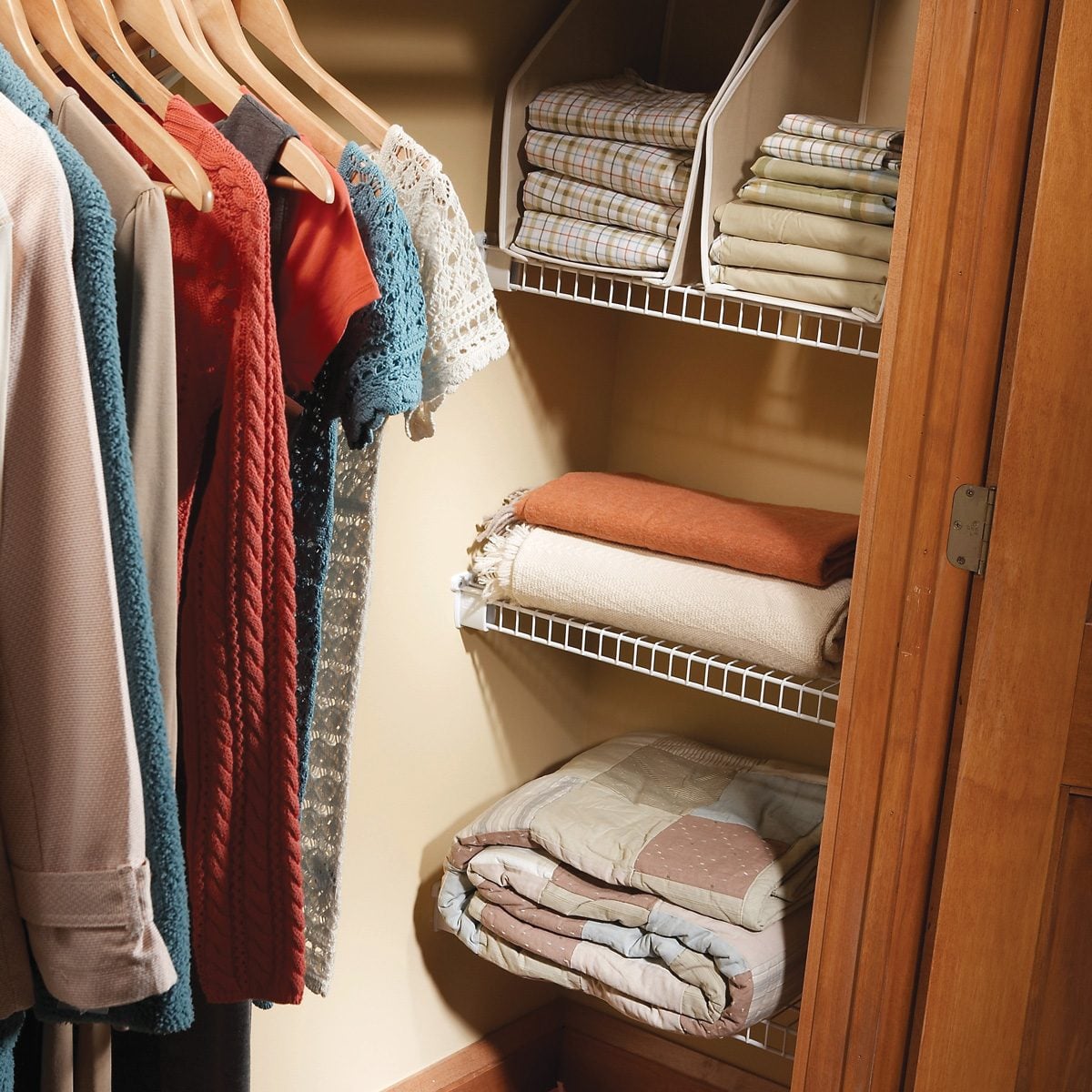
Shelves are the backbone of many DIY small closet ideas. If your closet has one high shelf and a rod, you can add side shelves, floating shelves, cube shelves, or a narrow bookcase-style unit. Shelves work beautifully for sweaters, jeans, handbags, hats, folded workout clothes, and storage baskets.
For a budget-friendly solution, install simple wood shelves with brackets. Paint or stain them to match the closet walls for a built-in look. If drilling is not an option, use a freestanding shelving unit that fits inside the closet. Choose adjustable shelves whenever possible, because your closet needs may change with the seasons, your wardrobe, or your sudden decision to own five cardigans in the exact same shade of oatmeal.
Use Shelf Dividers to Stop the Leaning Tower of Sweaters
Folded stacks can look wonderful for approximately six minutes. Then one sweater gets pulled from the middle, and the whole pile collapses like it lost faith in gravity. Shelf dividers solve this problem by separating stacks of sweaters, jeans, towels, purses, or linens. Clear acrylic dividers look clean and modern, while wire dividers are affordable and practical.
Keep each stack short enough to manage. If a pile is taller than your forearm, it is probably too tall to stay neat. File-folding items in bins or drawers can also help because it lets you see everything at once instead of digging from the top.
Turn the Closet Door Into Storage
The back of the closet door is prime real estate. Use an over-the-door organizer for shoes, scarves, gloves, belts, hair tools, small purses, cleaning supplies, or accessories. Clear pockets work well because you can see what is inside, while fabric pockets look softer and more decorative.
You can also mount hooks, peg rails, corkboard, or a slim rack to the inside of the door. Hooks are perfect for tomorrow’s outfit, a robe, hats, tote bags, or jewelry. Just avoid overloading the door so it still closes properly. A closet door that refuses to shut is not a design feature; it is a cry for help.
Choose Bins and Baskets With a Purpose
Baskets are not magic. They only work when each one has a clear job. Use labeled bins for categories such as winter accessories, workout clothes, swimsuits, handbags, travel items, extra toiletries, or off-season clothing. Matching containers create visual calm, which matters in a small closet because clutter looks louder in tight spaces.
Clear bins are excellent when visibility is the priority. Woven baskets look warmer and hide visual clutter. Fabric bins are lightweight and affordable. For deep shelves, choose bins with handles so you can pull the whole container forward instead of performing closet archaeology with one arm fully extended.
Create Zones for Daily Use, Occasional Use, and Seasonal Storage
A well-organized closet works because the most-used items are easiest to reach. Put everyday clothes, shoes, and accessories at eye level or waist height. Store occasional items higher or lower. Place seasonal pieces, formalwear, and backup items on the top shelf or in under-bed storage if your closet is extremely tight.
This zoning system saves time and prevents mess. If your favorite jeans are buried behind beach towels, holiday pajamas, and a tote bag full of cords, you will eventually stop putting things away neatly. The closet should match your real routine, not an idealized version of your life where you calmly fold scarves at sunrise.
Move Shoes Outor Organize Them Better
Shoes can devour a small closet. If you own many pairs, consider storing less-used shoes elsewhere: under the bed, in an entryway cabinet, on a bedroom shoe rack, or in clear drop-front boxes. Keep only your most-worn pairs in the closet.
If shoes must stay inside, use a slim shoe rack, stackable shoe shelves, over-the-door shoe pockets, or angled shelves. Store sandals heel-to-toe to save room. Boots can stand upright with boot shapers, rolled magazines, or pool noodles cut to size. The goal is simple: shoes should not be in a heap that requires a search party every Monday morning.
Install Hooks for Accessories and Quick-Grabs
Hooks are small closet heroes. They are cheap, easy to install, and useful in odd spaces where shelves do not fit. Add hooks to side walls, the back wall, the inside of the door, or beneath shelves. Use them for belts, necklaces, hats, bags, scarves, umbrellas, robes, and outfit planning.
Adhesive hooks work well for renters, but check weight limits before trusting them with a heavy bag. Screw-in hooks are sturdier for long-term storage. A row of hooks can also turn a blank wall into an accessory station, keeping small items visible and preventing them from vanishing into a drawer of doom.
Add Drawers Without Building Drawers
Closet drawers are wonderful, but custom built-ins can be expensive. The DIY shortcut is to use stackable drawer units, fabric drawers, clear plastic drawers, or cube organizers. These are great for socks, underwear, workout gear, pajamas, T-shirts, accessories, and folded basics.
Small drawers work better than giant ones because categories stay separated. Add labels so each drawer has a clear purpose. If you share a closet, give each person their own drawer or bin. Few household arguments are as unnecessary as “Why are your gym socks in my scarf basket?”
Use Vacuum Bags Carefully for Bulky Seasonal Items
Vacuum storage bags can be helpful for bulky coats, comforters, sweaters, and seasonal linens. They compress soft items so they take up less room on high shelves or under the bed. However, they are best for items you do not need often. No one wants to vacuum-seal and unseal a puffer jacket every time the weather changes its mind.
Do not overuse vacuum bags for delicate fabrics, structured garments, leather, or items that need to breathe. For everyday sweaters and coats, breathable garment bags or lidded bins may be better. Think of vacuum bags as seasonal storage, not daily closet management.
Light the Closet So You Can Actually See Things
A dark closet makes clutter worse because you cannot maintain what you cannot see. Add battery-operated LED lights, motion-sensor strip lighting, puck lights, or a plug-in light if an outlet is available. Better lighting makes clothing colors easier to identify and helps prevent accidental fashion surprises, such as pairing navy with black and pretending it was intentional.
Stick-on LED lights are renter-friendly and inexpensive. Place them under shelves or along the inside top of the closet. If your closet is deep, add light to the sides as well. A bright closet feels larger, cleaner, and easier to use.
Try a DIY Closet System or Modular Kit
If your closet has poor layout, a DIY closet system may be worth the investment. Wire systems, wood kits, adjustable track systems, and modular closet organizers can transform a basic reach-in closet into a customized storage wall. Many kits include rods, shelves, drawers, shoe storage, and adjustable components.
Before buying a system, make a list of what you need to store. Do you hang more than you fold? Do you need shoe storage? Are bags your biggest issue? Do you share the closet? Choose a design based on your belongings, not just the prettiest product photo. A closet system should solve your real problems, not create a showroom for items you do not own.
Make the Floor Work Harder
The closet floor often becomes a messy catchall, but it can provide excellent storage when used intentionally. Add a low shoe rack, rolling bin, lidded basket, or small drawer unit. If you store laundry hampers in the closet, choose a narrow hamper that fits the space and still allows the door to close.
Avoid filling the entire floor. Leave enough open space to pull items out easily. When the floor is packed wall to wall, the closet becomes harder to clean and harder to maintain. A small amount of breathing room makes the whole closet feel more generous.
Use the Walls Inside the Closet
Side walls are often ignored, especially in reach-in closets. Add narrow shelves, hooks, a pegboard, a belt rack, or a jewelry organizer. Pegboards are especially useful because they can be rearranged as your needs change. They work for accessories, craft supplies, hats, small bags, or even cleaning tools in a utility closet.
For a polished look, paint the pegboard the same color as the closet wall or choose a contrasting color for a mini design moment. Small closets deserve a little personality, too. They work hard; let them have a glow-up.
Fold Smarter, Not Harder
Folding style matters in a small closet. File-fold T-shirts, leggings, workout clothes, and pajamas in drawers or bins so each item stands vertically. This makes everything visible at once. For shelves, use neat stacks by category and keep heavier items at the bottom.
Hang items that wrinkle easily or are used often. Fold bulky sweaters, jeans, and casual wear. Overhanging bulky items can crowd the rod, while folded storage can free up hanging space for pieces that truly need it. The best closet setup usually uses a mix of hanging, folding, shelving, and bins.
Label Everything That Is Not Obvious
Labels are not just for people who own label makers and say things like “systems” at brunch. They make closets easier to maintain. Label bins, baskets, drawers, seasonal boxes, and high-shelf storage. Labels are especially helpful for shared closets, kids’ closets, linen closets, and entryway closets.
Use simple labels such as “winter hats,” “workout tops,” “travel,” “extra bedding,” or “donate.” The goal is not perfection; it is reducing decision fatigue. When every item has a home, cleanup becomes faster and less annoying.
Keep a Donation Bag in or Near the Closet
One of the easiest long-term closet organization ideas is to keep a donation bag nearby. When you try on something and immediately think, “Nope,” place it in the bag. When the bag is full, donate it. This prevents unwanted items from returning to the rod out of guilt, habit, or the belief that you might one day become a person who wears uncomfortable pants recreationally.
This method keeps clutter from rebuilding after your big closet makeover. Small closets need ongoing maintenance, but it does not have to be dramatic. A few tiny decisions each week are easier than a full closet intervention every six months.
DIY Small Closet Ideas by Closet Type
Small Bedroom Closet
Use slim hangers, a second rod, shelf dividers, and stackable drawers. Keep daily clothing at eye level and move off-season clothes to top shelves or under-bed bins. Add hooks for bags and tomorrow’s outfit.
Small Entryway Closet
Install over-the-door storage for gloves, hats, umbrellas, and pet leashes. Use baskets for each family member and a low shoe rack for everyday footwear. Limit coats to the current season so the closet does not become a padded winter cave.
Small Linen Closet
Roll towels, use shelf dividers, label bins, and store guest supplies in clear containers. Keep frequently used linens at the front and seasonal blankets on higher shelves. Store sheet sets inside one matching pillowcase to keep them together.
Small Kids’ Closet
Install a lower rod so children can reach their own clothes. Use labeled picture bins for toys, shoes, uniforms, and accessories. Choose flexible systems because kids’ storage needs change quickly, usually right after you finally organize everything.
Budget-Friendly DIY Upgrades That Make a Big Difference
You do not need to remodel the closet to improve it. Paint the interior a light color to make it feel brighter. Add peel-and-stick wallpaper to the back wall for style. Replace a sagging rod. Install a small mirror on the door. Add matching baskets. Use tension rods for scarves or heels. Repurpose office organizers for clutches, wallets, or small accessories.
Another simple upgrade is to create a “closet landing zone.” Place a small tray, hook, or basket for items you use every day, such as watches, sunglasses, keys, or lint rollers. When small items have a designated place, they stop spreading across shelves like confetti after a very boring parade.
Maintenance: The 10-Minute Weekly Closet Reset
The best closet organization system is one you can maintain. Set aside 10 minutes once a week to rehang clothes, refold stacks, return shoes, empty pockets, and remove items that do not belong. This small habit keeps your closet from slipping back into chaos.
Once each season, do a deeper review. Rotate clothes, clean shelves, check donation items, and adjust storage zones. A closet is not a one-time project; it is a tiny room with a job. When your wardrobe changes, your system should change with it.
Personal Experience: What Actually Works in a Tiny Closet
After organizing several small closets, the biggest lesson is that the first solution is almost never the fanciest one. The biggest transformation usually comes from editing. In one small bedroom closet, the owner thought the problem was a lack of shelves. After everything came out, nearly one-third of the clothes were items that no longer fit, had not been worn in years, or belonged in another area of the home. Once those pieces were removed, the closet suddenly looked less like a disaster zone and more like a space with potential. No power tools requiredjust honesty, bags for donations, and a little emotional support from coffee.
The second lesson is that matching hangers make a surprisingly big difference. They do not just save space; they reduce visual clutter. A small closet can feel crowded even when it is technically organized because mismatched hangers, random bags, and colorful bins compete for attention. Switching to slim hangers, grouping clothes by type, and lining items in the same direction made the closet easier to scan in the morning. It felt calmer, which is not a word most people use for a closet unless they are trying to sell you a luxury organizing package.
The third lesson is that bins only work when they are not too big. Large bins seem efficient, but they often become black holes. Smaller labeled bins are better for accessories, seasonal items, and folded clothing because they force categories to stay specific. A bin labeled “winter” is vague. A bin labeled “gloves and hats” is useful. A bin labeled “things I might need someday” is basically a junk drawer with handles.
Another practical discovery: the back of the door is underrated. In a small coat closet, adding an over-the-door rack created space for umbrellas, dog leashes, gloves, and reusable bags. Before that, these items lived on the floor in a pile that somehow looked both accidental and permanent. Once the door storage was added, the floor became usable for shoes, and the closet stopped attacking people when opened.
Lighting also matters more than expected. One closet had decent storage but felt messy because it was dark. A battery-powered motion light changed everything. Suddenly, navy and black clothes were easier to tell apart, shelves looked cleaner, and the owner stopped buying duplicate items because she could finally see what she already had. Visibility is organization’s less glamorous cousin, but it does a lot of the heavy lifting.
The final lesson is to design for real habits. If someone always drops bags on the closet floor, add a hook at shoulder height. If shoes never make it onto high shelves, use a low rack instead. If folded stacks constantly fall, switch to bins or drawers. A good DIY small closet design should not require a personality transplant. It should make the easiest choice the neatest choice. That is how a tiny closet becomes functional long after the organizing day is over.
Conclusion
Maximizing a small closet is not about cramming in more stuff. It is about making better decisions with the space you already have. Start by decluttering, then measure carefully, use vertical space, add flexible storage, improve lighting, and create zones based on your daily routine. Simple DIY upgrades like slim hangers, door organizers, shelf dividers, hooks, bins, and a second rod can completely change how your closet functions.
A small closet may never become a celebrity dressing room with a chandelier and a velvet chair no one sits in. But it can become neat, efficient, attractive, and easy to maintain. And honestly, a closet that opens without causing mild panic is already living its best life.