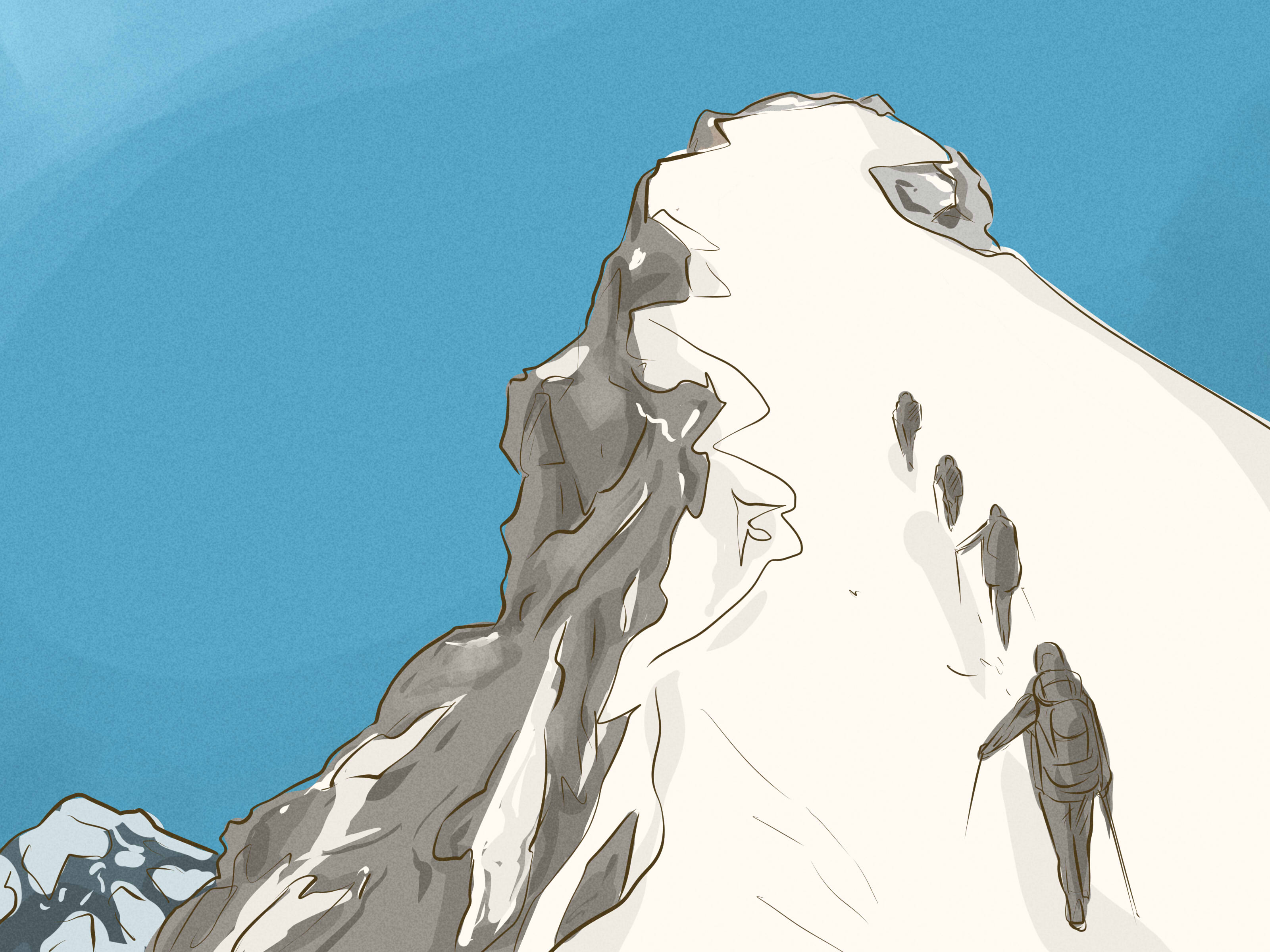
Note: This article is for informational and editorial purposes only. Mount Everest is not a beginner adventure, a weekend goal, or a “how hard can it be?” social media challenge. Any real attempt requires years of mountaineering experience, medical clearance, professional expedition support, official permits, and the maturity to turn around when the mountain says no.
Introduction: Everest Is Not a Mountain You “Just Try”
Mount Everest has a way of making people say wildly confident things from the comfort of sea level. “I’m pretty fit.” “I hike on weekends.” “I once carried three grocery bags upstairs without stopping.” Admirable? Sure. Everest-ready? Not quite.
At 29,032 feet, or about 8,849 meters, Mount Everest is the highest point on Earth. It rises on the border between Nepal and Tibet, and for climbers approaching from Nepal, the standard route follows the famous South Col line through the Khumbu Icefall, Western Cwm, Lhotse Face, South Col, Balcony, South Summit, Hillary Step area, and finally the summit ridge. That sentence may sound like an itinerary. In real life, it is a long negotiation with altitude, weather, ice, patience, logistics, and your own lungs.
So, how do you climb Mount Everest? The honest answer is: slowly, expensively, humbly, and with a team that knows what it is doing. Everest is not the most technically difficult mountain in the world, but it is one of the most unforgiving. The challenge is not one single heroic push. It is years of preparation, weeks of acclimatization, careful risk management, and the ability to make boring decisions when your ego wants a movie trailer moment.
This guide explains the real process behind an Everest climb: the training, experience, permits, costs, expedition timeline, health risks, gear planning, route structure, and mindset required. Think of it as a practical roadmap with a built-in reality checkand a small comedy helmet, because if you cannot laugh at the absurdity of paying car-money to freeze on purpose, mountaineering may not be your sport.
Understand What Climbing Everest Actually Means
Climbing Mount Everest is not like hiking to a scenic viewpoint with a granola bar and optimism. It is a high-altitude expedition that usually takes six to nine weeks from arrival in Nepal to the final descent. The schedule includes travel to Kathmandu, gear checks, the trek to Everest Base Camp, acclimatization rotations, rest periods, summit preparation, a weather window, and the descent.
Most climbers do not climb continuously from bottom to top. They move up and down the mountain in stages to help their bodies adapt to altitude. A climber may sleep at Base Camp, climb higher to Camp I or Camp II, descend to recover, then repeat the process higher on the mountain. This “climb high, sleep lower” approach is one of the major reasons Everest expeditions take so long. Your body is not a smartphone; you cannot just switch it to “oxygen-saving mode” and carry on.
The most common commercial route from Nepal uses fixed ropes, ladders across crevasses, established camps, Sherpa support, and supplemental oxygen for most clients above the higher camps. Even with those systems in place, Everest remains dangerous. Weather can change quickly, oxygen systems can fail, crowds can slow movement, and altitude illness can affect strong, experienced people.
Step One: Build Years of Mountaineering Experience
The first step in climbing Everest is not buying a giant down suit that makes you look like a radioactive marshmallow. The first step is becoming a competent mountaineer.
Before Everest, climbers usually build experience on progressively harder mountains. Common preparation peaks include Mount Rainier, Denali, Aconcagua, Mont Blanc, Kilimanjaro, Island Peak, Lobuche East, Ama Dablam, Cho Oyu, or Manaslu. The exact path depends on your location, budget, guide access, and skill level, but the principle is the same: Everest should come after years of cold, altitude, glacier travel, expedition camping, and decision-making under stress.
Skills You Need Before Everest
A serious Everest candidate should already understand glacier travel, crampon use, fixed-rope movement, basic rope systems, cold-weather layering, self-care at altitude, and expedition pacing. Just as important, the climber should know how they personally respond to altitude, fatigue, appetite loss, fear, and bad weather. Everyone is brave in a gear store. The mountain reveals who can still function after three nights of poor sleep and a breakfast that tastes like cardboard with ambition.
Experience also protects other people. On Everest, your weakness is not yours alone. Sherpa guides, teammates, porters, rescue workers, and expedition staff may all become involved if something goes wrong. A climber who arrives unprepared is not just “following a dream.” They may be outsourcing danger to others.
Step Two: Train Like an Endurance Athlete, Not a Tourist
Everest training usually begins at least six months before departure, and many serious climbers prepare for a year or longer. The goal is not to become the biggest person in the gym. The goal is to move steadily for many hours, carry weight, recover well, and remain coordinated when tired.
A smart Mount Everest training plan includes long hikes with elevation gain, aerobic base training, strength work, stair climbing, loaded pack carries, mobility, balance, and recovery weeks. Legs matter, lungs matter, core strength matters, and mental patience matters more than most people expect. The mountain rewards steady engines, not dramatic engines that burst into flames halfway up the hill.
What Good Training Looks Like
Training should gradually increase in volume. Weekend hikes become longer. Pack weight increases carefully. Gym sessions focus on legs, hips, back, and core. Cardio work builds the ability to stay active for hours without redlining. Rest days are not laziness; they are where adaptation happens. Overtraining before Everest is like burning your passport at the airporttechnically dramatic, but not helpful.
Many climbers also train in cold weather and on snow to test gear systems. A jacket that feels cozy in your living room may become a sweaty plastic bag on a steep uphill section. Gloves that seem perfect in a store may be useless when you need dexterity. Everest preparation is partly physical conditioning and partly discovering which pieces of gear annoy you before they annoy you at 23,000 feet.
Step Three: Choose the Right Expedition Company
For most climbers, Everest is climbed with a commercial expedition operator. Choosing that operator is one of the most important decisions of the entire project. The cheapest team is not automatically unsafe, and the most expensive team is not automatically perfect, but price often reflects staffing, oxygen supply, guide ratios, logistics, emergency planning, food quality, communications, and weather support.
Look for companies with a long safety record, experienced guides, clear acclimatization plans, transparent oxygen policies, strong Sherpa support, realistic screening standards, medical protocols, and honest communication. If a company markets Everest as “easy,” “guaranteed,” or “perfect for first-timers,” treat that as a red flag large enough to be visible from Base Camp.
Questions to Ask an Everest Operator
Before signing up, ask how the company screens clients, how many bottles of oxygen are included, what the guide-to-client ratio is, how weather decisions are made, what happens during illness, and whether the team has a clear turnaround policy. Ask who fixes routes, who carries loads, how Sherpa staff are insured, and what environmental practices are followed. A reputable operator should answer directly, not with foggy poetry about “following your summit destiny.”
Step Four: Budget for the Real Cost
Climbing Everest is expensive. For 2026, Nepal’s Everest climbing permit has been reported at $15,000 per foreign climber for the main spring season. That permit is only one part of the cost. A full expedition can range from tens of thousands of dollars to well over $100,000 depending on the operator, service level, oxygen plan, guide ratio, travel arrangements, insurance, gear, training climbs, tips, and emergency coverage.
A realistic budget should include international flights, Nepal travel, hotels, expedition fee, permit costs, high-altitude gear, boots, down suit, sleeping bags, communications, insurance, evacuation coverage, medical checks, training trips, and tips for local staff. Many climbers spend years saving. Everest has a funny way of making your bank account experience altitude sickness before you do.
Step Five: Get Permits, Insurance, and Medical Clearance
You cannot simply arrive in Nepal, point at Everest, and say, “One summit, please.” Climbers need official permits, park access, liaison arrangements, and expedition paperwork. In practice, commercial operators usually handle much of this process, but the climber is still responsible for supplying documents, passport details, insurance proof, medical information, and payment on time.
High-altitude rescue and evacuation insurance is essential. Helicopter evacuation in the Himalayas can be extremely expensive, and not every policy covers climbing above certain elevations. Read the details carefully. “Adventure travel” coverage may sound impressive until the fine print says it covers kayaking in a calm lake and absolutely not coughing at 19,000 feet near a glacier.
Medical clearance matters, too. A doctor familiar with high-altitude travel can help assess heart, lung, blood pressure, medication, and previous altitude history. Fitness does not make anyone immune to altitude illness. Strong athletes can get acute mountain sickness, high-altitude pulmonary edema, or high-altitude cerebral edema. Everest does not check your marathon time before it steals your oxygen.
Step Six: Follow the Expedition Timeline
Most Nepal-side expeditions begin in Kathmandu with gear checks, briefings, and final logistics. Climbers then fly to Lukla and trek through the Khumbu region, passing villages such as Phakding, Namche Bazaar, Tengboche, Dingboche, and Lobuche before reaching Everest Base Camp.
The trek itself is not just transportation. It is part of acclimatization. Moving gradually through the Khumbu helps the body adjust before the real climbing begins. It also introduces climbers to Sherpa culture, Buddhist monasteries, yak traffic jams, suspension bridges, and the humbling truth that local porters may move uphill faster in sandals than you do in expensive boots.
Base Camp and Rotations
Everest Base Camp becomes home for several weeks. From there, climbers complete acclimatization rotations through the Khumbu Icefall and up to higher camps. The Khumbu Icefall is one of the most hazardous sections of the Nepal route because it is a moving glacier with crevasses, towers of ice, and changing conditions. Teams usually aim to move through it efficiently and at times judged safer by their guides.
Higher on the mountain, climbers spend time at Camp I, Camp II, Camp III, and eventually Camp IV at the South Col. The final summit push often begins at night from Camp IV, when weather, wind, oxygen logistics, route conditions, and team strength align. The summit is only halfway in the moral sense. The descent is where many accidents happen, because climbers are exhausted, oxygen is limited, and celebration can blur judgment.
Step Seven: Respect Altitude Like It Has a Law Degree
Altitude is the main invisible opponent on Everest. Above 8,000 meters, climbers enter what mountaineers call the “death zone,” where the body cannot properly recover and the lack of oxygen creates serious risk. Even below that elevation, altitude illness can derail an expedition.
Good acclimatization includes gradual ascent, rest days, hydration, careful pacing, and honest symptom reporting. Headache, nausea, dizziness, loss of coordination, unusual fatigue, confusion, or breathlessness at rest should never be brushed aside as “just part of the grind.” On Everest, pretending to be fine is not toughness. It is bad teamwork wearing sunglasses.
Turnaround Discipline
The most important summit skill may be the willingness to turn around. Weather windows close. Bottled oxygen runs low. A climber slows down. A teammate becomes ill. Conditions change. The summit will remain where it is; your fingers, toes, lungs, and brain deserve the same courtesy.
Many experienced climbers use strict turnaround times. If the team has not reached a certain point by a certain hour, they descend. This decision can feel heartbreaking in the moment, but the mountain does not give refunds for stubbornness. Getting down alive is not a consolation prize. It is the entire point.
Step Eight: Pack the Right Gearbut Do Not Worship It
Everest gear is specialized, expensive, and necessary. Climbers typically need high-altitude double or triple boots, crampons, harness, helmet, ascender, carabiners, down suit, expedition mitts, layered clothing, goggles, glacier glasses, sleeping bags, headlamps, personal medication, and high-altitude nutrition. Operators usually provide group equipment, tents, fixed-camp infrastructure, cooking systems, and oxygen logistics depending on the package.
But gear is not magic. The best down suit in the world cannot compensate for poor judgment. The warmest boots cannot make an unprepared climber fast. The fanciest sunglasses cannot help someone who ignores weather forecasts. Gear supports skill; it does not replace it.
Step Nine: Understand Crowding and Ethics
Modern Everest has a crowding problem. In 2026, the Nepal side saw record single-day summit numbers, with hundreds of climbers reaching the top during a narrow weather window. Crowding matters because delays at extreme altitude increase exposure to cold, wind, fatigue, and oxygen depletion.
Ethical climbing means thinking beyond personal achievement. It means respecting Sherpa workers, paying fair wages through reputable operators, minimizing waste, following human waste rules, avoiding unnecessary helicopter use, and not treating the mountain as a luxury amusement ride with frostbite.
Everest is also culturally significant. It is Sagarmatha in Nepal and Chomolungma in Tibet. For local communities, it is not merely a trophy for visitors. Responsible climbers learn about the region, respect local customs, support local businesses, and remember that their dream depends on other people’s home.
Step Ten: Summit Day Is Not the Whole Story
Summit photos dominate the internet, but summit day is only one piece of the expedition. The real story includes the months of training, the nervous gear checks, the slow walk through the Khumbu, the waiting at Base Camp, the cold mornings, the bad appetite, the coughing, the boredom, the small victories, and the quiet fear that visits even confident climbers.
A successful Everest climb is not simply standing on top. It is reaching the summit only if conditions allow, descending safely, treating teammates well, respecting staff, and leaving the mountain cleaner than you found it. The best climbers are not the loudest people at the pre-expedition dinner. They are the ones who stay useful when plans change.
Common Mistakes People Make When Planning Everest
Mistake 1: Thinking Fitness Equals Readiness
Fitness is required, but it is not enough. Everest demands altitude experience, technical competence, patience, cold tolerance, and expedition judgment. A gym record does not teach you how to move safely on a glacier at dawn.
Mistake 2: Choosing the Cheapest Expedition
Budget matters, but cutting costs on oxygen, guide support, logistics, or insurance can increase risk. If the price looks suspiciously low, ask what is missing. The answer may be comfort, support, safety margin, or all three.
Mistake 3: Ignoring the Descent
Many climbers focus emotionally on the summit. Experienced mountaineers focus equally on getting down. The descent requires energy, oxygen, coordination, and clear thinking. Save strength for it.
Mistake 4: Hiding Symptoms
Altitude symptoms are not embarrassing. Hiding them is dangerous. Good teams encourage honest communication because early decisions can prevent emergencies later.
Mistake 5: Treating Sherpa Support as Invisible
Everest expeditions rely heavily on Sherpa labor, route fixing, load carrying, camp work, and guidance. Responsible climbers acknowledge that support, choose ethical operators, and never confuse being helped with being self-made.
Personal-Style Experiences and Lessons Related to Climbing Everest
Anyone researching how to climb Mount Everest quickly discovers that the mountain is less about one dramatic act and more about thousands of small, disciplined choices. The most useful “experience” to imagine is not the summit selfie. It is a cold morning at Base Camp when your boots are stiff, your appetite is missing, your water bottle is half frozen, and your guide says the plan has changed again. Everest teaches flexibility before it teaches glory.
One of the most common lessons from high-altitude climbers is that patience feels harder than movement. At sea level, ambitious people like action. They want progress they can measure: miles walked, calories burned, emails sent, mountains conquered. On Everest, waiting can be the job. You may wait for your body to acclimatize, wait for the Icefall route to stabilize, wait for wind to drop, wait for a storm to pass, wait for a cough to improve, or wait for a summit window that may never arrive. This waiting is not wasted time. It is part of survival.
Another experience climbers often describe is the strange shrinking of priorities. At home, life may revolve around deadlines, bills, messages, and the mysterious disappearance of phone chargers. On Everest, priorities become beautifully basic: breathe, drink, eat, stay warm, move carefully, listen to the guide, help your teammate, sleep if possible. The mountain edits life with a very cold pencil.
There is also the emotional experience of dependency. Many people arrive at Everest wanting to prove independence. Then they realize the climb depends on a huge network: Sherpa guides, cooks, porters, weather forecasters, rope-fixing teams, base camp doctors, helicopter pilots, family members back home, and teammates who notice when someone is not acting normally. Everest may look like an individual achievement from the outside, but from the inside it is a community project with crampons.
A practical lesson from Everest-style expeditions is that comfort is not weakness. Dry socks, warm gloves, steady eating, and good sleep habits are not luxuries. They are performance tools. A climber who manages small discomforts early may prevent bigger problems later. Something as simple as dealing with a hot spot before it becomes a blister can protect an entire rotation. Something as basic as drinking enough can affect energy, mood, and decision-making.
Another important experience is learning to detach identity from the summit. This may be the hardest lesson. People invest money, time, pride, and public announcements into Everest. Friends know. Family knows. Social media knows. The algorithm may already be warming up. But the mountain does not care how many people liked your training post. If conditions are wrong, turning around is wisdom, not failure. Many of the most respected climbers are respected precisely because they know when not to climb.
The best Everest mindset is serious but not grandiose. You can dream big without becoming careless. You can train hard without believing you are invincible. You can want the summit while still accepting that the summit is optional and coming home is mandatory. That balance is the real art of climbing Mount Everest.
Conclusion: The Real Way to Climb Everest
Learning how to climb Mount Everest begins with understanding that Everest is not conquered in a single season. It is built through years of preparation, smaller mountains, honest self-assessment, smart training, ethical planning, and respect for altitude. The mountain is high, cold, crowded, expensive, and dangerousbut it is also one of the most powerful tests of patience and humility on Earth.
If Everest is your long-term dream, begin far from Everest. Learn basic mountaineering. Climb smaller peaks. Build endurance. Hire qualified instructors. Practice cold-weather systems. Study altitude illness. Save responsibly. Choose operators carefully. Listen more than you talk. And when the time finally comes, remember this: the summit is meaningful only if you return safely with your judgment, gratitude, and sense of humor intact.
Because on Everest, the mountain always gets the final voteand it does not accept campaign donations.