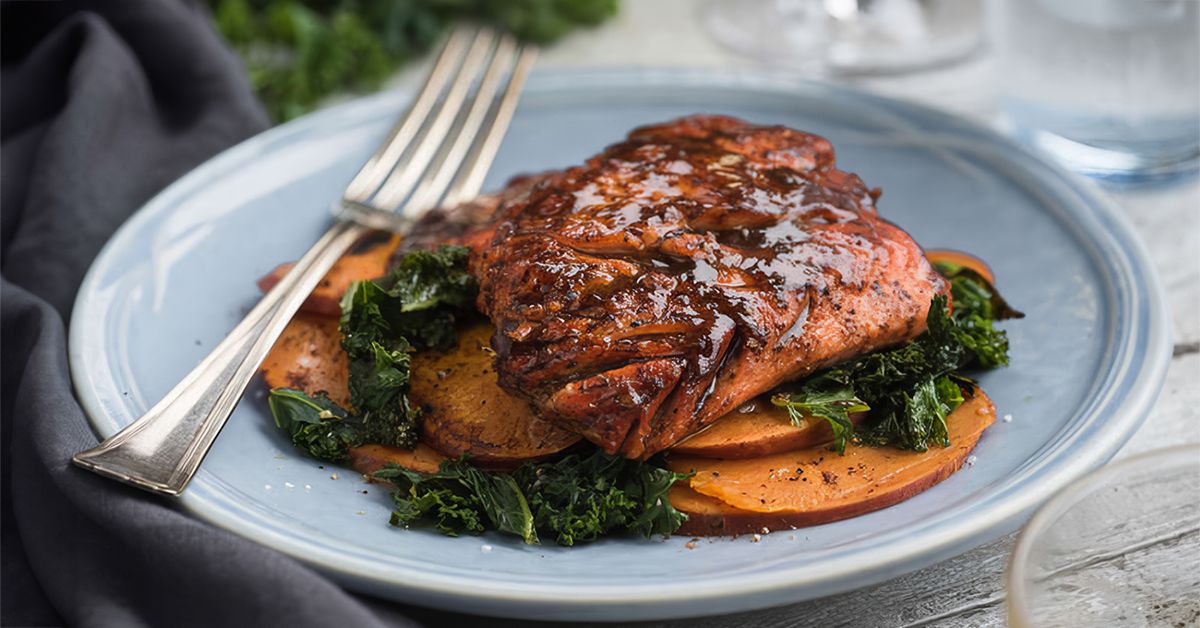
Some dinners politely sit on the plate. Others arrive like they booked a tiny tropical vacation and invited your appetite. Coconut Sweet Potatoes with Creamy Kale and Salmon belongs to the second group. It is warm, colorful, rich without being heavy, and balanced enough to feel like the kind of meal your future self will thank you for eating.
This dish brings together roasted sweet potatoes, silky coconut milk, tender kale, and flaky salmon in one satisfying bowl. The sweet potatoes provide natural sweetness and a soft, caramelized bite. The coconut milk turns the kale creamy without needing a full dairy parade. The salmon adds protein, healthy fats, and that restaurant-style “wow, I made this?” moment. Best of all, the recipe feels fancy but behaves like a weeknight dinner. No culinary degree required. A spatula and a little confidence will do.
In this guide, we will explore what makes coconut sweet potatoes, creamy kale, and salmon work so well together, how to cook each part correctly, how to adjust the recipe for your taste, and how to serve it like you planned the whole thing days ago instead of deciding at 6:12 p.m. that dinner should probably exist.
Why Coconut Sweet Potatoes with Creamy Kale and Salmon Works So Well
The beauty of this meal is contrast. Sweet potatoes are earthy and naturally sweet. Kale is slightly bitter and sturdy. Coconut milk is creamy, mellow, and lightly nutty. Salmon is rich, savory, and delicate. When they meet, the flavors do not argue. They form a dinner committee and make very good decisions.
The dish also has a smart nutritional structure. Sweet potatoes bring complex carbohydrates, fiber, and beta-carotene. Kale contributes leafy-green nutrients, including vitamins A, C, and K, plus minerals and plant compounds. Salmon is known for high-quality protein and omega-3 fats, especially EPA and DHA. Coconut milk adds body and richness, though it should be used thoughtfully because it contains saturated fat. In other words, this meal has comfort food energy with a meal-prep résumé.
The Flavor Formula
Think of this recipe as a four-part flavor formula:
- Sweet: roasted sweet potatoes with browned edges
- Creamy: coconut milk simmered with garlic, onion, and spices
- Green: kale softened until tender but not sad
- Savory: salmon cooked until flaky and juicy
Add lemon or lime at the end and the whole dish wakes up. Citrus is the friend who opens the curtains and says, “We are not becoming leftovers yet.”
Ingredients You Need
This recipe serves four people generously. It can also serve two people with excellent leftovers, which is a very respectable life choice.
For the Coconut Sweet Potatoes
- 3 medium sweet potatoes, peeled or scrubbed and cut into cubes
- 1 tablespoon olive oil or avocado oil
- 1/2 teaspoon kosher salt
- 1/2 teaspoon smoked paprika
- 1/4 teaspoon black pepper
- 1/2 cup light coconut milk
- 1 teaspoon lime juice
For the Creamy Kale
- 1 large bunch kale, stems removed and leaves chopped
- 1 tablespoon olive oil
- 2 cloves garlic, minced
- 1 small shallot or 1/4 yellow onion, finely chopped
- 3/4 cup light coconut milk
- 1 teaspoon Dijon mustard
- 1/4 teaspoon red pepper flakes, optional
- Salt and black pepper to taste
For the Salmon
- 4 salmon fillets, about 5 to 6 ounces each
- 1 tablespoon olive oil
- 1 teaspoon lemon zest
- 1 tablespoon lemon juice
- 1/2 teaspoon garlic powder
- 1/2 teaspoon kosher salt
- 1/4 teaspoon black pepper
- Fresh herbs, such as parsley, cilantro, or dill, for serving
How to Make Coconut Sweet Potatoes with Creamy Kale and Salmon
The easiest way to make this dish is to roast the sweet potatoes first, prepare the kale while they cook, and then finish with the salmon. The timing keeps everything warm and prevents kitchen chaos, also known as “why is every burner yelling at me?”
Step 1: Roast the Sweet Potatoes
Preheat the oven to 425°F. Toss the sweet potato cubes with oil, salt, smoked paprika, and black pepper. Spread them on a baking sheet in a single layer. Give them space. Crowded sweet potatoes steam instead of roast, and we are here for golden edges, not vegetable traffic.
Roast for 25 to 30 minutes, flipping once halfway through. The sweet potatoes should be tender inside and lightly browned outside. Once cooked, toss them with light coconut milk and lime juice. The heat from the potatoes will absorb some of the coconut flavor, creating a soft, creamy coating.
Step 2: Make the Creamy Kale
While the sweet potatoes roast, warm olive oil in a large skillet over medium heat. Add the shallot or onion and cook for 2 to 3 minutes, until softened. Add garlic and cook for about 30 seconds, just until fragrant. Garlic burns fast, so do not wander off to check your messages unless you enjoy the aroma of regret.
Add the chopped kale in handfuls, stirring as it wilts. Pour in the coconut milk, then stir in Dijon mustard, red pepper flakes, salt, and pepper. Simmer for 5 to 7 minutes, until the kale is tender and the sauce looks creamy. If the skillet seems dry, add a splash of water or broth. If the sauce seems too thin, simmer it for another minute or two.
Step 3: Cook the Salmon
Pat the salmon dry with paper towels. This small step helps it brown better. Rub the fillets with olive oil, lemon zest, lemon juice, garlic powder, salt, and pepper.
You can bake the salmon on a parchment-lined sheet at 400°F for 10 to 14 minutes, depending on thickness. For food safety, most seafood should reach an internal temperature of 145°F. The fish should look opaque and flake easily with a fork. If you prefer a juicier texture, use a thermometer and pay close attention near the end, because salmon goes from “silky” to “desk calendar” surprisingly quickly.
Step 4: Assemble the Bowls
Spoon the coconut sweet potatoes into shallow bowls. Add a generous scoop of creamy kale, then place a salmon fillet on top. Finish with fresh herbs, a squeeze of lemon or lime, and a pinch of red pepper flakes if you like a little heat.
The result is colorful, cozy, and deeply satisfying. It looks like something from a stylish café, but you made it in your own kitchen, probably while wearing socks that do not match. That is called balance.
Nutrition Benefits of the Main Ingredients
Sweet Potatoes: The Cozy Carbohydrate
Sweet potatoes are more than a pretty orange side dish. Orange-fleshed sweet potatoes are known for beta-carotene, a plant pigment the body can convert into vitamin A. They also provide fiber, potassium, and vitamin C. Their natural sweetness makes them perfect for pairing with savory ingredients like salmon, garlic, herbs, and greens.
Roasting sweet potatoes brings out their caramel-like flavor. The edges brown, the centers soften, and suddenly a humble root vegetable behaves like the main character. Tossing them with coconut milk after roasting adds creaminess without drowning them.
Kale: The Leafy Green with Backbone
Kale has a reputation for being the serious student of the vegetable world, but it becomes much friendlier when cooked properly. Raw kale can be sturdy and slightly bitter. Sautéed kale, especially with garlic and coconut milk, turns tender and flavorful while still holding its shape.
Kale is rich in nutrients, including vitamins A, C, and K. Because it is high in vitamin K, people taking certain blood-thinning medications should keep their leafy-green intake consistent and follow professional medical guidance. For most home cooks, the main takeaway is simple: kale is nutrient-dense, versatile, and much better when it is not treated like lawn clippings.
Salmon: Protein with Personality
Salmon brings richness, protein, and omega-3 fats to the bowl. Fatty fish such as salmon are commonly recommended as part of a balanced eating pattern. The American Heart Association recommends eating fish, particularly fatty fish, about twice per week.
Salmon also cooks quickly, which makes it a strong choice for weeknight meals. Baking is simple and reliable, while pan-searing gives crisp edges. Either method works with coconut sweet potatoes and creamy kale. Just avoid overcooking it. A dry salmon fillet has the emotional range of cardboard.
Coconut Milk: Creaminess with a Caveat
Coconut milk gives this recipe its smooth, tropical-style richness. Light coconut milk is a good option when you want creaminess without making the dish too heavy. Full-fat coconut milk works too, but it creates a richer sauce and adds more saturated fat.
The best approach is moderation. Use coconut milk as a flavor and texture builder, not as a swimming pool for vegetables. A little goes a long way, especially when paired with bright citrus, garlic, and fresh herbs.
Flavor Variations and Smart Swaps
Make It Spicy
Add curry powder, chili crisp, cayenne pepper, or a spoonful of Thai red curry paste to the coconut kale. The sweet potatoes can handle heat beautifully, and salmon loves bold seasoning.
Make It Dairy-Free
This recipe is naturally dairy-free if you use coconut milk and skip butter. For extra creaminess, mash a few roasted sweet potato cubes into the kale sauce. It thickens the sauce and makes the dish feel even cozier.
Make It More Filling
Serve the sweet potatoes, kale, and salmon over brown rice, quinoa, farro, or cauliflower rice. A grain base turns the dish into a bigger bowl meal and stretches the servings for meal prep.
Swap the Greens
If kale is not your favorite, use spinach, Swiss chard, collard greens, or mustard greens. Spinach cooks much faster, so add it near the end. Collards need a little more time to soften. Greens have personalities too; some are punctual, some need encouragement.
Serving Ideas
For a weeknight dinner: Serve each salmon fillet over the sweet potatoes and kale with lemon wedges and a sprinkle of herbs.
For meal prep: Store the sweet potatoes and kale together, but keep the salmon separate so it does not overcook when reheated.
For guests: Arrange everything on a large platter. Place the creamy kale on the bottom, scatter the coconut sweet potatoes around it, and lay the salmon fillets on top. Add herbs, citrus wedges, and toasted coconut flakes for a dramatic finish.
For a brunch twist: Serve leftovers with a soft-cooked egg. It may sound unusual, but it works. Breakfast is just dinner wearing pajamas.
Storage and Reheating Tips
Store leftovers in airtight containers in the refrigerator for up to 3 days. The sweet potatoes and kale reheat well in a skillet over medium-low heat. Add a splash of water or coconut milk to loosen the sauce.
Reheat salmon gently. Use a low oven, a covered skillet, or short microwave intervals at reduced power. High heat can dry it out. Cold leftover salmon is also excellent flaked over a salad or tucked into a grain bowl.
If you plan to meal prep this recipe, cook the salmon slightly less aggressively and reheat carefully. The goal is tender leftovers, not fish jerky with ambition.
Common Mistakes to Avoid
Overcrowding the Sweet Potatoes
If the pan is too crowded, the potatoes steam instead of roast. Use two sheet pans if needed. More space equals better browning.
Skipping the Acid
Coconut milk and salmon are both rich. Lemon or lime keeps the dish lively. Without acid, the meal can feel flat, like a song played on one note.
Overcooking the Salmon
Salmon cooks quickly, especially thinner fillets. Start checking early. A thermometer is the most reliable tool, and it saves dinner from guesswork.
Using Too Much Coconut Milk
The goal is creamy, not soupy. Add coconut milk gradually and simmer until the sauce coats the kale.
Experience Notes: What This Dish Teaches You in the Kitchen
Cooking Coconut Sweet Potatoes with Creamy Kale and Salmon is not just about following a recipe. It is a small lesson in how flavors and textures cooperate. The first thing you notice is timing. Sweet potatoes need time to roast properly, kale needs attention but not panic, and salmon needs you to respect the clock. The dish teaches patience without asking you to spend the entire evening chained to the stove.
The sweet potatoes are the anchor. When you cut them into even cubes, they cook at the same pace. When you give them room on the pan, they brown instead of becoming mushy. This is one of those little kitchen lessons that applies everywhere: vegetables like personal space. Once the potatoes are roasted and tossed with coconut milk, they become soft and glossy, almost like a savory version of a holiday side dish, but lighter and more modern.
The kale teaches another lesson: sturdy greens need flavor early. Garlic, shallot, salt, and a little fat help kale relax. Coconut milk softens its edges and turns what can be a tough green into something spoonable and comforting. If you have ever thought kale tasted too bitter, this preparation may change your mind. It is not trying to be a raw salad. It is trying to be creamy, warm, and useful, which is honestly a good career path for kale.
The salmon is where confidence grows. Many home cooks worry about fish because it seems delicate, expensive, or easy to ruin. But salmon is actually friendly if you watch it closely. Patting it dry, seasoning it simply, and checking doneness are small habits that make a big difference. Once you learn how quickly salmon cooks, you become less afraid of it. That confidence carries into other seafood recipes too.
This dish also teaches balance. The coconut milk is rich, so citrus matters. The sweet potatoes are sweet, so pepper and paprika matter. The kale is earthy, so garlic matters. The salmon is savory, so herbs matter. Each ingredient has a job, and when each job is done well, the bowl tastes complete.
From a practical point of view, this meal feels like something you can make after a long day without turning your kitchen into a disaster zone. One sheet pan, one skillet, and one baking dish can get the job done. The colors are beautiful enough for company, but the process is simple enough for a regular Tuesday. That is the sweet spot: food that looks special but does not demand a dramatic soundtrack.
The best experience comes from making it your own. Add curry paste if you want heat. Add toasted cashews for crunch. Use cilantro if you like brightness, dill if you want a softer herbal note, or parsley if you want to keep things classic. Once you understand the base, the recipe becomes flexible. That is when cooking gets fun: not when you obey every instruction perfectly, but when you know why the instructions work and can adjust without fear.
Final Thoughts
Coconut Sweet Potatoes with Creamy Kale and Salmon is the kind of dinner that checks several boxes at once. It is nourishing, colorful, flavorful, and practical. It brings together the natural sweetness of roasted sweet potatoes, the velvety comfort of coconut milk, the bold green bite of kale, and the rich tenderness of salmon.
It is also forgiving. You can make it spicy, keep it mild, serve it over grains, or plate it beautifully for guests. You can enjoy it fresh from the oven or turn the leftovers into tomorrow’s lunch. Most importantly, it proves that healthy salmon recipes do not have to taste like a punishment designed by a very strict gym teacher. They can be creamy, cozy, bright, and genuinely exciting.
So the next time you want a dinner that feels both wholesome and a little luxurious, make this bowl. The sweet potatoes bring the comfort, the kale brings the green goodness, the coconut milk brings the silk robe energy, and the salmon brings the main-event confidence. Dinner is handled.