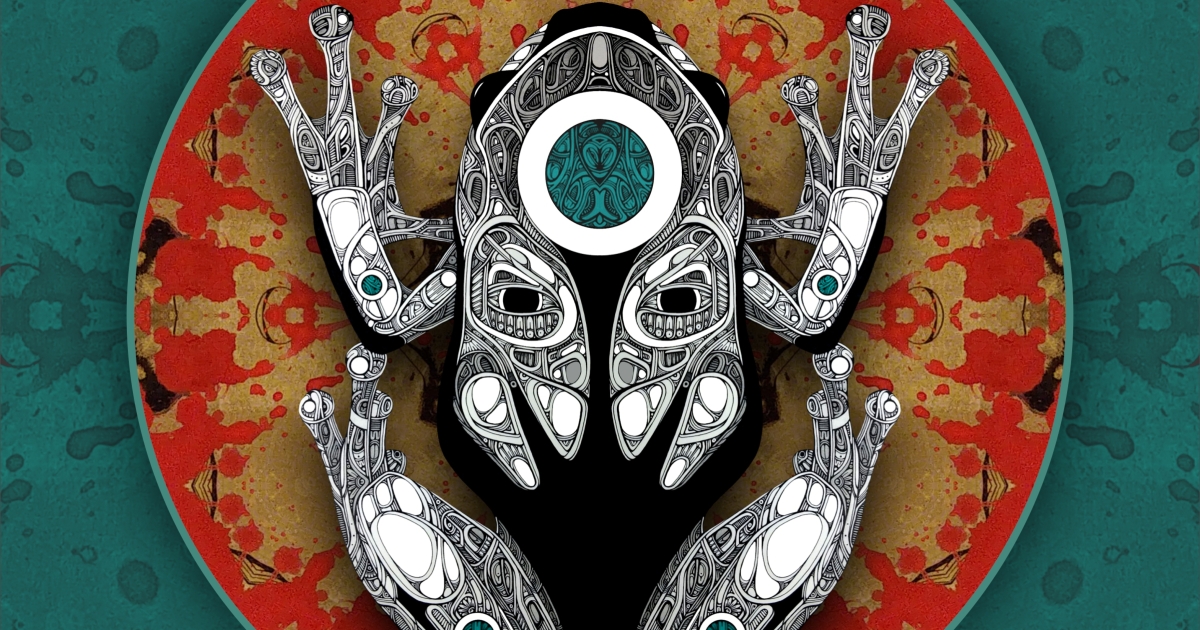
There are frogs, and then there are mandala frogs: the tiny pond philosophers of the art world, sitting calmly in circles of petals, dots, spirals, and patterns as if they know exactly where your missing black fineliner went. My 6 drawings of mandala frogs began as a simple creative experiment, but somewhere between the first curved toe and the fiftieth decorative dot, the project became a small meditation on patience, nature, personality, and the very real danger of saying, “I’ll just add one more detail.”
Mandala art has long been associated with circular balance, meditation, sacred geometry, and symbolic wholeness. Frogs, meanwhile, are creatures of transformation. They begin in water, change shape, leap between worlds, and somehow manage to look both ancient and slightly confused. Put the two together, and you get artwork that feels playful, calming, earthy, and unexpectedly meaningful.
This article explores the inspiration, meaning, design choices, and creative process behind six original mandala frog drawings. Whether you are an artist, a coloring enthusiast, a frog fan, or someone who simply enjoys highly decorated amphibians with excellent posture, these drawings show how a small subject can carry a surprising amount of personality.
Why Mandala Frogs Make Such a Fun Art Subject
At first glance, frogs and mandalas may seem like an odd pairing. One belongs in ponds, rainforests, gardens, and children’s science books. The other appears in spiritual art, meditation practices, coloring pages, and detailed geometric designs. But artistically, they fit together beautifully.
A mandala is usually built around a center point, with repeating shapes expanding outward. Frogs naturally have a rounded body, wide-set eyes, strong limbs, and a symmetrical pose when viewed from the front. That makes them perfect for circular composition. Their eyes can become focal points. Their toes can stretch into ornamental curves. Their backs can hold floral patterns, leaf motifs, dots, waves, stars, and tiny decorative shapes.
Frogs also bring a sense of humor to mandala art. A lotus mandala may feel peaceful. A sun mandala may feel powerful. But a frog mandala? That feels like peace with a splash. It is calm, but not too serious. It is decorative, but not stiff. It has a little swampy charm, like a yoga teacher who lives under a lily pad.
The Meaning Behind Mandala Frog Art
Mandala designs often represent harmony, focus, unity, and the journey from outer noise toward inner calm. Frogs add their own symbolic layers. Because they transform from tadpoles into adults, frogs are often connected with change, renewal, adaptability, and growth. Their lives between water and land make them natural symbols of transition.
That symbolism made the drawings feel more personal. Each frog became more than a cute character. One looked like a calm observer. One felt like a tiny jungle guardian. Another seemed almost magical, as if it had hopped out of a dream and brought a full pattern library with it.
In visual storytelling, animals often work best when they carry both biological truth and emotional suggestion. A frog’s real-world featuresmoist skin, strong legs, delicate toes, big eyes, and rounded formsgive the artist a strong foundation. Mandala patterns then turn that foundation into something expressive. The result is not just “a frog with decoration.” It is a small portrait of transformation, balance, and playful imagination.
Drawing 1: The Calm Pond Frog
The first drawing in the collection is the simplest and most peaceful. I imagined this frog sitting quietly on a lily pad at sunrise, possibly thinking deep thoughts, possibly waiting for breakfast. The body is rounded and centered, with symmetrical mandala petals spreading from the belly and back.
Design Details
The Calm Pond Frog uses soft circular patterns, leaf shapes, and gentle dot work. The eyes are large but relaxed, giving the frog a patient expression. Around the body, the mandala details stay balanced and open. This drawing does not try to shout. It whispers, “Please breathe, drink water, and stop checking your phone every seven seconds.”
The main artistic challenge was keeping the design detailed without making it crowded. In mandala-style animal drawings, it is tempting to fill every inch with pattern. But empty space matters. The quiet areas help the detailed areas stand out, much like silence makes music easier to hear.
Drawing 2: The Jungle Jewel Frog
The second frog is bolder. Inspired by colorful tree frogs, tropical leaves, and rainforest textures, this drawing has more energy. The pose is slightly lifted, as if the frog is ready to leap into a dramatic documentary scene narrated by someone with a very serious voice.
Design Details
This frog features sharper petal shapes, layered circles, vine-like lines, and small teardrop patterns. The back carries the most decoration, almost like a living jewel. The toes are extended and patterned with tiny bands, turning them into one of the most expressive parts of the drawing.
Tree frogs are visually inspiring because of their climbing feet, bright colors, and elegant body shapes. Even in black-and-white mandala form, those features can be suggested through curved lines, sticky-looking toe pads, and a pose that feels light rather than heavy. This drawing taught me that a frog does not need actual green ink to feel alive. Good line work can do a lot of hopping on its own.
Drawing 3: The Moonlit Meditation Frog
The third drawing has a nighttime mood. I imagined a frog sitting under the moon, surrounded by ripples, stars, and quiet water. This one feels more mystical, like the frog knows ancient secrets but refuses to share them unless paid in flies.
Design Details
The mandala patterns in this piece use crescent shapes, fine dots, curved bands, and circular ripples. The eyes are slightly wider, giving the frog an alert but peaceful look. The belly pattern resembles a small moon mandala, making the center of the frog feel like the center of the entire composition.
This drawing works because it combines two types of rhythm: the natural rhythm of water and the visual rhythm of repeated mandala shapes. Repetition is powerful in art. It guides the eye, creates calm, and gives the viewer a path to follow. In this frog, the viewer moves from the eyes to the body, from the body to the circular patterns, and then outward into the surrounding details.
Drawing 4: The Garden Guardian Frog
The fourth mandala frog is earthier and friendlier. It was inspired by backyard gardens, mossy stones, flower beds, and the tiny creatures that appear after rain. This frog feels less like a rainforest acrobat and more like the wise little neighbor who has seen every slug in the zip code.
Design Details
The patterns include leaves, small flowers, seed shapes, and gentle spirals. Instead of making the frog perfectly polished, I allowed the line work to feel organic. Some curves are slightly irregular. Some patterns look hand-grown rather than machine-perfect. That imperfection gives the drawing warmth.
Nature rarely draws in perfect copy-and-paste symmetry. Leaves bend. Water ripples unevenly. Frogs sit at strange angles because frogs are not concerned about your composition grid. By allowing the mandala to stay handmade, the drawing feels more connected to the garden world that inspired it.
Drawing 5: The Tiny Royal Frog
The fifth frog has attitude. Not rude attitudemore like “I am small, but I own this lily pad” energy. This drawing was designed with ornamental patterns that suggest a crown, jewelry, and decorative armor. It is not exactly a frog prince. It is more like a frog who skipped the prince stage and went directly to running the pond.
Design Details
The head includes crown-like triangular shapes above the eyes. The chest has layered arches, and the back uses repeated diamond and bead patterns. The legs are decorated with bands that make them look almost ceremonial.
This piece shows how mandala art can create character. The same frog outline can feel shy, calm, magical, or royal depending on the pattern language. Triangles feel sharper and more energetic. Circles feel soft and peaceful. Diamonds feel ornate. Dots add texture and charm. When those elements are arranged carefully, the frog begins to act. It becomes a personality, not just a shape.
Drawing 6: The Cosmic Leap Frog
The final drawing is the most imaginative of the six. Instead of placing the frog in a pond or garden, I imagined it leaping through a circular universe of stars, waves, petals, and spiral energy. This is the frog that says, “Yes, I am an amphibian, but I also have a galaxy appointment at 8.”
Design Details
The composition is more dynamic than the others. The frog’s body is angled, the legs stretch outward, and the surrounding mandala expands like motion lines. Stars and circular ornaments create a sense of movement. The patterns are tighter near the body and looser toward the edges, helping the frog feel like it is jumping through space.
This drawing was the hardest because mandalas naturally favor stillness and balance, while a leaping frog suggests motion. The solution was to keep the frog itself detailed and centered in feeling, while letting the surrounding shapes curve in the direction of movement. It became a mix of calm structure and wild little frog ambition.
How I Built the Mandala Frog Style
Creating these drawings required a balance of observation and imagination. I looked at real frog shapes: the round eyes, the compact body, the folded legs, the long toes, and the way frogs often appear both delicate and sturdy. Then I simplified those features into clean outlines that could hold patterns.
Once the outline was ready, I divided the frog into sections. The head, belly, back, legs, and feet each became separate pattern zones. This helped prevent visual chaos. Without zones, a mandala animal can quickly become a decorative traffic jam. Beautiful, yes, but still a traffic jam.
I used repeating elements such as dots, scallops, petals, teardrops, spirals, leaf shapes, diamonds, and curved bands. The trick was not to use every pattern everywhere. Each frog needed its own visual vocabulary. One used water ripples. Another used garden leaves. Another used cosmic curves. That made the collection feel connected but not repetitive.
Why Black-and-White Mandala Frogs Work So Well
Although frogs are often loved for their color, black-and-white line art gives them a different kind of beauty. Without color, the viewer pays more attention to shape, rhythm, spacing, and detail. A black-and-white mandala frog also works perfectly as a coloring page, tattoo-style illustration, journal design, printable wall art, or mindful drawing project.
Line art invites participation. A finished colored painting says, “Here I am.” A black-and-white mandala drawing says, “Here I amnow what colors will you give me?” That interactive quality makes the artwork more personal for viewers. Someone might color the Calm Pond Frog in soft greens and blues. Someone else might turn the Cosmic Leap Frog purple, gold, and electric pink because subtlety left the room and took the car keys.
Tips for Drawing Your Own Mandala Frog
If you want to create your own mandala frog, start with a simple frog outline. Do not begin with the patterns. The frog shape is the house; the mandala details are the furniture. And nobody wants a sofa floating in a swamp with no walls.
Start With Big Shapes
Draw the eyes, head, belly, legs, and feet first. Keep the outline clear. A strong silhouette will make the final design readable even when it becomes detailed.
Divide the Body Into Pattern Sections
Use light pencil lines to separate the belly, back, limbs, and face. Each section can hold a different pattern, but they should still feel related.
Repeat, Then Vary
Repetition creates mandala harmony. Variation keeps the drawing from looking like wallpaper that got trapped in a frog costume. Repeat dots, petals, or curves, but change their size and spacing.
Respect the Eyes
Frog eyes are powerful. Keep them clear and expressive. If the eyes are too cluttered, the frog may look less magical and more like it just read the terms and conditions.
Leave Breathing Room
Not every space needs decoration. Let some areas stay open so the detailed areas can shine.
What These Drawings Taught Me About Creativity
My 6 drawings of mandala frogs taught me that a narrow theme can actually create more freedom. Instead of asking, “What should I draw?” I asked, “How many different moods can one frog idea hold?” That question opened the door to calm frogs, royal frogs, cosmic frogs, garden frogs, and tiny amphibian philosophers.
Creative limits are useful. A theme gives the mind something to push against. When the subject stays consistent, the artist begins to explore smaller choices more deeply: the curve of a foot, the direction of a pattern, the spacing of dots, the emotion in the eyes. Those small choices are where style begins to appear.
The project also reminded me that art does not need to be enormous to feel meaningful. A small frog drawing can contain symmetry, humor, patience, nature, mindfulness, and personality. That is a lot for an animal that could comfortably sit inside a coffee mug.
Extra Personal Experience: Living With Six Mandala Frogs on the Desk
After finishing the six drawings, I noticed something funny: they did not feel like six versions of the same idea. They felt like six little characters waiting for their own stories. I kept them on my desk for a while, and every time I looked at them, one seemed to match a different mood.
The Calm Pond Frog became the drawing I looked at when I needed to slow down. Its round shapes and gentle spacing reminded me that not every piece of art has to sprint toward the finish line. Some drawings are better when they stroll. This one taught me patience, especially during the dot work. Dot work looks easy until you realize your hand has signed up for a tiny marathon.
The Jungle Jewel Frog made me think about confidence. It was the boldest design, and at first I worried it might become too busy. But as the patterns developed, the busyness turned into energy. That was a good reminder that detail is not the enemy. Unplanned detail is the enemy. When every pattern has a purpose, complexity can feel exciting instead of messy.
The Moonlit Meditation Frog became my favorite for quiet evenings. It had the strongest sense of atmosphere. While drawing it, I found myself slowing down naturally, especially around the circular ripple patterns. There is something calming about repeating curves. The hand moves, the mind settles, and suddenly the frog looks wiser than everyone in the room.
The Garden Guardian Frog felt the most personal because it reminded me of ordinary nature. Not dramatic nature. Not postcard nature. Just the humble beauty of wet leaves, soil, small flowers, and the creatures that appear after rain. Drawing it made me appreciate how much inspiration is hiding in simple outdoor spaces.
The Tiny Royal Frog made me laugh the most. Its little crown-like details gave it a ridiculous amount of dignity. That drawing reminded me not to remove humor from art. Beauty is wonderful, but charm is what makes people lean closer. A frog with royal energy is not scientifically necessary, but emotionally? Absolutely essential.
The Cosmic Leap Frog pushed me the hardest. It asked for movement, balance, and imagination all at once. I had to redraw parts of the legs and adjust the surrounding patterns several times. That frustration ended up being useful. The drawing became better because I stopped forcing it to behave like the others. It needed motion. It needed space. It needed to leap.
Looking back, the entire set became a small lesson in creative consistency. The theme held everything together, but each drawing had its own voice. That is what I love most about mandala frog art: it can be peaceful, funny, decorative, symbolic, and wildly imaginative at the same time. It proves that even a humble frog can become a tiny universe when you give it enough circles, patience, and personality.
Conclusion
My 6 drawings of mandala frogs started as a playful art challenge and turned into a deeper exploration of pattern, balance, transformation, and character design. By combining the circular harmony of mandala art with the natural charm of frogs, each drawing developed its own mood: calm, bold, mystical, earthy, royal, and cosmic.
For artists, this theme offers endless possibilities. Frogs have expressive shapes, mandalas provide structure, and the combination creates artwork that feels both relaxing and full of life. For viewers, mandala frogs offer something equally valuable: a reminder that creativity does not always need to be serious to be meaningful. Sometimes the best ideas arrive on webbed feet.