Some luxuries shout. A chandelier announces itself. A marble island clears its throat. A freestanding soaking tub practically demands applause. But heated floors? They are quieter. They do not sparkle, hum, or ask guests to admire their grout lines. They simply wait until a cold morning, then greet your bare feet like a tiny household miracle.
Floor warming, also known as radiant floor heating or heated flooring, has become one of those “little luxuries” that feels far more extravagant than it looks on paper. It can turn a chilly bathroom into a spa-like retreat, make a basement feel less like a storage bunker, and help a kitchen feel cozy before the coffee is brave enough to do its job. Better yet, radiant floor heat can be practical when planned correctly, especially in rooms with tile, stone, or concrete floors that naturally feel cold underfoot.
This guide explores how floor warming works, where it makes the most sense, what it costs, which flooring materials perform best, and how to decide whether it belongs in your next remodel. Spoiler: if you have ever performed the “bathroom tile tiptoe dance” in January, you already understand the emotional argument.
What Is Floor Warming?
Floor warming is a heating system installed beneath the finished floor surface. Instead of blasting warm air through vents, radiant heat moves upward from the floor and gently warms the room, the people in it, and the objects nearby. The result is an even, comfortable warmth that starts exactly where winter attacks first: your feet.
There are two main types of floor warming systems used in homes: electric radiant floor heating and hydronic radiant floor heating. Both create warmth from below, but they do it in different ways.
Electric Radiant Floor Heating
Electric floor warming systems use heating cables, mats, or mesh installed beneath tile, stone, laminate, vinyl, or another compatible flooring material. When electricity passes through the system, the cables warm up and transfer heat through the floor. These systems are especially popular in bathrooms, powder rooms, laundry rooms, mudrooms, and small kitchens because they are relatively straightforward to install during a flooring project.
Electric radiant heat is often used as a comfort upgrade rather than a whole-home heating system. In other words, it may not replace your furnace, boiler, or heat pump, but it can make the most-used cold surfaces feel downright civilized.
Hydronic Radiant Floor Heating
Hydronic floor heating uses warm water that circulates through flexible tubing installed beneath the floor. The heated water transfers warmth through the flooring and into the room. Hydronic systems are common in new construction, large remodels, basements, and whole-home heating designs because they can be efficient over larger areas.
The tradeoff is complexity. A hydronic system typically requires more planning, more labor, and more upfront investment than an electric mat in a bathroom. However, for large spaces or homes designed around radiant heat, hydronic systems can offer excellent comfort and long-term performance.
Why Heated Floors Feel So Good
The magic of floor warming is not just temperature. It is the way the heat is delivered. Forced-air heating warms the air first, which then circulates around the room. That can work well, but it may also create drafts, temperature swings, and dusty air movement. Radiant floor heating feels different because it distributes heat evenly from below.
Think of it like sunshine through a window versus standing beside a hair dryer. Both are warm. Only one feels like your nervous system just received a handwritten thank-you note.
Because radiant heat starts at the floor, it is especially satisfying in rooms where people walk barefoot. Bathrooms are the classic example. Tile is durable, water-resistant, and beautiful, but it can feel like stepping onto a polite glacier. Add radiant floor warming, and suddenly the room feels less like a necessity and more like a boutique hotel that happens to contain your toothbrush.
Best Rooms for Floor Warming
Bathrooms
Bathrooms are the superstar location for heated floors. They are usually smaller, which helps control installation and operating costs. They often have tile or stone flooring, which conducts heat well. They are also rooms where comfort matters every single day. A warm bathroom floor can make early mornings less rude and evening showers feel more relaxing.
Kitchens
Kitchens are another strong candidate, especially in homes with tile, concrete, or stone floors. Since people often stand in the kitchen for long stretches, warm flooring can make cooking, cleaning, and pretending to understand sourdough starter much more pleasant. For larger kitchens, careful zoning and thermostat control are important to avoid unnecessary energy use.
Basements
Basements tend to be cool because they sit partly or fully below grade. Radiant floor warming can help make a finished basement feel like true living space rather than “the place where old paint cans go to retire.” It pairs especially well with concrete or tile, though insulation beneath the system is important so heat moves upward into the room instead of disappearing into the slab.
Mudrooms and Entryways
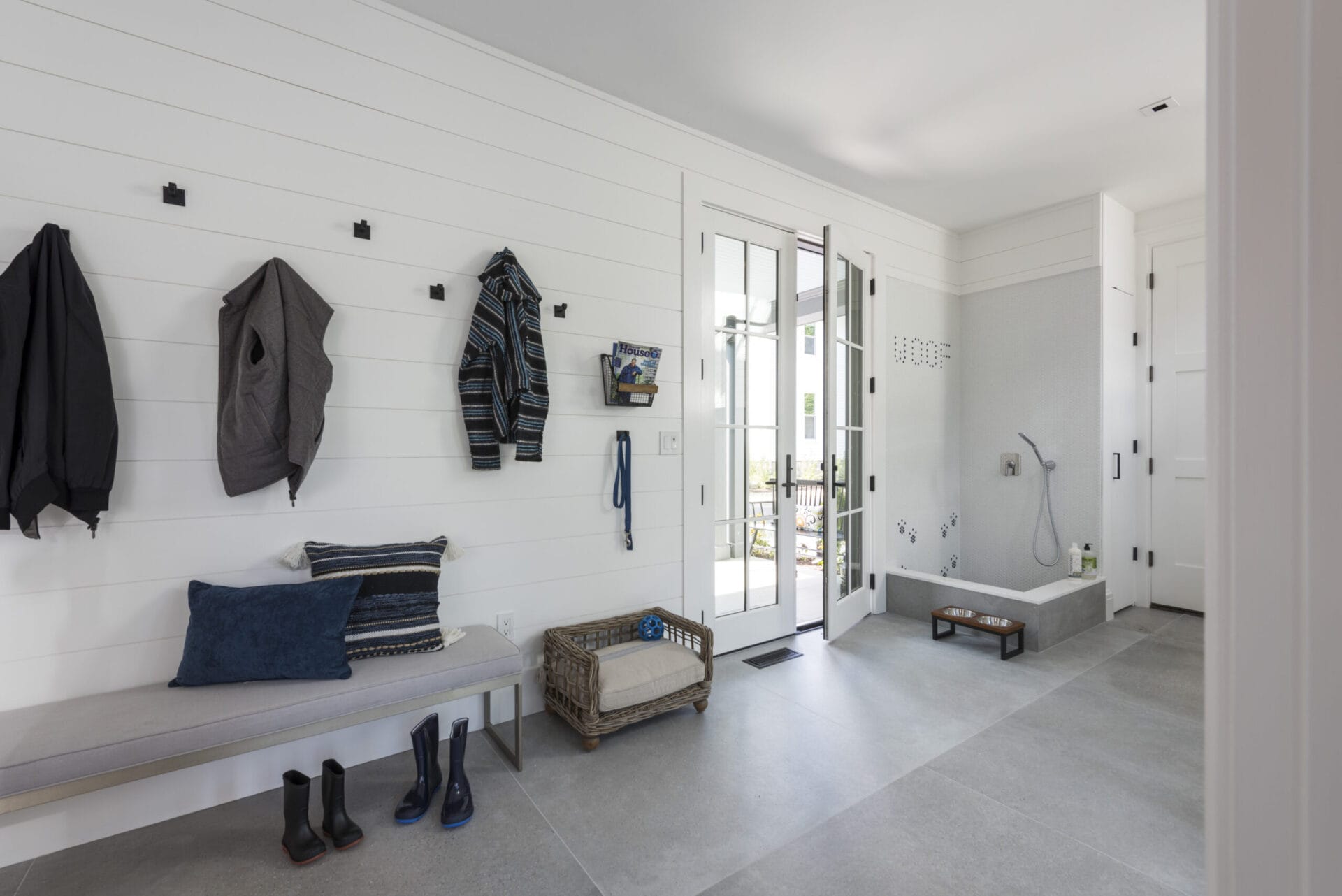
A heated mudroom floor can help boots, shoes, and wet paws dry faster. It also makes a hardworking transition space feel more welcoming. If your entryway routinely collects snow, rain, backpacks, sports gear, and mysterious crumbs, floor warming may be the most elegant way to bring order to the chaos.
Bedrooms
Floor warming in bedrooms is less common than in bathrooms, but it can be lovely in colder climates. The best fit is usually a primary suite with an attached bathroom or a bedroom with hard flooring. If the room has thick carpet and heavy padding, the system may not perform as efficiently because carpet acts as insulation.
Best Flooring Materials for Radiant Heat
Not every floor covering behaves the same with radiant heat. The best materials transfer heat efficiently, remain stable with temperature changes, and follow manufacturer guidelines for maximum surface temperatures.
Tile and Porcelain
Ceramic and porcelain tile are top choices for heated floors. They conduct heat well, handle moisture, and are commonly used in bathrooms and kitchens. Tile also tends to feel cold without radiant heat, which makes the upgrade especially noticeable.
Natural Stone
Stone flooring can work beautifully with radiant heat. Marble, slate, limestone, and travertine can absorb and hold warmth, creating a luxurious feel. Stone may take longer to heat than thinner tile, but it can retain warmth nicely once it reaches temperature.
Concrete
Concrete is a strong partner for radiant heating, particularly in basements, modern homes, and slab-on-grade construction. Like stone, concrete has thermal mass, meaning it can absorb heat and release it gradually. Proper insulation below the slab or heating layer is essential for efficiency.
Engineered Wood
Engineered wood is generally a better option than solid hardwood over radiant heat because it is more dimensionally stable. Still, homeowners should confirm compatibility with both the flooring manufacturer and the heating system manufacturer. Wood is sensitive to temperature and humidity, so limits matter.
Luxury Vinyl and Laminate
Many modern luxury vinyl and laminate products can be installed over radiant heat, but not all. The key is checking product specifications. Some floors require maximum temperature limits, gradual warm-up periods, or specific underlayment. Guessing is not a plan; it is how floors get dramatic.
Carpet
Carpet can work with radiant floor heating in some cases, but it reduces heat transfer. Thick carpet and dense padding can trap warmth below the surface, making the system less effective. If carpet is part of the design, choose low-profile carpet and compatible padding.
How Much Does Floor Warming Cost?
The cost of floor warming depends on the system type, room size, flooring material, labor rates, electrical work, subfloor condition, and whether the project is new construction or a retrofit. Small electric systems for bathrooms are usually the most approachable. Larger hydronic systems cost more upfront but can make sense for big areas or whole-home heating.
For electric radiant floor warming, many homeowners should expect costs to vary by square footage and installation complexity. A small powder room may be relatively affordable, especially if the floor is already being replaced. A large kitchen with custom layout, floor leveling, and electrical upgrades will cost more. Hydronic systems often require tubing, manifolds, pumps, controls, and a heat source, which is why they are usually best planned during major construction or renovation.
One smart way to think about cost is to separate “materials,” “installation,” and “operation.” Materials include mats, cables, sensors, thermostats, and underlayment. Installation includes labor for preparing the subfloor, placing heating elements, testing the system, installing flooring, and connecting controls. Operation depends on electricity rates, system size, insulation, thermostat settings, and how often the system runs.
Is Floor Warming Energy Efficient?
Floor warming can be efficient, but context matters. Radiant systems deliver heat directly where people feel it, which can allow comfortable settings without overheating the air. Zoned controls can also help by warming only the rooms that need it, when they need it.
However, electric radiant heat is still electric resistance heat. That means it converts electricity into heat very effectively at the point of use, but operating cost depends heavily on local electricity prices and usage habits. Running a small bathroom floor for a few hours in the morning is very different from trying to heat a large, poorly insulated room all day.
Hydronic systems can be efficient for larger areas, especially when paired with a modern boiler, heat pump water heater, air-to-water heat pump, or other efficient heat source. The best performance usually comes from combining radiant heating with good insulation, air sealing, smart controls, and realistic expectations.
Installation: What Homeowners Should Know
Floor warming is easiest to install when the floor is already being replaced. That is why it often appears during bathroom remodels, kitchen renovations, basement finishing, and new construction. Retrofitting a heated floor without changing the finished floor can be difficult and expensive unless the system can be accessed from below.
Plan the Layout Carefully
Heating elements should usually be placed only where people walk or stand. They are not typically installed beneath permanent cabinets, tubs, toilets, vanities, or large appliances. A good layout avoids wasted heat and protects the system from trapped heat under fixed objects.
Test Before, During, and After Installation
Electric floor warming systems should be tested according to manufacturer instructions before installation, after the heating mat or cable is placed, and after the finished floor is installed. This helps catch damage early. Once tile is set over a damaged wire, repairs become less cheerful.
Use the Right Thermostat
A programmable or smart thermostat can make a major difference in comfort and operating cost. Many floor warming thermostats use a floor sensor that monitors the surface temperature. Scheduling the system to warm up before you wake or before evening showers can deliver comfort without running the floor all day.
Respect Electrical Requirements
Electric radiant systems should be installed according to local code and manufacturer instructions. Bathrooms and wet areas require special attention to electrical safety. Even if a homeowner handles some flooring tasks, a licensed electrician is often the right person to connect the system.
Pros and Cons of Floor Warming
Pros
Floor warming offers quiet comfort, even heat distribution, and a clean look because there are no visible radiators or vents. It is especially appealing in bathrooms and other rooms with cold hard surfaces. It can also improve the daily experience of a home in a way that feels personal and immediate.
Another advantage is zoning. You can warm one bathroom without heating the entire house. That makes radiant floor heating a targeted luxury rather than a whole-home commitment.
Cons
The biggest drawback is upfront cost. Floor warming is much easier and more affordable when installed during a remodel than after a new floor is already in place. It can also raise floor height slightly, which may require transitions at doorways. Electric systems can become expensive to operate if used as primary heat in large spaces, especially in areas with high electricity rates.
Repairs can also be challenging because the heating elements are hidden beneath the floor. Quality installation and careful testing are essential. This is not the place for “good enough” energy. Your future self does not want to chisel tile because someone skipped a resistance check.
Design Tips for a More Luxurious Heated Floor
To get the most from floor warming, pair the system with materials and routines that enhance comfort. In a bathroom, install heating where your feet naturally land: in front of the vanity, near the shower, and around the toilet area. In a kitchen, focus on prep zones, sink areas, and main walking paths. In a mudroom, warm the zone where shoes and boots collect.
Choose flooring that conducts heat well. Tile, stone, and concrete deliver the most noticeable results. Use insulation below the heating system whenever recommended, especially over concrete slabs or crawl spaces. Without insulation, heat can travel in the wrong direction, which is rude and expensive.
Finally, program the floor around real life. Most people do not need a bathroom floor warm at 2:17 p.m. on a Tuesday. But they may adore it at 6:30 a.m. and again before bedtime. Smart scheduling turns heated floors from an energy hog into a well-behaved luxury.
Is Floor Warming Worth It?
Floor warming is worth it when it solves a real comfort problem in a room you use often. It is especially worthwhile in bathrooms, small tiled spaces, finished basements, and homes in colder climates. It may be less worthwhile under thick carpet, in rarely used rooms, or in projects where the existing floor is staying in place.
If you are already replacing flooring, the decision becomes easier. Adding electric floor warming during a bathroom remodel can feel like a modest upgrade compared with the total cost of tile, labor, fixtures, lighting, and plumbing. But unlike some decorative choices, you feel this upgrade every time you step into the room.
That is the charm of little luxuries. They do not have to impress the neighbors. They only have to improve the ordinary moments you repeat every day.
Real-Life Experiences: The Quiet Joy of Warm Floors
The first time many homeowners experience floor warming, the reaction is not dramatic. Nobody bursts through the bathroom door yelling, “Behold, radiant technology!” Instead, there is usually a pause. A small smile. Maybe a suspicious glance at the floor, as if the tile has suddenly developed manners. Then comes the sentence every remodeler loves to hear: “Why didn’t we do this sooner?”
In everyday life, heated floors shine during the tiny transitions that usually go unnoticed. Getting out of bed on a cold morning feels less punishing when the bathroom floor is already warm. A late-night trip to brush your teeth becomes oddly pleasant. After a shower, stepping onto heated tile feels like the room planned ahead. It is comfort with excellent timing.
Families often notice the difference in shared spaces. In a mudroom, kids are more likely to sit down and remove wet shoes when the floor is not freezing. Dogs discover the warmest patch with alarming accuracy and claim it like tiny landlords. In kitchens, the person making breakfast may stand longer at the counter without feeling cold creeping upward from the floor. These are not glamorous moments, but they are the moments that make a house feel generous.
One of the most practical experiences comes from bathroom remodels. Many homeowners splurge on beautiful tile, only to remember that tile can feel cold in winter. Floor warming completes the decision. It makes the tile not only attractive but comfortable. The room feels finished in a sensory way, not just a visual one. You do not simply look at the remodel; you feel it working.
There are also lessons learned. People who love their heated floors usually mention planning. They chose the right zones, used a programmable thermostat, and avoided heating areas under cabinets or fixtures. People who feel disappointed often expected a small electric system to heat an entire large room, or they ran it nonstop and then had an awkward conversation with the utility bill. Floor warming is best treated like a precision comfort tool, not a substitute for whole-house efficiency.
The emotional value is hard to measure but easy to understand. Heated floors create a sense of care. They say, quietly, that someone thought about how the room would feel at 6 a.m. in February. That kind of detail can change your relationship with a space. A bathroom becomes a retreat. A basement becomes livable. A mudroom becomes less miserable. A kitchen becomes warmer in both temperature and mood.
Floor warming is not the flashiest upgrade in a home, and that is exactly why it works. It is private luxury. Guests may never know it is there unless they take off their shoes. But you will know. Your feet will know. And on the coldest mornings, that may be all the proof you need.
Conclusion
Floor warming is one of the most satisfying upgrades a homeowner can make because it blends comfort, design, and daily usefulness. It does not need to dominate a renovation budget or replace an entire heating system to make a meaningful difference. In the right room, with the right flooring and smart controls, radiant floor heating can turn ordinary routines into small moments of comfort.
For bathrooms, kitchens, basements, mudrooms, and other chilly spaces, heated flooring offers a cozy, efficient-feeling luxury that works quietly in the background. The key is thoughtful planning: choose compatible flooring, size the system correctly, install proper insulation where needed, use a programmable thermostat, and work with qualified professionals when electrical or hydronic connections are involved.
Little luxuries matter because they improve the parts of life we repeat most. A warm floor may not sound dramatic, but neither does a good pillow until you sleep on one. Once you have stepped onto heated tile on a cold morning, regular floors start to feel like they owe you an apology.