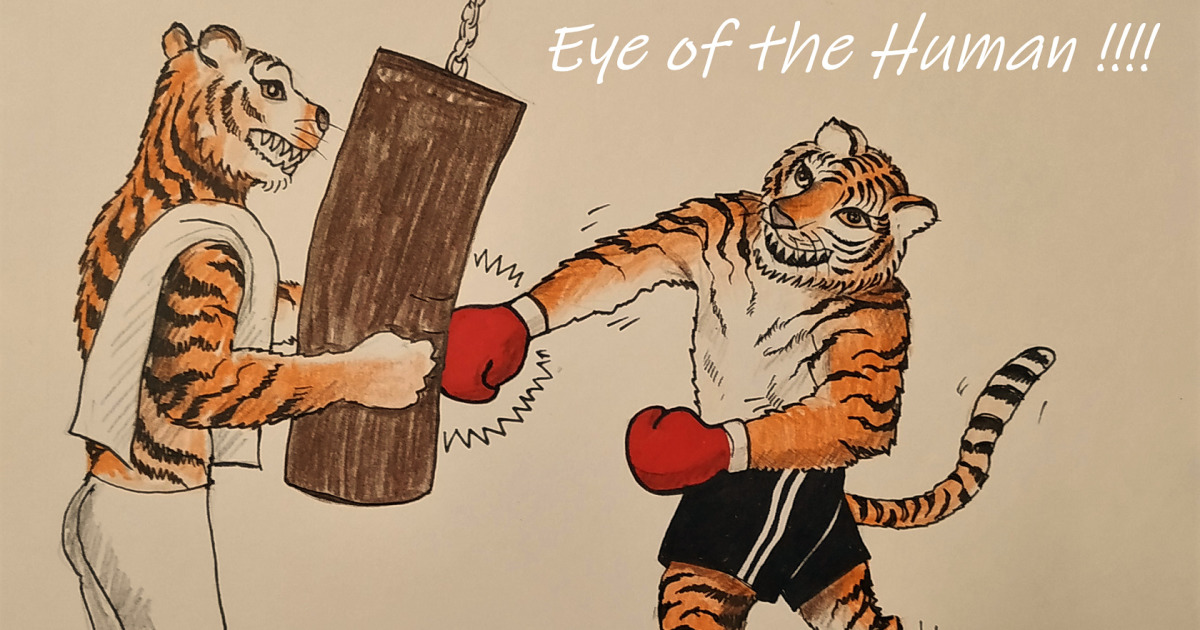
In this universe, humans talk a lot. We talk in texts, emails, podcasts, restaurant reviews, group chats that should have ended in 2018, and awkward small talk about the weather. But animals? They communicate with posture, scent, sound, movement, color, electricity, rhythm, touch, and signals so subtle we often miss them completely.
Now imagine a parallel universe where animals converse as clearly as people dobut with the flavor, drama, elegance, and comic timing of their real-world communication styles. Bees hold staff meetings by dancing. Whales publish ballads across the ocean. Dogs send emotional memos with their tails. Cats issue royal decrees with one slow blink. Cuttlefish wear their opinions like animated billboards. And somewhere, a prairie dog is shouting, “Tall human in blue shirt approaching from the left!” with the urgency of a tiny neighborhood watch captain.
This playful idea is more than a cartoonish fantasy. It is inspired by real animal communication, which is far richer than “woof,” “meow,” and “please stop filming me for social media.” Scientists have found that animals exchange information about danger, food, identity, territory, mating, social bonds, and emotional states. They may not be sitting around discussing tax policy or whether pineapple belongs on pizza, but their messages can be complex, purposeful, and beautifully adapted to their worlds.
What Would Animal Conversation Sound Like in a Parallel Universe?
If animals could converse in a parallel universe, their “languages” probably would not copy human speech. That would be too easyand frankly, a little boring. Instead, each species would expand its natural communication system into something more expressive.
A dolphin might not say, “Good morning, Steve.” It might release a sparkling ribbon of whistles, clicks, and body turns that means, “Good current today, old friend; I found fish, avoided a shark, and your left fin looks unusually heroic.” A honey bee might not write directions on a map. She would perform a precise dance that says, “Fly this way, continue past the suspicious sunflower, and do not stop at the mediocre clover buffet.”
Animal conversation in this imagined world would be multi-sensory. Some species would speak in scent. Some would speak in vibration. Some would flash color like living neon signs. Others would combine sound, posture, and movement into messages that make human language look like a plain sandwich next to a full dessert table.
The Science Behind the Fantasy
To make this parallel universe feel believable, we need to start with the real one. Animals communicate through several major channels: vocal sounds, visual signals, chemical messages, touch, movement, and in some cases, electrical pulses. Each method fits the animal’s body, habitat, and survival needs.
Birds sing to claim territory, attract mates, maintain contact, and warn others. Whales use clicks, whistles, pulsed calls, and songs to navigate, socialize, and find one another in the vast ocean. Elephants can produce low-frequency rumbles that travel long distances, allowing herds to coordinate across landscapes. Dogs communicate through eyes, ears, mouth, posture, tail position, movement, and vocal sounds. Even a tail wag is not a simple “hello”; it needs context, body posture, and emotional tone.
Insects are no less impressive. Honey bees use the famous waggle dance to share information about food location. Ants create chemical trails that guide nestmates. Cephalopods such as octopuses and cuttlefish change color and skin patterns to camouflage, warn, court, or signal. Electric fish produce weak electric pulses that help them navigate and communicate in dark waters. In short, the animal kingdom is already running a global messaging platform. Humans just forgot the password.
If Dogs Had a Debate Club
In a parallel universe, dogs would be the most emotionally transparent conversationalists. Their meetings would be loud, sincere, and deeply concerned with snacks.
A golden retriever might open a neighborhood debate by thumping his tail and announcing, “I believe every visitor should be greeted as a long-lost hero, regardless of whether we met them six minutes ago.” A terrier would immediately object: “Counterpoint: squirrels are invading from the fence line, and no one is taking this seriously.” A border collie would present a 42-slide strategy deck on ball retrieval logistics. The bulldog would sleep through the entire meeting, then wake up and vote for cheese.
This fantasy fits real canine communication because dogs already use body language to express comfort, stress, playfulness, alertness, fear, and aggression. A relaxed dog may have soft eyes, loose muscles, and easy movement. A tense dog may stiffen, raise or tuck the tail, pin the ears, or bark in a different tone. In our parallel universe, those signals become sentences. The play bow becomes, “I formally invite you to act ridiculous with me.” The side-eye becomes, “I saw you hide the medicine in peanut butter, Deborah.”
If Cats Ran the Government
Cats would not join the conversation. They would allow the conversation to approach them.
In the parallel universe, feline language would be elegant, indirect, and slightly insulting. A cat sitting on a windowsill might flick her tail and say, “The birds are performing poorly today.” A slow blink would mean, “You are acceptable, for now.” A sudden sprint down the hallway at 2:14 a.m. would translate to, “The ancient spirits demand cardio.”
Cats communicate through vocalizations, posture, scent marking, tail position, ear movement, eye contact, and touch. But unlike dogs, cats often prefer diplomacy by implication. In our imagined world, a cat would never shout, “I am annoyed.” She would rotate one ear, pause dramatically, and deliver a five-part lecture through silence. Humans would still misunderstand, naturally.
If cats ran a parliament, every session would begin with a nap, continue with a dispute over seating, and end when someone knocked the official documents off the table. The national anthem would be purring, but only when the nation deserved it.
Whales Would Be Ocean Poets
Whales already seem built for epic conversation. Their sounds can travel through water in ways human voices cannot. In a parallel universe, whale communication would be less like casual chatter and more like opera, poetry, navigation, and family newsletter combined.
A humpback whale might sing, “The moon is bright, the current is kind, and Harold is once again swimming too close to the tourist boat.” A sperm whale might trade patterned clicks like coded messages in a deep-sea conference. A mother whale might send a soft call to her calf that means, “Stay near me; the ocean is beautiful, but it has teeth.”
Because real whales use sound for social contact, navigation, feeding, and mating behavior, their parallel-universe conversations would likely be long-distance and layered. They would not need phones. The ocean would be the network. Unfortunately, they might still complain about poor signal quality whenever a cargo ship passes.
Birds Would Host the Morning News
Every dawn, birds already create the closest thing nature has to a breaking news broadcast. In a parallel universe, the morning chorus would become a full radio network.
The cardinal would report: “Sunrise confirmed. Territory still mine.” The crow would provide investigative journalism: “Human dropped fries near parking lot. More at eleven.” The chickadee would issue safety updates. The mockingbird would imitate everyone, then deny everything. A rooster, of course, would continue yelling the same headline every morning: “The sun! Again! You are welcome!”
Bird communication can include songs, calls, visual displays, drumming, and body movement. Some songs are learned, practiced, and adjusted. Calls may warn of predators, keep flocks together, or signal food. In our parallel universe, birds would be excellent broadcasters because many already use sound to organize social life. They are loud, efficient, and completely unbothered by your desire to sleep past 6 a.m.
Bees Would Speak in Geometry
If humans created language with words, bees created it with choreography. The honey bee waggle dance is one of the most famous examples of animal communication because it can point nestmates toward food. In a parallel universe, bees would be mathematicians, cartographers, and highly motivated office managers.
A forager bee returning to the hive might perform a dance that translates to, “Excellent nectar source. Distance: respectable. Direction: sun-left. Quality: five stars. Risk: one rude butterfly.” The other bees would watch, smell, taste, and interpret the information. No PowerPoint needed. Just rhythm, direction, and commitment.
Bee conversation would probably be the most efficient in the animal kingdom. No small talk. No “per my last email.” Just: food, location, urgency, go. Humans could learn something from this, though we would probably still schedule a meeting to discuss the dance.
Elephants Would Remember Every Word
Elephants in a parallel universe would speak slowly, deeply, and with emotional intelligence. Their conversations would travel through air and ground, carried by rumbles too low for many human ears to detect. A matriarch might send a message across the savanna: “Water is this way. Keep the calves close. Also, nobody follow the young male; he has confidence but no plan.”
Real elephants communicate with sound, touch, smell, visual signals, and low-frequency rumbles. Their social lives are complex, and their family bonds are strong. In our imagined world, elephant speech would be memory-rich. They would greet old friends with layered stories, warn one another of danger, and comfort grieving herd members with contact and low, steady sound.
If elephants had voicemail, every message would be emotionally devastating and beautifully composed. “Dear sister, we crossed the dry riverbed at dusk. The calves are safe. The old path still remembers us.” Then humans would listen and immediately need a minute.
Cuttlefish Would Wear Their Opinions
Some animals speak. Cuttlefish redecorate themselves.
In a parallel universe, cuttlefish conversation would look like a living art show. Their skin would pulse with color, pattern, and texture. A cuttlefish might turn striped to say, “I am interested,” darken to say, “Back away,” or ripple with luminous waves to say, “I am mysterious and frankly very busy.”
Real cephalopods use color change for camouflage, warning, courtship, and signaling. Their skin can shift rapidly, producing patterns that seem almost digital. In our imaginary world, cuttlefish would be the graphic designers of the sea. Arguments would look like animated posters. Flirting would look like a nightclub wall. Passive aggression would appear as tasteful beige with one flashing purple eyebrow.
Prairie Dogs Would Run the Neighborhood Watch
Prairie dogs may be small, but their communication is famous for its alarm calls. In a parallel universe, they would be security analysts with excellent lung capacity.
One prairie dog standing upright might shout, “Coyote approaching from the north!” Another might add, “Large bird overhead, suspicious wing angle!” A third, wearing imaginary reading glasses, would note, “Human approaching in blue shirt, medium speed, possibly carrying snacks but not enough to justify risk.”
Research into prairie dog alarm calls suggests that these animals can communicate detailed information about predators. That makes them perfect residents of a parallel universe where every burrow has a warning system and every warning system has a gossip channel.
What Animal Conversations Would Teach Humans
This imaginary world is funny because animals would not simply talk like us. They would remind us that communication is bigger than speech. A dog’s relaxed posture, a cat’s slow blink, a whale’s song, a bee’s dance, a bird’s alarm call, and a cuttlefish’s color shift all prove that meaning can move through bodies, sound waves, chemicals, electricity, and shared attention.
Humans often assume language is the crown jewel of intelligence. It is certainly powerful. But the animal kingdom shows that survival does not require paragraphs. Sometimes it requires one perfect signal delivered at exactly the right time. “Danger.” “Food.” “Come here.” “Back off.” “I know you.” “Stay close.” “This place is mine.” “Let’s play.” “I am ready.” “I am afraid.”
In a parallel universe, animals might laugh at how much humans say while listening so little. We fill the air with words, but miss the raised hackles, the tucked tail, the sudden silence, the change in birdsong, the chemical trail, the ripple in water, and the message written in motion. Maybe the fantasy of animal conversation is really a reminder: the world is already talking. We are the ones who need better ears.
Why This Parallel Universe Feels So Believable
The best fantasy grows from reality. Imagining animals conversing in a parallel universe works because animals already communicate with surprising sophistication. The leap is not from silence to speech; it is from signals to stories.
A whale song becomes a family epic. A bee dance becomes a travel guide. A dog’s tail becomes a mood report. A cat’s stare becomes a royal command. A cuttlefish display becomes a glowing opinion column. A bird chorus becomes a neighborhood podcast. The humor comes from exaggeration, but the foundation is real biology.
This is why the idea is so charming. It lets us see animals not as background characters in the human world, but as active participants in their own. They are not mute. They are not simple. They are communicating in forms shaped by evolution, environment, body structure, and social need. We may not understand every message, but that does not mean the message is not there.
Experiences Inspired by Imagining Animal Conversations
Once you start imagining how animals converse in a parallel universe, ordinary moments become wildly entertaining. A walk through the park turns into a diplomatic summit. A squirrel freezes on a tree trunk and suddenly seems to be announcing, “Everyone remain calm. The tall primate has no acorns, but the shoelaces are suspicious.” A pigeon waddles past with the confidence of a city mayor who has never once paid rent. Two dogs meet on the sidewalk and perform an entire social negotiation through sniffing, circling, tail movement, and brief bursts of dramatic barking.
One of the funniest experiences is watching pets as if they are speaking in full sentences. A dog staring at the treat cabinet is not merely begging. In the parallel universe, he is presenting a legal argument: “According to the ancient household treaty, I sat when asked, therefore payment is due.” A cat sitting directly on a laptop is not being inconvenient. She is saying, “Your work lacks warmth, so I have improved it with my body.” A rabbit thumping a back foot might be filing a formal complaint about the vacuum cleaner, which, to be fair, does sound like a dragon with poor manners.
Birdwatching also becomes more vivid with this mindset. Instead of hearing random chirps, you begin to imagine a lively exchange of announcements, warnings, flirtations, and neighborhood drama. One bird calls from a fence. Another answers from a tree. A crow lands nearby and appears to judge everyone involved. Suddenly, the backyard feels less like scenery and more like a busy café where every table has an opinion.
The same happens at aquariums and zoos when observation replaces rushing. Elephants touching trunks feel like relatives checking in. Penguins waddling in groups look like commuters complaining about traffic. Fish moving together seem to hold silent meetings through direction and spacing. Even insects become more fascinating. Ants following a trail are no longer just tiny workers; they are commuters reading chemical road signs. Bees entering and leaving flowers seem like airborne food critics with wings.
This imaginative exercise can also make people more compassionate. When we picture animals as communicators, not decorations, we pay closer attention to their comfort and boundaries. A dog turning away may need space. A cat flattening her ears may not want to be picked up. Birds going quiet may be responding to a threat. These are not human sentences, but they are meaningful signals. Respect begins when we stop demanding that animals communicate like us and start learning how they already communicate.
That is the real magic of imagining animals conversing in a parallel universe. It makes the real universe louder, richer, and more alive. The fantasy adds jokes, personalities, and imaginary dialogue, but it also trains attention. After a while, you realize the world has never been silent. It has been buzzing, singing, rumbling, blinking, wagging, flashing, dancing, and tapping messages into the ground all along.
Conclusion
Imagining how animals converse in a parallel universe is a playful way to appreciate the remarkable communication systems that already exist in nature. Dogs speak through posture and energy. Cats specialize in subtle signals and superior facial expressions. Birds broadcast songs and warnings. Bees dance directions. Whales carry sound through oceans. Elephants rumble across distance. Cuttlefish turn their bodies into living messages. Even animals we overlook may be exchanging information in ways humans are only beginning to understand.
The parallel universe is imaginary, but the wonder is real. Animals may not be asking for coffee recommendations or complaining about Monday mornings, but they are constantly sending and receiving information that helps them survive, connect, reproduce, defend, explore, and belong. When we pay attention, we become better observers, kinder companions, and more humble members of the living world. And if your dog is staring at you right now, yes, the message is probably about food.
Note: This article uses real animal communication science as creative inspiration. The parallel-universe conversations are imagined for storytelling and humor, not presented as literal translations of animal signals.