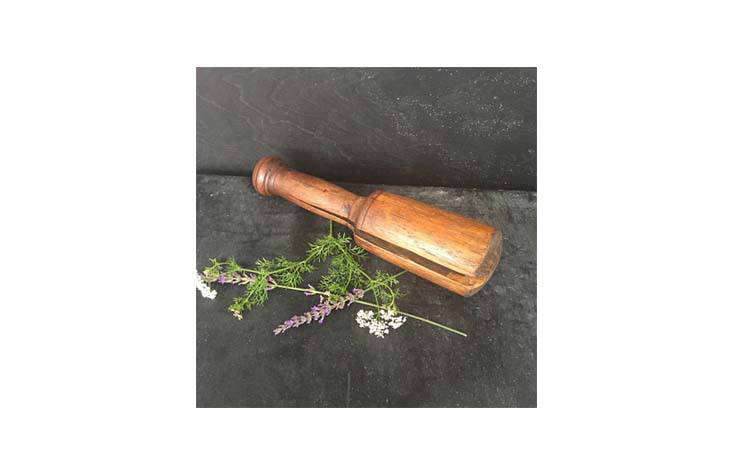
An antique primitive rustic wooden masher may not look like much at first glance. It is usually a solid piece of wood, shaped by hand or turned on a lathe, darkened by age, and decorated mostly by dents, scratches, and years of honest kitchen duty. No flashing lights. No Bluetooth. No tiny instruction booklet printed in six languages. Just wood, pressure, and the quiet confidence of a tool that knows exactly what it was born to do.
Yet this humble kitchen utensil has become a favorite among collectors, farmhouse decorators, food-history fans, and anyone who thinks a modern kitchen needs at least one object that looks like it survived a century of mashed potatoes and family gossip. Whether it was used for potatoes, beans, apples, butter work, herbs, or other soft foods, a rustic wooden masher tells a story about practical American homes, handmade tools, and the beauty of everyday objects.
This guide explores what an antique wooden masher is, how to identify one, why collectors love primitive kitchen tools, how to display them, and how to care for them without accidentally turning “authentic patina” into “oops, I sanded off history.”
What Is an Antique Primitive Rustic Wooden Masher?
An antique primitive rustic wooden masher is a hand kitchen tool typically made from a single piece of hardwood or softwood. It often has a long handle and a rounded, flat, or slightly bulbous base used to mash cooked foods. Some examples resemble small pestles. Others look like short plungers with broad bases. Their forms vary because many were made locally, sometimes by woodworkers, farmers, or handy household members rather than by large factories.
The words in the title matter. “Antique” usually suggests an object around 100 years old or older, though sellers sometimes use the term loosely. “Primitive” refers to a simple, handmade, functional style rather than something crude or inferior. “Rustic” points to natural wear, weathered surfaces, farmhouse character, and a less polished appearance. “Wooden masher” is the practical heart of the phrase: this was a working tool, not a decorative sculpture, although it now makes a charming one.
A Small Tool With a Big Kitchen History
Before electric mixers, food processors, immersion blenders, and stand mixers took over the countertop like shiny little kitchen robots, families relied on hand tools. Wooden mashers were part of that world. They were used in kitchens where food preparation was physical, repetitive, and deeply connected to the household routine.
Mashed potatoes are the most obvious association, especially in American kitchens. Potatoes became a major staple crop and remain one of the most familiar comfort foods in the United States. A wooden masher could also be used for cooked root vegetables, beans, fruit pulp, baby food, or ingredients that needed crushing in a bowl, crock, or pot. In some households, similar wooden tools appeared in dairy work, laundry work, or general farm tasks, which is why identifying the exact original purpose of a single old masher can sometimes require careful comparison.
That mystery is part of the fun. One collector may call a piece a potato masher. Another may see it as a pestle, kraut pounder, butter worker, or general kitchen pounder. The truth may depend on its size, shape, wear pattern, region, and family history. Antique tools often refuse to wear name tags. They prefer to make us guess.
Common Features of Primitive Wooden Mashers
One-Piece Construction
Many rustic wooden mashers were carved or turned from a single piece of wood. This made them sturdy and easy to clean by the standards of the time. A one-piece masher also has visual appeal because the handle and base flow together naturally. Collectors often appreciate this simple construction because it feels direct and honest.
Rounded or Flat Mashing Base
The base may be broad and flat, slightly convex, rounded like a knob, or shaped almost like a short pestle. A wider base works well for pressing soft vegetables in a bowl, while a narrower base may suggest use in a crock or deep container. Heavy wear on the bottom can indicate long use, though wear alone does not prove great age.
Dark Patina
Patina is one of the most important visual qualities of an antique primitive rustic wooden masher. Over time, handling, oils, kitchen smoke, washing, and oxidation can darken the wood and soften the edges. A good patina looks layered, natural, and uneven in a believable way. It should not look like someone attacked the tool yesterday with brown shoe polish and a dream.
Tool Marks and Imperfections
Handmade or early turned mashers may show small irregularities, carving marks, off-center shaping, or slight asymmetry. These flaws are not necessarily defects. In fact, they often add character. Primitive pieces are loved because they do not look machine-perfect. They look human.
How to Identify an Antique Wooden Masher
Identifying an antique wooden masher involves looking at form, material, wear, construction, and context. No single feature gives a perfect answer, but several clues together can help you make a reasonable judgment.
Look at the Wood
Many wooden mashers were made from durable local woods. Maple, beech, pine, birch, and other accessible woods were commonly used for household objects. Hardwoods generally resisted wear better, while softer woods may show deeper dents and handling marks. Because old kitchen tools were utilitarian, the maker often used whatever wood was available and workable.
Examine the Wear Pattern
Authentic wear usually appears where hands and food contact would occur: around the handle, on the mashing base, and along edges. A handle may be smoother where fingers gripped it repeatedly. The bottom may show compression, tiny dents, or darkening from use. Random scratches everywhere can happen, but believable wear tends to follow function.
Check for Repairs and Cracks
Small age cracks are common in old wooden utensils, especially if they experienced changes in humidity. A tight, stable crack may not ruin a decorative piece. A wide split, loose section, or active flaking can reduce value and make the masher unsuitable for food use. Collectors often accept minor cracks as part of primitive charm, but condition still matters.
Be Careful With “Antique” Claims
Online listings often describe wooden mashers as antique, vintage, primitive, farmhouse, or early American. These terms can be useful, but they are not guarantees. Some pieces may date to the early 1900s; others may be mid-century or later reproductions made in an old style. A seller’s description is a starting point, not a birth certificate.
Why Collectors Love Antique Primitive Kitchen Tools
Primitive kitchen tools are popular because they combine function, history, and warmth. Unlike fragile porcelain or fancy silver, an antique wooden masher feels approachable. You can imagine it in a farmhouse kitchen, resting near a stoneware crock, beside a rolling pin, or tucked into a wooden bowl with other well-loved utensils.
Collectors also enjoy the variety. One masher may be short and chunky. Another may be tall and elegant. One may have a mushroom-shaped base; another may be straight and cylindrical. Some are deeply darkened, while others keep a honey-brown tone. Put five antique wooden mashers together and suddenly you have a tiny museum of mashed-food ambition.
These tools also fit several decorating styles: primitive Americana, rustic farmhouse, cottagecore, country kitchen, cabin décor, and wabi-sabi inspired interiors. Their appeal comes from texture, age, and imperfection. In a world of glossy appliances, a scarred wooden masher says, “Relax. Dinner does not need an app update.”
Decorating With an Antique Rustic Wooden Masher
Display It in a Crock
One of the easiest ways to display a wooden masher is in a stoneware crock with rolling pins, wooden spoons, butter paddles, and ladles. This creates a layered farmhouse look without needing much space. A masher with a broad base adds height and shape to the arrangement.
Use It as Wall Décor
Some collectors hang mashers on a kitchen wall, especially if the handle has a hole or if a simple bracket can hold it safely. Grouping several old wooden utensils together creates visual rhythm. For best results, mix shapes: a masher, paddle, spoon, scoop, and small cutting board can look more interesting than five nearly identical pieces.
Style It on Open Shelving
An antique primitive wooden masher looks natural on open shelves with ironstone pitchers, old cookbooks, woven baskets, and glass jars. The key is contrast. Smooth white dishes make dark wood stand out. A rough linen towel adds texture. A small herb pot nearby says, “Yes, this kitchen is charming, and no, we did not try too hard.”
Pair It With Seasonal Displays
In fall, display a rustic wooden masher with pumpkins, dried corn, and brown transferware. In winter, pair it with greenery, oranges, cinnamon sticks, and antique bowls. In spring, soften the look with flowers and pale ceramics. The masher’s neutral wood tone makes it surprisingly flexible.
Can You Still Use an Antique Wooden Masher?
In most cases, an antique wooden masher is best used as a decorative or collectible object rather than an active cooking tool. Old wood can have cracks, unknown residues, old finishes, staining, or contamination from years of storage. Even if it looks clean, you may not know whether it spent decades in a kitchen drawer, barn, basement, or attic next to something deeply unappetizing.
If you want a functional masher for cooking, buy a new food-safe wooden or stainless-steel masher. Let the antique enjoy retirement. It has already mashed enough things. Give it a peaceful life on a shelf.
How to Care for an Antique Primitive Rustic Wooden Masher
Dust Gently
Use a soft, dry cloth or a soft brush to remove dust. Avoid aggressive scrubbing, which can damage the surface and reduce the aged character that makes the piece desirable.
Avoid Soaking
Never soak an antique wooden masher in water. Wood absorbs moisture, and old wood may swell, crack, warp, or loosen along existing splits. A quick wipe with a barely damp cloth may be acceptable for a stable decorative piece, but drying it immediately is essential.
Skip the Dishwasher
This should be obvious, but antique wooden utensils and dishwashers are not friends. The heat, detergent, and water exposure can be harsh even on modern wooden tools. On an old masher, it can be disastrous. The dishwasher is where patina goes to file a complaint.
Do Not Over-Restore
Avoid sanding, bleaching, heavy oiling, or refinishing unless you have a specific conservation reason and know what you are doing. Collectors usually value original surface, color, and wear. Over-cleaning can make an antique tool look new in the worst possible way: not new enough to be modern, not old enough to feel authentic.
Value: What Makes One Wooden Masher More Collectible?
The value of an antique primitive rustic wooden masher depends on age, condition, form, surface, provenance, and visual appeal. A simple vintage masher may sell for a modest price, while an unusually large, early, beautifully worn, or sculptural example can attract stronger interest. Pieces with documented history, regional origin, or a distinctive handmade shape may also stand out.
Condition affects value, but not always in the way beginners expect. A few dents and darkened areas can be desirable because they show age and use. However, severe splitting, missing pieces, active insect damage, heavy staining, or unpleasant odors can reduce appeal. In primitive collecting, “worn” is good. “Falling apart and smells like a damp shed” is less good.
Visual presence matters too. Some mashers simply have better lines. They stand nicely in a crock, photograph well, and look balanced. Collectors often buy with their eyes first, especially when shopping for farmhouse décor.
Antique Wooden Masher vs. Pestle: What Is the Difference?
A wooden masher and a wooden pestle can look similar, but they are not always the same. A pestle is typically paired with a mortar and used for pounding or grinding. A masher is usually used to press and crush soft cooked foods in a bowl or pot. The difference can be subtle when looking at old handmade tools.
A broad, flat base often suggests mashing. A long, narrow, rounded tool may suggest pestle use. But household tools were often multipurpose. A family may have used the same wooden tool for several jobs, especially in rural kitchens where practicality mattered more than catalog categories.
How to Shop for an Antique Primitive Rustic Wooden Masher
When shopping, start by studying photos carefully. Look for clear images of the handle, base, side profile, bottom, and any cracks. Ask for measurements if they are not listed. An 8-inch masher and a 14-inch masher can create very different display effects.
Read descriptions critically. Words like “primitive,” “rustic,” “farmhouse,” and “early” are useful style clues, but they do not prove age. Look for details: wood type if known, construction, condition issues, signs of repair, and whether the item is intended for décor only. If a listing says “great patina,” check whether the surface actually looks naturally aged or simply dirty.
At flea markets and antique malls, hold the piece if allowed. Feel the weight, look for wobbling or loose sections, and smell it discreetly. Yes, smell matters. Old wood should smell neutral or faintly woody, not musty, chemical, or suspiciously like it spent 40 years in a basement arguing with mildew.
Experience Notes: Living With and Styling an Antique Primitive Rustic Wooden Masher
The first time you bring home an antique primitive rustic wooden masher, you may wonder why such a simple object feels so satisfying. It is not rare in the way a museum masterpiece is rare, and it will not make your kitchen faster, smarter, or more aerodynamic. But it adds something many modern rooms lack: evidence of use. It has weight, warmth, and a sense of having belonged to ordinary life.
In my experience, the best way to appreciate one is not to treat it like a lonely artifact. Pair it with objects that speak the same visual language. A wooden masher looks wonderful beside old breadboards, stoneware crocks, linen towels, enamelware, pantry jars, and ironstone bowls. It can look awkward if placed alone on a shiny counter under bright white lighting, but give it texture and company, and suddenly it looks intentional.
One practical lesson: scale matters. A small masher may disappear inside a deep crock, while a taller one can anchor a display. If you own several wooden utensils, place the tallest pieces in the back and let shorter mashers or paddles lean forward. This keeps the arrangement casual but readable. The goal is “collected over time,” not “kitchen utensil traffic jam.”
Another experience-based tip is to avoid making the display too perfect. Primitive pieces look best when they have breathing room and a little looseness. If every utensil is lined up like soldiers at inspection, the rustic charm fades. Let one handle tilt. Let the masher show its worn side. Let the cracks and dents be visible. Those marks are the point.
Cleaning is where many new collectors get nervous, and that is understandable. You want the masher to look cared for, not neglected. But the safest approach is usually the gentlest one: dry dusting, minimal handling, and stable display conditions. If a piece is grimy, a very light wipe may help, but heavy washing can change the surface. I would rather keep a little honest age than scrub away the exact thing that made the tool attractive.
For photography or online selling, natural light is your best friend. Place the masher near a window, on a neutral cloth, cutting board, or simple tabletop. Photograph the full length, the base, the handle, and any condition issues. Buyers appreciate honesty, and collectors often do not mind flaws when they are shown clearly. A crack disclosed in good lighting feels like character. A crack discovered later feels like betrayal with shipping costs.
As décor, an antique wooden masher is especially useful because it bridges seasons. It works in a fall harvest display, a Christmas kitchen vignette, a spring farmhouse shelf, or a year-round country pantry arrangement. Unlike trendier decorations, it does not shout for attention. It quietly improves the room, like a good supporting actor who never steals the scene but makes every scene better.
The most enjoyable part is the conversation it starts. Guests may ask, “What is that?” and suddenly you are talking about old kitchens, handmade tools, family recipes, and the difference between decoration and memory. That is the real charm of antique primitive kitchenware. It does not just fill space. It invites stories.
Conclusion
An antique primitive rustic wooden masher is more than a charming old kitchen tool. It is a small piece of domestic history, shaped by hand, marked by use, and loved today for the very imperfections that once came from everyday work. Whether you collect primitive Americana, decorate a farmhouse kitchen, sell vintage goods online, or simply enjoy objects with soul, a wooden masher offers texture, warmth, and authenticity.
The best examples have honest wear, pleasing form, stable condition, and natural patina. They should be cared for gently, displayed thoughtfully, and appreciated for what they are: practical tools that became beautiful because they were used. In a modern kitchen full of gadgets promising to change your life, the old wooden masher makes a quieter promise. It reminds us that simple things can last, and sometimes the most ordinary objects carry the richest stories.
SEO Tags
Note: This article is written for web publication in standard American English and is based on real information about antique wooden kitchen tools, primitive collecting, farmhouse décor, and safe preservation practices.