Note: This publication-ready article is based on verified historical accounts from U.S. naval history sources, museum archives, maritime archaeology reporting, and major U.S. science/history publications. Source links are intentionally omitted for clean web publishing.
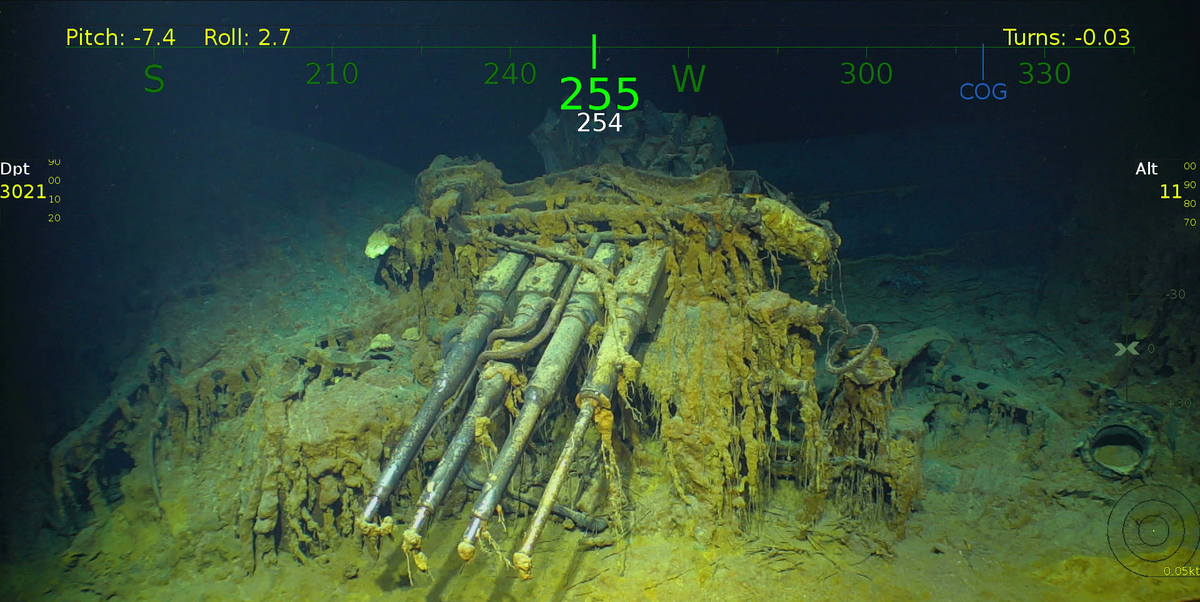
For more than seven decades, the USS Lexington rested in the deep silence of the Coral Sea, far below fishing boats, shipping lanes, storms, and ordinary human memory. Then, in March 2018, a deep-sea expedition led by Microsoft co-founder and philanthropist Paul G. Allen located the wreck of the legendary World War II aircraft carrier about 3,000 meters beneath the surface, more than 500 miles off Australia’s eastern coast. Suddenly, “Lady Lex,” as her crew affectionately called her, was no longer just a name in naval records. She was visible againher guns, aircraft, nameplate, and battle scars preserved in the cold darkness like a time capsule with a steel flight deck.
The discovery of this long-lost World War II aircraft carrier was not just another “cool shipwreck found” headline, although, to be fair, it absolutely was cool. It was a rare moment when technology, history, and human memory met on the ocean floor. The USS Lexington was one of America’s first aircraft carriers, a ship that helped define how naval warfare would be fought in the modern age. Her final battle, the Battle of the Coral Sea in May 1942, became the first major naval engagement in which opposing ships never directly saw each other. Aircraft did the fighting. Carriers became the center of sea power. The future arrived loudly, and Lexington paid a heavy price for it.
The Legendary “Lady Lex” Before the War
The USS Lexington began life with a plot twist worthy of a Hollywood prequel. She was originally planned as a battlecruiser, a fast, heavily armed warship designed for big-gun naval combat. But the Washington Naval Treaty of 1922 changed naval construction rules, and the unfinished hull was converted into an aircraft carrier. In other words, Lexington started out as one kind of sea monster and became another.
Commissioned in 1927, Lexington was massive for her era. She stretched nearly 900 feet, carried dozens of aircraft, and used turbo-electric propulsion that made her both advanced and unusual. Long before World War II, she helped the U.S. Navy learn how to operate aircraft carriers as more than floating airfields. During naval exercises, carriers like Lexington and her sister ship Saratoga proved that aircraft could strike far beyond the range of traditional battleship guns. The old battleship admirals may not have loved that lesson, but history was already clearing its throat.
Her crew nicknamed her “Lady Lex,” a name that gave the giant vessel a strangely personal charm. She was not just steel, engines, cables, elevators, and flight decks. She was a workplace, a home, a machine, and a symbol. Thousands of sailors and aviators passed through her decks before and during the war, and many remembered her with the kind of affection usually reserved for hometown diners, loyal dogs, and cars that somehow survive three teenagers learning to drive.
Why the Battle of the Coral Sea Mattered
To understand why the discovery of the USS Lexington matters, we need to visit May 1942. The Pacific War was still young, and Japan had advanced rapidly after Pearl Harbor. Japanese forces were pushing toward Port Moresby in New Guinea, a move that threatened Australia and Allied supply lines. The United States and its allies needed to stop that expansion before the map got uglier.
The Battle of the Coral Sea took place from May 4 to May 8, 1942. On one side were Allied forces including the U.S. carriers Lexington and Yorktown. On the other were Japanese carrier forces supporting the planned invasion. What made the battle revolutionary was not simply its size or drama. It was the way it was fought. The opposing surface fleets never came within sight of each other. Instead, aircraft launched from carriers searched, attacked, missed, returned, refueled, and launched again across enormous distances.
This was the moment the aircraft carrier fully stepped into the spotlight. Battleships had dominated naval imagination for generations, but Coral Sea showed that the ship launching aircraft could be more important than the ship firing the biggest shell. The battle was messy, confusing, and costly, but strategically it helped stop Japan’s move toward Port Moresby. In the larger story of World War II in the Pacific, Coral Sea helped set the stage for the Battle of Midway one month later.
The Final Hours of USS Lexington
On May 8, Japanese aircraft struck Lexington with torpedoes and bombs. At first, the carrier seemed damaged but still possibly savable. Her crew fought hard to control flooding, fires, and mechanical problems. For several hours, it looked as if “Lady Lex” might limp away from the battle and live to fight again.
Then internal explosions changed everything. Gasoline vapors from damaged aviation fuel systems helped create dangerous conditions inside the ship. Fires spread. Explosions shook the carrier. The crew’s battle shifted from fighting the enemy to fighting the ship’s own destruction. Eventually, the order came to abandon ship.
More than 2,700 crewmen were rescued by nearby U.S. ships, a remarkable evacuation under terrible conditions. Still, 216 men were lost with Lexington. After the evacuation, the destroyer USS Phelps was ordered to scuttle the crippled carrier so she would not fall into enemy hands. Torpedoes sent “Lady Lex” beneath the Coral Sea. The first U.S. fleet carrier lost in World War II disappeared from view, taking aircraft, equipment, and unanswered questions with her.
How the Long-Lost Carrier Was Found
The wreck of USS Lexington remained lost until March 4, 2018, when the crew of Research Vessel Petrel located her deep in the Coral Sea. The expedition was funded by Paul G. Allen, whose team had already become known for finding major World War II wrecks. The Petrel was equipped with advanced sonar systems and remotely operated vehicles capable of reaching extreme depths. This was not treasure hunting with a pirate map and a dramatic parrot. It was patient research, deep-ocean engineering, and the kind of technical persistence that makes “needle in a haystack” sound too easy.
Search teams used historical records, battle reports, estimated sinking positions, and modern seabed mapping to narrow the area. At nearly two miles deep, the pressure is immense, sunlight is absent, and human divers cannot simply swim down for a quick look. Remotely operated vehicles, or ROVs, did the visual confirmation. When cameras captured the nameplate reading “Lexington,” the mystery was finally settled.
What the team found was stunning. Parts of the carrier rested on the seafloor along with aircraft that had gone down with the ship. Images showed remarkably preserved planes, including TBD Devastator torpedo bombers, SBD Dauntless dive bombers, and an F4F Wildcat fighter. Some still displayed paint, insignia, and squadron markings. One Wildcat showed the famous Felix the Cat emblem of Fighting Squadron 3. For historians and aviation enthusiasts, that was the underwater equivalent of finding a handwritten note tucked inside a library book from 1942.
Why the Wreck Was So Well Preserved
Deep-sea wrecks can look surprisingly intact because the environment is cold, dark, and relatively stable. There is little light, fewer organisms that rapidly break down materials, and less disturbance from storms or human activity. The USS Lexington was not perfectly intactno ship goes through battle damage, sinking, and a long fall to the seabed without consequencesbut many features remained recognizable.
The aircraft were especially powerful discoveries. Unlike restored museum pieces, these planes were not polished, repainted, and placed under bright lights. They were frozen in context. Their markings, folded parts, and positions told a story about the ship’s final day. They also reminded viewers that military technology is never just machinery. Each aircraft had pilots, mechanics, deck crews, fuel handlers, and signalmen connected to it. Every preserved marking was a doorway into a human story.
The Human Side of a Deep-Sea Discovery
Shipwreck discoveries often attract attention because they are mysterious, dramatic, and visually spectacular. But the USS Lexington is also a war grave. That matters. The wreck is not simply an artifact collection scattered across the ocean floor. It is the final resting place connected to sailors who died during the Battle of the Coral Sea.
Responsible maritime archaeology treats such sites with respect. The goal is documentation, not disturbance. High-resolution video, photography, sonar mapping, and historical analysis can reveal enormous amounts without removing objects. In the case of Lexington, the images helped families, historians, veterans, and the public reconnect with a story that had been hidden beneath the sea for 76 years.
There is something deeply moving about seeing a ship after so much time has passed. History books can tell us that a carrier sank. A photograph from the deep ocean makes that fact feel present. Suddenly, the past is not flat text on a page. It has rivets, propellers, wheels, paint, bent metal, and silence.
Other World War II Aircraft Carrier Discoveries
The discovery of USS Lexington belongs to a wider wave of deep-sea World War II exploration. Paul Allen’s research teams and other maritime explorers have helped locate several famous wrecks, including USS Indianapolis, USS Hornet, and Japanese battleship Musashi. Each discovery adds detail to naval history and helps correct or confirm wartime records.
USS Hornet, another legendary American aircraft carrier, was found in 2019 near the Solomon Islands. Hornet had launched the Doolittle Raid in 1942, fought at Midway, and was later sunk during the Battle of the Santa Cruz Islands. Like Lexington, her wreck helped bring a famous ship back into public memory. These discoveries show how much of World War II’s physical history still lies underwater, waiting for technology and careful research to catch up.
Not every wreck should be raised, and not every mystery needs to become a tourist attraction. In many cases, the best approach is to document, study, and leave the site undisturbed. The ocean has become an enormous archive, and deep-sea explorers are learning how to read it without tearing out the pages.
What USS Lexington Teaches Us About Naval Warfare
The USS Lexington discovery is more than a dramatic ending to a lost-ship mystery. It helps explain a turning point in military history. Before World War II, many naval planners still believed battleships would decide major sea battles. By 1942, aircraft carriers were proving otherwise. Coral Sea and Midway showed that airpower at sea could determine the fate of entire campaigns.
Lexington was part of that transformation. She was born from a battlecruiser design, converted into a carrier, tested in prewar exercises, and lost in the first carrier-versus-carrier battle in history. Her life story almost reads like the U.S. Navy’s own transition from old-school gun duels to aviation-centered warfare.
That is why the wreck matters. It is not just a sunken ship; it is evidence of a world changing at high speed. The carrier’s broken sections, scattered aircraft, and preserved details help historians understand both the technology and the human experience of early carrier warfare. The ocean floor became a classroom, though admittedly one with terrible lighting and absolutely no comfortable chairs.
Why People Still Care About Lost WWII Ships
World War II is often discussed through dates, leaders, maps, and battles. Shipwrecks make the history physical. They remind us that war was experienced by individuals working in cramped engine rooms, crowded hangars, hot galleys, radio rooms, gun stations, and flight decks where one mistake could become everyone’s emergency.
The discovery of a long-lost World War II aircraft carrier also speaks to a broader human fascination with hidden history. We like mysteries, but we care about meaningful mysteries even more. Finding Lexington did not change the outcome of the Battle of the Coral Sea. It did something quieter: it restored detail. It gave shape to memory. It allowed people to see what had only been imagined.
For younger generations, discoveries like this can make World War II feel less distant. A black-and-white photograph from 1942 may seem ancient. A high-definition image of a Wildcat fighter sitting in deep water, still carrying its markings, feels immediate. It says: this really happened, and the evidence is still here.
Experiences Related to “Long-Lost World War II Aircraft Carrier Found at Last”
There is a special kind of feeling that comes from learning about a lost ship being found. It is not exactly excitement, not exactly sadness, and not exactly curiosity. It is a mix of all three, with a little goosebump seasoning sprinkled on top. When people first see images of the USS Lexington resting on the ocean floor, the reaction is often quiet amazement. The ship looks both ruined and dignified, damaged and preserved, distant and strangely close.
Imagine standing in a museum exhibit about the Battle of the Coral Sea. You read a panel explaining that Lexington sank in 1942. That is interesting. Now imagine seeing deep-sea footage of the actual ship, her name still visible, her aircraft still nearby, her guns still recognizable. The experience changes. The event stops being only historical information and becomes something you can almost feel. It is the difference between reading that someone built a house long ago and finding the front door still standing in the woods.
For families connected to sailors who served aboard Lexington, the discovery can be deeply personal. A name in a family story becomes attached to a real place. Grandchildren and great-grandchildren who never met the sailors can see where part of their family history unfolded. Even when no remains are recovered and no objects are brought up, documentation itself can offer a form of recognition. The message is simple but powerful: they were not forgotten.
For history lovers, the discovery creates a different experience. It invites questions. How did naval aviation evolve so quickly? What did pilots face when launching from early carriers? How did crews manage fuel, aircraft, repairs, and battle damage on a moving ship in wartime? The wreck does not answer everything, but it gives researchers more evidence. Every aircraft position, every broken section, every preserved marking can add a small piece to the puzzle.
For technology enthusiasts, the search is just as fascinating as the ship. The idea of finding a wreck nearly two miles underwater is mind-boggling. The ocean is huge, dark, deep, and not particularly interested in making things easy. Search teams must combine archival research, sonar mapping, navigation data, robotics, engineering, and patience. A modern ROV becomes the eyes and hands of historians, moving through darkness where no human could safely go. It is exploration in the truest sense, except the “new world” being explored is part of our own past.
There is also an emotional lesson in restraint. Many people instinctively ask, “Will they bring anything up?” Sometimes the better question is, “Should they?” Wrecks like USS Lexington are historic sites and memorial spaces. Leaving them undisturbed can be an act of respect. The best experience may not come from touching an artifact in a display case, but from knowing the site remains intact, carefully documented, and protected as part of shared history.
Finally, the discovery reminds us that history is never completely finished. Even when textbooks summarize a battle in a few paragraphs, the physical evidence may still be waiting somewhereunderwater, underground, in archives, or in family collections. “Long-lost World War II aircraft carrier found at last” is more than a headline. It is a reminder that the past still has a voice. Sometimes it speaks through documents. Sometimes through photographs. And sometimes through a silent carrier resting in the deep sea, waiting for the world to look again.
Conclusion
The discovery of the USS Lexington was a remarkable moment in maritime archaeology and World War II history. Found after 76 years beneath the Coral Sea, the long-lost aircraft carrier revealed a preserved battlefield far below the waves. Her wreck tells the story of early naval aviation, the courage of her crew, the strategic importance of the Battle of the Coral Sea, and the power of modern technology to reconnect us with the past.
“Lady Lex” may have vanished in 1942, but she was never truly gone. Her story lived in naval records, survivor memories, family histories, and museum archives. When deep-sea cameras finally found her again, they did more than solve a mystery. They returned a legendary ship to public memory, reminding us that history is not only writtenit is also waiting, quietly, in the deep.