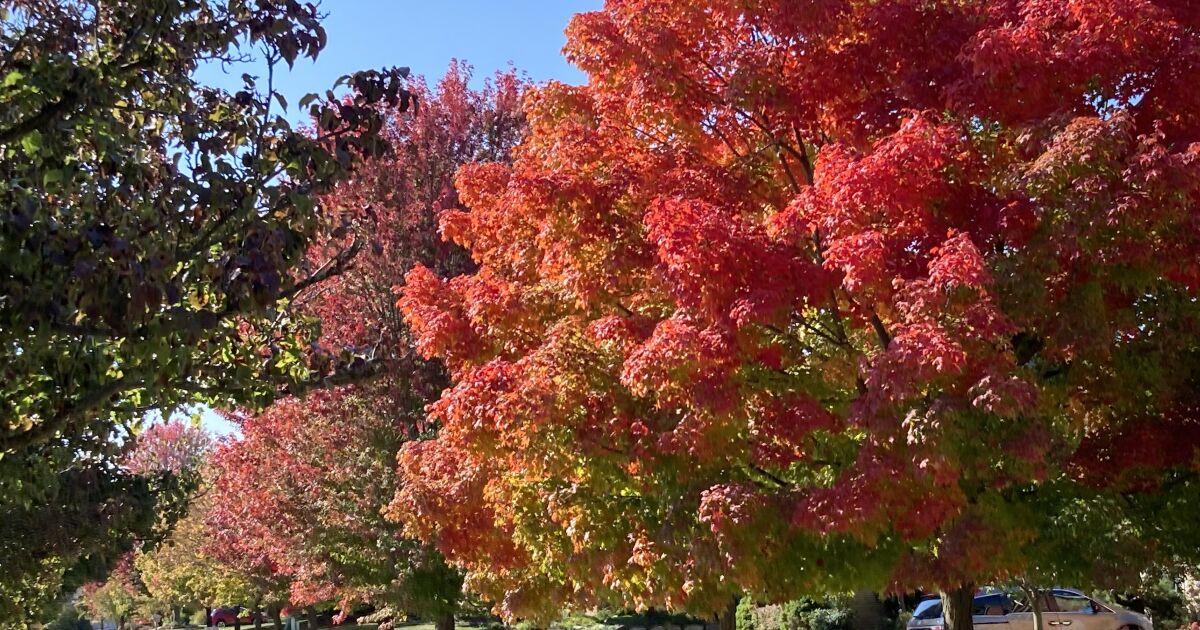
There are two kinds of people in autumn: those who casually admire a golden tree on the way to the grocery store, and those who stop mid-sidewalk, whisper “wow,” and take 47 pictures of the same leaf from slightly different angles. This article is for the second groupand, honestly, for the first group too, because autumn leaves have a sneaky way of turning even the most serious adult into a happy raccoon collecting shiny things.
The invitation is simple: Hey Pandas, post your favorite picture of autumn leaves! It can be a dramatic forest path glowing like a movie poster, one perfect maple leaf on wet pavement, a backyard tree doing its annual fashion show, or a blurry but beloved photo taken while your dog tried to pull you into a bush. Autumn photography does not require perfection. It requires noticing.
Fall foliage is one of the most photogenic seasonal moments in the United States. From New England maples to the Appalachian Mountains, from the Colorado Rockies to small neighborhood parks, colorful leaves create a short-lived outdoor gallery. The colors feel magical, but they are also rooted in science: shorter days, cooler temperatures, fading chlorophyll, and pigments that finally get their turn in the spotlight. Nature is basically saying, “Before winter arrives, let me absolutely crush this final outfit.”
Why Autumn Leaves Make Us Reach for the Camera
Autumn leaves are beautiful because they are temporary. A summer tree is lovely, but it stays green for months like it has a long-term contract. Fall foliage, however, arrives with a deadline. One windy afternoon can change the whole scene. That urgency makes people want to capture it, share it, and say, “Look, this existed for a minute, and I was lucky enough to see it.”
There is also something emotionally cozy about fall colors. Yellow leaves feel cheerful, orange leaves feel warm, red leaves feel dramatic, and brown leaves bring that crunchy, earthy, “someone please hand me a cinnamon snack” mood. A good autumn leaves picture can feel like a memory even when you took it five minutes ago.
The Simple Science Behind Fall Colors
During spring and summer, leaves look green because of chlorophyll, the pigment that helps plants use sunlight to make food. As autumn arrives, shorter days and cooler temperatures signal deciduous trees to prepare for winter. Chlorophyll breaks down, and the hidden colors inside the leaves become visible.
Yellow and Orange Leaves
Yellow and orange shades often come from carotenoids, pigments that are present in leaves throughout the growing season but hidden by green chlorophyll. When the green fades, the golds and oranges step forward like backup dancers who have secretly been the stars all along.
Red and Purple Leaves
Red, purple, and crimson colors usually come from anthocyanins. These pigments can develop when sugars are trapped in leaves during autumn. Warm sunny days followed by cool, above-freezing nights often help produce especially vivid red tones. In other words, the best red leaves enjoy weather that feels like a comfortable sweater: bright by day, chilly by night, but not frozen solid.
Brown and Russet Leaves
Brown leaves are not failed leaves. They are part of the palette too. Tannins and late-season breakdown processes can create tan, russet, and deep brown tones, especially in species such as oaks and beeches. A forest floor covered in brown leaves may not shout like a red maple, but it has quiet main-character energy.
What Makes a Great Autumn Leaves Picture?
A great autumn leaves picture does not have to look like it came from a calendar company with suspiciously perfect lighting. The best fall foliage photos often have one clear feeling: calm, wonder, nostalgia, joy, or “I just stepped on a leaf so crunchy it deserves an award.”
1. A Strong Subject
Instead of photographing every tree in sight, choose one subject: a single red leaf, a tunnel of golden branches, a reflection in a lake, or a path covered in leaves. A photo becomes stronger when the viewer knows where to look first.
2. Interesting Light
Early morning and late afternoon light can make autumn colors glow. Overcast days are also excellent because soft light reduces harsh shadows and makes colors look rich. Bright noon sun may be useful, but it can also wash out delicate colors, especially yellow leaves.
3. Texture and Detail
Autumn is a texture festival. Look for curled leaf edges, raindrops, veins, bark, moss, stones, and the contrast between smooth paths and messy leaf piles. Close-up shots can be just as powerful as wide landscapes.
4. A Human Touch
A hand holding a leaf, boots on a leaf-covered trail, a coffee cup beside a pile of maple leaves, or a child pointing at a bright tree can add story. The leaf is pretty; the human moment makes it memorable.
Photo Ideas for Pandas Who Want to Join the Autumn Fun
If you are ready to post your favorite picture of autumn leaves but your camera roll currently contains 900 nearly identical tree photos, do not panic. That is not a failure. That is fall enthusiasm with storage consequences.
Try a Single-Leaf Portrait
Pick one leaf with strong color or an unusual shape. Place it on a simple background such as a sidewalk, wooden table, tree stump, or neutral fabric. Shoot from above for a clean, graphic look. This works especially well for maple, oak, sweetgum, and dogwood leaves.
Capture Leaves in Motion
A leaf falling through the air is hard to photograph, but when it works, it feels magical. Use burst mode on your phone or camera. You can also toss a few leaves gently upward and photograph them as they drift down. Just avoid throwing leaves into someone’s face unless your goal is to be remembered as “the chaotic leaf person.”
Look for Reflections
Water doubles the drama. A pond, puddle, lake, or even a shiny car roof can reflect fall color. Reflections work beautifully on cloudy days because the softer light helps preserve detail.
Use Trails and Roads as Leading Lines
Paths, fences, bridges, and winding roads naturally guide the eye through a photo. A leaf-covered trail disappearing into the trees practically writes its own story: “Something cozy and mysterious is ahead, probably involving soup.”
Include Contrast
Autumn colors pop when they are paired with contrast. Try red leaves against blue sky, yellow leaves against dark bark, orange leaves on gray stone, or brown leaves beside green moss. Contrast gives the viewer’s eye something to hold onto.
Where to Find Beautiful Autumn Leaves
You do not need to travel across the country to find a good fall photo. Some of the best autumn leaves pictures happen in ordinary places: school sidewalks, apartment courtyards, parking lots, backyard fences, and neighborhood parks. The trick is to slow down and look at small scenes.
That said, many classic leaf-peeping destinations in the United States are famous for a reason. The Appalachian region, including areas around Shenandoah, the Blue Ridge Parkway, and Great Smoky Mountains, is known for diverse deciduous forests and long fall color seasons. New England is legendary for maples. The upper Midwest has glowing hardwood forests. The Rockies offer golden aspens that look like sunlight learned how to grow leaves.
Elevation matters too. In mountainous areas, colors often begin at higher elevations and gradually move downward. Weather, rainfall, wind, drought, and temperature all influence timing and intensity. That is why “peak color” is less like a fixed appointment and more like a dramatic friend who says they will arrive at 7 but shows up whenever the lighting feels right.
How to Write a Great Caption for Your Autumn Leaves Picture
A strong caption can turn a pretty photo into a post people remember. You do not need to write a poem, although autumn does make everyone suspiciously poetic. Keep it simple, specific, and human.
Caption Examples
“Found this little maple leaf pretending to be a sunset.”
“My neighborhood tree waited all year just to show off for three days.”
“Crunch level: professional.”
“I came for a walk and accidentally joined the leaf paparazzi.”
“This is my favorite autumn leaves picture because it feels like the season paused for me.”
Leaf-Peeping Etiquette: Be Kind to Nature and Other Humans
Autumn brings crowds to scenic overlooks, parks, trails, and roads. Good leaf-peeping manners make the season better for everyone. Take photos from safe areas, stay on marked trails, pull over only where it is allowed, and do not block traffic for a “just one more shot” moment. We all understand the temptation, but no leaf picture is worth creating a roadside circus.
Watch your footing on trails because loose leaves can hide rocks, roots, mud, or slick surfaces. If you are hiking, bring water, layers, navigation, and a light source. Weather can change quickly in fall, and sunset arrives earlier than many people expect. Autumn is gorgeous, but it has a tiny prankster personality.
Also, avoid damaging trees or plants for a photo. Fallen leaves are fair game for artful arrangements, but snapping branches or trampling sensitive areas is not worth it. The best fall photos celebrate nature without making nature file a complaint.
Why Sharing Autumn Photos Feels So Good
Posting autumn leaves is not just about showing color. It is about sharing a pause. A fall photo says, “I noticed something beautiful today.” In a fast-scrolling world, that is a small but meaningful act.
Community posts like “Hey Pandas, post your favorite picture of autumn leaves!” work because they invite everyone in. You do not need expensive equipment, professional editing, or a famous location. A phone photo of one golden leaf on a driveway can be just as charming as a mountain panorama. Sometimes more charming, actually, because it feels personal.
How to Improve Your Autumn Leaves Photo Without Overediting
Editing can help a fall photo, but too much editing can make leaves look radioactive. Unless your maple tree has been drinking neon energy drinks, keep the colors believable. Slightly increase contrast, adjust exposure, sharpen details, and warm the white balance if needed. Be careful with saturation. A gentle boost is nice; turning every leaf into a traffic cone is a choice, but not always a wise one.
Crop the photo to remove distractions. Straighten horizons. If the sky is dull, focus more on the leaves and less on the blank white space above them. If the photo feels busy, try converting your idea into a closer crop. Autumn is already dramatic; your job is to help it speak clearly, not give it a megaphone and glitter cannon.
of Autumn Leaves Experience: A Walk, a Camera, and a Very Opinionated Tree
One of the best autumn leaves experiences begins with no plan at all. You step outside thinking you are only going for a quick walk, maybe ten minutes, maybe just enough time to clear your head. Then you notice one tree at the end of the street that has apparently decided to become a masterpiece overnight. Yesterday it was mostly green. Today it is gold, orange, and red, like it attended a secret meeting and was elected mayor of October.
You take one photo. Then you move closer and take another. Then you crouch slightly because the light looks better from that angle. Suddenly you are no longer a person taking a walk. You are a documentary filmmaker covering the emotional journey of a leaf. A neighbor passes by and says, “Pretty, isn’t it?” You nod with the seriousness of someone who has discovered a rare treasure, even though the treasure is technically all over the sidewalk.
The wonderful thing about photographing autumn leaves is how quickly your attention changes. At first, you see the whole tree. Then you see the branch. Then you see one leaf with a red edge fading into yellow. Then you notice that the leaf has tiny brown speckles, a little tear near the stem, and veins that look like rivers on a tiny map. The world becomes smaller, but somehow richer.
There is also the sound. Autumn photography is not only visual. Leaves crunch under your shoes. Wind moves through branches with a dry whisper. Somewhere nearby, a squirrel makes a suspicious noise, probably judging your composition. The air smells cooler, sharper, and faintly earthy. Even if your final picture is simple, the experience behind it feels full.
My favorite kind of autumn leaves picture is not always the brightest one. Sometimes it is a leaf stuck to wet pavement after rain, glowing against the dark gray ground. Sometimes it is a messy pile of leaves gathered near a curb. Sometimes it is a tree that has lost half its foliage but still holds onto a few stubborn gold leaves like tiny lanterns. Those photos feel honest. They show that fall is not just peak color; it is change, movement, and letting go.
That is why the best autumn leaf photos often come with a memory attached. Maybe you took the picture during a family walk. Maybe it was outside your school, your office, your apartment, or a park bench where you stopped for five quiet minutes. Maybe the photo is technically imperfect but emotionally perfect. A little blur, a crooked frame, or a photobombing dog does not ruin it. It makes it yours.
So, Pandas, post the picture. Share the red maple, the golden aspen, the oak leaf, the leaf pile, the rainy sidewalk, the glowing trail, or the tiny leaf you saved in a book because it looked too pretty to leave behind. Autumn does not last long, but a photo lets us keep a small piece of itwithout having to sweep the entire yard afterward, which is frankly a major bonus.
Conclusion
Autumn leaves remind us that beauty does not have to last forever to matter. Their colors come from real chemistry, seasonal timing, weather patterns, and tree survival strategies, but the feeling they create is wonderfully human. We stop, look, photograph, share, and remember. Whether your favorite autumn leaves picture is a sweeping forest view or one tiny leaf on your front steps, it belongs in the conversation.
So here is the official invitation: Hey Pandas, post your favorite picture of autumn leaves! Show us the season through your eyes. Make it cozy, funny, dramatic, peaceful, or wonderfully chaotic. The leaves already did the hard part by turning into art. Now it is your turn to frame the moment.
SEO Tags
Note: This is an original web-ready article based on reputable U.S. forestry, national park, university extension, science, and photography guidance, rewritten in a natural style with no copied source text.