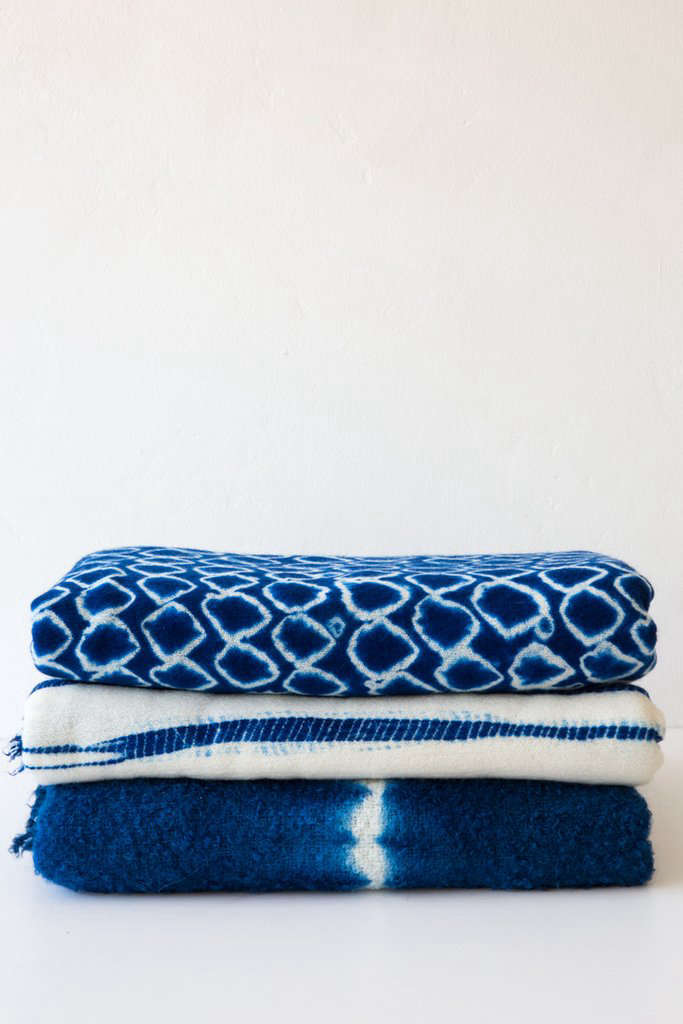
A Suzusan Shibori Throw is not the kind of blanket you toss over the sofa and forget about. It has presence. It has texture. It has that quietly dramatic look that makes guests pause and say, “Waitwhere did you get that?” Then you get to casually answer, “Oh, it’s handmade in Japan,” as though your living room did not just gain museum-level textile credibility.
At its heart, the Suzusan Shibori Throw blends traditional Japanese resist-dyeing with the comfort of a luxury home textile. Depending on the design, Suzusan throws may feature wool, cashmere, alpaca, linen, or other refined fibers, shaped through the visual language of shibori: binding, stitching, pleating, compressing, and dyeing fabric to create irregular patterns that look both controlled and wildly alive.
Unlike printed throws, where the surface design simply sits on top of the fabric, shibori is part of the textile’s transformation. The pattern is created through pressure, resistance, dye, patience, and a very human kind of imperfection. That is exactly why a Suzusan Shibori Throw feels less like a seasonal décor accessory and more like a piece of functional art. Yes, it can keep you warm. It can also make your sofa look like it went to design school in Kyoto and did a semester abroad in Düsseldorf.
What Is a Suzusan Shibori Throw?
A Suzusan Shibori Throw is a luxury throw blanket made by Suzusan, a Japanese textile brand rooted in the Arimatsu-Narumi shibori tradition. Suzusan was founded by Hiroyuki Murase, a fifth-generation member of a family connected to shibori craftsmanship. The brand is known for translating a centuries-old Japanese textile technique into modern home goods, scarves, clothing, lighting, and interior pieces.
The throw itself is usually defined by three things: a high-quality natural fiber base, a handmade shibori process, and a pattern that is never perfectly identical from one piece to the next. Some Suzusan throws are made with wool and cashmere blends for softness and warmth. Others may use linen with a waffle texture for a lighter, more breathable feel. Sizes vary by style, but many are large enough to work beautifully at the end of a bed, over the back of a sofa, or wrapped around shoulders on a cool evening.
What makes the Suzusan Shibori Throw especially appealing is the balance between tradition and restraint. It is not loud in the way mass-market tie-dye can be loud. Instead, the patterning often feels atmospheric: misty gradients, broken stripes, soft dots, cloudy transitions, or inky contrasts. The result is a throw that feels earthy, elegant, and slightly mysteriouslike your blanket knows something about good taste that the rest of the room is still learning.
The Story Behind Suzusan and Arimatsu Shibori
To understand the appeal of the Suzusan Shibori Throw, it helps to understand where it comes from. Arimatsu, now part of Nagoya in Aichi Prefecture, Japan, is famous for Arimatsu-Narumi shibori, a traditional tie-dyeing craft that developed during the Edo period. Historically, the region became known for producing shibori textiles such as hand towels and kimono fabrics, using complex resist-dye methods passed down through generations.
Shibori is often simplified as “Japanese tie-dye,” but that comparison does not really do it justice. Tie-dye may bring to mind summer camp T-shirts and enthusiastic rubber-band experiments. Shibori, especially in the Arimatsu tradition, is a highly refined family of techniques. Fabric may be folded, stitched, bound, twisted, clamped, gathered, or compressed before dyeing. Each method produces a different visual effect, from small dotted patterns to sweeping stripes and smoky gradients.
Suzusan’s modern achievement is that it does not freeze this heritage behind glass. Instead, the brand brings shibori into contemporary interiors and wardrobes. A Suzusan Shibori Throw can sit comfortably in a minimalist apartment, a rustic farmhouse bedroom, a modern loft, or a carefully layered bohemian living room. It respects tradition without looking like a souvenir. That is a tricky design line to walk, and Suzusan walks it with the confidence of someone who has been practicing for generations.
Why Shibori Makes This Throw Different
The beauty of shibori lies in controlled unpredictability. The artisan can guide the process, but the cloth still gets a vote. Dye moves through fiber differently depending on tension, folding, stitching, material, and time. This creates patterns that feel organic rather than mechanical.
Every Throw Has Its Own Signature
Because the shibori process is done by hand, no two Suzusan throws are exactly the same. Even when two pieces share the same colorway or pattern family, small variations appear in the spacing, gradient, texture, and dye movement. That uniqueness is part of the value. You are not buying “a blanket with a design.” You are buying a textile shaped by hands, materials, and process.
The Pattern Is Built Into the Fabric’s Personality
Printed throws can look attractive, but their designs often feel surface-level. Shibori has depth because the pattern is created through the way dye interacts with resisted areas of fabric. The light and dark sections are not merely decorative; they are evidence of the making process. That gives the Suzusan Shibori Throw a tactile and visual richness that rewards close looking.
It Works With Modern Interiors
One reason Suzusan has found an audience beyond traditional textile collectors is that its shibori patterns feel contemporary. Blue-and-white versions can look crisp and coastal. Black-and-white throws add graphic contrast. Soft gray, ivory, or indigo gradients bring quiet sophistication. Instead of shouting for attention, the throw adds movement, craft, and depth to a room.
Materials: Wool, Cashmere, Alpaca, Linen, and Soft Luxury
Suzusan throws are often made from premium fibers, and the exact material depends on the specific design. Some product listings describe wool and cashmere blends, such as 85% wool and 15% cashmere or 90% wool and 10% cashmere. Other versions may include alpaca or linen. These materials are not just chosen for luxury points, although let’s be honest: cashmere does make everything sound as if it should be served with sparkling water and very small cookies.
Wool provides warmth, resilience, and natural texture. Cashmere adds exceptional softness and a more delicate hand. Alpaca can bring loft, warmth, and a plush feel. Linen versions, especially waffle-woven styles, offer breathability and a relaxed, sculptural texture that works well in warmer climates or layered bedding. Together, these fibers help position the Suzusan Shibori Throw as both practical and collectible.
The material also affects how you use the throw. A wool-cashmere shibori throw is ideal for cooler evenings, reading corners, guest rooms, and bed layering. A linen waffle throw may feel more casual and breathable, making it suitable for year-round styling. If you are choosing between versions, think first about your climate and use case: cozy winter comfort, decorative layering, airy summer texture, or all-day sofa luxury.
How to Style a Suzusan Shibori Throw at Home
The Suzusan Shibori Throw is versatile, but it looks best when you let it breathe visually. Because the pattern already has movement, it does not need to fight with too many other busy prints. Give it a calm backdrop and it will do the heavy lifting.
On a Sofa
Drape the throw over one arm of the sofa for a relaxed, editorial look. If your sofa is neutralcream, gray, tan, charcoal, or browna blue-and-white or black-and-white shibori throw adds instant contrast. Fold it lengthwise for a clean stripe of pattern, or let it fall naturally for a softer, lived-in effect. The goal is not perfection. The goal is “effortless,” which, as every decorator knows, sometimes requires exactly seven minutes of adjusting fabric and pretending it took one second.
At the End of a Bed
A large Suzusan Shibori Throw looks stunning folded across the foot of a bed. It breaks up solid bedding and adds an artisan layer without making the room feel cluttered. Pair it with white linen sheets, a natural wood bed frame, and simple pillows for a calm Japanese-inspired look. For a moodier bedroom, use a black, indigo, or deep blue shibori throw against charcoal, taupe, or oatmeal bedding.
Over a Chair or Bench
If you have a reading chair, accent chair, or entryway bench, a Suzusan throw can soften hard lines and introduce visual interest. A small placement works especially well in rooms where you want a textile moment but do not want the entire space to feel busy. Think of it as the home décor equivalent of wearing one excellent scarf instead of seven necklaces.
As Wall Textile Art
Some people may choose to display a shibori throw as wall art, especially if the pattern is particularly striking. This works best in minimalist rooms, above a console, behind a bed, or in a hallway that needs warmth. Because Suzusan throws are handmade textiles, treating one as an art piece feels completely reasonable. Just use proper hanging methods that avoid stretching, puncturing, or damaging the fabric.
Color and Pattern: Choosing the Right Look
Suzusan’s shibori patterns range from subtle to dramatic. When choosing a Suzusan Shibori Throw, consider how much contrast your room needs.
A blue-and-white throw feels classic, fresh, and slightly coastal. It pairs beautifully with pale wood, rattan, ceramics, white walls, and linen upholstery. A black-and-white shibori throw feels more graphic and modern, making it a strong choice for contemporary interiors or rooms with metal accents. Ivory, gray, and soft neutral versions create a quieter look, ideal for bedrooms and spaces where calm is the main design goal.
Pattern type matters too. Striped shibori can create direction and structure. Cloudy or gradient patterns feel softer and more atmospheric. Dot-like motifs add playfulness without becoming childish. If your room already has patterned rugs or pillows, choose a subtler Suzusan throw. If your space is mostly solid colors, you can go bolder.
Care Tips for a Suzusan Shibori Throw
A handmade luxury textile deserves gentle care. Always follow the care label for your specific Suzusan throw, because instructions may vary depending on fiber content and finishing. Many wool, cashmere, and alpaca textiles require hand washing or professional care, while linen pieces may have different instructions.
For delicate wool and cashmere blends, avoid aggressive machine washing, hot water, harsh detergent, twisting, or wringing. Spot clean small marks when possible, using a gentle textile-safe approach. If washing is recommended, use cool water, mild detergent, and minimal agitation. Lay the throw flat to dry away from direct sunlight and heat. Hanging a wet heavy throw can stretch it, which is not the dramatic transformation anyone wants from an expensive blanket.
For storage, fold the throw clean and dry. Use breathable cotton storage rather than plastic when storing for long periods. Keep it away from moths, damp spaces, and direct sunlight. A Suzusan Shibori Throw is made to be used, but it also benefits from thoughtful handling. Treat it well and it can remain beautiful for years.
Is a Suzusan Shibori Throw Worth It?
A Suzusan Shibori Throw is not a budget blanket. It belongs in the category of artisan home textiles, where price reflects materials, handwork, heritage, design, and limited production. For someone who simply needs “something warm,” there are cheaper options everywhere. For someone who values craft, texture, Japanese design, and objects with a story, the Suzusan throw offers something more meaningful.
The value is not only in warmth. It is in the way the throw changes a room. It adds softness to modern spaces, refinement to casual rooms, and authenticity to interiors that might otherwise feel too polished. It also ages differently from trend-driven décor. Because shibori is rooted in tradition and natural irregularity, it does not look dated as quickly as mass-produced seasonal prints.
In other words, the throw is worth considering if you want a textile that does more than match your pillows. It is for people who appreciate the difference between decoration and craft. Also, it is for people who understand that sometimes the smallest “finishing touch” in a room is actually the thing everyone notices first.
How It Compares With Ordinary Throws
Ordinary throws can be cozy, attractive, and useful. There is nothing wrong with a good cotton knit blanket or a soft fleece throw for movie night. But the Suzusan Shibori Throw sits in a different lane. It is less about quick comfort and more about long-term character.
A standard printed throw often looks the same across hundreds or thousands of units. A Suzusan shibori piece carries variation. A mass-market throw may follow a trend color or seasonal theme. Suzusan’s designs rely on a craft tradition that has survived for centuries. A typical throw may be replaced when décor changes. A Suzusan throw is more likely to move with you from room to room, home to home, and maybe even generation to generation if cared for properly.
That does not mean it has to be treated like a fragile museum artifact. The best handmade textiles are often happiest when they are part of daily life. Use it on the bed. Curl up with it. Let it add warmth to quiet mornings and texture to evenings at home. Just do not toss it into a hot wash with gym socks and optimism.
Best Rooms for a Suzusan Shibori Throw
The living room is the most obvious place for a Suzusan Shibori Throw. It can soften a structured sofa, add contrast to a neutral palette, and create that layered look designers love. In a bedroom, it brings a boutique-hotel feeling without making the space look overly styled. In a home office, draped over a chair, it adds warmth and personality, especially if your workspace currently has the emotional range of a printer manual.
Guest rooms are another excellent choice. A Suzusan throw at the foot of the bed communicates care and attention without needing a handwritten welcome note, although that would also be lovely. In a reading nook, it becomes both practical and atmospheric. Pair it with a ceramic lamp, wood side table, and a good book, and suddenly your corner looks like it has a publishing deal.
Buying Tips: What to Look For
When shopping for a Suzusan Shibori Throw, confirm the material, size, care instructions, colorway, and pattern name. Look closely at dimensions because some pieces are generous bed-sized throws while others may be smaller shawl-like blankets. Check whether the fiber content suits your needs. Wool and cashmere are excellent for warmth, while linen can be better for lighter layering.
Because shibori patterns vary, review product images carefully. A handmade textile may not match the photo exactly, and that is part of the charm. Still, you should understand the general color balance and pattern style before buying. If you prefer symmetry, choose a design with more structured stripes. If you enjoy organic movement, choose a cloudier or more irregular pattern.
Finally, buy from reputable retailers or directly from authorized sources when possible. Suzusan is a respected craft-based brand, and authentic pieces carry the quality and story that make the investment worthwhile.
Personal Experiences and Everyday Impressions With a Suzusan Shibori Throw
Living with a Suzusan Shibori Throw is a different experience from simply owning a blanket. The first thing you notice is that it has mood. Place it on a plain sofa and the room suddenly feels more intentional. Not “I hired a celebrity interior designer” intentional, but “I have taste and maybe I read books with deckled edges” intentional.
In everyday use, the throw works best as a visible layer. It is too beautiful to hide in a closet and too tactile to treat as decoration only. Folded over the back of a sofa, it becomes a natural invitation to sit down. Draped across the end of a bed, it gives the room a finished look even when the rest of the bedding is refreshingly imperfect. There is something forgiving about shibori: the irregular pattern makes real life look better. A slightly rumpled linen duvet beside a shibori throw does not look messy; it looks relaxed and expensive. Interior design is full of these little miracles.
One of the most enjoyable things about a Suzusan Shibori Throw is how it changes with light. Morning light may soften the pattern and make the dye gradients look airy. Evening lamplight can make darker areas feel richer and more dramatic. In a room with natural wood, ceramics, books, and woven textures, the throw becomes part of a broader material conversation. It does not scream for attention. It quietly improves everything around it, which is frankly more than can be said for many decorative pillows.
The throw also teaches you to appreciate imperfection. In mass-produced décor, consistency is often treated as the highest goal. Every stripe must be straight. Every dot must repeat. Every edge must behave. Shibori does not operate that way. It celebrates the mark of the hand, the slight shift, the place where dye blooms differently than expected. That makes the Suzusan throw feel warm even before you wrap it around yourself.
As a practical piece, it shines during slow rituals: morning coffee, late-night reading, weekend naps, or the noble activity of watching one episode and accidentally finishing the entire series. A wool-cashmere version feels especially comforting in cooler weather, while linen styles offer a breezier kind of luxury. The texture matters as much as the pattern. You do not simply see the throw; you experience it through touch.
It is also a conversation starter, but not in a loud or gimmicky way. Guests may ask whether it is vintage, hand-dyed, Japanese, or custom made. That gives you an easy opening to talk about shibori, Arimatsu, and the idea of preserving craft through contemporary design. In a world full of disposable home goods, a Suzusan Shibori Throw feels refreshingly rooted. It has a past, a process, and a purpose.
The only downside is that it can make other throws look slightly lazy. Once you get used to the depth of handmade shibori, flat printed patterns may feel less exciting. But that is not really a problem. It is more like your eyes have upgraded their software.
If you are styling one at home, resist the urge to over-coordinate. Do not match every pillow to the exact shade of blue or gray. Let the throw be the interesting element. Pair it with natural materials, solid upholstery, simple ceramics, and relaxed bedding. The best setting for a Suzusan throw is one that gives it room to be itself.
Ultimately, the experience of owning a Suzusan Shibori Throw is about slowing down enough to notice craft. It reminds you that a blanket can be useful and beautiful, comfortable and cultural, modern and old at the same time. It is the kind of object that makes a house feel more personalnot because it is flashy, but because it carries evidence of human hands. And in a home, that kind of evidence matters.
Conclusion: A Throw With Craft, Comfort, and Quiet Drama
The Suzusan Shibori Throw is more than a luxury blanket. It is a meeting point between Japanese textile heritage and modern interior design. With its handmade shibori patterns, premium fibers, and timeless visual language, it brings warmth, texture, and meaning into the home. Whether styled on a sofa, layered across a bed, or displayed as textile art, it has the rare ability to feel both refined and relaxed.
For design lovers, collectors of handmade goods, or anyone tired of home décor that looks copied and pasted, the Suzusan Shibori Throw offers something special. It is cozy, yes. Beautiful, absolutely. But most importantly, it feels alive with process. That is what makes it memorableand what makes it worth the attention.