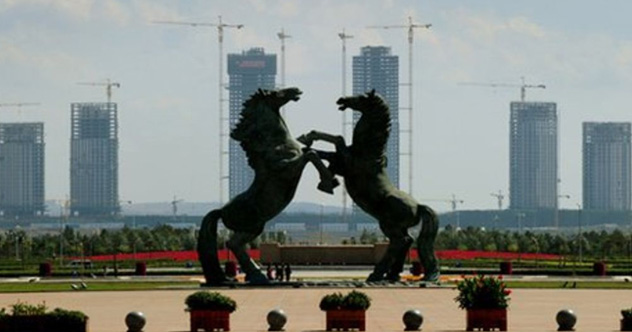
Human beings have a charming habit of looking at messy society and saying, “You know what would fix this? A brand-new city with perfect rules, perfect streets, perfect neighbors, and absolutely no unexpected plumbing issues.” From religious communes to corporate towns, from modernist capitals to eco-laboratories in the desert, the dream of the utopian city has tempted reformers, architects, industrialists, activists, and visionaries for centuries.
The problem is that cities are not chessboards. They are made of people, weather, budgets, politics, culture, disease, traffic, boredom, ego, and that one neighbor who insists on starting meetings that could have been notes on a bulletin board. Many utopian cities began with noble goals: equality, sustainability, beauty, social harmony, racial justice, efficient housing, or an escape from industrial chaos. Yet many ended in bankruptcy, abandonment, conflict, or the quieter failure of becoming just another place with rent, cars, and committee meetings.
This list explores ten failed attempts to create utopian cities, model communities, or planned settlements. Some physically collapsed. Others survived but failed to fulfill their original promise. All of them reveal the same lesson: building paradise is easy on paper. Maintaining it after dinner, payroll, mosquitoes, and human disagreement is the hard part.
1. New Harmony, Indiana: The Socialist Dream That Needed Better Management
New Harmony began as one of America’s most famous utopian experiments. In 1825, British industrial reformer Robert Owen purchased the Indiana town from the Harmonists and imagined a cooperative society based on education, equality, and shared property. It was supposed to prove that people could thrive without harsh competition or inherited privilege.
Unfortunately, New Harmony quickly discovered a problem that has haunted group projects since the beginning of time: not everyone agrees on who should do the work. The community attracted intellectuals, teachers, scientists, and reformers, but it lacked enough skilled laborers and practical managers. Governance was unclear, housing was strained, and economic self-sufficiency never arrived wearing a helpful little hat.
Within about two years, Owen’s grand cooperative experiment had largely fallen apart. The town did leave an important legacy in education, science, and social reform, but as a functioning utopian city, it failed. New Harmony proved that big ideals need boring infrastructure: accounting, agriculture, conflict resolution, and people willing to fix fences.
2. Brook Farm, Massachusetts: Intellectual Paradise Meets the Invoice
Founded in 1841 in West Roxbury, Massachusetts, Brook Farm tried to unite manual labor, intellectual life, equality, and communal living. Inspired by Transcendentalist ideals, it attracted writers, teachers, farmers, and reform-minded dreamers. The plan was elegant: everyone would share work, education, leisure, and moral improvement. Basically, a book club with cows.
For a while, Brook Farm had genuine charm. It operated schools, welcomed debate, and became one of the best-known American utopian communities. But farming was difficult, finances were unstable, and the community’s ambitions kept growing faster than its revenue. When members adopted ideas from Charles Fourier and began building a large communal structure called the Phalanstery, the project became even more expensive.
Then came disaster. In 1846, the uninsured Phalanstery burned down. That fire did not simply destroy a building; it incinerated the community’s financial future. Brook Farm closed in 1847. Its failure was not a failure of imagination. It was a failure of economic durability. Paradise, as it turns out, should probably have fire insurance.
3. Fruitlands, Massachusetts: A New Eden With Too Little Food
Fruitlands was founded in 1843 by Bronson Alcott and Charles Lane in Harvard, Massachusetts. The goal was to create a pure, ascetic, self-sufficient “New Eden” based on Transcendentalist principles. Residents aimed to live off the land, avoid animal labor, reject commerce, eat a strict vegetarian diet, and purify both body and spirit.
The ideals were lofty. The harvest was not. Fruitlands suffered from poor planning, unrealistic agricultural expectations, and a lifestyle so severe it made ordinary farm hardship look like a spa weekend. The community refused to use animal labor, but human labor was limited and uneven. Food shortages, cold weather, and internal tensions quickly undermined the dream.
Fruitlands lasted only about seven months. It became famous partly because Louisa May Alcott, Bronson’s daughter, later satirized the experiment in “Transcendental Wild Oats.” The lesson is painfully clear: any utopia that underestimates winter, calories, and the workload of women is already packing its own suitcase.
4. Pullman, Illinois: The Company Town That Forgot Workers Were People
George Pullman built his model industrial town near Chicago in the 1880s to house workers who made his luxury railroad sleeping cars. Pullman had neat streets, attractive buildings, sanitation, parks, and a carefully controlled environment. Visitors praised it as a model community. It looked clean, orderly, and morally upright, which is often how trouble dresses before entering the room.
The town’s weakness was paternalism. Pullman controlled housing, rents, rules, and many aspects of daily life. Workers could rent homes but not own them. When the economic downturn of 1893 hit, Pullman reduced wages but did not reduce rents. Since rents were deducted from paychecks, workers felt trapped inside a polished cage.
The result was the Pullman Strike of 1894, one of the most important labor conflicts in American history. The utopian company town became a symbol of corporate control rather than worker welfare. Pullman showed that beauty without autonomy is not community. It is management with landscaping.
5. Fordlandia, Brazil: Henry Ford Versus the Amazon
In 1927, Henry Ford launched Fordlandia in the Brazilian Amazon to secure a rubber supply for Ford Motor Company. But Ford did not only want rubber trees. He wanted a model American-style town with modern infrastructure, homes, a hospital, a movie theater, rules about behavior, and a strong dose of Midwestern morality dropped into the rainforest.
The Amazon was unimpressed. Rubber trees planted too closely became vulnerable to disease. Workers resisted American-style food, schedules, and social controls. The climate, ecology, and culture did not bend to Detroit’s factory logic. Ford’s team also failed to rely sufficiently on local expertise, which is a risky choice when the local environment is a rainforest that can eat your business plan for breakfast.
Fordlandia produced little useful rubber for Ford’s tire needs. Disease damaged plantations, labor unrest disrupted operations, and the project was eventually abandoned. In 1945, the site returned to Brazilian control. Fordlandia remains one of the most dramatic examples of industrial utopian failure: a reminder that money can build a town, but it cannot command ecology.
6. Brasília, Brazil: A Modernist Capital With a Human Problem
Brasília was not abandoned, and it is not a failure in the simple sense. Brazil’s capital, inaugurated in 1960, remains an architectural landmark and a powerful symbol of national ambition. Designed by Lúcio Costa and Oscar Niemeyer, it was planned as a futuristic modernist capital that would help unify the country and project progress into the interior.
Yet Brasília’s utopian promise has long been criticized. The famous Plano Piloto separated functions into zones: government here, residences there, commerce over there, and pedestrians somewhere presumably wearing excellent shoes. The result was visually striking but often difficult for ordinary street life. Wide roads and superblocks favored cars more than spontaneous urban interaction.
The biggest contradiction was social. The workers who built the city and many lower-income residents were pushed into satellite towns, while the central planned area became more exclusive. Brasília succeeded as a capital and architectural icon, but it struggled as an egalitarian urban utopia. It proved that a city can look like the future from an airplane and still be awkward at sidewalk level.
7. Chandigarh, India: The Planned City That Could Not Control Its Own Success
After India’s independence and Partition, Chandigarh was designed as a new capital for Punjab. With major contributions from Le Corbusier and other architects, it became one of the twentieth century’s most famous planned cities. Its sectors, green spaces, monumental civic buildings, and rational street hierarchy embodied modernist confidence.
Chandigarh did achieve many things. It offered generous parks, civic identity, and a distinctive architectural legacy. But as a utopian planning model, it faced serious limits. Its car-oriented design clashed with changing social realities, surrounding settlements grew beyond the original plan, and the wider metropolitan region developed in ways planners did not fully control.
Like many planned cities, Chandigarh struggled because life did not remain within the lines drawn by designers. The city became desirable, prosperous, and admired, but that success created pressure on housing, transport, land, and nearby towns. Chandigarh’s lesson is subtle: a utopian city can fail not because nobody wants to live there, but because too many realities arrive after the ribbon-cutting.
8. Soul City, North Carolina: The Civil Rights Utopia That Funding Could Not Save
Soul City was one of the most ambitious American planned communities of the civil rights era. Led by activist Floyd B. McKissick in Warren County, North Carolina, it was envisioned as a multiracial city that would provide housing, jobs, schools, healthcare, industry, recreation, and economic opportunity. It aimed to serve 50,000 residents and show that racial justice could be built into the structure of a city.
The idea was bold and historically significant. Soul City was not a fantasy village for hobby reformers; it was a serious development plan rooted in economic empowerment. But it faced fierce political opposition, media skepticism, funding challenges, and the difficulty of attracting industry to a rural location before the city had a large population.
Some infrastructure was built, but Soul City never reached anything close to its intended scale. By the early 1980s, the dream had faded. Yet calling Soul City a simple failure would be unfair. It exposed how deeply race, capital, politics, and regional development are intertwined. It failed as a city, but its vision still asks a sharp question: what would American planning look like if justice came before profit?
9. Pruitt-Igoe, St. Louis: The Housing Utopia That Became a Warning Sign
Pruitt-Igoe was a large public housing complex in St. Louis, designed by Minoru Yamasaki and completed in the 1950s. It was meant to replace overcrowded, deteriorating housing with modern apartments, light, air, green space, and rational urban order. At its most hopeful, Pruitt-Igoe represented the belief that design and public policy could improve life for low-income residents.
Instead, the project deteriorated rapidly. Underfunded maintenance, racial segregation, poverty, population decline in St. Louis, policy failures, and design compromises all contributed to its collapse. The towers became associated with vacancy, vandalism, insecurity, and neglect. Beginning in 1972, sections of Pruitt-Igoe were demolished, and the images became famous as symbols of modernist failure.
The common myth says architecture alone killed Pruitt-Igoe. The truth is more complex. Buildings matter, but so do budgets, racism, governance, maintenance, jobs, and citywide economic decline. Pruitt-Igoe did not prove that public housing was impossible. It proved that a community cannot survive when policy builds walls and then forgets the people inside them.
10. Arcosanti, Arizona: The Eco-City That Stayed a Prototype
Arcosanti began in 1970 in the Arizona desert as architect Paolo Soleri’s prototype for “arcology,” a blend of architecture and ecology. The idea was to create a dense, sustainable, walkable alternative to urban sprawl. Arcosanti would demonstrate how people could live with fewer resources, stronger community, and a smaller environmental footprint.
The place still exists, and that makes it fascinating. Arcosanti is not an abandoned ruin. It is an ongoing experiment, educational site, artistic community, and architectural landmark. But as a utopian city, it never reached Soleri’s grand scale. The original vision imagined thousands of residents; in practice, the population has remained far smaller.
Arcosanti’s failure is therefore not dramatic collapse but incompletion. It became a prototype that never became the full machine. Still, it may be one of the most useful failures on this list. Its ideas about density, sustainability, and anti-sprawl design feel more relevant now than ever. Sometimes a utopian city fails to become a city, yet succeeds as a question that refuses to go away.
Why Utopian Cities Keep Failing
They Confuse Design With Society
Many failed utopian cities began with the belief that good design would naturally produce good behavior. Straight roads, shared dining halls, green belts, towers, sectors, or communal farms were expected to reshape human life. But people do not become cooperative simply because the blueprint asks nicely.
They Underestimate Economics
Brook Farm, New Harmony, Soul City, and Fordlandia all show that idealism needs a working financial engine. A city must pay for food, maintenance, schools, utilities, transportation, healthcare, and repairs. The spreadsheet may be less romantic than the manifesto, but it usually gets the last word.
They Ignore Local Conditions
Fordlandia ignored the ecological complexity of the Amazon. Brasília and Chandigarh struggled with the lived reality of class, transport, and expansion. Pullman ignored workers’ desire for autonomy. Utopian planning often fails when outsiders assume their theory is smarter than local life.
They Put Too Much Power in One Vision
A charismatic founder can launch a utopian city, but long-term communities require shared governance. Owen, Pullman, Ford, Soleri, Disney, and many others had compelling visions. The problem is that cities outlive founders, slogans, and promotional drawings. Without adaptable institutions, utopia becomes either chaos or control.
Experiences and Lessons From Failed Utopian Cities
Studying failed utopian cities is like walking through a museum of beautiful overconfidence. At first glance, each project seems easy to mock. Fruitlands could not feed itself. Fordlandia tried to make the Amazon behave like Michigan. Pullman created a worker paradise where the workers did not control much of anything. Pruitt-Igoe promised modern housing but became a national symbol of urban breakdown. It is tempting to say, “Well, obviously that was doomed.” History always looks obvious after it has finished tripping over a chair.
But the more useful experience is humility. These projects were not always foolish. Many were responding to real problems: inequality, unsafe housing, exploitative labor, racial injustice, sprawl, environmental damage, industrial alienation, and the loneliness of modern life. Their founders often saw genuine failures in the existing world. New Harmony challenged brutal economic competition. Brook Farm tried to dignify both work and education. Soul City tried to build racial equity into economic development. Arcosanti challenged wasteful suburban expansion decades before sustainability became a common planning word.
The failure was usually not the desire for a better city. The failure was the assumption that a better city could be engineered once and then left to perform like a well-oiled machine. Real communities are not machines. They are living negotiations. They need room for disagreement, adaptation, repair, ownership, memory, and surprise. A perfect plan that cannot change is less like a city and more like a costume: impressive until people have to move around in it.
Another experience from these examples is that residents must be participants, not props. Pullman’s town looked beautiful to visitors, but workers experienced it as control. Brasília’s monumental plan impressed the world, yet many lower-income residents ended up outside the privileged center. Pruitt-Igoe’s residents were asked to live inside a policy experiment shaped by forces far beyond their control. When planners design for people without giving those people power, utopia begins to smell suspiciously like management.
Failed utopian cities also teach that small things are not small. Maintenance matters. Food matters. Rent matters. Shade matters. Walkability matters. Whether a resident can complain and be heard matters. Whether a child can safely play outside matters. Whether a place has jobs before it has slogans matters. The grand language of harmony, progress, and civilization can collapse quickly if the roof leaks, the bus does not arrive, or nobody has enough money to keep the lights on.
Yet these failures should not kill the utopian imagination. They should discipline it. The best lesson is not “never dream.” The lesson is “dream with plumbing.” Cities need ideals, but they also need feedback loops, local knowledge, flexible governance, economic realism, environmental respect, and residents who can shape the place after the architects leave. Utopia may never arrive as a finished city. But better cities can emerge when imagination learns to share a room with humility.
Conclusion: Paradise Needs a Maintenance Budget
The history of failed utopian cities is not just a parade of eccentric dreamers and expensive mistakes. It is a record of humanity’s stubborn refusal to accept that the world must remain unfair, ugly, wasteful, or lonely. That impulse is worth protecting.
Still, the record is clear: utopian cities fail when they treat people as design elements, ignore local realities, centralize power, or assume morality can be installed like plumbing. The most successful communities are not perfect. They are adaptable. They listen. They repair. They let residents argue, vote, build, complain, improve, and belong.
So yes, dream of better cities. Dream of greener streets, fairer housing, stronger communities, and places where human dignity is not an optional upgrade. Just remember to invite accountants, farmers, nurses, janitors, bus drivers, teachers, children, critics, and the person who knows where the water line actually is. Utopia does not fail because people dream too much. It fails when dreamers forget that paradise has to work on a Tuesday.