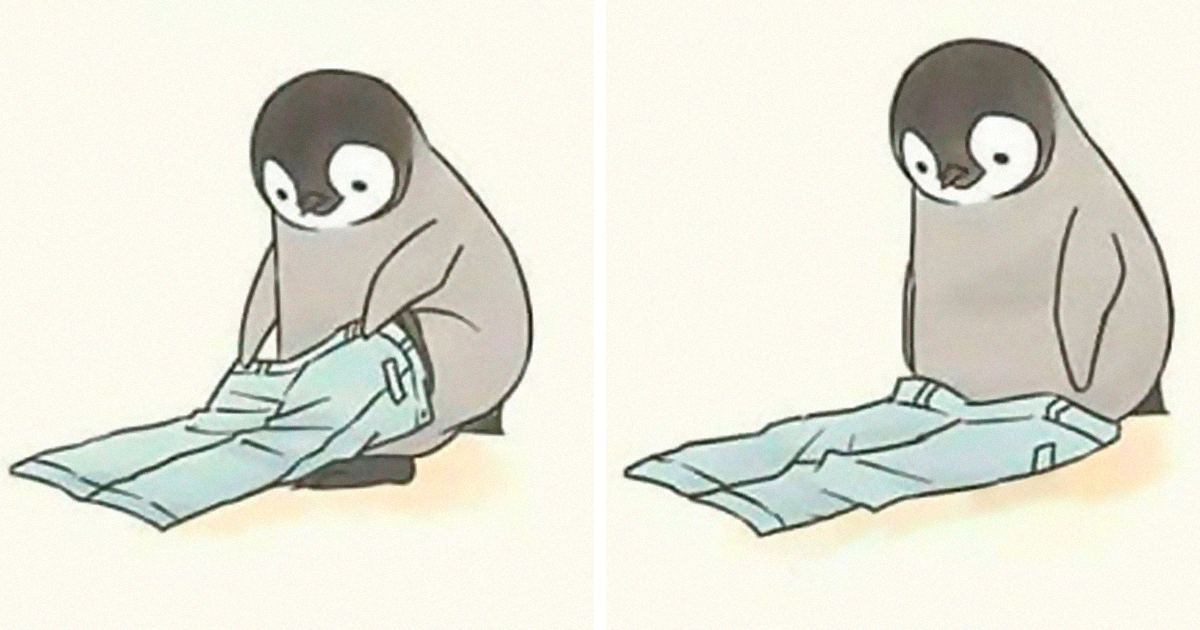
Some comic characters save the universe. Some solve mysteries. Some ride dragons, defeat villains, and deliver speeches dramatic enough to make a thunderstorm feel underdressed. Then there is Sheba’s little penguin: a tiny, round, deeply relatable bird who appears to have been placed on Earth to lose battles against jump ropes, weather, clothes, cameras, naps, and possibly the concept of balance itself.
And honestly? That may be the most heroic thing of all.
Sheba, a self-taught Japanese artist known online for adorable penguin comics, has built a small world where failure is not a disaster. It is a punchline wrapped in feathers. The penguin in these wholesome comics does not need to be perfect, graceful, productive, or emotionally prepared for Tuesday. It only needs to keep waddling. That simple idea is why these cute penguin drawings feel instantly shareable: they turn basic life tasks into tiny emotional adventures.
The title may promise “30 pics,” but the real appeal is bigger than a gallery. These comics capture the exact moment when a normal day becomes slightly too much. A penguin tries to exercise. A penguin fights sleepy gravity. A penguin meets a problem and reacts with the full dramatic range of a Shakespeare actor trapped inside a marshmallow. The result is funny, soft, and strangely comforting.
Who Is Sheba, the Artist Behind the Penguin Comics?
Sheba is a self-taught Japanese artist whose comics often focus on penguins, especially the baby-emperor-penguin kind of cuteness that seems genetically engineered to make people say “aww” in public. The artist has explained in interviews and online coverage that birds became a long-term love early in life, and penguins became a favorite subject because their shapes, expressions, and movements are easy to turn into comedy.
That makes perfect sense. Penguins already look like they are wearing formalwear to an event where nobody told them there would be stairs. Their waddling walk, round bodies, tiny flippers, and serious little faces create a natural contrast: they look dignified and ridiculous at the same time. Sheba’s comics lean into that contrast without mocking the character. The humor is gentle. The penguin fails, but the joke is never cruel.
That is important. A lot of internet humor depends on embarrassment. Sheba’s work feels warmer. The little penguin may struggle with everyday life, but the world of the comic treats those struggles as normal. There is no villain pointing and laughing. There is just a tiny bird, a tiny problem, and a tiny emotional collapse that somehow heals your soul.
Why a Little Penguin Makes the Perfect Comic Hero
Penguins are naturally funny to humans because they carry two opposite vibes at once. On land, they can look clumsy, soft, and slightly confused. In the water, real penguins are powerful swimmers, built for speed, diving, and survival. That contrast gives artists a goldmine: a character can be adorable and capable, awkward and resilient, silly and surprisingly brave.
Sheba’s penguin comics use this contrast beautifully. The bird may fail at basic life tasks, but it never feels useless. It feels familiar. We have all had a day when opening a snack, taking a photo, starting a workout, or dealing with rain felt like an Olympic event sponsored by chaos. Seeing those moments acted out by a little penguin makes them easier to laugh at.
In a way, the penguin becomes a cartoon version of our inner monologue. It is the part of us that wants to be efficient but gets distracted. The part that plans to be productive but ends up under a blanket. The part that says, “Today I will become a better person,” then immediately trips over a cable. Sheba’s penguin does not make failure look glamorous. It makes failure look survivable.
The Art Style: Simple, Soft, and Emotionally Sneaky
One reason these cute penguin comics work so well is their visual simplicity. The little penguin does not need complicated scenery or dramatic shading to deliver a joke. A small body tilt, a blank stare, or a tiny flipper gesture can carry the whole scene. That minimalist approach gives the reader room to project their own feelings onto the character.
The design is also extremely readable. In webcomics, especially comics meant to be shared on social media, clarity matters. Readers scroll fast. A comic has only a few seconds to say, “Hello, I am worth your attention.” Sheba’s penguin passes that test with a tiny waddle and a face that says, “I tried my best, and my best was weird.”
Small Expressions, Big Feelings
The penguin’s emotional range is part of the charm. A small dot eye can suggest panic. A soft slump can suggest defeat. A proud pose can turn into comedy when the next panel reveals that the penguin has misunderstood the assignment completely. The humor is quiet, but it lands because the emotions are universal.
This is the secret of many successful animal comics: the character does not speak for everyone by saying everything. It speaks for everyone by reacting honestly. Sheba’s penguin is not trying to be inspirational, which makes it more inspiring. It simply keeps existing in a world full of small inconveniences, and that is enough.
Relatable Life Fails: Why Readers See Themselves in the Penguin
The phrase “fails at basic life tasks” sounds dramatic, but that is exactly what makes the comics funny. Basic tasks are not always basic. Anyone can have a complicated relationship with exercise, weather, sleep, fashion, social situations, or household objects that seem harmless until they attack your dignity.
Sheba’s comics turn those little defeats into tiny stories. A penguin trying to jump rope becomes a symbol of fitness ambition meeting reality. A penguin struggling with clothing becomes a reminder that fashion is sometimes just fabric with opinions. A penguin dealing with a bug, a camera, or a nap becomes an emotional documentary about modern life, except shorter and much cuter.
The best part is that the penguin’s failures do not feel final. They feel like moments. The comic does not say, “You are bad at life.” It says, “Life is oddly difficult sometimes, and also you are still adorable.” That is a message many readers can use, especially after a day that has been personally attacked by emails.
Why These Penguin Comics Feel So Wholesome
Wholesome comics work because they offer relief without pretending everything is perfect. Sheba’s penguin world is not loud or cynical. It does not rely on shocking twists or mean-spirited jokes. Instead, it finds comedy in everyday friction: trying, slipping, reacting, recovering.
That softer approach is part of why the comics travel well across cultures. You do not need to understand a specific local reference to understand a tiny penguin having a difficult time with ordinary life. Awkwardness is international. Sleepiness needs no translation. A failed workout is recognized in every language, especially the language of lying on the floor afterward.
Cuteness With a Purpose
The penguin is cute, of course. That is the doorway. But cuteness alone is not enough to make a comic memorable. The real strength is the emotional timing. Each strip tends to build from a recognizable situation to a gentle punchline. The reader smiles not just because the penguin is adorable, but because the penguin’s reaction makes sense.
That is why the comics do not feel like random animal drawings. They feel like tiny character studies. The penguin has a personality: hopeful, easily overwhelmed, stubborn, soft-hearted, and very likely to lose a staring contest with a donut.
The Internet Loves Characters Who Are Bad at Life but Good at Feelings
There is a reason awkward animal characters do so well online. Internet culture is full of people joking about being tired, overwhelmed, socially clumsy, or only partly functional before coffee. A character like Sheba’s penguin gives those feelings a safe, funny shape. Instead of saying, “I am struggling,” someone can share a comic of a penguin failing at a small task and let the image do the emotional heavy lifting.
That kind of relatability is powerful. It invites readers to laugh at themselves without being harsh. The penguin’s tiny failures become a social signal: “This is me.” Comment sections under these kinds of comics often fill with people tagging friends, confessing similar struggles, or simply reacting with a long digital squeal of affection.
In short, the penguin is not just a character. It is a mood. A fluffy, waddling mood with questionable life skills.
What Artists and Content Creators Can Learn From Sheba’s Penguin Comics
Sheba’s comics offer useful lessons for anyone who creates online content. First, a strong character can be more important than a complicated concept. The setup is simple: a little penguin encounters daily life. But because the character is visually memorable and emotionally clear, the premise can support many different situations.
Second, small moments can be enough. Not every comic needs a massive twist. Sometimes the funniest material comes from the ordinary things people already understand: waking up, exercising, getting dressed, taking photos, wanting snacks, avoiding discomfort, and failing with style.
Third, gentleness can be a brand. In a noisy digital world, wholesome humor stands out because it feels safe to enjoy. Readers do not leave Sheba’s penguin comics feeling attacked. They leave feeling seen, amused, and maybe slightly tempted to buy something with a penguin on it.
Consistency Builds Attachment
Another smart element is consistency. The penguin’s repeated presence creates familiarity. Readers begin to know what kind of world they are entering: soft lines, simple humor, everyday problems, and a character who is somehow both helpless and emotionally victorious. That consistency builds trust. When readers see the penguin again, they already know they are in for a tiny dose of comfort.
Experience Section: What Reading These Penguin Comics Feels Like
Reading Sheba’s little penguin comics feels like discovering a tiny emotional support bird hiding inside your phone. You open a comic expecting a quick smile, and suddenly you are thinking about every time you confidently attempted a normal human task and immediately regretted your confidence. The penguin is not just cute; it is accurate. Painfully accurate. Softly accurate. The kind of accurate that waddles into your life and says, “Remember when you tried to fold a fitted sheet?”
The experience is especially funny because the penguin makes failure feel low-stakes. In real life, small failures can feel annoying. You spill coffee, miss a step, burn toast, forget why you entered a room, or start a workout with the energy of a superhero and end it three minutes later as a decorative rug. In Sheba’s comics, those same moments become gentle comedy. The penguin absorbs the embarrassment for us. It turns “I am bad at this” into “Look at this precious creature trying.”
That shift matters. A good cute comic does not erase stress, but it changes the angle. Instead of staring directly at frustration, we look at it through a small, round bird who probably needs supervision near shoelaces. The result is emotional distance. We can laugh because the scene is familiar but softened. The penguin becomes a tiny buffer between us and our own dramatic reactions to minor inconvenience.
There is also a cozy rhythm to these comics. They are short enough to enjoy during a break, but memorable enough to stick around afterward. You may scroll past dozens of loud posts, arguments, headlines, and advertisements, but a little penguin failing at a basic life task stays with you because it feels human without needing a human character. That is the magic trick. The less realistic the penguin is, the more emotionally real it becomes.
For many readers, the experience is also communal. These are the kinds of comics people send to friends with captions like “you,” “me today,” or “why is this literally us?” A tiny penguin becomes shorthand for friendship, exhaustion, awkwardness, and affection. It lets people admit vulnerability without writing a paragraph. Sharing the comic says, “I am having a penguin moment,” and somehow everyone understands.
Finally, there is comfort in the penguin’s persistence. It fails, but it keeps appearing in new strips, ready for another attempt. That is quietly encouraging. The penguin may not master basic life tasks, but it never loses its softness. It reminds readers that being clumsy, tired, emotional, or imperfect does not make you less lovable. Sometimes it just makes you the main character of a very good comic.
Why the Little Penguin Stays With Us
Sheba’s penguin comics succeed because they understand a simple truth: people do not always need grand inspiration. Sometimes they need a tiny bird to fail at jumping rope so they can feel less alone. The comics are cute, yes, but they are also quietly wise. They celebrate effort without demanding success. They make room for awkwardness. They turn ordinary frustration into a soft landing.
In a culture that often rewards polish, productivity, and perfect presentation, this little penguin offers something better: permission to be a mess and still be charming. The bird may not conquer every task. It may not become a lifestyle guru. It may not own a planner with color-coded tabs. But it shows up, tries again, and looks unbelievably cute doing it.
That is the reason these comics continue to resonate. They are not just drawings of a penguin. They are tiny reminders that failure can be funny, softness can be strong, and sometimes the most relatable hero is the one waddling bravely toward disaster with absolutely no plan.
Conclusion
Sheba’s adorable penguin comics prove that a simple character can carry a big emotional message. Through small daily failures, soft visual humor, and a penguin who seems permanently one inconvenience away from a nap, the artist creates a world that feels funny, warm, and deeply relatable. The little penguin may fail at basic life tasks, but it succeeds beautifully at being cute, comforting, and unforgettable.
For readers, the appeal is clear: these comics make everyday chaos feel lighter. They remind us that nobody handles life perfectly, not even a cartoon penguin with maximum cuteness and minimum coordination. And maybe that is the whole point. We do not have to be graceful to be lovable. Sometimes we just have to keep waddling.
SEO Tags
Note: This is an original, SEO-friendly commentary article based on publicly available information about Sheba’s penguin comics and general penguin background. It does not reproduce the original comic images.