Finding the reciprocal sounds like one of those math tasks that should require a secret handshake, a graphing calculator, and possibly a wizard hat. Good news: it does not. A reciprocal is simply the number you multiply by another number to get 1. That is the whole mission. No dragons. No hidden trapdoors. Just multiplication doing its tidy little dance.
For example, the reciprocal of 5 is 1/5 because 5 × 1/5 = 1. The reciprocal of 2/3 is 3/2 because 2/3 × 3/2 = 1. In math language, the reciprocal is also called the multiplicative inverse. That phrase sounds very official, as if it should wear a tiny business suit, but it means the same thing: “the number that helps another number multiply back to 1.”
In this guide, you will learn 3 ways to find the reciprocal: for fractions, whole numbers, and decimals or mixed numbers. We will also look at common mistakes, quick checks, examples, and real learning experiences that make reciprocals much less annoying than they first appear.
What Is a Reciprocal?
A reciprocal is the value you get when you write 1 divided by a number. If the number is a, its reciprocal is 1/a, as long as a is not zero.
Here is the simplest rule:
A number and its reciprocal always multiply to 1.
Examples:
- The reciprocal of 4 is 1/4, because 4 × 1/4 = 1.
- The reciprocal of 7/9 is 9/7, because 7/9 × 9/7 = 1.
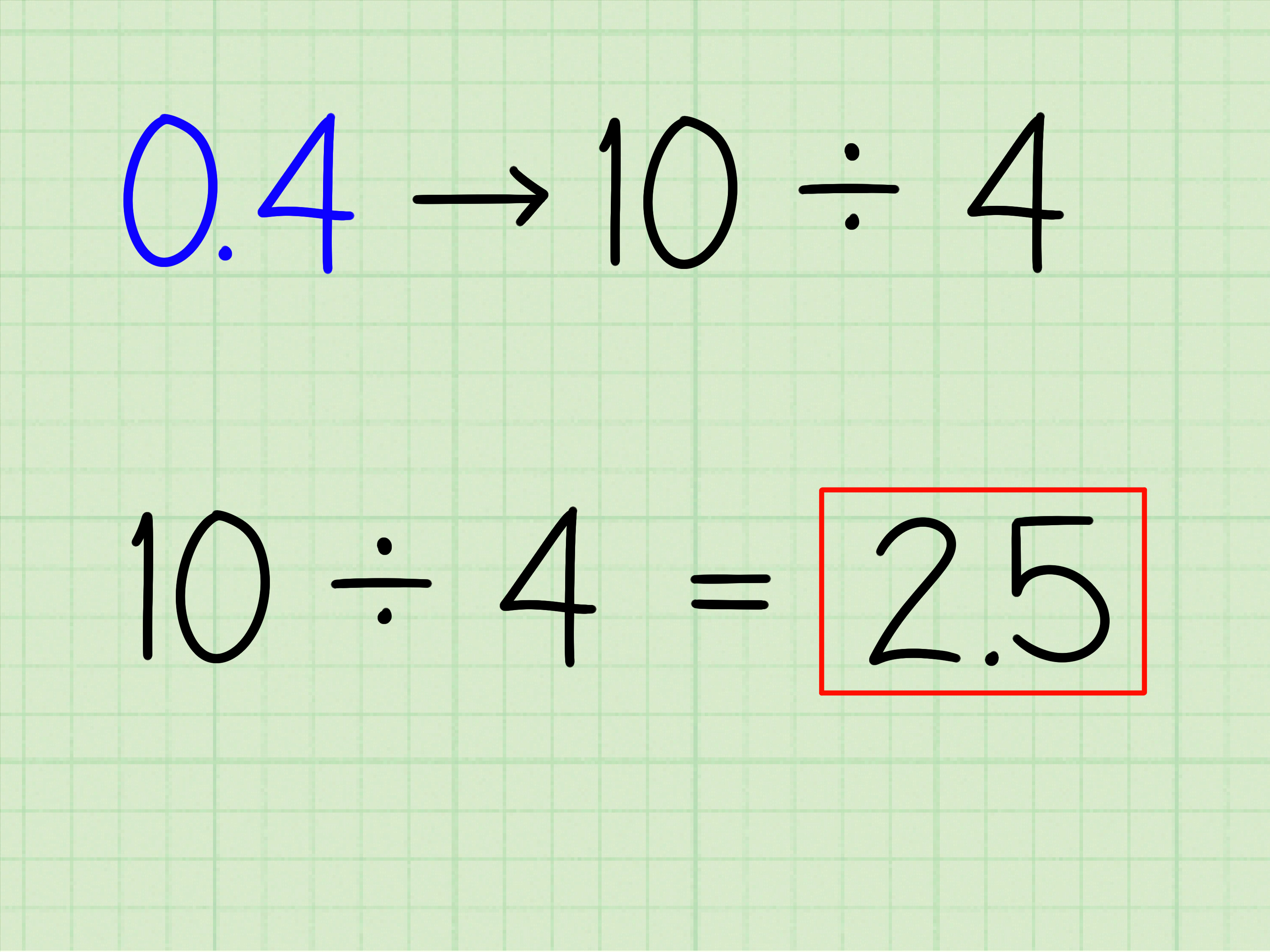
- The reciprocal of 0.5 is 2, because 0.5 × 2 = 1.
The only number that does not have a reciprocal is 0. Why? Because there is no number you can multiply by zero to get 1. Zero is stubborn like that. It multiplies everything into zero and refuses to negotiate.
Why Reciprocals Matter
Reciprocals are not just a random classroom trick. They show up in fraction division, algebra, ratios, proportions, measurement conversions, and even advanced topics like trigonometry. When you divide by a fraction, you multiply by its reciprocal. When you solve equations, reciprocals help undo multiplication. When you compare rates, reciprocals can flip a relationship from “miles per hour” to “hours per mile.”
In other words, learning how to find the reciprocal gives you a useful math shortcut. It is like having a spare key for many math problems, except this key is shaped like a fraction bar.
Way 1: Find the Reciprocal of a Fraction
The easiest reciprocal problems usually involve fractions. To find the reciprocal of a fraction, simply switch the numerator and the denominator.
The Rule for Fractions
If you have a fraction:
a/b
Its reciprocal is:
b/a
That is often described as “flipping the fraction.” The top number moves to the bottom, and the bottom number moves to the top. It is not gymnastics; it is just arithmetic wearing stretchy pants.
Examples of Fraction Reciprocals
| Original Fraction | Reciprocal | Check |
|---|---|---|
| 2/5 | 5/2 | 2/5 × 5/2 = 1 |
| 3/8 | 8/3 | 3/8 × 8/3 = 1 |
| 11/4 | 4/11 | 11/4 × 4/11 = 1 |
| 9/10 | 10/9 | 9/10 × 10/9 = 1 |
Notice something important: the original fraction can be proper or improper. It does not matter. You still flip it.
What About Negative Fractions?
If the fraction is negative, the reciprocal is also negative. The negative sign stays with the number.
Examples:
- The reciprocal of -2/7 is -7/2.
- The reciprocal of -5/3 is -3/5.
- The reciprocal of 4/-9 is -9/4.
Why does the negative sign remain? Because a negative number times a negative reciprocal gives a positive 1. For example:
-2/7 × -7/2 = 1
The two negative signs cancel, and the numbers reduce neatly. Math may be dramatic, but it still likes balance.
Way 2: Find the Reciprocal of a Whole Number
Whole numbers are not written as fractions at first glance, but every whole number can become one. The trick is to place the whole number over 1.
The Rule for Whole Numbers
To find the reciprocal of a whole number:
- Write the whole number as a fraction over 1.
- Flip the numerator and denominator.
- Simplify if needed.
For example, the number 6 can be written as 6/1. Flip it, and the reciprocal is 1/6.
Examples of Whole Number Reciprocals
| Whole Number | As a Fraction | Reciprocal |
|---|---|---|
| 3 | 3/1 | 1/3 |
| 12 | 12/1 | 1/12 |
| 25 | 25/1 | 1/25 |
| 100 | 100/1 | 1/100 |
This is why the reciprocal of a whole number is usually a unit fraction, meaning a fraction with 1 on top.
Special Case: The Reciprocal of 1
The reciprocal of 1 is 1. That is because:
1 × 1 = 1
One is its own reciprocal. It is the math equivalent of a person who can take themselves to dinner and have a perfectly nice evening.
Special Case: Zero Has No Reciprocal
The reciprocal of 0 is undefined. You cannot write it as 1/0 in ordinary arithmetic because division by zero is not allowed. There is no number that makes this true:
0 × ? = 1
No matter what value you choose, zero multiplied by that value remains zero. So if a worksheet asks for the reciprocal of zero, the correct response is usually undefined or no reciprocal.
Way 3: Find the Reciprocal of Decimals and Mixed Numbers
Decimals and mixed numbers look a little trickier, but they are not secretly plotting against you. The best method is usually to convert them into fractions first, then flip.
How to Find the Reciprocal of a Decimal
To find the reciprocal of a decimal:
- Convert the decimal into a fraction.
- Simplify the fraction if possible.
- Flip the fraction.
Example 1: Find the reciprocal of 0.25.
First, write 0.25 as a fraction:
0.25 = 25/100 = 1/4
Now flip it:
1/4 → 4/1 = 4
So the reciprocal of 0.25 is 4.
Example 2: Find the reciprocal of 0.6.
Convert to a fraction:
0.6 = 6/10 = 3/5
Flip it:
3/5 → 5/3
So the reciprocal of 0.6 is 5/3.
How to Find the Reciprocal of a Mixed Number
A mixed number has a whole number and a fraction, such as 2 1/3. To find its reciprocal, first convert it into an improper fraction.
Example: Find the reciprocal of 2 1/3.
- Multiply the whole number by the denominator: 2 × 3 = 6.
- Add the numerator: 6 + 1 = 7.
- Keep the same denominator: 2 1/3 = 7/3.
- Flip the improper fraction: 7/3 → 3/7.
So the reciprocal of 2 1/3 is 3/7.
More Mixed Number Examples
| Mixed Number | Improper Fraction | Reciprocal |
|---|---|---|
| 1 1/2 | 3/2 | 2/3 |
| 3 2/5 | 17/5 | 5/17 |
| 4 3/7 | 31/7 | 7/31 |
| 6 1/4 | 25/4 | 4/25 |
The key is not to flip the mixed number while it is still mixed. Do not turn 2 1/3 into 3 1/2. That is not a reciprocal; that is a math costume party gone wrong. Convert first, then flip.
How to Check Your Reciprocal
The best way to check a reciprocal is to multiply the original number by the answer. If the product is 1, you found the correct reciprocal.
Check Example 1
Original number: 4/9
Reciprocal: 9/4
Check:
4/9 × 9/4 = 36/36 = 1
Correct.
Check Example 2
Original number: 8
Reciprocal: 1/8
Check:
8 × 1/8 = 8/8 = 1
Correct again. The reciprocal has passed inspection and may now enter the math building.
Common Mistakes When Finding Reciprocals
Mistake 1: Confusing Reciprocal with Opposite
The opposite of a number changes its sign. The reciprocal flips its fraction form.
- The opposite of 5 is -5.
- The reciprocal of 5 is 1/5.
These are not the same. One changes direction on the number line; the other creates a multiplication partner that equals 1.
Mistake 2: Forgetting to Convert Whole Numbers
A whole number must be written over 1 before you flip it. The reciprocal of 9 is not 9. It is 1/9.
Mistake 3: Flipping a Mixed Number Too Soon
Mixed numbers need to become improper fractions first. The reciprocal of 1 3/4 is not 4 3/1. First convert:
1 3/4 = 7/4
Then flip:
7/4 → 4/7
Mistake 4: Giving Zero a Reciprocal
Zero has no reciprocal. If you see 1/0, stop. Do not pass Go. Do not collect 200 imaginary math dollars. Division by zero is undefined.
Reciprocal Practice Problems
Try these before looking at the answers. Your pencil deserves a little adventure.
Problems
- Find the reciprocal of 5/6.
- Find the reciprocal of 13.
- Find the reciprocal of 0.2.
- Find the reciprocal of 3 1/2.
- Find the reciprocal of -7/10.
Answers
- 6/5
- 1/13
- 5, because 0.2 = 1/5
- 2/7, because 3 1/2 = 7/2
- -10/7
How Reciprocals Help With Division
One of the most common uses of reciprocals is dividing fractions. The rule is often written as:
Keep, change, flip.
That means:
- Keep the first fraction.
- Change division to multiplication.
- Flip the second fraction.
Example:
2/3 ÷ 4/5
Keep 2/3, change division to multiplication, and flip 4/5 to 5/4:
2/3 × 5/4 = 10/12 = 5/6
This works because dividing by a number is the same as multiplying by its reciprocal. It is one of those math rules that seems suspiciously convenient until you use it enough times and realize, yes, it really does make life easier.
Experiences and Practical Tips for Learning Reciprocals
Many students first meet reciprocals during a fraction unit, and the first reaction is often: “Wait, why are we flipping numbers now?” That reaction is completely normal. Reciprocals can feel strange because they ask you to think backward. Instead of asking, “What is this number?” you ask, “What number would multiply with it to make 1?” That small shift in thinking can make a big difference.
One helpful experience is to connect reciprocals with everyday sharing. Imagine one whole pizza. If each slice is 1/4 of the pizza, how many of those slices make one whole pizza? Four slices. That is why the reciprocal of 1/4 is 4. The reciprocal tells you how many groups of that size fit into one whole. Suddenly, the reciprocal is not just a flipped fraction; it is a way of measuring how many pieces complete the whole.
Another useful learning habit is to always say the check out loud: “Do these multiply to 1?” For example, if you think the reciprocal of 3/5 is 5/3, multiply them mentally: the 3s cancel, the 5s cancel, and you get 1. That quick check builds confidence. It also catches mistakes before they sneak into homework like tiny arithmetic raccoons.
For whole numbers, a strong tip is to remember the invisible denominator. A number like 8 secretly means 8/1. The denominator is not written, but it is there when you need it. Once students understand that every whole number can be written over 1, reciprocals become much easier. The reciprocal of 8 is not mysterious anymore. It is just 8/1 flipped into 1/8.
Decimals often cause more hesitation because they do not look flippable. The best experience-based strategy is to convert friendly decimals into fractions you recognize. For example, 0.5 is 1/2, so its reciprocal is 2. 0.25 is 1/4, so its reciprocal is 4. 0.75 is 3/4, so its reciprocal is 4/3. Over time, these common decimal-fraction pairs become familiar, and the process speeds up naturally.
Mixed numbers require patience. A common classroom mistake is trying to flip the whole number and fraction separately. That does not work. The reliable method is to convert the mixed number to an improper fraction first. Think of it as changing into the right outfit before entering the reciprocal party. Once 2 2/5 becomes 12/5, the reciprocal is easy: 5/12.
Students also learn reciprocals better when they connect them to division. The phrase “divide by a fraction, multiply by the reciprocal” is useful, but it becomes more powerful with examples. If you divide 1 by 1/3, you are asking how many one-thirds fit into one whole. The answer is 3. That is why 1 ÷ 1/3 = 3, and it matches the reciprocal of 1/3. This makes the rule feel less like memorization and more like common sense.
Another practical tip is to avoid rushing with negative signs. If the original number is negative, the reciprocal is negative too. The sign does not disappear. The reciprocal of -4/9 is -9/4. Checking confirms it: a negative times a negative gives a positive, and the product becomes 1.
Finally, the best way to master reciprocals is through short, mixed practice. Do a few fractions, a few whole numbers, a decimal, a mixed number, and one negative fraction. This variety helps your brain recognize the type of number before choosing the method. After enough practice, finding the reciprocal becomes quick and almost automatic. You see 7/11, and your brain says 11/7. You see 6, and your brain says 1/6. You see 0, and your brain politely says, “Nope, undefined.” That is when you know the concept has truly clicked.
Conclusion
Learning how to find the reciprocal is mostly about recognizing the form of the number. For a fraction, flip the numerator and denominator. For a whole number, write it over 1 and flip. For a decimal or mixed number, convert it to a fraction first, then flip. After that, check your answer by multiplying the original number by its reciprocal. If the result is 1, you nailed it.
Reciprocals may look small, but they are powerful. They help with dividing fractions, solving equations, simplifying expressions, and understanding how multiplication can be undone. Once the idea clicks, the reciprocal becomes less like a confusing math rule and more like a handy little tool that keeps showing up exactly when you need it.
Note: This article is written for educational web publishing and is based on standard American math instruction for fractions, whole numbers, decimals, mixed numbers, and multiplicative inverses.