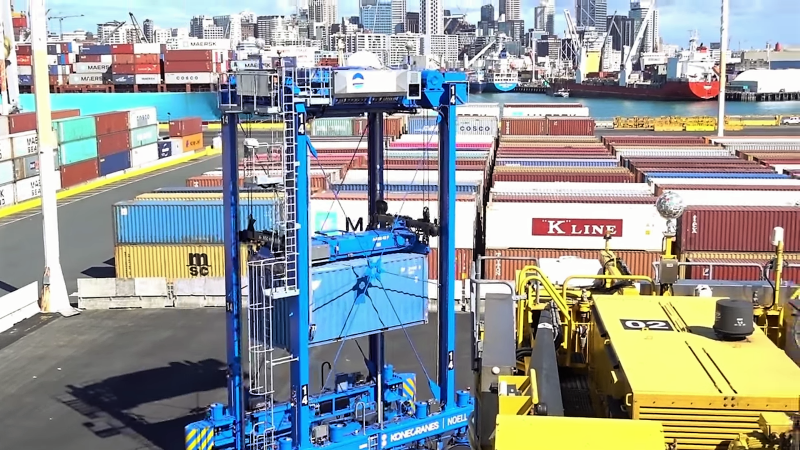
Picture a shipping container terminal at 2:17 a.m. The vessel is taller than a city block, the container stacks look like a game of Tetris designed by a committee, and somewhere in the darkness a crane is calmly moving a 40-foot steel box as if it were a shoebox. No yelling. No guessing. No “Where did we put that one container with the urgent auto parts?” Just sensors, software, electric cranes, and a very serious logistics brain that never asks for a coffee break.
That is the promise behind automated freight handling: shipping containers sorted by robot stevedores. The phrase sounds like science fiction wearing a hard hat, but the technology is already reshaping container terminals in the United States and around the world. Automated stacking cranes, remote-controlled ship-to-shore cranes, autonomous yard vehicles, optical character recognition, appointment systems, port data platforms, and artificial intelligence are all joining the dockside crew.
Still, this is not a cartoon where robots roll in, beep twice, and solve global trade by lunchtime. Port automation is expensive, politically sensitive, technically complex, and deeply tied to the future of longshore work. It can improve safety, yard density, emissions, and cargo visibility. It can also create bottlenecks if data is messy, systems do not communicate, or labor relations turn into a tug-of-war with a container ship attached.
This article explores how robot stevedores work, why ports are adopting them, where the technology shines, where it stumbles, and what the future of automated container shipping may look like.
What Are Robot Stevedores?
A traditional stevedore is a dockworker who loads and unloads cargo from ships. A “robot stevedore” is not usually a humanoid machine in a reflective vest. In real port operations, the term points to automated equipment and software systems that perform container handling tasks once done entirely by people operating cranes, yard trucks, straddle carriers, and gate systems.
The modern automated container terminal is a coordinated ecosystem. A ship-to-shore crane lifts containers from a vessel. Automated guided vehicles, shuttle carriers, or terminal tractors move containers across the yard. Automated stacking cranes place boxes into storage blocks. A terminal operating system decides where each container should go based on destination, customs status, vessel schedule, truck appointment, rail connection, weight, hazardous cargo rules, and whether the box needs refrigeration.
In other words, the robot is not one machine. It is the whole choreographed dance: cranes, vehicles, cameras, sensors, algorithms, wireless networks, databases, and human supervisors watching the operation from control rooms. The steel does the lifting; the software does the thinking; the people handle planning, oversight, maintenance, exceptions, safety, and decision-making.
Why Ports Want to Automate the Freight
Container shipping is the circulatory system of global trade. Clothes, electronics, furniture, food ingredients, machinery, medical supplies, retail inventory, auto parts, and holiday decorations all move through ports. When container terminals slow down, the delays ripple across warehouses, rail yards, trucking fleets, factories, stores, and living rooms. Yes, even the couch you ordered online has feelings about port congestion.
Ports are under pressure from several directions at once. Ships have become larger, cargo surges are harder to predict, urban port land is limited, trucking queues create pollution and frustration, and shippers want better visibility into every container. Automation offers a way to increase throughput without simply paving over more land. In dense coastal cities, that matters.
Automated container handling can help terminals stack containers more tightly and retrieve them more predictably. Automated stacking cranes can operate within narrow blocks, placing boxes with high precision. Electric equipment can reduce local diesel emissions. Digital systems can match container moves with vessel schedules, rail departures, and truck appointment windows.
The business case is not just “robots are cool,” although, frankly, giant electric cranes are cool. The stronger case is consistency. A well-designed automated terminal can run with predictable cycles, fewer random delays, and improved visibility. For importers, exporters, and carriers, predictability is gold. Gold that arrives in a steel box, but gold nonetheless.
How Automated Container Sorting Works
1. The Container Is Identified
Every container has an identification number, size, type, weight declaration, owner, booking data, and routing information. Cameras and optical character recognition systems can read container numbers as boxes enter gates, move under cranes, or pass through inspection points. This reduces manual entry errors and helps the terminal operating system track the box from ship to stack to truck or rail.
2. The Terminal Operating System Makes the Plan
The terminal operating system is the brain of the container yard. It assigns work instructions to cranes and vehicles, chooses storage locations, and tries to avoid unnecessary reshuffling. A poorly placed container may require several extra moves later. Multiply that by thousands of containers and suddenly the yard has become a very expensive puzzle with diesel fumes.
Good software plans container placement according to when the box will leave, how it will leave, and what rules apply. A refrigerated container needs power. A heavy export box must be stacked safely. A rail-bound import should be near the intermodal yard. A container due for customs inspection should not be buried under six boxes headed somewhere else.
3. Automated Equipment Executes the Moves
Automated stacking cranes handle vertical moves inside the yard. Automated guided vehicles or shuttle carriers handle horizontal moves between the quay and storage blocks. Some terminals use semi-automation, where yard stacking is automated but horizontal transport still involves human-driven vehicles. Others go further, automating more of the movement between ship, stack, rail, and gate.
Remote operators may step in during complex or delicate moves, especially near trucks or during exception handling. This is one reason “fully automated” does not mean “no humans.” It means many routine moves are automated while people supervise the system, solve problems, maintain equipment, and manage safety-critical situations.
Real-World Examples of Port Automation
Long Beach Container Terminal is one of the most visible U.S. examples of advanced port automation. Its all-electric equipment, automated stacking cranes, and remote operations have made it a reference point for discussions about cleaner and more efficient container handling. The terminal shows how automation can be linked not only to productivity goals but also to emissions reduction, especially when electric cranes and electric yard equipment replace older diesel-intensive systems.
The Port of Virginia is another major U.S. case. Its terminals have invested heavily in semi-automated stacking cranes and expanded container yard capacity. The strategy is practical: increase throughput and density on existing terminal land while improving rail and truck connections. Virginia’s model is especially interesting because it shows that automation does not have to mean an instant leap to a fully unmanned terminal. Semi-automation can modernize specific parts of the operation while keeping human roles central.
The Port of Los Angeles has also pursued digital visibility through cargo dashboards, data portals, and technology partnerships. That matters because automation is not only physical. A container terminal can have impressive cranes and still struggle if stakeholders do not share timely data. Digital platforms help cargo owners, truckers, railroads, terminal operators, and port authorities understand where cargo is and what is coming next.
Globally, ports such as Rotterdam and Singapore’s Tuas development are often discussed as leaders in advanced automation. They use combinations of automated cranes, autonomous vehicles, digital twins, and large-scale planning systems. These examples influence U.S. port strategy, but American ports have their own constraints, including labor contracts, local politics, environmental review, legacy infrastructure, and the awkward fact that not every terminal was designed yesterday on a blank sheet of paper.
The Benefits of Robot Stevedores
Better Yard Density
Port land is precious. Automated stacking cranes can organize containers in dense blocks with precise spacing. That allows terminals to handle more cargo without expanding their footprint. In cities where port expansion faces environmental, political, and real estate limits, yard density is a powerful advantage.
Improved Safety
Container terminals are dangerous environments. Heavy equipment moves constantly, visibility can be limited, and a loaded container can weigh more than 60,000 pounds. Automation can reduce the need for workers to stand near moving machines or climb into high-risk operating positions. Remote crane operation can move some workers from the cab to a control room, where the chair is less dramatic but considerably less windy.
Lower Local Emissions
Many automated systems rely on electric cranes and electric yard equipment. When paired with clean power and smart charging, electric automation can reduce local air pollution around port communities. This is especially important in neighborhoods near major freight corridors, where diesel emissions from ships, trucks, locomotives, and cargo-handling equipment have long been a public health concern.
More Predictable Operations
Automation can reduce variability. Machines can follow planned routes, repeat cycles, and generate data for performance monitoring. Predictability helps carriers plan vessel schedules, helps truckers avoid wasted time, and helps importers manage inventory. In supply chain language, “predictable” is basically a love poem.
Better Data for Everyone
Modern terminals generate enormous amounts of operational data. That data can support predictive maintenance, berth planning, gate appointment systems, rail coordination, and customer visibility. When information moves faster than the container, the container has a better chance of moving on time.
The Challenges Nobody Should Ignore
Automation Is Expensive
Automated cranes, sensors, control systems, civil works, software integration, cybersecurity, workforce training, and maintenance facilities require major capital investment. A terminal cannot simply buy a few robots online, select two-day shipping, and call itself automated. The physical layout often has to be redesigned. Pavement may need reinforcement. Power systems may need upgrades. Wireless networks must be reliable. Backup procedures must be ready for failure events.
Productivity Gains Are Not Automatic
One of the great ironies of automation is that automated systems do not automatically perform better. Early-stage automated terminals can struggle with software tuning, exception handling, maintenance complexity, and integration with trucks, trains, and vessels. If the system is designed poorly, automation can create a very expensive way to move containers slowly.
The best results usually come when automation is treated as an operations redesign, not a gadget purchase. Ports need clean data, trained technicians, strong maintenance programs, realistic performance targets, and close cooperation among terminal operators, labor, carriers, truckers, railroads, and cargo owners.
Labor Concerns Are Real
Few topics in port automation are more sensitive than jobs. Longshore workers and their unions have raised concerns that automated cranes and yard systems can reduce employment, change work rules, and shift bargaining power. Employers argue that modern technology is needed to improve safety, capacity, and competitiveness. Both sides have a point, which is why the issue is so hard to resolve with a bumper sticker.
The future likely depends on whether ports can create credible transition plans. That includes retraining workers for remote operations, equipment maintenance, software supervision, safety management, and data-driven logistics roles. A port that invests in machines but not people is not modern; it is just shiny.
Cybersecurity Becomes Critical
A digital terminal is also a target. If cranes, gates, appointment systems, and container records depend on connected software, cybersecurity becomes part of port safety. A cyberattack could delay cargo, corrupt data, or disrupt terminal operations. Automated freight systems need strong access controls, monitoring, backups, incident response plans, and vendor accountability.
Robot Stevedores and the Human Workforce
The smartest view of automation is not “robots versus workers.” It is “machines handling repetitive precision tasks while humans handle judgment, supervision, repair, planning, negotiation, and exceptions.” Ports are full of exceptions. A container is damaged. A truck misses its appointment. A ship arrives late. A reefer alarm goes off. A customs hold changes the plan. A storm interrupts operations. A crane needs maintenance. The box that should be easy is suddenly the box that makes everyone sigh.
Human expertise remains essential because freight is not just movement; it is coordination. A terminal is connected to ocean carriers, freight forwarders, chassis pools, drayage companies, warehouses, railroads, customs agencies, retailers, manufacturers, and local communities. Automation can accelerate the physical moves, but people still manage the relationships and decisions around those moves.
The best port automation programs will likely be those that bring workers into the transition early. Training a longshore worker to operate equipment remotely or diagnose automated crane issues preserves practical yard knowledge. A software engineer may understand the algorithm, but the person who has seen a thousand bad container plans knows where the algorithm is about to embarrass itself.
What This Means for Shippers, Truckers, and Consumers
For shippers, automated terminals can mean better appointment reliability, improved container visibility, and fewer surprise delays. For truckers, the hope is shorter turn times and more predictable pickup windows. For railroads, automation can improve container flow into intermodal yards. For consumers, the benefit is invisible but meaningful: fewer supply chain hiccups that lead to empty shelves, delayed orders, or price pressure.
But benefits are not evenly distributed unless systems are designed with the whole freight network in mind. A super-efficient container yard does not help much if trucks sit outside the gate for hours. A fast crane does not solve rail congestion. A beautiful dashboard does not fix inaccurate data. Freight automation works best when ports treat the terminal as one piece of a larger supply chain orchestra. And yes, sometimes the trombone section is a chassis shortage.
The Future of Automated Container Shipping
The next generation of automated freight will be more connected, more electric, and more predictive. Artificial intelligence will help forecast yard congestion, equipment failures, vessel delays, and truck arrival patterns. Digital twins may allow terminals to simulate operations before changing layouts or schedules. Computer vision will improve container inspection and damage detection. Autonomous vehicles may become more common in controlled terminal environments before they become common on public roads.
Expect more semi-automated terminals than fully automated ones in the near term. Semi-automation offers a practical path: automate the yard, improve data flow, electrify equipment, and keep humans in roles where judgment and flexibility matter most. Full automation will continue to grow, especially at large terminals with high volumes, standardized processes, and enough capital to justify the investment.
The winning ports will not simply be the ones with the most robots. They will be the ones that combine automation, labor strategy, clean energy, cybersecurity, data sharing, and customer service into one reliable operating model. A robot crane is impressive. A port that can move cargo smoothly through vessel, yard, rail, truck, and warehouse is the real prize.
Experience-Based Insights: What It Feels Like When Freight Gets Automated
Anyone who has spent time around container logistics knows that ports have a personality. They are loud, disciplined, impatient, weather-sensitive, and allergic to vague plans. A container terminal does not care that a spreadsheet looked perfect at headquarters. If a truck arrives late, a chassis is missing, a vessel changes berth, or a box is buried in the wrong stack, the yard will expose the mistake with theatrical confidence.
That is why automation feels less like replacing people and more like forcing the whole operation to become honest. Automated systems require clean instructions. They do not enjoy “figure it out when it gets there.” A human operator can sometimes improvise around a bad plan. A robot stevedore will follow the plan faithfully, even if the plan deserves to be thrown into the harbor. This makes data quality one of the most important lessons in automated freight. Before a terminal can automate container moves, it has to automate trust in the information.
In practical terms, the biggest improvement many logistics teams notice is visibility. Instead of calling three people to find out whether a container has been discharged, grounded, inspected, released, or mounted, stakeholders can use digital tools to track status. That does not make every problem disappear, but it changes the conversation. People stop asking, “Where is the box?” and start asking, “What is the next best move?” That is a much better question.
Another real-world lesson is that automation rewards preparation. Truckers need appointment discipline. Cargo owners need accurate documentation. Terminal planners need reliable vessel data. Maintenance teams need spare parts and diagnostic skills. Software teams need to understand port operations, not just write elegant code that looks great until it meets a rainy Tuesday and a delayed ship. The glamour of automation may be the crane, but the secret sauce is boring: planning, training, preventive maintenance, and communication.
There is also a cultural adjustment. A remote crane operator may work from a control room rather than a cab high above the dock. A mechanic may need more electrical and software knowledge. A dispatcher may rely on predictive systems instead of radio chatter. Some workers appreciate the safety and comfort improvements; others worry about reduced headcount or loss of craft identity. Both reactions are understandable. Ports are not laboratories. They are workplaces, economic engines, and community institutions.
For companies using automated terminals, the best approach is to treat them as partners, not vending machines. Provide accurate forecasts. Respect appointment windows. Monitor release data. Build flexibility into inland transportation plans. And do not assume “automated” means “immune to congestion.” A robot crane can be fast, but it cannot magically unload every vessel at once, invent rail capacity, or make paperwork errors evaporate like morning fog.
The most encouraging experience is seeing automation remove friction from routine moves. When the system works, containers flow with a calm rhythm. The yard is tighter. The handoffs are cleaner. The emissions are lower. The status updates are clearer. Humans are still there, but they are less often standing in harm’s way and more often managing the system. That is the version of automated freight worth building: not a dock without people, but a dock where people and machines each do what they are best at.
Conclusion
Automating the freight is not about turning ports into robot theme parks. It is about making container logistics safer, cleaner, denser, more visible, and more predictable. Robot stevedoresautomated cranes, guided vehicles, smart sensors, and terminal operating systemscan sort shipping containers with impressive precision. But the technology only succeeds when it is matched with skilled workers, reliable data, strong cybersecurity, practical labor agreements, and smart supply chain coordination.
The future of container shipping will not be purely human or purely robotic. It will be hybrid. Machines will lift, stack, scan, and calculate. People will supervise, maintain, negotiate, troubleshoot, and improve the system. The ports that understand this balance will move more cargo with fewer surprises. And in freight, fewer surprises are a beautiful thingright up there with an on-time vessel and a truck appointment that actually behaves.
Note: This publication-ready article is based on synthesized information from official port materials, logistics industry reports, transportation research, and reputable U.S. news coverage. Source links are intentionally omitted for clean web publishing.