The systemic poverty in Navajo Nation is not a sad footnote in America’s story. It is a flashing warning light on the dashboard of the country’s conscience. And no, this is not one of those dashboard lights you can ignore for six months while saying, “It’s probably just the sensor.” The problem is real, measurable, and painfully human.
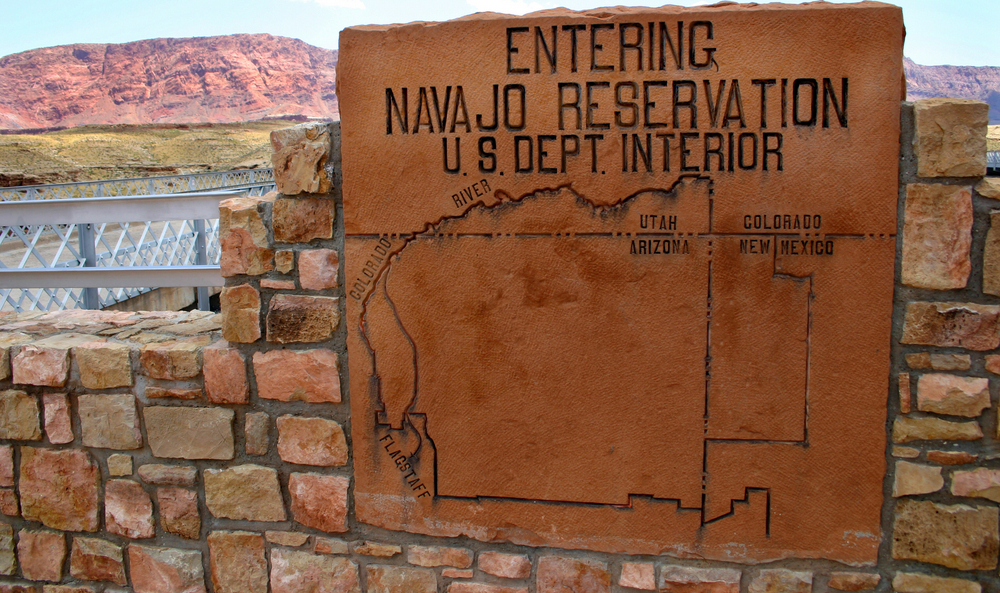
The Navajo Nation stretches across Arizona, New Mexico, and Utah, covering more than 27,000 square mileslarger than several U.S. states. It is home to Diné families, communities, languages, traditions, entrepreneurs, artists, veterans, ranchers, teachers, students, and elders. It is also a place where too many households still face conditions that would shock Americans if they appeared in a suburb, a resort town, or anywhere near a cable news studio.
High poverty, limited infrastructure, housing shortages, food insecurity, underfunded health care, environmental contamination, and barriers to jobs are not separate issues. They are interlocking gears in a machine that keeps turning against families who have already endured generations of broken promises. Calling this a “challenge” is too polite. It is a national travesty.
Why Navajo Nation poverty is different from ordinary hardship
Poverty anywhere is difficult. Poverty in the Navajo Nation often comes with an added layer of distance, infrastructure gaps, and jurisdictional complexity. A family in a rural town may struggle to pay a utility bill. A family in a remote Navajo community may not have a utility line to begin with. That difference matters.
Recent American Community Survey estimates show poverty rates on the Navajo Nation far above the national average, while median household income remains roughly around half of the U.S. level. Those numbers are not just statistics. They mean fewer savings accounts, fewer reliable vehicles, fewer repairs made on time, fewer doctor visits, fewer college application fees, and more hard choices at the kitchen table.
And because the Navajo Nation is geographically vast, the cost of being poor is often higher. Long drives are normal. Services can be hours away. A missed appointment is not always about irresponsibility; sometimes it is about bad roads, no gas money, no childcare, no electricity, no broadband, or a vehicle that has decided to retire without giving two weeks’ notice.
Water access: the clearest symbol of neglect
If America can land rovers on Mars, it should be able to deliver safe running water to families in the Southwest. That sentence should not sound radical. Yet in parts of the Navajo Nation, many households still haul water for drinking, cooking, bathing, livestock, and basic hygiene.
Water hauling is not a charming rustic lifestyle. It is expensive, exhausting, and time-consuming. Families may drive long distances to fill barrels or containers, then ration water carefully at home. Every gallon carries labor. Every shower becomes math. Every load of laundry becomes a logistical event worthy of a small military operation.
This water access gap became painfully visible during the COVID-19 pandemic. Public health officials told Americans to wash their hands frequently, while many Navajo households lacked running water. That contradiction was not merely inconvenient; it was dangerous. Health advice means less when basic infrastructure is missing.
Electricity: when modern life is still optional by geography
Electricity is another dividing line. Many Americans complain when the Wi-Fi slows down during a movie. In some Navajo homes, the issue is not buffering; it is whether the house has power at all.
Without electricity, families may rely on generators, propane lanterns, batteries, or small solar setups. These can help, but they are not the same as stable grid power. Refrigerators, medical devices, heating, cooling, homework, phone charging, and telehealth all become harder. A student without reliable power is expected to compete with students who have quiet rooms, laptops, broadband, and snacks that did not require a 90-mile round trip.
Programs such as Light Up Navajo have connected families to power, and every connection is meaningful. But progress remains far too slow. When a home waits years for electricity in the United States, the word “infrastructure” stops sounding boring. It starts sounding like dignity.
Food insecurity and the geography of hunger
Food insecurity in the Navajo Nation is not simply about income. It is about distance and access. The Nation is enormous, yet full-service grocery stores are limited. Many families live closer to convenience stores than supermarkets, and convenience stores are excellent places to buy a soda, a bag of chips, and regretnot necessarily fresh produce for a week of balanced meals.
This is why food sovereignty matters. Navajo farmers, local food programs, community gardens, traditional crops, and distribution efforts are not cute side projects. They are practical tools for survival and independence. Fresh foods grown closer to home reduce travel costs, strengthen local economies, and reconnect families with traditional food systems disrupted by colonization and federal policy.
When outside observers ask why people do not “just eat healthier,” the answer may be: because the nearest affordable fresh vegetables are hours away, gas is expensive, and the family car has the personality of a tired mule.
Housing shortages create a chain reaction
Housing is one of the less visible but most powerful drivers of systemic poverty in the Navajo Nation. Overcrowding, aging homes, limited construction, land-use complications, financing barriers, and high building costs all play a role.
When housing is scarce, several generations may share one home. Multigenerational living can be culturally meaningful and supportive, but overcrowding caused by lack of options creates stress. It can make studying harder for children, worsen health risks, and limit privacy. It can also make it more difficult for young adults to stay in their communities while building careers.
Housing shortages also affect economic development. Employers cannot easily recruit workers where housing is unavailable. Families cannot easily relocate within the Nation for jobs, school, or health care. A home is not just shelter. It is the base camp for everything else.
Health care under pressure
The Navajo Area Indian Health Service and tribal health programs provide essential care across a huge region. Yet geography, staffing shortages, facility needs, chronic disease burdens, and funding gaps create persistent barriers.
For many families, getting health care means arranging transportation, taking time off work, finding someone to watch children, and traveling long distances. Specialty care can be even harder to reach. Telehealth can help, but only when families have electricity, devices, broadband, and privacy. In other words, digital health care is wonderfulunless the digital part is missing.
The federal government has treaty and trust responsibilities to Native nations. Health care is not charity. It is part of a legal and moral obligation. When care is delayed because systems are underfunded, the result is not an accounting problem. It is pain, preventable illness, and shorter lives.
Environmental injustice: extraction without equal investment
The Navajo Nation’s poverty cannot be separated from environmental injustice. For decades, uranium mining, coal extraction, and energy development pulled wealth and power from Navajo land while leaving communities with pollution, health risks, and economic dependency.
The EPA has identified more than 500 abandoned uranium mines on or near the Navajo Nation. That is not a typo, and it is not ancient history. Mine waste, contaminated sites, and water concerns continue to affect communities. Families who contributed to the nation’s energy and defense economy should not be left with radioactive leftovers and a shrug.
This is one of the cruelest ironies in American infrastructure: Navajo land helped power cities while some Navajo homes remained without electricity. If irony were a utility, the reservation would be fully lit.
Jobs, sovereignty, and the economic trap
Economic development in the Navajo Nation is often discussed as if the solution were as simple as “bring in businesses.” But businesses need roads, water, electricity, broadband, housing, workforce training, legal clarity, and access to capital. Poverty is not solved by a ribbon cutting if the surrounding infrastructure still looks like a to-do list from 1958.
Tribal sovereignty is central to the solution. Navajo leaders, chapter communities, entrepreneurs, and local institutions know their needs better than outside planners who parachute in with a grant proposal and a very confident PowerPoint. Effective development must support self-determination, not replace it.
That means investing in Navajo-owned businesses, renewable energy, tourism managed with cultural respect, language preservation, broadband, local construction capacity, water systems, schools, health care, and food sovereignty. It also means reducing bureaucratic delays that turn urgent needs into paperwork marathons.
The role of federal responsibility
There is a temptation in American politics to treat Native poverty as a local problem. That framing is wrong. The poverty seen in the Navajo Nation was shaped by federal policies: forced removal, land restrictions, resource extraction, boarding schools, underfunded services, and decades of infrastructure neglect.
The Treaty of 1868 allowed the Diné people to return to a portion of their homeland after the Long Walk and imprisonment at Bosque Redondo. That history is not decorative background. It is the foundation for today’s trust responsibility. The United States made commitments. Meeting those commitments should not depend on election cycles, budget mood swings, or whether a crisis becomes briefly viral.
What real solutions should look like
1. Build water systems at the scale of the need
Small pilot projects can help, but the Navajo Nation needs sustained, large-scale water infrastructure funding. Wells, pipelines, home water systems, wastewater treatment, maintenance funding, and trained local operators must be part of the same plan.
2. Finish electrification
Every home should have reliable power. Solar microgrids, grid extensions, battery storage, and utility partnerships can work together. The measure of success should be simple: no family left in the dark.
3. Expand broadband as essential infrastructure
Broadband is not a luxury. It is education, telemedicine, job access, banking, emergency communication, and small business development. Without it, poverty becomes harder to escape.
4. Fund housing with flexibility
Housing programs must match local realities, including land status, construction costs, rural access, cultural preferences, and multigenerational needs. Cookie-cutter housing policy is rarely delicious.
5. Support Navajo-led economic development
Outside investment should strengthen sovereignty, not create dependency. Navajo entrepreneurs need access to capital, technical assistance, procurement opportunities, and infrastructure that allows businesses to grow.
Experience-based reflection: what poverty feels like on the ground
To understand the systemic poverty in Navajo Nation, imagine a normal weekday stretched across impossible distances. A grandmother wakes before sunrise because water needs to be hauled before the day gets hot. The truck is old, gas is expensive, and the road is rough enough to make every bolt in the vehicle reconsider its career choices. She is not doing this because she enjoys rugged authenticity. She is doing it because the sink does not magically produce water.
In another home, a student tries to complete homework using a phone because the family does not have reliable broadband. The assignment asks for online research, which sounds simple in a city apartment. On the reservation, it can mean sitting near a chapter house, a school parking lot, or a hill where the signal appears if the wind is feeling generous. The student is not less capable than peers in Phoenix, Denver, or Dallas. The student is competing in a race where other runners received shoes, a track, and a coach, while Navajo students were told, “Good luckalso, the road may wash out.”
A parent may drive hours for groceries, medical appointments, or paperwork. One errand becomes a day. A flat tire is not an annoyance; it can become a crisis. Families learn to plan with impressive discipline. They combine trips, share rides, store water, stretch food, and help relatives. This resilience is admirable, but admiration should never become an excuse for neglect. People should not have to be heroic just to do laundry, charge a medical device, or buy fresh vegetables.
Health care experiences can be just as complicated. A routine appointment may require coordination that would exhaust a professional event planner. Weather, distance, transportation, childcare, and work schedules all pile up. If specialty care is needed, the trip may extend far beyond the local community. Telehealth is promising, but a video appointment requires a device, a signal, electricity, and a quiet place. Poverty has a way of turning every “simple solution” into a checklist.
Yet the lived experience of Navajo poverty is not only hardship. It is also mutual aid, humor, ceremony, language, family networks, and creativity. Communities organize food distributions. Utility crews connect homes. Local leaders fight for water rights. Teachers keep students moving forward. Health workers serve huge areas with deep commitment. Elders preserve stories and teachings that carry more wisdom than any policy memo. The national travesty is not that Navajo communities lack strength. The travesty is that America has relied on that strength as a substitute for justice.
The experience of poverty in the Navajo Nation teaches a hard lesson: infrastructure is not abstract. It is the difference between opportunity and exhaustion. It is the difference between a child studying at a desk and a child searching for a signal. It is the difference between washing hands during a pandemic and hauling water in plastic containers. It is the difference between being included in America’s promise and being asked to wait another decade for the basics.
Conclusion: poverty in Navajo Nation is a policy failure, not fate
The systemic poverty in Navajo Nation is not inevitable. It is the result of decisions made, delayed, avoided, and underfunded. That means it can be changed by better decisions: serious infrastructure investment, respect for sovereignty, full funding of treaty responsibilities, environmental cleanup, housing support, broadband expansion, and Navajo-led economic development.
America does not lack the money, technology, or expertise to address these problems. It lacks urgency. And urgency is exactly what this moment demands. The Navajo Nation should not have to keep proving that water, electricity, health care, housing, and opportunity are basic rights. The evidence is already overwhelming. The question is whether the United States will finally act like it believes its own promises.