Dry eyes can make a normal day feel oddly dramatic. Reading gets blurry. Screens feel rude. Contact lenses suddenly act like they have a personal grudge. And while weather, age, hormones, and too much screen time often get blamed first, medications are frequent troublemakers hiding in plain sight.
If your eyes started burning, stinging, watering, or feeling like they’re hosting a tiny sandstorm after you began a new prescription or over-the-counter medicine, that is not a random coincidence to shrug off. Many common drugs can reduce tear production, change the balance of the tear film, or increase evaporation. In other words, your eyes may not be “just tired.” They may be under-medicated with tears and over-medicated with something else.
This guide breaks down the most common medications that cause dry eyes, explains why they do it, and walks through remedies that can actually help. The goal is not to panic every time you read a pill bottle. It is to help you connect the dots, protect your eyes, and know when it’s time to talk with a doctor instead of blaming your laptop for everything.
Why medications can trigger dry eye
Dry eye disease usually happens for one of two reasons: your eyes do not make enough tears, or your tears evaporate too quickly. Some medications can affect the watery layer of tears. Others interfere with the oily layer that keeps tears from evaporating too fast. A few do both, because apparently some drugs like to multitask.
The effect can be subtle at first. You may notice that your eyes feel scratchy in the morning, your vision gets filmy after long stretches at the computer, or your contacts become unbearable by late afternoon. Some people also get paradoxical watering. That sounds unfair, but it makes sense: when the eye is irritated and dry, it may reflexively flood itself with poor-quality tears that do not stick around long enough to fix the problem.
Medication-related dry eye becomes more likely if you already have risk factors such as aging, menopause, contact lens wear, autoimmune disease, thyroid disease, eyelid inflammation, prior eye surgery, or heavy screen use. In those cases, a medicine may not create the problem from scratch, but it can absolutely pour gasoline on a smoldering fire.
Types of medications that cause dry eyes
1. Antihistamines and decongestants
These are some of the most common offenders. Allergy and cold medicines are famous for drying out mucus membranes, which is helpful if your nose is behaving like a leaky faucet, but less charming when your eyes are begging for moisture. Oral antihistamines may reduce tear production, and decongestants can add to that drying effect.
Examples include diphenhydramine, cetirizine, loratadine, fexofenadine, and combination cold medicines that also contain decongestants such as pseudoephedrine. If your eyes get noticeably drier during allergy season, your pollen problem may be real, but your allergy medication may be helping it stage a comeback.
2. Antidepressants, anti-anxiety medications, and some sleep aids
Several antidepressants can contribute to dry eye, especially medications with anticholinergic effects. Tricyclic antidepressants are the classic example, but selective serotonin reuptake inhibitors and other mood medications can also be associated with dryness in some people. Certain anti-anxiety medications and sleep medications may make symptoms worse too.
Why? Some of these drugs interfere with nerve signaling involved in moisture production. The result may be dry eyes, dry mouth, blurry vision, and a new appreciation for how much your body normally lubricates things without asking for applause.
If you take a medication for depression or anxiety and notice eye irritation, do not stop it abruptly on your own. These medicines often need careful adjustment. The right move is to bring the side effect to the prescriber’s attention and ask whether a dose change, a different option, or eye-directed treatment makes sense.
3. Blood pressure medications, especially beta blockers and diuretics
Some blood pressure medications can worsen dry eyes, particularly beta blockers and diuretics. Beta blockers may reduce tear production. Diuretics, which help the body get rid of extra fluid, can sometimes leave tissues a bit drier overall, including the ocular surface.
This does not mean blood pressure medications are bad. It means your heart and your eyeballs may be negotiating behind the scenes. If you developed dry eye symptoms after starting a new blood pressure drug, keep a timeline and mention it during your next visit. A clinician can help determine whether the medication is the culprit or whether something else, such as age or environment, is piling on.
4. Acne medications, especially isotretinoin
Isotretinoin is a well-known dry-eye trigger. It can affect the meibomian glands in the eyelids, which produce the oily layer of the tear film. When that oil layer is reduced or altered, tears evaporate faster. That is when eyes start to feel gritty, irritated, and mysteriously hostile to contact lenses.
This is one reason people taking isotretinoin often report not just dry lips and dry skin, but also dry eyes and light sensitivity. For some patients, the dryness improves after treatment ends. For others, symptoms linger and need active management.
If you are on isotretinoin, it is smart to be proactive. Keep lubricating drops around, limit contact lens wear if needed, and tell your dermatologist and eye doctor if symptoms are more than mild.
5. Hormonal medications, including birth control and hormone therapy
Hormones influence tear production and tear quality, which is why dry eye tends to be more common during hormonal shifts. Some people notice more dryness while taking oral contraceptives or hormone replacement therapy. Antiandrogen medications can also affect the meibomian glands and contribute to tear film instability.
This does not happen to everyone, but it is common enough that it should be on the radar, especially in women who suddenly develop dry eye without changing anything obvious in their routine.
6. Parkinson’s medications and anticholinergic drugs
Medications used for Parkinson’s disease are often listed among drugs associated with dry eye. In addition, many medicines with anticholinergic effects can reduce secretions throughout the body. That includes some medications used for overactive bladder, nausea, motion sickness, muscle spasms, and irritable bowel symptoms.
A good rule of thumb is this: if a drug is famous for causing dry mouth, constipation, or blurred vision, it may also be capable of drying out your eyes. Your tear film is part of the same body-wide moisture story.
7. Some antipsychotics and other neurologic medications
Certain antipsychotic medications and neurologic drugs may worsen ocular dryness directly or indirectly. In some cases, they can affect blinking, eyelid closure, or surface comfort. If blinking becomes less complete or less frequent, the tear film breaks up faster and symptoms can snowball.
This is a good reminder that dry eye is not always just about tear quantity. Sometimes the issue is how tears spread, how long they stay stable, and whether the eye surface is being protected normally.
8. Eye drops themselves can be part of the problem
Yes, this feels a little rude. Some medicated eye drops, especially when used long term, can worsen dry eye symptoms. Glaucoma drops are a classic example, partly because preservatives in some formulations may irritate the ocular surface over time. “Get the red out” drops can also make irritated eyes angrier in the long run and are not a true dry eye treatment.
If you are using several eye medications every day and your eyes still feel miserable, ask whether the preservatives, the active ingredients, or the number of drops you use could be contributing. Sometimes switching to a preservative-free option makes a real difference.
Signs your medication may be contributing to dry eyes
It is easy to miss the pattern because dry eye often creeps in. Still, a medication may be part of the picture if your symptoms started soon after beginning a new drug, got worse after a dose increase, or flare most on days when you use certain medicines such as allergy tablets or decongestants.
Common symptoms include burning, stinging, grittiness, redness, stringy mucus, watery eyes, fluctuating blurry vision, eye fatigue, and discomfort with contact lenses. Many people say, “It feels like something is in my eye,” even when there is nothing there.
A medication review is especially important if you are taking more than one drying drug. Individually, each medicine may cause only a mild effect. Together, they can turn your tear film into a very underfunded project.
Remedies for medication-related dry eyes
Review your medication list with a clinician
The first remedy is not heroic self-diagnosis. It is a smart medication review. Bring a complete list of prescription drugs, over-the-counter products, allergy medicines, supplements, and eye drops to your doctor, eye doctor, or pharmacist. Sometimes the fix is as simple as switching timing, lowering a dose, or changing to a comparable medication with less drying potential.
Do not stop an important medication on your own, especially antidepressants, blood pressure medicines, Parkinson’s medications, or glaucoma treatment. The goal is balance, not rebellion.
Use artificial tears the right way
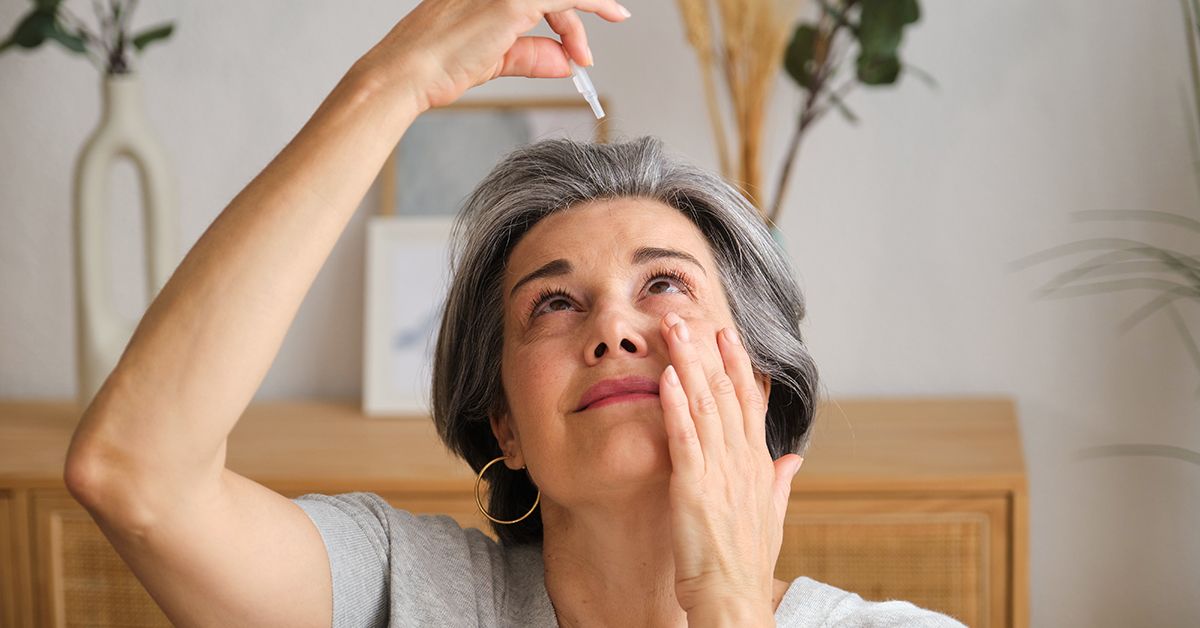
For many people, preservative-free artificial tears are the first-line remedy. They help lubricate the eye surface and can be used throughout the day. If you need drops often, preservative-free versions are usually kinder to irritated eyes.
Gels and ointments can help at night if you wake up with dry, sticky, painful eyes. They are thicker, so they may blur vision temporarily, which is fine when your main evening plan is sleeping and not driving a forklift.
Support the oil layer with eyelid care
If the medication seems to be worsening evaporation rather than just lowering tear volume, warm compresses can help. A warm eye mask for about 10 minutes may improve meibomian gland function. Gentle eyelid hygiene can also be useful if you have blepharitis or clogged oil glands.
This matters because healthy tears need more than water. They need oil to keep from evaporating too quickly and mucin to spread smoothly across the eye.
Change your environment and screen habits
Dry air, fans, smoke, and endless screen time make medication-related dry eye worse. Try a humidifier, avoid direct air blowing into your face, and take regular blink breaks during computer use. The eyes tend to blink less when staring at screens, which is wonderful for productivity and terrible for comfort.
If you wear contacts, give yourself permission to scale back during a flare. Sometimes switching to glasses for part of the day is the fastest route to relief.
Ask about prescription dry eye treatment if symptoms persist
If over-the-counter drops are not enough, an eye doctor may recommend prescription treatment such as cyclosporine or lifitegrast, short-term anti-inflammatory therapy in selected cases, or procedures such as punctal plugs. Punctal plugs help keep tears on the eye longer by slowing drainage.
These treatments are not for everyone, but they can be helpful when dry eye is persistent, inflammatory, or clearly affecting vision and quality of life.
When to seek medical care promptly
See an eye doctor sooner rather than later if dry eyes are severe, one-sided, associated with significant pain, light sensitivity, discharge, or a drop in vision. You should also seek care if you have an autoimmune condition, recent eye surgery, or symptoms that are not improving with basic treatment.
Medication-related dry eye is common, but not every irritated eye is dry eye. Infection, corneal injury, allergic eye disease, and other problems can mimic it. Eyes are small, but they are not subtle when something serious is going on.
Common real-world experiences with medication-related dry eye
One of the most typical stories involves allergy season. A person starts taking an oral antihistamine every morning because the pollen outside is trying to ruin spring. Their sneezing improves, but by afternoon their eyes feel dry, tired, and a little sandy. They assume it is the pollen, the weather, or their screen. In reality, it may be all three working together. The antihistamine lowers tear production, the spring wind speeds evaporation, and the laptop cuts blinking. Suddenly, reading email feels like an endurance sport.
Another common experience shows up in people taking antidepressants. They are finally sleeping better, functioning better, and feeling more stable, which is a major win. Then they notice their contact lenses are less comfortable than before, especially late in the day. Their vision gets filmy during long meetings, and they blink more to clear it. This can be confusing because the eye symptoms feel small compared with the reason they started the medication. But small symptoms still count. In many cases, the answer is not stopping the medicine. It is recognizing the side effect early and treating the eyes directly.
People taking isotretinoin often describe a different pattern. The dryness can feel more obvious and more stubborn. Lips get dry, skin gets dry, and then the eyes join the party uninvited. Contact lenses may become impossible. Wind and bright light may feel harsher than usual. Some patients do fine with regular artificial tears and shorter contact lens wear. Others need more aggressive eye care while acne treatment continues. The key experience here is surprise. Many people expect chapped lips from isotretinoin, but do not expect their tear film to file a complaint.
There is also the experience of the multitasking medication list. This person may be older, managing blood pressure, allergies, and overactive bladder, while also using a glaucoma drop at night. None of the medications alone seems dramatic. Together, however, they can create a very dry ocular surface. The person may say their eyes sting in the morning, water outside in the wind, and blur when reading. This is where a medication review becomes incredibly useful. Dry eye is often not about one villain. It is about a cast.
Then there is the “I thought these eye drops were helping” experience. Someone uses redness-relief drops often because their eyes look irritated. At first the drops seem helpful, but the relief is temporary, and the irritation keeps coming back. Eventually the eye surface gets even more uncomfortable. This can happen when the wrong drops are used for the wrong problem. Redness does not always mean the eye needs whitening drops. Sometimes it means the eye needs moisture, inflammation control, or fewer preservatives.
Across all of these experiences, one theme repeats: people often blame themselves before they blame the medication. They think they are tired, aging, staring at screens too much, or not drinking enough water. Sometimes those things do contribute. But if symptoms line up with a medication change, the most helpful move is not guilt. It is curiosity. Once the cause is recognized, relief usually becomes much easier to find.
Conclusion
Medications that cause dry eyes are incredibly common, and the list includes many everyday treatments for allergies, depression, blood pressure, acne, hormones, Parkinson’s disease, bladder symptoms, and even certain eye conditions. The good news is that you usually do not have to choose between treating your health problem and keeping your eyes comfortable. With a thoughtful medication review, preservative-free artificial tears, better screen and environment habits, and professional eye care when needed, most people can get meaningful relief.
If your eyes have become dry, gritty, watery, or blurry after starting a medicine, trust the timing and bring it up. Your eyes are not being dramatic. They are sending a memo. It is worth reading.