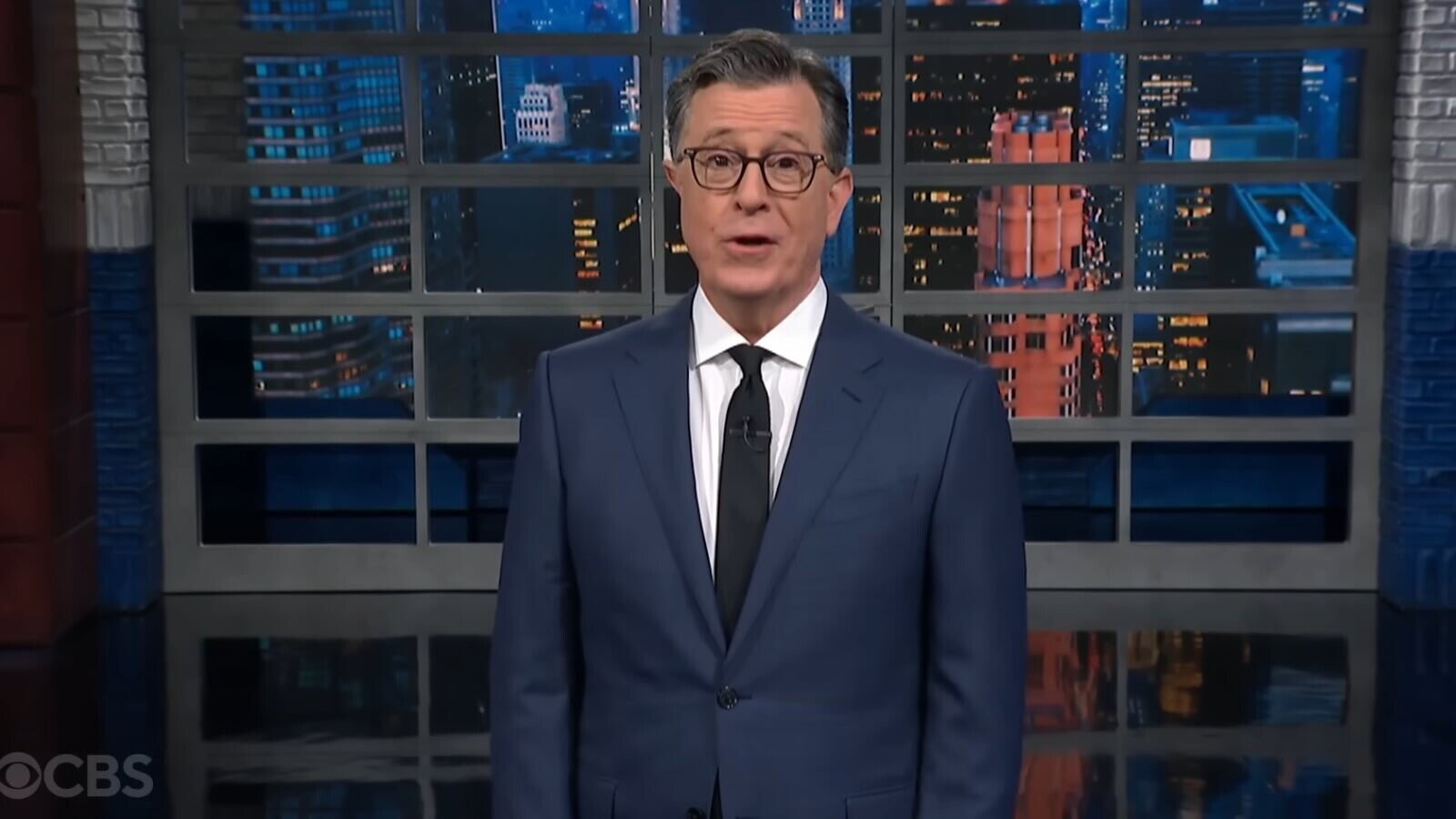
When CBS announced that The Late Show with Stephen Colbert would disappear, the network offered a straightforward explanation: money. Skydance Media later supplied an equally direct message of its own: the company had nothing to do with the decision.
Those two statements should have wrapped up the story neatly. Unfortunately for everyone hoping for a quiet corporate transition, the timing arrived wearing a trench coat, fake mustache, and a name tag reading “Definitely Not Suspicious.”
The cancellation was announced on July 17, 2025, while Paramount Global, CBS’s parent company, was awaiting federal approval for its multibillion-dollar merger with Skydance. It also came only days after Colbert criticized Paramount’s $16 million settlement with President Donald Trump over a disputed 60 Minutes interview.
Skydance denied influencing the cancellation in a July 31 letter to Senators Elizabeth Warren, Bernie Sanders, and Ron Wyden. The company said Paramount independently decided to end the show and notified Skydance only shortly before the announcement became public.
That denial established Skydance’s official position. It did not, however, erase the larger questions about corporate incentives, political pressure, shrinking television revenue, and the increasingly complicated relationship between media ownership and editorial independence.
What Exactly Did Skydance Say About the Colbert Cancellation?
The most important part of Skydance’s response was refreshingly free of interpretive dance. According to the company, it was not involved in CBS’s decision to cancel The Late Show with Stephen Colbert.
Skydance said Paramount provided notice only after making its own independent decision. The notice reportedly arrived shortly before Paramount publicly acknowledged the cancellation. In other words, Skydance’s legal position was that it received a heads-up, not a vote.
The letter was signed by Stephanie Kyoko McKinnon, then Skydance Media’s general counsel and co-president of business operations. It also emphasized that the company had complied with applicable laws, including federal anti-bribery laws.
Skydance acknowledged having routine contact with government officials during the regulatory review. Such meetings are normal when a transaction requires approval from an agency such as the Federal Communications Commission. A merger involving broadcast licenses does not simply receive a handshake, a fruit basket, and permission to proceed.
Still, “routine” does not automatically mean “irrelevant.” Critics wanted to understand whether discussions about the merger, CBS programming, political balance, or the Trump administration’s expectations might have indirectly shaped Paramount’s choices.
The Timeline That Made People Suspicious
The skepticism surrounding the Colbert cancellation came primarily from chronology. None of the individual events proved improper coordination, but placing them next to one another created a corporate-media timeline that practically begged for a corkboard and red string.
July 1: Paramount Settles Trump’s Lawsuit
Paramount agreed to pay $16 million to settle Trump’s lawsuit over the editing of a 2024 60 Minutes interview with then-Vice President Kamala Harris. The money was designated for Trump’s future presidential library and legal costs rather than paid directly to him.
Trump alleged that CBS had deceptively edited Harris’s response to make her look better. CBS had previously defended its editing and maintained that the lawsuit lacked merit. Many legal observers also questioned whether Trump’s claims would have succeeded in court.
The settlement attracted special attention because Paramount needed the Trump administration’s FCC to approve its transaction with Skydance. Paramount said settling avoided the uncertainty and expense of prolonged litigation. Critics argued that avoiding regulatory trouble may have been the more valuable prize.
July 14: Colbert Calls the Settlement a Bribe
Colbert used his monologue to condemn the settlement, sarcastically referring to it as a “big fat bribe.” His language was comedic, but the underlying accusation was serious: Paramount may have paid to remove an obstacle threatening its merger.
Colbert also told viewers that the settlement had damaged his trust in the company. That was an unusually direct criticism from a star employee toward the corporation paying for the cameras, theater, writers, band, and desk behind him.
July 17: CBS Announces the End of the Show
Three days later, CBS announced that The Late Show would end during the following television season. The network did not merely replace Colbert with a cheaper host. It retired the franchise entirely.
CBS executives described the move as a purely financial decision unrelated to Colbert’s performance, the show’s content, or other events at Paramount. Colbert announced the news to his audience, explaining that he was not being replaced and that the program itself was going away.
The reaction was immediate. Democratic lawmakers questioned whether political considerations played a role. Other late-night hosts expressed shock and support. Trump celebrated the cancellation publicly, which did little to lower the temperature.
July 24: The FCC Approves the Merger
One week after the cancellation announcement, the FCC approved Skydance’s acquisition of Paramount. The commission voted 2-1, allowing the transfer of licenses associated with CBS television stations.
Skydance had made commitments involving viewpoint diversity, local broadcasting, nondiscrimination, and oversight of complaints about perceived bias at CBS. FCC Chairman Brendan Carr praised the transaction as an opportunity for change at the network. Democratic Commissioner Anna Gomez dissented and sharply criticized the approval process.
July 31: Skydance Sends Its Denial
Skydance responded to questions from Warren, Sanders, and Wyden by denying involvement in both the Colbert cancellation and Paramount’s underlying settlement decision.
The letter arrived after the FCC had approved the merger but before Paramount and Skydance officially completed it on August 7, 2025. By then, the political and financial narratives had become permanently tangled.
Did Skydance Have Any Role in the Trump Settlement?
Skydance’s answer was more detailed than a simple no.
The company said it was neither a party to Trump’s lawsuit nor a party to Paramount’s settlement. Under the transaction agreement, Paramount reportedly had discretion to settle unrelated litigation valued at up to $50 million without obtaining Skydance’s consent.
However, Paramount did request Skydance’s consent for one provision involving the future publication of transcripts from interviews with presidential candidates. Skydance said it did not believe its approval was legally required but granted the request anyway.
That distinction matters. Skydance denied participating in the decision to pay the settlement, yet it acknowledged approving a particular nonfinancial term. Critics could therefore say the companies were not operating in entirely separate rooms with noise-canceling headphones.
On the other hand, approving a transcript policy does not prove that Skydance encouraged the settlement, requested Colbert’s removal, or promised anything to government officials. Suspicion is not evidence, even when suspicion has excellent ratings.
The Financial Case for Canceling The Late Show
Any fair analysis must take CBS’s financial explanation seriously. Traditional late-night television had been weakening for years before Colbert’s cancellation.
Viewers increasingly watched monologues and interviews as individual clips on YouTube, TikTok, and other platforms. That behavior extended the cultural reach of late-night comedy but disrupted the television advertising model that funded it.
Advertising revenue for Colbert’s show reportedly declined from approximately $121.1 million in 2018 to $70.2 million in 2024. Industrywide late-night advertising revenue fell from roughly $439 million to about $220 million over a similar period.
Reports citing a person familiar with the show’s finances claimed that The Late Show had been losing around $40 million annually. That figure was not presented as a publicly audited number, and some industry figures disputed whether it captured revenue from streaming, affiliate arrangements, digital clips, and the show’s broader value to CBS.
Production was undeniably expensive. Colbert worked with a large writing and production operation, a live band, celebrity guests, topical material prepared daily, and approximately 200 employees. The program was staged at New York’s Ed Sullivan Theater rather than in someone’s garage next to a ring light and an inspirational poster.
CBS had already canceled After Midnight, which followed Colbert’s program. Rival networks were also cutting late-night costs by reducing weekly episodes, eliminating bands, and trimming production budgets.
Therefore, the economic argument was not invented from thin air. The unresolved question was whether economics fully explained the decision or merely made a politically convenient decision easier to justify.
Why Ratings Did Not Settle the Debate
Colbert remained a ratings leader among traditional broadcast late-night hosts. Reuters reported that his show averaged about 2.5 million viewers during the 2024-2025 season, ahead of its major network competitors.
Ordinarily, canceling the category leader sounds like closing the busiest restaurant because people no longer enjoy food. Yet being first in a declining market does not guarantee profitability. A gold medal is less useful when the entire event is being removed from the Olympics.
Ratings also measure only part of modern media performance. A program can dominate broadcast television while struggling to turn digital engagement into revenue. Conversely, a show may look weaker in overnight ratings but generate significant streaming subscriptions, social reach, licensing value, or promotional benefits.
Because CBS did not release a complete public accounting of the show’s costs and revenue, outsiders could not independently test its financial conclusion. The absence of transparent numbers left room for both legitimate business explanations and political suspicions.
What Skydance’s Denial Provedand What It Did Not
Skydance’s letter proved one important thing: the company formally denied participating in the cancellation decision. That denial carries legal and reputational weight. Corporate lawyers do not usually submit statements to United States senators as a creative-writing exercise.
The letter also provided a specific sequence. Paramount made the decision, then notified Skydance shortly before the public announcement. If accurate, that chronology contradicts claims that Skydance directly ordered CBS to eliminate Colbert’s program.
However, the denial did not conclusively answer every broader concern. Corporate influence can exist without a written command saying, “Please cancel the comedian by Thursday.” A company preparing to be acquired may anticipate what its future owner, regulators, or political leaders would prefer.
That possibility is an inference, not an established fact. No publicly disclosed evidence showed Skydance instructing Paramount to cancel Colbert. Likewise, the suspicious timing did not prove that CBS’s financial explanation was false.
The most defensible conclusion is less dramatic than either partisan narrative: late-night television faced genuine financial pressure, while Paramount operated in a political and regulatory environment that reasonably invited scrutiny of every major editorial decision.
Why the Story Matters Beyond Stephen Colbert
The controversy became larger than one host because CBS is not simply an entertainment company. It operates a major national news organization and local broadcast stations using publicly regulated airwaves.
When a media company needs federal approval for a lucrative merger, settles a president’s lawsuit, removes one of that president’s most prominent critics, and promises regulators changes involving political balance, the public will naturally examine whether editorial independence is being traded for corporate convenience.
That does not mean every restructuring decision is censorship. Companies are allowed to cancel expensive programs. They are also allowed to settle lawsuits they consider distracting or risky.
But media corporations sell more than shows. They sell trust. Once audiences suspect that programming choices are shaped by government pressure, rebuilding that trust is considerably harder than relaunching a streaming app with a new logo.
Experiences and Practical Lessons from the Colbert-Skydance Controversy
The Colbert cancellation offers several useful real-world lessons for viewers, journalists, employees, publishers, and anyone who has ever received a corporate email beginning with “After careful consideration.”
Experience One: Build a Timeline Before Forming a Conclusion
Fast-moving controversies encourage people to choose a villain before breakfast. A better approach is to list confirmed events in chronological order: the settlement, Colbert’s monologue, the cancellation announcement, FCC approval, Skydance’s response, and the merger’s closing.
A timeline does not automatically reveal motive, but it separates evidence from atmosphere. It also highlights which conclusions require assumptions. In this case, the sequence justified questions without independently proving coordination.
Experience Two: Read the Primary Document
Headlines summarized Skydance’s position as “We had nothing to do with it.” The actual letter supplied more nuance. It explained Paramount’s settlement authority, acknowledged Skydance’s consent to one transcript-related provision, denied involvement in the cancellation, and referenced routine government contacts.
Reading primary documents helps readers notice what a company answers directly, what it answers narrowly, and what it leaves unsaid. Corporate correspondence is often written with surgical precision. Every sentence has a job, and none of them are there merely to enjoy the stationery.
Experience Three: Follow Both Money and Power
Public debates often demand a single explanation. Either CBS canceled Colbert because the show was losing money, or it canceled him because of politics. Reality may contain overlapping incentives.
A financially vulnerable show is easier to eliminate when it creates political or regulatory complications. At the same time, a politically controversial host can still be working for a genuinely unprofitable program. Following money without examining power is incomplete; following power while ignoring costs is equally weak.
Experience Four: Remember the Workers Behind the Headline
Coverage naturally centered on Colbert, Trump, Paramount executives, and David Ellison. Yet the cancellation affected approximately 200 people involved in producing the show: writers, researchers, musicians, camera operators, editors, assistants, technicians, and other staff members.
For those workers, the distinction between political and financial motives may not change the practical outcome. Their experience is a reminder that corporate media decisions presented as strategic abstractions eventually land on actual paychecks and careers.
Experience Five: Judge Corporate Promises by Later Behavior
Statements made during merger reviews should not be evaluated only on the day they are issued. Audiences, employees, and journalists can compare those promises with later decisions involving news leadership, editorial oversight, staffing, political coverage, and content investment.
Skydance said it supported independent editorial judgment free from government intrusion and politicization. The meaningful test was therefore not the elegance of the sentence but the company’s conduct after taking control of Paramount.
This approach is useful far beyond entertainment. When a corporation makes assurances during an acquisition, save the statement. Revisit it six months or a year later. Corporate memory can be surprisingly flexible, particularly when quarterly earnings arrive carrying a large eraser.
What Happened After the Controversy?
The FCC approved the Paramount-Skydance transaction on July 24, 2025, and the companies completed the $8 billion merger on August 7. David Ellison became chairman and chief executive of the combined company, bringing CBS, Paramount Pictures, MTV, Comedy Central, and Paramount+ under the new organization.
CBS continued producing The Late Show through its final season. Colbert’s run ended in May 2026, closing not only his tenure but the broader CBS franchise that David Letterman had launched in 1993.
The conclusion did not settle the original argument. Supporters of CBS’s explanation continued pointing to declining advertising revenue and high production costs. Critics continued pointing to the settlement, merger approval process, and cancellation timing.
In the end, the controversy became a case study in how difficult it is to separate business strategy from political context when a company owns major news outlets and depends on government regulators to complete a valuable transaction.
Conclusion: A Firm Denial in an Uncomfortable Context
Skydance clearly stated that it did not participate in CBS’s decision to cancel The Late Show with Stephen Colbert. It said Paramount reached the decision independently and notified Skydance only shortly before informing the public. No disclosed evidence conclusively established that Skydance ordered or negotiated the cancellation.
Nevertheless, the surrounding circumstances made skepticism inevitable. Paramount had settled Trump’s lawsuit while seeking regulatory approval, Colbert had fiercely criticized that settlement, CBS canceled his top-rated program days later, and the FCC approved the merger the following week.
The financial decline of late-night television provides a plausible business explanation. The political and regulatory timeline provides a plausible reason to demand transparency. Both realities can exist simultaneously, inconveniently sharing the same desk.
The lasting lesson is not that every corporate denial must be rejected or that every cancellation is censorship. It is that media companies operating near political power should expect their decisions to receive more scrutiny than an ordinary scheduling change. When trust is part of the product, “because we said so” is rarely a complete communications strategy.