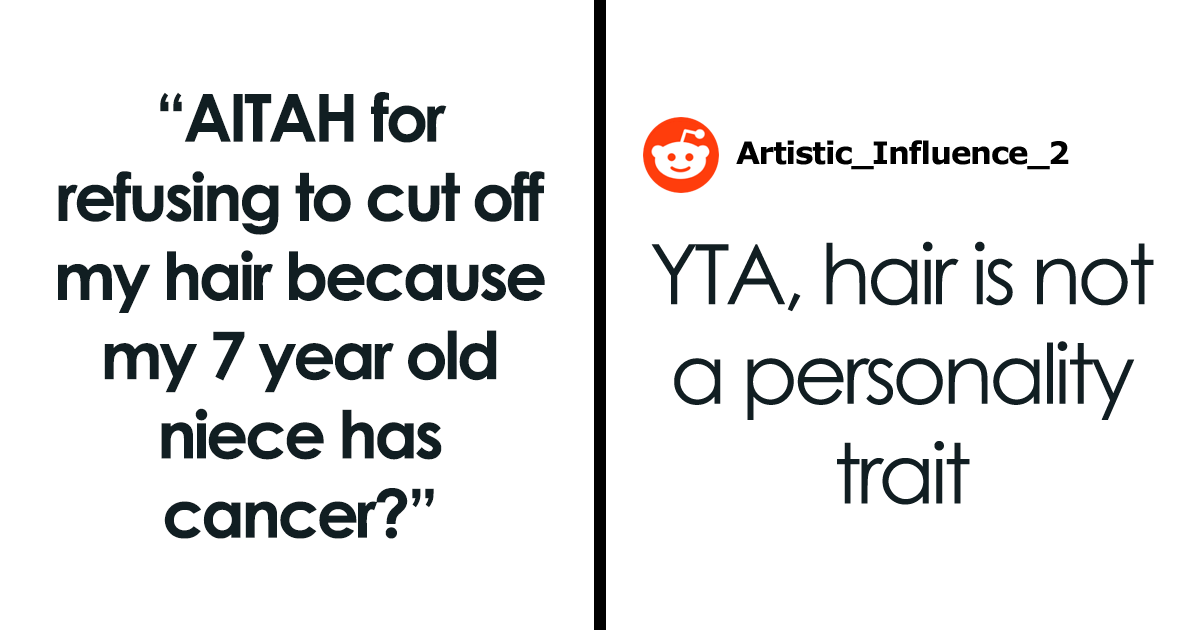
A family cancer diagnosis can turn ordinary life into a group project nobody volunteered for. Suddenly, every phone call feels urgent, every hospital update carries the weight of a weather warning, and relatives search for something—anything—that makes them feel less helpless. In one widely shared online story, that search for solidarity became a painful family argument when a 17-year-old refused to shave his long hair after his 7-year-old niece began losing hers during treatment for acute lymphoblastic leukemia.
According to the reported account, several relatives had already shaved their heads. The teenager’s mother then approached him with electric clippers and asked when he was ready to join them. He said he felt as though he was being pushed into a corner. His hair was not a casual accessory to him; it had become a major part of his identity, confidence, and self-image. He loved his niece, but he questioned whether surrendering something deeply personal would actually help her. The post originated on Reddit and was later covered by several publications, so the family’s private circumstances cannot be independently verified beyond what was publicly shared.
The internet, naturally, arrived wearing a judge’s robe and carrying snacks. Yet beneath the familiar “Who is wrong?” debate lies a more useful question: What does real support look like when someone you love has cancer?
Why Shaving One’s Head Can Feel Meaningful
For many families, shaving their heads is a visible promise: “You are not alone.” Cancer treatment can change a child’s appearance quickly, and hair loss may make an already frightening experience feel public. A shared haircut can reduce the sense that only the patient looks different. It can also give relatives a ritual at a time when medical decisions are largely out of their hands.
The impulse is understandable. Acute lymphoblastic leukemia, commonly called ALL, is the most common form of childhood cancer. Treatment commonly involves combination chemotherapy, and some chemotherapy drugs damage rapidly growing healthy cells, including cells involved in hair growth. Hair loss can cause worry, sadness, embarrassment, anger, or fear, especially for children and teenagers whose appearance is tied closely to their developing sense of self.
In the best circumstances, a solidarity shave is chosen freely and centered on the patient. Someone asks the child how they feel about it. Family members decide for themselves. Nobody keeps score. There is no group chat spreadsheet titled “Relatives Who Care Enough.” The gesture becomes loving because it is voluntary.
Where Solidarity Crosses Into Pressure
The problem in this story was not that relatives shaved their heads. The problem was the assumption that everyone else had to do it too.
Support stops feeling supportive when it becomes a test of obedience. “Do this to prove you love her” is emotional pressure, even when it comes from frightened people with good intentions. The teen’s refusal did not prevent anyone else from participating. It did not interfere with treatment. It did not mock his niece’s hair loss. He simply did not consent to changing his own appearance.
Body Autonomy Still Matters During a Crisis
A family emergency does not erase a teenager’s right to have boundaries around his body. At 17, he is still a minor, but he is also at a developmental stage when identity, appearance, and independence carry enormous emotional importance. Hair can represent culture, gender expression, creativity, belonging, or the rare feature a person genuinely likes about himself.
Healthy boundary-setting requires both empathy and respect. Young people should learn that they can care about another person’s feelings without surrendering control of their own bodies. Adults model that lesson by asking rather than assuming, listening rather than cornering, and accepting a calm “no” without turning it into a character indictment. Pediatric and child-development guidance also emphasizes involving teens in decisions and supporting healthy coping rather than adding more pressure during stressful periods.
Hair Can Matter to Two People at Once
It is possible to recognize that the niece’s involuntary hair loss is painful while also recognizing that the teenager’s hair matters to him. These truths are not competing in the Suffering Olympics. One person is facing cancer and treatment-related changes; the other is being asked to give up a valued part of his appearance. The stakes are not equal, but his feelings do not become imaginary.
Cancer organizations regularly advise families to validate the patient’s feelings about hair loss rather than dismissing them as vanity. The same principle—appearance can be deeply connected to identity—helps explain why a forced or coerced haircut may feel violating to someone else. Empathy becomes more credible when it travels in both directions.
The Niece’s Reaction Does Not Settle the Argument
In the viral account, the teenager described his niece giving only a brief reaction when shown relatives who had shaved their heads. That detail strengthened his belief that the gesture would change little. Still, a 7-year-old’s muted response should not be interpreted as ingratitude.
A child undergoing cancer treatment may be tired, frightened, distracted, uncomfortable, overwhelmed, or simply focused on a cartoon because cartoons are wonderfully uncomplicated and do not ask anyone to discuss blood counts. Children also process major events differently from adults. A small outward reaction does not tell us what the gesture meant internally.
However, the relatives’ disappointment at not receiving a dramatic response reveals an important risk. When supporters need visible appreciation, the gesture can drift away from the patient and toward the supporters’ own emotional needs. A child with cancer should not have to perform gratitude while managing treatment. If shaving is genuinely offered as a gift, the giver must accept that the child may respond with tears, laughter, indifference, confusion, or a request to return to the television.
Why Families Reach for Big Symbolic Gestures
Serious childhood illness affects the entire family. Parents, siblings, grandparents, and extended relatives may experience fear, guilt, anger, grief, disrupted routines, financial strain, and a painful loss of control. Family members often cope differently: one organizes meal deliveries, one reads every medical paper ever uploaded to the internet, one cracks jokes at inappropriate moments, and one wants everybody bald by Saturday.
That does not make the family malicious. It makes them distressed. Pediatric cancer centers recognize that siblings and other relatives need information, emotional support, and room to process their own reactions. Child life specialists, oncology social workers, psychologists, and sibling programs exist because cancer does not remain neatly contained inside the patient’s hospital room.
But distress explains coercive behavior; it does not automatically excuse it. The healthier move would have been for an adult to say, “We are scared and we hoped this would make us feel united. We understand that you want to support her differently.” That sentence is less cinematic than brandishing clippers, but considerably better for family relationships.
What Meaningful Cancer Support Can Look Like
A shaved head is one possible form of support, not the universal entrance fee to compassion. In many cases, practical and consistent help may matter more than a dramatic one-time gesture.
Ask the Child and Caregivers What They Need
The most patient-centered question is not “What would look supportive?” It is “What would make this week easier?” Needs may include rides, meals, help with siblings, homework support, pet care, hospital parking costs, a quiet companion during appointments, or someone who can communicate updates to extended family.
Offer Something Specific
“Let me know if you need anything” is kind, but it transfers the planning burden to people who are already overloaded. A clearer offer—“I can bring dinner Tuesday,” “I can sit with her during your meeting,” or “I can handle the school pickup”—is easier to accept. Cancer centers and patient-support organizations repeatedly highlight the value of concrete day-to-day assistance, emotional presence, and dependable communication.
Support the Child’s Choices About Appearance
The niece may want a wig, colorful scarves, soft hats, temporary tattoos, a fully shaved head, or absolutely no conversation about hair before breakfast. Families can offer options without dictating them. The goal is to restore a sense of control, not replace chemotherapy’s loss of control with a new committee making appearance decisions.
Stay Present After the Dramatic Moment
Hair-shaving videos receive attention because they are visual. Cancer treatment, by contrast, can be long, repetitive, exhausting, and deeply unphotogenic. Real support survives after the clippers are put away. It checks in during later treatment cycles, remembers important dates, adapts when plans change, and does not vanish when the social-media applause becomes quieter.
Was the Teen Selfish for Refusing?
Based on the account as presented, refusing to shave his hair was not inherently selfish. He did not reject his niece. He rejected one specific gesture that carried a high personal cost for him and uncertain value for her. A person can say no to a symbolic act while saying yes to love, time, attention, fundraising, companionship, and practical help.
That said, the teenager’s focus on whether his sacrifice would be appreciated deserves gentle examination. Support is not a vending machine: insert haircut, receive gratitude. If he chose to shave, the healthiest reason would be that he personally wanted to share the experience with his niece, not that he expected praise from his aunt or a sufficiently emotional reaction from a sick child.
The adults also had a responsibility to manage their disappointment without making him the family villain. Calling a teenager selfish because he will not alter his body is unlikely to produce genuine compassion. It is more likely to produce resentment, secrecy, and one very tense Thanksgiving photo.
A Better Conversation the Family Could Have Had
The conflict might have changed completely with a few respectful sentences:
“We are shaving our heads because it helps us feel close to her. You are invited, but you are not required. What would you feel comfortable doing to support her?”
The teenager could then respond:
“I love her, but I am not comfortable shaving my hair. I can visit, play games with her, help with errands, raise money, or take on another regular responsibility.”
This approach keeps the focus on contribution rather than conformity. It also gives the niece something more valuable than a row of matching scalps: a family that can survive disagreement without confusing control for love.
Related Experiences: What Families Often Learn in Similar Situations
Experience 1: The Gesture the Patient Never Requested
Some cancer patients feel touched when loved ones shave their heads. Others feel uncomfortable, guilty, or newly exposed. A patient may think, “Now everyone is staring at us,” or feel responsible for relatives losing hair they wanted to keep. The lesson is not that solidarity shaving is wrong. The lesson is to ask first whenever possible. A surprise party is one thing; a surprise involving six bald cousins and an emotional expectation is another.
Experience 2: The Relative Who Helps Quietly
In many families, the most useful supporter is not the person making the biggest public gesture. It is the aunt who tracks medication pickups, the uncle who keeps the refrigerator stocked, the cousin who plays the same video game for the 40th time, or the teenager who sends memes during long hospital afternoons. These actions are not visually dramatic, but they reduce isolation and make daily life more manageable.
Quiet support also respects the fact that a child remains a child. She may want to talk about cancer today and dinosaurs tomorrow. The best companion follows her lead instead of turning every interaction into an inspirational documentary.
Experience 3: The Healthy Teen Whose Needs Disappear
When one child in a family becomes seriously ill, healthy siblings and young relatives may feel guilty for having ordinary needs. They may stop mentioning school stress, friendships, appearance, or personal goals because those concerns seem tiny beside cancer. Over time, that silence can become anger or withdrawal.
Specialized sibling programs at pediatric cancer centers exist because young family members also need honest information, stable routines, attention, and permission to experience mixed emotions. They can be loving and frightened, helpful and resentful, grateful and exhausted—sometimes before lunch. Adults should not demand flawless selflessness from teenagers while the adults themselves are struggling to cope.
Experience 4: The Boundary That Protects the Relationship
Families sometimes interpret a boundary as rejection: “If you loved us, you would do this.” Yet a clear boundary can prevent a relationship from filling with resentment. The teen’s “no” may actually preserve his ability to be present for his niece without silently blaming her for a haircut she did not request.
A respectful compromise could be a smaller haircut, a temporary style chosen with the niece, a fundraising challenge, matching hats, a hospital activity box, regular video calls, or a commitment to one practical task each week. The exact alternative matters less than whether it is useful, voluntary, and guided by the patient’s comfort.
Experience 5: The Family That Learns to Ask Instead of Perform
After the initial shock of diagnosis, families often discover that support is not a single grand act. It is a series of small questions: “Do you want company?” “Should we talk about your hair or leave it alone?” “What can I take off your plate?” “Would you like me to tell the relatives to stop asking questions today?”
Those questions return control to the person whose life has been overtaken by appointments, tests, medications, and side effects. They also protect relatives from competing over who appears most devoted. Cancer is difficult enough without turning compassion into a reality show elimination round.
Conclusion: Love Is Not Measured in Inches of Hair
The teenager in this story was caught between two genuine emotional realities: a little girl facing cancer and a young man protecting a part of himself that gave him confidence. His family’s desire to stand together was understandable. Their pressure was not.
Shaving one’s head can be moving, funny, intimate, and unforgettable when it is freely chosen and welcomed by the patient. It becomes something else when relatives use guilt, threats, or accusations to force participation. Support should lighten the patient’s burden, not create a new conflict she may eventually feel responsible for.
The wisest standard is simple: ask what helps, respect bodily autonomy, offer specific assistance, and keep showing up. Hair may grow back. Trust is much slower.