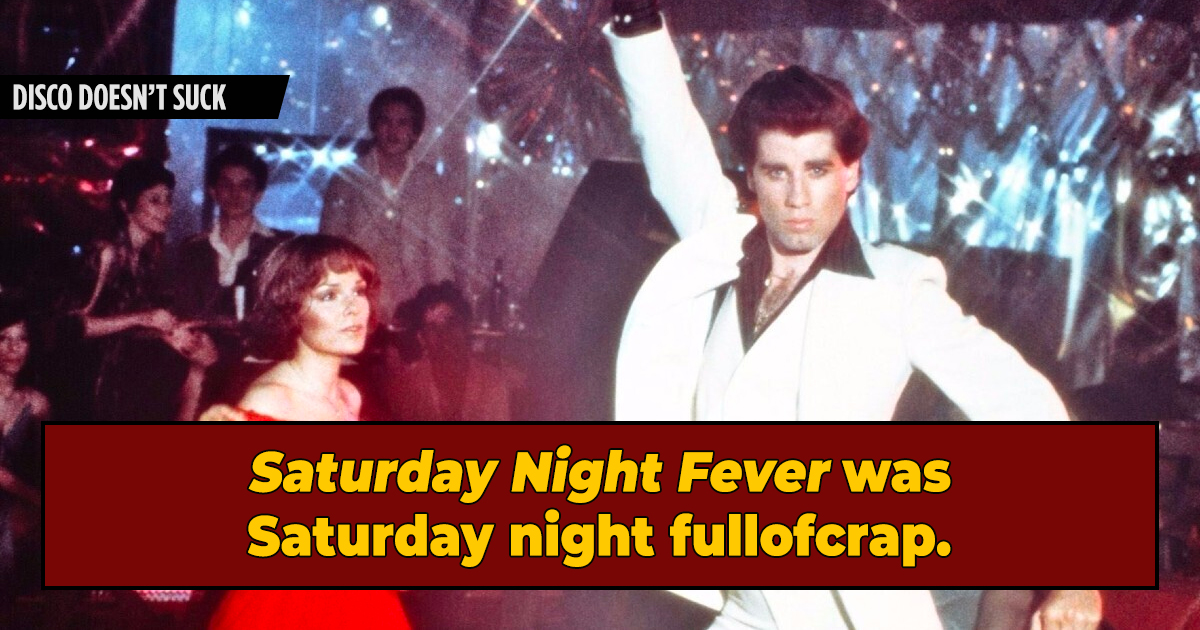
Disco did not begin with a white suit, a pointed finger, or John Travolta strutting down a Brooklyn sidewalk like the pavement owed him money. Long before Saturday Night Fever turned disco into a global pop-culture earthquake, the music was already pulsing through underground clubs, private loft parties, Black dance floors, Latino neighborhoods, queer nightlife, and DJ-led spaces where people built freedom one record at a time.
Then came a magazine story. In 1976, New York magazine published Nik Cohn’s “Tribal Rites of the New Saturday Night,” a gritty, cinematic profile of a young Italian American disco king in Bay Ridge, Brooklyn. The piece inspired Saturday Night Fever, which helped push disco from underground culture into mainstream America. There was just one glittery problem: the article was not the deep reporting readers thought it was. Cohn later admitted that many of the characters, quotes, and scenes were fabricated.
That revelation does not make the story less important. If anything, it makes it more revealing. The article did not invent disco, but it helped invent the version of disco many Americans first accepted: straighter, whiter, more male-centered, and easier to sell with a movie poster, a soundtrack, and a pair of very confident hips.
The Real Roots of Disco Were Not in Hollywood
To understand why Cohn’s article mattered, we have to rewind before the Bee Gees became shorthand for disco fever. Early disco grew from a blend of soul, funk, Philadelphia R&B, Latin rhythms, gospel emotion, and DJ experimentation. It thrived in New York City clubs and private parties where Black, Latino, and LGBTQ+ dancers created spaces that were not simply about entertainment. They were about belonging.
At places such as David Mancuso’s Loft, the DJ was not background decoration. The DJ was a guide, a mood engineer, a community organizer with turntables. The dance floor became a social experiment: no assigned seats, no stiff rules, no velvet-rope hierarchy telling people their joy had bad credit. The music was continuous, physical, emotional, and open-ended. A record did not just play; it traveled through the room.
Other clubs and scenes helped shape disco’s rise, including The Sanctuary, The Gallery, Paradise Garage, and numerous neighborhood venues that rarely make it into the simplified “disco decade” highlight reel. Early disco was not one sound or one demographic. It was a meeting point for people who were often pushed to the margins in daylight but became central under the lights.
Enter Nik Cohn and “Tribal Rites of the New Saturday Night”
Nik Cohn was a British rock journalist with a sharp ear for youth culture and a gift for dramatic detail. In 1976, he wrote “Tribal Rites of the New Saturday Night” for New York magazine. The article focused on a working-class Brooklyn dancer named Vincent, a local superstar at the 2001 Odyssey disco. Vincent had style, swagger, ambition, frustration, and a small kingdom on the dance floor.
The story read like nonfiction, but it moved like a movie. It had class tension, neighborhood codes, sexual drama, fashion, music, and a hero who seemed born for the camera. Hollywood noticed. Vincent became the rough blueprint for Tony Manero, the character John Travolta played in Saturday Night Fever.
The problem was that Vincent, as presented, was not a reported subject in the traditional journalistic sense. Cohn later acknowledged that his story was substantially invented. He had briefly visited the Brooklyn disco scene, but he was not deeply embedded in the lives of the people he described. Instead, he built his central figure from imagination, memory, and youth-culture archetypes he knew from elsewhere.
In other words, one of the most influential disco stories in American media history was not a carefully documented portrait of the culture. It was a fictionalized myth wearing a press badge and platform shoes.
How a Made-Up Article Became a Real Cultural Machine
The strange thing about cultural myths is that they do not have to be true to become powerful. “Tribal Rites of the New Saturday Night” helped give Hollywood a narrative it could sell: one young man, one neighborhood, one dance floor, one escape route. That is much easier to package than a sprawling, multiracial, queer, DJ-driven, club-by-club history of disco.
Saturday Night Fever, released in 1977, was not just a movie. It was a conversion kit. It turned disco into something suburban moviegoers, radio programmers, fashion retailers, and record executives could recognize and monetize. Suddenly disco was not only underground pleasure; it was a white suit in a shopping mall window, a dance lesson, a soundtrack, and a thousand guys practicing the finger point in their bedrooms with alarming seriousness.
The film’s soundtrack became one of the most successful albums of all time, with the Bee Gees at its commercial center. But even that soundtrack tells a more complicated story than the movie poster suggests. Alongside the Bee Gees were artists and groups such as Tavares, Kool & The Gang, KC and the Sunshine Band, MFSB, The Trammps, Yvonne Elliman, Ralph MacDonald, and others. The music itself still carried disco’s broader DNA, even as the marketing image narrowed around Travolta.
What “Whitened Disco” Really Means
Saying the article “whitened” disco does not mean disco had no white dancers before 1976. Of course it did. Disco was always porous, adaptive, and hungry for bodies in motion. But mainstream media often chooses one face to represent a movement, and that choice changes public memory.
Before Saturday Night Fever, disco’s cultural engine was heavily associated with Black musicians, Latino dancers, queer clubs, women vocalists, and DJs who treated records like living material. After the film, the mainstream image shifted toward a straight white male hero in Brooklyn. The story became less about collective liberation and more about individual escape. Less Loft, more Tony. Less underground family, more cinematic loner with great hair.
That shift mattered because cultural credit matters. When a subculture moves from the margins to the marketplace, the people who built it are often edited out of the trailer. The music remains, the fashion remains, the money flows, but the origin story gets cleaned up until it looks less threatening to the audience with buying power.
The Role of Journalism: Reporting or Mythmaking?
Cohn’s article sits in a messy corner of media history. It arrived during the age of New Journalism, when writers often used literary techniques to make nonfiction feel vivid, subjective, and cinematic. The best of that movement produced unforgettable reporting. The worst of it blurred the line between “I saw this” and “this would be amazing if it happened.”
“Tribal Rites of the New Saturday Night” worked because it felt true. It captured real anxieties of the 1970s: economic frustration, masculine insecurity, class mobility, ethnic neighborhood pride, and the weekend hunger to become someone else for a few hours. Even if Vincent was invented, the emotional ingredients were recognizable.
But emotional truth is not the same as factual truth. Journalism depends on trust, especially when it represents communities that already struggle to control their own image. When a writer turns a culture into a dramatic prop, the result can be entertaining, profitable, and historically misleading all at once. Congratulations, media industry: that is a very crowded dance floor.
Disco Was Already Being Documented More Carefully
Cohn was not the only writer paying attention to disco. Critics such as Vince Aletti had been documenting the emerging scene earlier and with greater sensitivity to its music, DJs, clubs, records, and communities. Aletti’s work helped show disco as a living network rather than a colorful backdrop for one fictionalized hero.
This difference matters. One approach asks, “Who is here, what are they playing, and why does this room matter?” The other asks, “What story can I build from this scene that readers will devour?” Both can create memorable writing, but only one gives the culture a fair chance to speak for itself.
Disco history is richer when it includes the people behind the booth, the dancers who made songs famous before radio touched them, the record pools that helped DJs break new music, and the independent labels that fed the floor. Disco was not merely a genre. It was an ecosystem.
The Backlash Proved Disco Was Never “Just Music”
By the late 1970s, disco had become unavoidable. It was on radio, television, movie screens, fashion racks, wedding playlists, and probably in at least one uncle’s regrettable satin shirt. But popularity brought backlash. The “disco sucks” movement framed disco as artificial, shallow, and overproduced. Some critics simply disliked the sound. Others were reacting to what disco represented: racial mixing, queer visibility, female power, urban nightlife, and pleasure outside rock’s masculine gatekeeping.
The backlash reached its most infamous symbol with Disco Demolition Night in Chicago in 1979, when disco records were blown up between baseball games and the event turned into a riot. Not everyone involved saw themselves as part of a racist or homophobic movement, but many historians and cultural critics have noted that anti-disco anger often carried those undertones. When people chant for the destruction of a music associated with Black, Latino, gay, and female performers, the subtext does not exactly arrive wearing a disguise.
The irony is that disco did not die. It changed names, went underground, and re-emerged through house, dance-pop, electronic music, hip-hop sampling, club culture, and modern festival sounds. The beat survived the bonfire.
Why the Fabrication Still Matters Today
The made-up nature of Cohn’s article is more than a juicy media footnote. It is a reminder that the stories which mainstream a culture often become more famous than the culture’s real origins. That pattern still happens today. A trend begins in a marginalized community, travels through social media, gets rebranded by a celebrity, and suddenly everyone acts as if it appeared by magic in a marketing meeting.
Disco’s mainstream story shows how quickly cultural memory can be rearranged. A Black, Latino, queer, female-powered, DJ-centered movement became popularly remembered through a straight white male character created by a writer who was not deeply rooted in the community he described. That does not mean Saturday Night Fever has no artistic value. Travolta’s performance is electric, the soundtrack is undeniable, and the film’s darker look at class and masculinity still has bite. But its success came with a cost: many viewers mistook the adaptation for the origin.
The better way to remember disco is not to cancel the white suit. It is to widen the frame. Keep Tony Manero, but put him back in context. Put him beside Donna Summer, Gloria Gaynor, Sylvester, Grace Jones, Chic, MFSB, Larry Levan, David Mancuso, Nicky Siano, Tom Moulton, the dancers, the DJs, the clubs, the record stores, the queer communities, and the Black and Latino innovators who made the floor possible.
Specific Examples of What Got Lost in the Mainstream Version
1. The DJ as an artist
Before disco, mainstream audiences often saw the DJ as someone who simply played records. Disco changed that. DJs shaped tempo, mood, sequence, and community. They knew when to lift the room, when to hold tension, and when to drop the record that made everybody lose their minds in a socially acceptable way.
2. The dance floor as a safe space
For queer dancers and people of color, the club could be more than a party. It could be a rare environment where identity, desire, style, and movement were not policed in the same way they were outside. The mainstream version often reduced that freedom to fashion and choreography.
3. Women’s voices as disco’s emotional center
Disco’s great female vocalists gave the genre its drama, resilience, heartbreak, humor, and command. Songs of survival, longing, and release were not decorative; they were the emotional architecture of the room.
4. The business machine behind the boom
Once disco became profitable, major labels and studios flooded the market. That overexposure helped fuel the backlash. But the backlash often blamed the genre itself rather than the industry that had rushed to squeeze every possible dollar out of it.
Experience Section: What This Story Teaches Anyone Who Loves Pop Culture
Spending time with the story of the made-up article behind Saturday Night Fever feels a little like finding out your favorite family legend has been “lightly edited” by an uncle with dramatic instincts. At first, it is funny. Then it is awkward. Then you realize the exaggeration changed who got credit at the dinner table.
One of the biggest experiences this topic offers is the uncomfortable pleasure of rewatching a classic with new eyes. You can still enjoy Travolta’s walk, the Bee Gees’ falsetto, and the electric confidence of the dance scenes. The movie still works because it understands longing. Tony Manero wants out. He wants to be seen. He wants the dance floor to turn him from a paint-store clerk into a legend, if only until closing time. That feeling is real, even if the article that helped create him was not.
But once you learn more about disco’s origins, the movie no longer feels like the whole story. It feels like one loud, marketable chapter placed in front of a much bigger book. You start wondering about the people outside the frame: the DJs carrying crates, the dancers who tested records before radio cared, the queer kids who found safety in rhythm, the Black and Latino communities whose music and movement shaped the sound, and the women whose voices made disco feel like survival with better lighting.
Another useful experience is learning how media can make a culture easier to consume by making it less complicated. A messy, diverse, underground movement is hard to sell in a two-minute trailer. A handsome lead character in a white suit is not. That does not make audiences foolish; it makes marketing powerful. Most people meet history through stories, and the simplest story often wins unless someone keeps asking, “Who is missing?”
This topic is also a reminder to treat nostalgia carefully. Nostalgia is fun. It gives us mirror balls, old records, vintage photos, and the charming belief that everyone in the 1970s owned perfect cheekbones. But nostalgia can flatten history. It can turn struggle into aesthetic. Disco was joyful, absolutely, but it was not empty joy. It was joy made by people who often had to fight for space, safety, and recognition.
For writers, editors, bloggers, and anyone building content online, the lesson is especially sharp: do not confuse a great angle with the whole truth. The best story is not always the neatest one. Sometimes the real story has more voices, more contradictions, and a less convenient ending. That is not a weakness. That is where the rhythm lives.
Conclusion: The Beat Was Real, Even If the Story Wasn’t
The article that helped mainstream disco was made up, but disco itself was never fake. Its roots were deep, communal, inventive, and defiantly alive. Nik Cohn’s “Tribal Rites of the New Saturday Night” gave Hollywood a compelling myth, and Saturday Night Fever turned that myth into a worldwide phenomenon. Yet the true history of disco is bigger than Tony Manero, bigger than Bay Ridge, and bigger than a white suit under colored lights.
Disco came from rooms where people danced themselves into visibility. It came from Black and Latino music traditions, queer nightlife, women’s voices, DJ innovation, and the hunger for collective release. The mainstream version may have whitened and simplified the story, but the original beat kept moving. That is disco’s real miracle: even when the culture industry tried to package it, parody it, or blow it up, the groove slipped out the side door and kept dancing.
Note: This article is written as an original synthesis based on established historical reporting, music history archives, public media sources, and documented accounts of disco culture, Nik Cohn’s article, Saturday Night Fever, and the disco backlash.