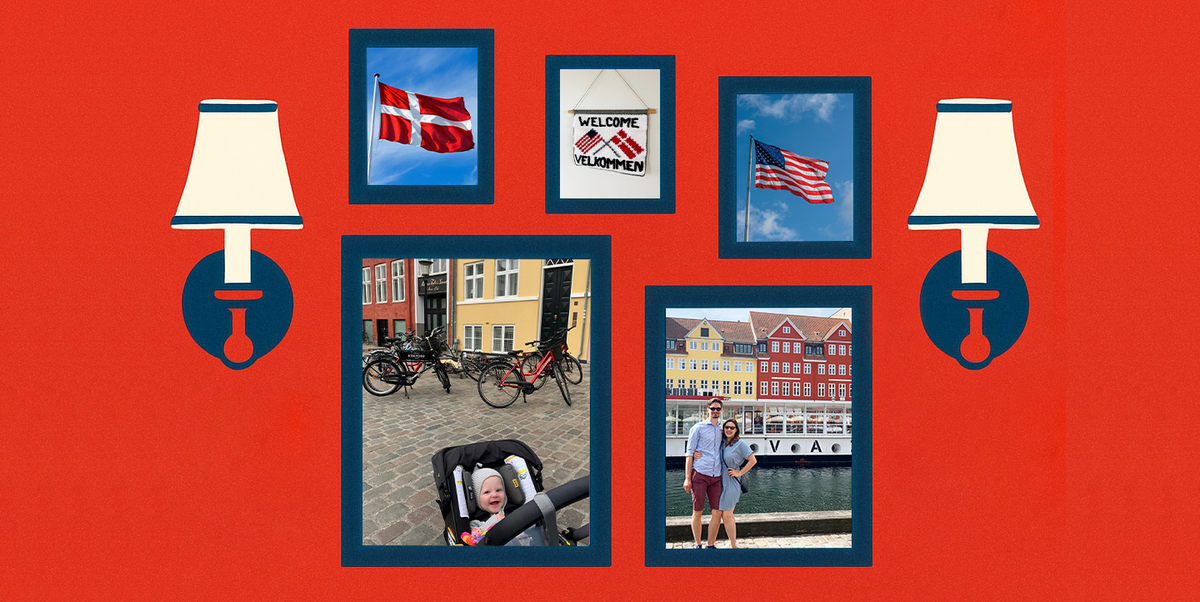
Before children, cultural differences can feel charming. One parent makes dumplings for Lunar New Year; the other insists that Thanksgiving stuffing is practically a food group. One family greets everyone with hugs, while the other considers a respectful nod a complete emotional monologue.
Then a baby arrives, and suddenly those differences are no longer decorative. They affect bedtime, discipline, food, language, school, religion, independence, grandparents, privacy, manners, and whether a toddler should be allowed to leave the house wearing rain boots, pajamas, and a superhero cape.
Parenting across cultures is not simply about blending holidays or serving two cuisines at dinner. It is the daily work of deciding which values to preserve, which habits to question, and which new traditions to create. The goal is not to declare one culture the winner. It is to build a family culture in which children feel secure, connected, and free to become more than a compromise between two adults.
Why Cross-Cultural Parenting Creates So Much Friction
Culture influences what adults consider normal childhood behavior. It shapes expectations surrounding obedience, emotional expression, academic achievement, family loyalty, gender roles, independence, caregiving, and respect for elders. Even the meaning of “good parenting” can differ dramatically from one household to another. Researchers emphasize that child development always takes place within social, cultural, linguistic, and historical contexts rather than inside a universal parenting laboratory.
One parent may believe that children show respect by following instructions without debate. The other may view questions as signs of confidence and critical thinking. One may think children should sleep independently as early as possible. The other may consider shared sleeping arrangements an ordinary part of family closeness.
Neither parent necessarily cares more or less. They may simply be using different cultural maps.
The Conflict Is Usually About Meaning, Not the Surface Issue
A disagreement about bedtime might actually concern authority. An argument over speaking the heritage language may be about connection to grandparents. A dispute about chores can represent competing ideas about responsibility, gender, or childhood freedom.
When couples argue only about the visible behavior, they miss the emotional machinery underneath it. “Should our child attend this family event?” sounds like a scheduling question. Beneath it may be a fear that the child is drifting away from half of the family.
Successful intercultural communication requires more than exchanging information. It involves recognizing different cultural assumptions and adapting toward one another rather than demanding total assimilation.
Start by Naming the Values Beneath Your Rules
Instead of beginning with, “This is how my family did it,” begin with, “What value am I trying to teach?”
Suppose one parent wants children to greet every older relative formally, while the other finds that expectation stiff and unnecessary. The first parent may be protecting respect, continuity, and family hierarchy. The second may value authenticity and relaxed relationships.
Once the values are visible, the couple can design a rule that honors both. A child might be expected to greet relatives warmly and respectfully but allowed to choose among culturally appropriate forms of greeting.
A useful family exercise is to have each parent identify five qualities they hope their child develops. Common answers include kindness, confidence, responsibility, curiosity, perseverance, generosity, independence, humility, and loyalty. Couples often discover that their deepest goals overlap even when their preferred methods do not.
Create a Parenting Constitution
A cross-cultural household benefits from a short set of principles that outrank individual customs. Think of it as a family constitution, only with fewer powdered wigs and more spilled applesauce.
The constitution might state that:
- Every person deserves physical and emotional safety.
- Children may express feelings without insulting others.
- Parents explain important rules whenever developmentally appropriate.
- Both family cultures are spoken about respectfully.
- Adults discuss serious disagreements privately.
- Rules may change as children mature or circumstances change.
Children generally benefit from clear expectations, predictable routines, positive communication, and consistent consequences. Those practices can be adapted to many family structures and cultural traditions.
Consistency does not mean both parents must have identical personalities. One can be more playful and the other more structured. The important point is that the child should not have to solve an international diplomatic crisis every time someone says, “No more cookies.”
Use Warmth and Structure Instead of Fear
Discipline is often the hottest part of a culture clash because adults tend to repeat, reject, or overcorrect what happened in their own childhoods.
Parenting frameworks commonly distinguish between warmth and control. An authoritative approach combines affection and responsiveness with boundaries, expectations, and age-appropriate autonomy. An authoritarian approach emphasizes obedience while offering less dialogue or responsiveness. Cultural context affects how particular behaviors are understood, so labels should not be applied carelessly. Still, research across cultures generally supports parenting that combines warmth, guidance, communication, and reasonable limits.
Parents can preserve culturally important expectations without relying on humiliation, threats, or physical punishment. The American Academy of Pediatrics recommends discipline that teaches desired behavior through strategies such as limit setting, redirection, positive reinforcement, and clear expectations.
Replace “Because I Said So” with Brief Explanations
Explaining a rule does not surrender authority. It teaches judgment.
Instead of saying, “Do not interrupt adults,” try, “Let Grandma finish her story, and then we will listen to you.” Instead of, “You must hug your uncle,” try, “You need to greet him politely, but you may wave, shake hands, or say hello.”
The child still receives structure, but the rule also protects dignity and bodily autonomy.
Protect Both Languages Without Turning Conversation into Homework
Language is one of the most emotional issues in bicultural parenting. A heritage language can connect children to grandparents, stories, humor, songs, faith, history, and relatives who may not speak English fluently. Losing it may feel like losing access to part of the family.
Children can learn more than one language without being confused or automatically developing a language delay. Parents are encouraged to use their languages early, frequently, and naturally while valuing practice over perfection.
The strongest language plan is usually the one a family can sustain. Options include one parent consistently using one language, speaking the heritage language at home, setting aside certain days for it, or linking it to particular relatives and activities.
Avoid correcting every sentence as though the child is defending a doctoral dissertation. Read stories, cook together, watch age-appropriate programs, tell jokes, call relatives, and use the language during routines. Connection is the engine; vocabulary follows.
Prepare for the Parent-Child Acculturation Gap
Children often absorb the surrounding culture faster than their parents. They encounter its language, humor, expectations, fashion, technology, and social rules at school and among friends. Parents may remain more strongly oriented toward their heritage culture.
This difference is sometimes called a parent-child acculturation gap. Research on immigrant families has linked larger gaps or persistent acculturation conflict with family tension and some emotional or behavioral difficulties, although outcomes vary across families and communities.
The answer is not to freeze children inside the parents’ past. Nor is it to treat the heritage culture as baggage that must be dropped at the school entrance. Parents can remain curious about their child’s world while helping the child understand the family’s history.
Useful questions include:
- “What do your friends think about this?”
- “Does our family rule feel different from what happens in other homes?”
- “What part of our tradition matters to you?”
- “Is there something you wish we understood better?”
These conversations do not guarantee agreement. They prevent disagreement from becoming loneliness.
Let Children Be Bicultural, Not Cultural Referees
A child should never be forced to prove loyalty by choosing one half of the family. Comments such as “You are becoming too American” or “That side of the family is backward” turn identity into a tug-of-war.
Children benefit when parents communicate pride in their heritage while also teaching respect for other traditions. Family stories, books, music, photographs, community events, language, food, and honest discussions about history can help children develop cultural confidence.
A child may identify differently at different ages. A young child may describe identity through food and holidays. A teenager may explore race, migration, religion, discrimination, or belonging more deeply. These changes are not necessarily rejection. Identity development is a process, not a loyalty exam with multiple-choice answers.
Manage Grandparents and Extended Family with Respectful Boundaries
Cross-cultural parenting often includes a third party: everybody’s relatives.
Extended family can provide love, language, practical help, cultural knowledge, and a strong sense of belonging. Family relationships beyond parentsincluding grandparents, aunts, uncles, siblings, and other caregiverscan be important parts of children’s healthy development.
They can also deliver strong opinions about feeding, clothing, manners, sleep, discipline, schooling, and whether the baby is cold. The baby is always cold. It could be July in Arizona, and someone will still produce a sweater.
Parents should agree privately on nonnegotiable boundaries before speaking with relatives. Present decisions as joint choices: “We have decided…” rather than “My spouse refuses…” This prevents one partner from being cast as the villain who imported strange ideas into an otherwise flawless family system.
Whenever possible, explain the value behind the boundary. “We are teaching her to greet everyone respectfully, but we are not requiring physical affection” is more constructive than “Stop making her hug people.”
Build New Rituals Instead of Splitting Everything in Half
A bicultural family does not need to divide every tradition with mathematical precision. Some celebrations may come primarily from one culture. Others can be combined, alternated, or invented.
Family rituals help connect children to history, values, relationships, and a sense of continuity. They do not have to be formal or religious to be meaningful.
Your family might celebrate two New Year traditions, cook one grandparent’s recipe on birthdays, tell migration stories during a yearly dinner, or create a Sunday ritual featuring music from both backgrounds. The result is not a diluted version of two cultures. It is a third family culture with its own personality.
Keep the Child Out of Adult Cultural Battles
Children should not be asked to carry messages, translate emotional arguments, or decide which parent is culturally correct. When adults openly attack each other’s traditions, children may hear criticism of themselves.
Discuss disagreements privately and return with a shared decision. When immediate agreement is impossible, use a temporary rule and schedule a later conversation. A calm provisional plan is better than a dramatic debate conducted while a preschooler quietly eats crayons nearby.
Responsive, back-and-forth relationships with caring adults support early development and help children manage stress. What matters most is not perfect cultural agreement but the presence of attentive, stable, and emotionally available caregivers.
Know When Outside Support Can Help
Some disagreements can be settled over coffee. Others become repetitive conflicts involving anger, contempt, withdrawal, or fear. Couples counseling, family therapy, parenting education, cultural community groups, faith leaders, or a pediatric professional may help.
Look for someone who understands that cultural difference is not automatically dysfunction. A useful professional should ask about each family’s history, values, migration experience, language, support network, and goals rather than treating one cultural model as the default setting for humanity.
Experiences from the Messy Middle of a Culture Clash
Consider a composite family we will call Maya and Daniel. Maya grew up in a home where children served older relatives first, school performance was discussed at every dinner, and family decisions were rarely open to negotiation. Daniel grew up calling adults by their first names and debating nearly everything, including rules, politics, and whether cereal could qualify as dinner.
Before becoming parents, they considered these differences amusing. After their daughter, Lena, turned four, amusement became a limited natural resource.
Their first major argument began when Lena refused to greet Maya’s parents during a video call. Maya saw disrespect. Daniel saw an exhausted preschooler who had just spent eight hours at day care. They argued about the greeting but were actually defending different fears. Maya worried that Lena would lose her connection to family and language. Daniel worried that obedience would be valued more than honesty.
Once they named those fears, they created a simple rule: Lena had to acknowledge relatives, but she could choose how. She could wave, say hello, blow a kiss, or briefly show a drawing. The grandparents received recognition. Lena retained some control. Nobody had to convene the United Nations.
Language created another struggle. Maya spoke her heritage language with Lena, but Lena increasingly answered in English. Maya interpreted this as rejection and began correcting nearly every response. Conversations became tense. Lena spoke less.
The family changed tactics. They stopped treating language as a test and attached it to enjoyable experiences. Maya and Lena cooked with a grandparent over video, labeled family photographs, sang ridiculous songs, and invented secret phrases. Daniel learned basic expressions too, cheerfully mispronouncing several of them. Lena gradually began using more words because the language once again represented connection rather than evaluation.
Another composite couple, Priya and Marcus, clashed over independence. Priya’s family expected frequent involvement in children’s decisions, even into adulthood. Marcus believed that children should solve problems independently as early as possible. Their son’s middle-school friendship conflict exposed the difference. Priya wanted to call the other parents immediately. Marcus wanted their son to handle everything alone.
They eventually created a support ladder. First, their son would describe the problem. Second, they would help him identify possible responses. Third, he would try one. The parents would intervene only if the situation involved safety, bullying, repeated harm, or a clear power imbalance.
This approach respected Marcus’s goal of independence and Priya’s commitment to family support. More importantly, it taught their son that asking for help and developing competence are not opposites.
Real cross-cultural parenting is full of these imperfect negotiations. Some decisions work immediately. Others require revisions after bedtime collapses, relatives protest, or the child offers a surprisingly sensible objection. Progress often looks less like harmony and more like recovering faster after conflict.
The most successful families are not those that eliminate cultural differences. They are the ones that become skilled at discussing them. They learn to ask what a tradition protects, whether a rule still serves the child, and how both parents can remain visible in family life.
Over time, children may become remarkably fluent cultural interpreters. They learn that respect can include both listening and speaking honestly. They understand that independence does not require isolation and that family loyalty does not require surrendering individuality. They discover that belonging can be plural.
That may be the greatest gift of parenting across a culture clash. A child does not simply inherit two sets of customs. The child learns how to approach difference with curiosity, flexibility, humor, and confidenceskills that will matter far beyond the family kitchen.
Note: The family experiences in this section are composite examples created to illustrate common cross-cultural parenting challenges. They do not describe one identifiable family.