Snow looks charming when it floats down like powdered sugar on a holiday cookie. Then the driveway disappears, the sidewalk becomes a skating rink, and suddenly that peaceful winter scene turns into a full-body workout with a plastic shovel and a questionable attitude. Shoveling snow may seem simplescoop, toss, repeatbut your back knows the truth. Done poorly, it can trigger muscle strain, lower back pain, shoulder aches, slips, and even serious health problems.
The good news? You do not need superhero strength or a heated driveway to protect yourself. With the right shovel, smarter body mechanics, steady pacing, and a few common-sense habits, you can clear snow without making your spine file a formal complaint. This guide explains how to prevent back injury while shoveling snow, how to reduce winter aches, when to stop, and how to make the job easier before the first flake even lands.
Why Shoveling Snow Is So Hard on Your Back
Shoveling snow combines several things your back does not love: bending forward, twisting, lifting uneven weight, standing on slippery ground, and working in cold temperatures. Fresh powder may be light, but wet snow can feel like moving cement with a handle. When you lift too much, reach too far, or toss snow over your shoulder, your lower back absorbs the punishment.
Cold weather adds another layer of risk. Muscles tend to feel tighter in low temperatures, and your body is already working to stay warm. If you rush outside without warming up, your back muscles may be asked to go from “couch mode” to “winter lumberjack mode” in 30 seconds. That is not a smooth career transition.
Before You Shovel: Prepare Like It Is a Workout
Shoveling is physical exercise, not a casual outdoor errand. Treat it like a workout and your body will thank you later. Before grabbing the shovel, spend five to ten minutes warming up indoors. Walk around the house, do gentle marching in place, roll your shoulders, and move your hips. The goal is not to break a sweat; it is to wake up the muscles that are about to help you survive the driveway.
Stretch Gently, Not Aggressively
Light stretches can help loosen the back, hips, hamstrings, and shoulders. Try gentle lunges, slow torso rotations, hip circles, and easy back mobility movements. Avoid deep, forceful stretching in a cold garage. Your muscles are not pizza dough; they do not need to be yanked into shape.
Check Your Health Before Heavy Shoveling
People with a history of heart disease, high blood pressure, long-standing back problems, recent surgery, or very low physical activity should be extra cautious. Snow shoveling can raise heart rate and blood pressure, especially in freezing weather. If you are unsure whether shoveling is safe for you, ask a healthcare professional before the next storm, not while standing in knee-deep snow wondering if stubbornness counts as cardio.
Choose the Right Snow Shovel
The best snow shovel is not always the biggest one. A huge scoop may look efficient, but it can tempt you to lift more than your back can comfortably handle. Choose a lightweight shovel that fits your height and strength. A curved or ergonomic handle may reduce bending, while a smaller blade can help you move lighter loads.
Look for a shovel that lets you keep your back fairly straight. If you have to hunch like a cartoon villain every time you scoop, the handle may be too short. If the shovel feels heavy before snow is even on it, it is not your winter soulmate.
Push Snow Whenever Possible
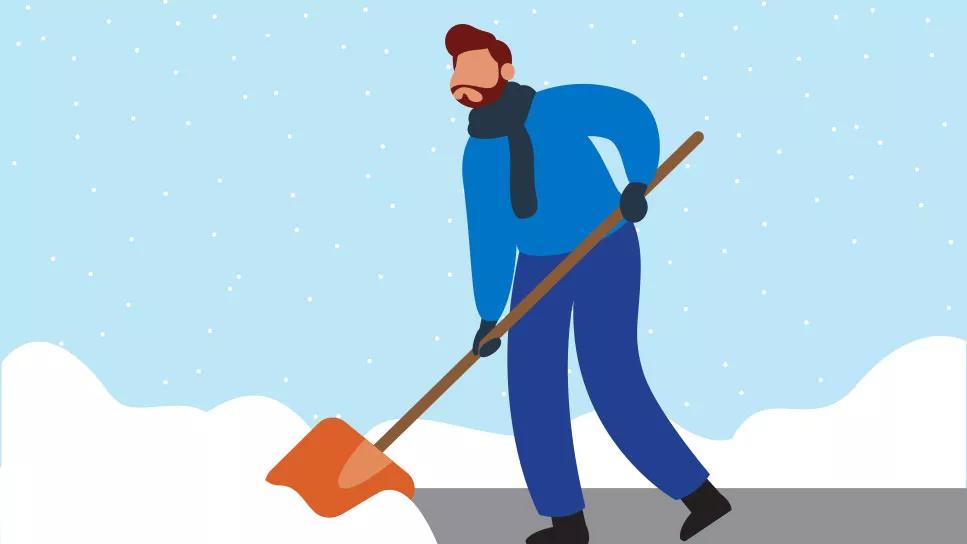
The golden rule of back-friendly snow removal is simple: push, do not lift, whenever you can. Pushing snow keeps the load closer to the ground and reduces strain on the lower back. It also avoids the risky combination of lifting, twisting, and tossing.
For light or moderate snow, start in the middle of the driveway or walkway and push toward the edges. Think of it as moving a blanket, not launching snow into orbit. If the snow is deep, clear it in layers rather than trying to move the whole pile at once.
Use Proper Lifting Technique When You Must Lift
Sometimes pushing is not enough. You may need to lift snow over a curb, away from a doorway, or onto a pile. When that happens, protect your back by using your legs and keeping the load small.
Keep Your Back Straight
Bend at your knees and hips, not at your waist. Keep your chest up, tighten your core slightly, and lift with your legs. This distributes the work across larger muscle groups instead of dumping the entire job onto your lower back.
Keep the Shovel Close
Holding a heavy shovel far away from your body increases strain on your spine. Keep the shovel close to your torso and avoid reaching too far. Your arms should not become a snow-loaded crane.
Turn Your Whole Body
One of the biggest mistakes people make is twisting at the waist while tossing snow to the side. Instead, move your feet and turn your whole body toward the place where you want the snow to go. Your spine is designed to move, yes, but it does not appreciate being used like a corkscrew under load.
Take Smaller Scoops
Small scoops may feel slower, but they are usually safer and more sustainable. A shovel filled one-fourth to one-half full is easier to control than a monster scoop of packed snow. This is especially important with wet, heavy snow, which can weigh far more than it looks.
If you are tempted to prove something by lifting the biggest scoop possible, ask yourself: “Would I rather finish five minutes earlier or avoid walking like a question mark tomorrow?” Usually, the answer is clear.
Clear Snow Early and in Stages
Fresh snow is usually easier to move than snow that has been walked on, driven over, melted, refrozen, or compacted into icy layers. If a long storm is expected, consider clearing every few inches instead of waiting for the grand finale. It is less dramatic, but your back will enjoy the smaller workload.
For heavy storms, divide the job into sections. Clear the front steps first, then the sidewalk, then one lane of the driveway, then take a break. Snow removal is not a reality show challenge. There is no trophy for finishing while gasping into your scarf.
Dress for Warmth and Traction
Good clothing helps prevent both cold stress and awkward movement. Wear warm layers that allow you to move freely. Choose gloves with grip, a hat that covers your ears, and boots with solid traction. Waterproof or water-resistant footwear is especially useful when snow turns slushy.
Avoid bulky clothing that restricts your arms, hips, or knees. If you cannot bend properly because your coat is shaped like a sleeping bag with sleeves, your lifting technique will suffer. Dress warmly, but stay mobile.
Watch Your Footing
Back injuries do not always come from lifting. Sometimes they happen when you slip, twist suddenly, or catch yourself mid-fall. Before shoveling, sprinkle traction material on icy spots if needed. Move slowly, take short steps, and avoid rushing on uneven surfaces.
Pay special attention to steps, sloped driveways, hidden curbs, and areas where snow covers ice. A careful pace may feel boring, but boring is better than meeting the pavement unexpectedly.
Take Breaks Before You Feel Exhausted
Do not wait until your back is screaming before you rest. Take short breaks every 10 to 15 minutes, especially during heavy snow or extreme cold. Stand upright, walk around, sip water, and check how your body feels. Hydration matters in winter too, even if you are not sweating like it is July.
Fatigue makes your technique worse. Once you are tired, you are more likely to bend from the waist, twist carelessly, overload the shovel, or ignore slippery spots. Breaks are not weakness. They are maintenance.
Know When To Stop Shoveling
Stop immediately if you feel sharp back pain, chest pain, pressure in the chest, unusual shortness of breath, dizziness, nausea, cold sweats, or pain spreading to the arm, shoulder, neck, or jaw. These symptoms can signal serious problems and should not be ignored.
For back pain, stop if pain becomes sudden, severe, or travels down the leg with numbness, tingling, or weakness. Mild muscle fatigue is common after physical work, but sharp or radiating pain deserves attention. The snow can wait. Your spine and heart cannot be replaced at the hardware store.
Use Snow Blowers Safely
A snow blower can reduce lifting, but it is not risk-free. Wear proper footwear, keep hands away from moving parts, and turn the machine off before clearing clogs. Never reach into a snow blower chute with your hand, even if the machine appears stopped. Use the clearing tool recommended by the manufacturer.
Also, do not let the snow blower pull you faster than you can safely walk. Maintain good posture, keep both hands on the handles, and avoid forcing the machine through deep, compacted snow.
After Shoveling: Help Your Back Recover
When the job is done, do not collapse immediately into the nearest chair and remain there until spring. Cool down with a few minutes of gentle walking and light stretching. This helps your muscles transition out of work mode.
If your back feels mildly sore, gentle movement, rest, and warmth may help. Avoid heavy lifting for the rest of the day if you already feel strained. If pain worsens, lasts more than a few days, or includes numbness, weakness, fever, or loss of bladder or bowel control, seek medical care promptly.
Smart Alternatives When Shoveling Is Too Much
Sometimes the safest snow-shoveling technique is not shoveling at all. Hiring a snow removal service, asking a neighbor, using a snow blower, or splitting the job with another person can be a smart decision. This is especially true for older adults, people with heart conditions, people with chronic back problems, and anyone recovering from illness or injury.
There is no shame in outsourcing snow removal. Your driveway does not care who clears it. Your back, however, may send a thank-you card.
Common Snow Shoveling Mistakes That Cause Back Pain
Many back injuries happen because of small mistakes repeated over and over. These include bending at the waist, lifting overloaded shovels, twisting while throwing snow, rushing without warming up, wearing poor footwear, ignoring ice, and trying to clear deep snow in one pass.
Another common mistake is shoveling immediately after a heavy meal or while already tired. Your body performs better when it has energy, mobility, and circulation on its side. A short warm-up, lighter scoops, and a calmer pace can make the same job much safer.
Quick Checklist: Back-Safe Snow Shoveling
- Warm up indoors for five to ten minutes.
- Use a lightweight shovel that fits your height.
- Push snow instead of lifting whenever possible.
- Lift small amounts with bent knees and a straight back.
- Keep the shovel close to your body.
- Turn with your feet instead of twisting your waist.
- Take frequent breaks and drink water.
- Wear warm layers and boots with good traction.
- Stop for chest pain, dizziness, severe back pain, or unusual shortness of breath.
- Ask for help when the snow is too heavy or your health makes shoveling risky.
Real-Life Experiences: What Snow Shoveling Teaches You the Hard Way
Anyone who has lived through a real winter knows that snow shoveling is not just a chore. It is a character test with frozen eyebrows. The first storm of the season often inspires confidence. You step outside, admire the fluffy white layer, and think, “This will take ten minutes.” Forty minutes later, your gloves are wet, your back is negotiating a peace treaty, and the snowplow has just buried the end of your driveway again.
One of the most useful lessons from experience is that timing matters. Fresh snow is far easier to move than snow that has been compacted by tires or melted and frozen again overnight. Many homeowners learn this after ignoring a light snowfall in the afternoon, only to discover the next morning that their driveway has transformed into a glazed pastry of regret. Clearing smaller amounts earlier may feel inconvenient, but it often saves time and strain later.
Another practical lesson is that technique usually fails when pride takes over. People often overload the shovel because they want to finish quickly. The problem is that one heroic scoop can lead to one very unheroic back spasm. Smaller scoops feel less impressive, but they keep your rhythm steady. Snow shoveling is more like brushing your teeth than winning a weightlifting competition: consistency beats drama.
Footwear is another detail people underestimate until the first slip. Old sneakers may seem fine for a quick trip outside, but snow hides ice beautifully. A good pair of insulated boots with traction can make the difference between controlled movement and an accidental winter dance routine. When footing feels secure, your body can focus on pushing and lifting properly instead of bracing against every step.
Many people also discover that the best snow-removal plan starts before the storm. Keeping the shovel near the door, spreading ice melt where appropriate, checking the forecast, and moving cars before snow piles up can reduce awkward lifting later. A little planning keeps you from dragging a buried shovel out from behind the garage while muttering things that would disappoint your grandmother.
Experience also teaches humility. Some storms are simply too much for one person. Heavy, wet snow at the bottom of the driveway can be especially brutal because it is packed by plows and mixed with road slush. That section deserves patience, smaller bites, or help. Breaking it into layers is safer than trying to lift blocks of frozen sludge like you are training for the Arctic Games.
Finally, the smartest shovelers learn to listen to their bodies. A tired back, cold fingers, breathlessness, or lightheadedness are not background noise. They are signals. Going inside for ten minutes, warming up, drinking water, or asking for help is not quitting. It is how you make sure snow removal remains a chore instead of becoming an injury story you tell every winter afterward.
Conclusion
Shoveling snow can be tough on your back, but it does not have to leave you aching for days. The safest approach is simple: warm up, use the right shovel, push instead of lift, keep loads small, avoid twisting, take breaks, and stop if your body sends warning signs. Snow may be stubborn, but you do not have to match it scoop for scoop. Work smarter, move carefully, and give your back the kind of respect it deservesespecially when winter decides to redecorate your driveway overnight.