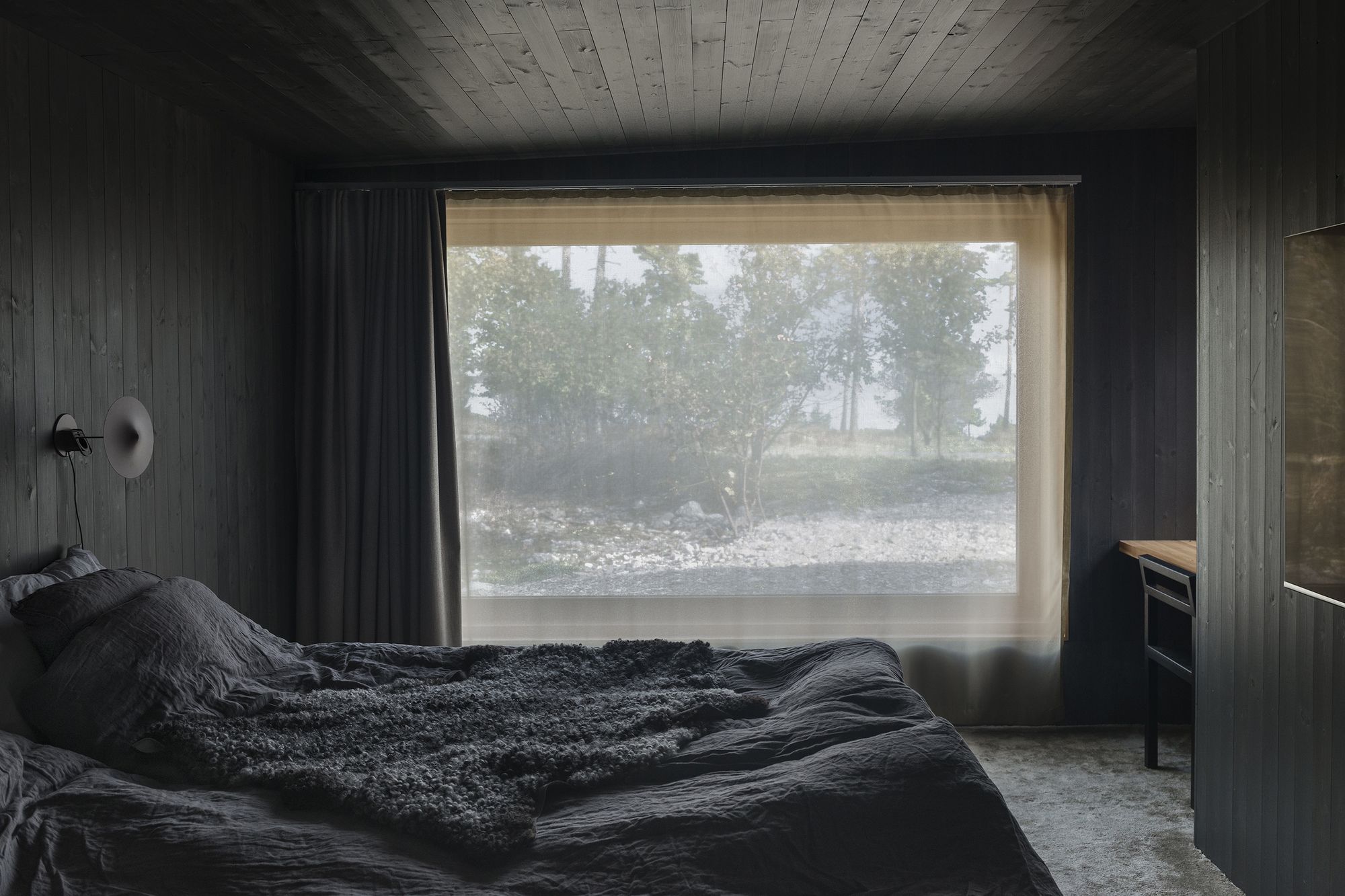
Some bedrooms politely suggest that you relax. This one practically confiscates your phone, closes the curtains, and orders you to sleep.
Hidden inside a converted military bunker in Bungenäs, on the northern end of Sweden’s island of Gotland, this dramatic sleeping nook turns black into something surprisingly warm. Swedish architecture firm Skälsö Architects used ebonized wood, black bedding, dark carpeting, sheepskins, and almost-invisible wall lights to create a room that feels protective rather than oppressive. The original structure combines cast-in-place concrete with local Gotland pine, giving its monochromatic interior a rugged connection to the surrounding landscape.
The good news is that you do not need an abandoned Baltic Sea bunker to recreate the mood. You need a disciplined palette, tactile materials, carefully controlled lighting, and the confidence to keep painting after your cautious inner decorator begins whispering, “Perhaps one black wall is enough.”
Why the Gotland Black Bedroom Works
Gotland is the largest island in the Baltic Sea, sitting roughly 60 miles from mainland Sweden. Its scenery includes limestone formations, windswept beaches, pine forests, and historic settlements, so it makes sense that interiors on the island often feel elemental and closely connected to natural materials.
The bunker bedroom succeeds because its darkness is not decorative frosting. It is an architectural idea. Walls, floor, bedding, lighting, and accessories belong to the same shadowy family. Instead of chopping the small space into visible sections, the black surfaces blur boundaries and create a cocoon.
This approach resembles color drenching, a technique in which walls, ceilings, trim, doors, and sometimes furnishings share one color family. Using a single hue can make distracting architectural details recede while producing a calmer, more unified room. Dark versions of color drenching are especially effective when the desired result is intimacy rather than brightness.
Step 1: Choose the Right Kind of Black
Walking into a paint store and asking for “black” is a little like ordering “food” at a restaurant. Technically clear, practically useless. Black paints may carry blue, green, brown, violet, or charcoal undertones, and those hidden notes become more obvious as the light changes.
Use Warm Black for a Softer Cocoon
A brown-black or warm charcoal usually feels more comfortable alongside pine, oak, wool, leather, and cream-colored sheepskin. These shades preserve the dramatic effect without making the bedroom look like the inside of a printer cartridge. Warm blacks can also complement the earthy character that makes the Gotland room so inviting.
Sherwin-Williams notes that warm black paints commonly contain brown, red, or warm-purple undertones and recommends testing them with the room’s actual light and surrounding finishes. Benjamin Moore similarly advises viewing samples in daylight and artificial light because the same black can change substantially throughout the day.
Consider Charcoal If True Black Feels Severe
For a more forgiving version, select an almost-black charcoal. During the day it may reveal subtle gray, blue, or brown notes; at night it will appear nearly black. This gives the room visual depth and makes it easier to coordinate fabrics from different manufacturers, since not every “black” duvet, curtain, and rug is actually the same black.
Test Large Samples
Paint at least two large sample boards and move them around the bedroom. Check them beside the window in the morning, behind the bed in the afternoon, and under your proposed lamps at night. A tiny chip can look elegant at the store and mysteriously turn navy beside your flooring.
Step 2: Paint Beyond the Walls
The strongest feature of the Swedish bedroom is its commitment. Dark walls continue into the surrounding woodwork, floor, and furnishings, so there is no bright white baseboard outlining the room like a coloring-book page.
For the closest interpretation, paint the walls, trim, door, and ceiling in related dark tones. Matching the ceiling to the walls reduces visual interruptions and can make the architecture feel more expansive and atmospheric. Dark ceilings do absorb light, but that can be an advantage in a bedroom designed to feel sheltered and quiet.
Vary the Sheen, Not the Color
A room covered in one flat finish may look dull rather than deep. Use matte or flat paint on walls and ceilings, then introduce a slightly higher sheen on doors, trim, or built-ins. The change will be subtle during the day and more noticeable under lamplight.
Matte black absorbs light and produces a soft, organic atmosphere, while glossier finishes reflect highlights and emphasize architectural details. Paint manufacturers also recommend reserving higher sheens for smoother or frequently touched surfaces because gloss tends to expose every dent, ripple, and enthusiastic roller mark.
Step 3: Bring in Blackened Wood
The ebonized wood in the original room gives the darkness grain, movement, and a sense of craftsmanship. Unlike a featureless painted wall, stained or charred-looking timber still reveals knots and texture. It catches light differently from one board to the next, preventing the monochromatic design from becoming visually flat.
You can imitate the effect with black-stained pine paneling, dark vertical shiplap, an ebonized plywood headboard, or a wall of narrow wood slats. Renters can create a removable headboard panel rather than covering an entire wall.
Texture matters particularly when decorating with black. Rough wood, scraped metal, boucle, mohair, wool, and long-haired fibers reflect light at different angles, creating variation even when the color barely changes.
Step 4: Layer the Bed in Several Shades of Night
A single matching bedding set may look like a rectangular black hole. The Gotland approach works because the bed is layered. Use slightly different tones and weaves so each element remains visible.
- Start with charcoal or washed-black linen sheets.
- Add a matte black duvet cover with a relaxed, slightly rumpled finish.
- Fold a dark gray wool blanket across the foot of the bed.
- Mix smooth pillowcases with nubby, quilted, or woven cushions.
- Place an ivory, gray, or brown sheepskin beside or across the bed.
Linen is especially useful because its natural creases catch soft highlights. Velvet provides deeper shadows, while wool introduces a dry, substantial texture. Combining these materials makes the bed look luxurious without requiring shiny decoration or an army of throw pillows that must be relocated every evening.
Step 5: Use Sheepskin as the Warm Counterpoint
The sheepskins in the Swedish room are not random rustic accessories. They interrupt the hard surfaces of concrete and dark wood with softness, irregular shape, and a pale natural color.
One genuine or high-quality faux sheepskin is enough. Lay it beside the bed so your first contact with the morning is soft rather than a cold floor and immediate regret. Another option is to drape it over a compact bench or reading chair.
Keep the color muted. Cream, oatmeal, smoky gray, or natural brown will feel more authentic than brilliant optical white. The goal is gentle contrast, not a glowing object visible from space.
Step 6: Ground the Room With a Dark Floor
Black walls above pale flooring can work beautifully, but the Gotland room creates a more enveloping effect by continuing darkness underfoot. Replacing a floor is unnecessary for most homes. A large charcoal rug can establish the same visual foundation.
Choose a low-pile wool rug, flat-weave carpet, or deep charcoal area rug large enough to extend beyond the bed. Avoid tiny bedside rugs that make the bed appear to be wearing slippers. In a compact room, one broad floor treatment looks calmer and makes the space feel more intentional.
For warmth, select black with visible brown, gray, or heathered fibers. A perfectly uniform synthetic black can show every thread, crumb, and mysterious pale speck that enters the room.
Step 7: Install Lighting That Almost Disappears
Bright ceiling lighting would destroy the bunker-like calm faster than someone asking, “Are you asleep?” from the hallway. The original room uses discreet black wall lights that blend into the surrounding surfaces.
Choose Focused Bedside Sconces
Mount compact adjustable sconces beside or above the bed. Matte black fixtures will disappear against dark walls, leaving only the warm pools of light visible. Plug-in models offer a similar effect without opening the wall.
Layer Several Low Light Sources
A functional bedroom should include more than one glaring overhead fixture. Combine bedside task lights with a dim ceiling fixture and one low lamp across the room. Layered lighting distributes a soft glow and makes a bedroom feel more polished than relying on a single central source.
Use Warm, Dimmable Bulbs
Choose warm bulbs, preferably around the cozy end of the residential lighting spectrum, and install dimmers where possible. Avoid cool, bluish light in the evening. Sleep guidance consistently recommends reducing bright light before bed and keeping the sleeping environment dark, since light is a powerful signal for the body’s circadian rhythm.
Step 8: Add Real Blackout Window Treatments
A black-painted bedroom is not automatically a blackout bedroom. Streetlights and early morning sun remain annoyingly unimpressed by your color palette.
Install blackout shades inside the window frame and add full-length curtains outside it. The layered treatment closes light gaps around the edges while improving softness and acoustics. Extend the curtain rod several inches beyond the window and mount it above the frame so the fabric overlaps the opening.
Independent testing has found that darker curtain colors often block more light, although construction and backing are also important. Sleep specialists recommend blackout curtains or effective room-darkening shades when exterior light interferes with rest.
Step 9: Keep Furniture Low, Spare, and Useful
The Gotland bedroom is compelling partly because it is not crowded. The palette supplies the drama, so the furniture can remain quiet.
Select a low platform bed or simple dark frame, narrow wall-mounted shelves instead of bulky nightstands, and one bench or chair if space permits. Avoid filling every wall with artwork. One small abstract piece, sculptural branch, stone object, or weathered wooden bowl will have more impact than a gallery wall competing with the architecture.
Hide charging cables and bright electronics. Cover glowing indicator lights, move the television elsewhere, and choose a clock whose display can be dimmed. A restful black bedroom should resemble a refined retreat, not a control room during a minor emergency.
Step 10: Balance the Darkness With Natural Materials
Black feels welcoming when it is paired with materials that have visible age, grain, or softness. Natural wood, wool, linen, leather, stone, and handmade ceramics prevent the room from becoming sterile.
Limit accent colors to a restrained selection such as:
- Oatmeal and warm ivory
- Tobacco brown and cognac leather
- Weathered gray
- Muted pine green
- Oxidized brass or blackened steel
These tones echo the landscape surrounding Gotland without turning the bedroom into a themed Scandinavian souvenir shop. You are borrowing the atmosphere, not installing a miniature Viking ship beside the nightstand.
A Practical Shopping List for Stealing the Look
- One warm-black or charcoal interior paint
- Matte wall finish and satin trim finish
- Black-stained wood panel or simple platform headboard
- Large charcoal wool or low-pile rug
- Washed-black linen duvet cover and pillowcases
- Dark gray wool throw
- Natural cream or gray sheepskin
- Two adjustable matte-black sconces
- Dimmable warm-light bulbs
- Blackout shade and full-length dark curtains
- Minimal dark bedside shelf or compact table
Start with paint, bedding, and lighting before buying decorative objects. Those three changes will deliver most of the transformation. Accessories should finish the room, not attempt to rescue a weak foundation.
Common Mistakes to Avoid
Using Only One Texture
Ten black objects made from the same smooth material will merge into a lifeless mass. Combine matte paint, wood grain, woven linen, wool, metal, and fur-like texture.
Ignoring Daylight
A cool black may look crisp in a sunny south-facing bedroom and unexpectedly blue in a cooler room. Test samples beside flooring, curtains, and bedding before committing.
Choosing Bright White Contrast
Pure white can make a dark bedroom feel harsher. Use cream, flax, mushroom, or natural wool for a softer transition.
Depending on One Ceiling Light
Dark surfaces absorb illumination, so one fixture may create a bright spot and gloomy corners. Spread several low-level lights around the room.
Sleeping in a Freshly Painted Room Too Soon
Ventilate thoroughly during and after painting, follow the manufacturer’s drying and reoccupancy directions, and keep paint containers sealed. The U.S. Environmental Protection Agency recommends maximizing ventilation during painting and using exhaust ventilation to remove pollutants from renovation areas.
Living With the Look: The Experience of a Black-Out Bedroom
The first noticeable change in a nearly black bedroom is not visual. It is behavioral. A bright bedroom often invites activity: folding clothes, checking messages, answering email, or beginning an unnecessary organizational project at 11:40 p.m. A deeply shaded bedroom sends a clearer signal. The day is over. The room has one principal job, and it would appreciate everyone cooperating.
During daylight hours, the experience depends on texture. Morning sun grazing across black-stained wood can reveal brown undertones, knots, and tiny variations that disappear after sunset. Linen bedding shifts from charcoal to soft gray where it catches the window light. A sheepskin becomes more prominent without looking like an unrelated accessory. The room is still dark, but it is not static.
At night, the lighting plan becomes the entire design. Switching on a narrow bedside sconce creates a small island of warm illumination while the walls recede. Because the fixture nearly disappears, attention moves toward the book, bedding, and textured surfaces inside the light. This is more relaxing than flooding the room from above, and it makes even inexpensive materials appear richer.
There are practical surprises. Dust may show on smooth black nightstands, while lint prefers dark bedding with the enthusiasm of an unpaid intern trying to get noticed. A soft brush, lint roller, and microfiber cloth become useful bedside allies. Heathered textiles and wood grain are more forgiving than perfectly uniform black surfaces.
The room may also feel smaller during the first few days, especially when you enter from a white hallway. Once your eyes adjust, the effect can reverse. Corners become less obvious, furniture blends into the background, and the visual boundaries seem less rigid. The space begins to feel less like a box and more like an enclosure.
A true blackout setup changes the morning experience as well. Heavy curtains can prevent sunrise from serving as nature’s extremely persistent alarm clock, so a scheduled alarm or gradual wake-up light may become more important. Complete darkness is valuable for sleep, but it can make 8:00 a.m. look suspiciously like midnight.
The most satisfying aspect is the sense of separation from the rest of the home. A Gotland-inspired bedroom does not need to match a pale kitchen or colorful living room. Its difference is the point. Crossing the threshold feels like entering a quieter climate where visual noise has been edited out.
However, the room works best when darkness is paired with comfort. Scratchy bedding, inadequate reading light, poor ventilation, or a cold floor will not become luxurious simply because everything is black. The successful experience comes from contrast: hard architecture and soft textiles, deep color and warm illumination, visual simplicity and physical richness.
That balance is the real lesson of the bunker bedroom. Its appeal is not darkness for darkness’s sake. It is the feeling of being protected from brightness, clutter, and interruption. Recreated thoughtfully, the look can turn an ordinary bedroom into a private retreat that feels grounded, dramatic, and unusually peacefulwithout requiring reinforced concrete walls or a former military installation.
Conclusion: Go Dark, but Make It Comfortable
The black-out bedroom on Gotland proves that an all-black interior can be warm, natural, and deeply restful. Its success comes from consistency rather than novelty: blackened wood, dark textiles, discreet lighting, soft sheepskin, and minimal furniture work together as one composition.
To steal the look, begin with a tested warm-black paint, extend it beyond a single accent wall, and build depth with varied finishes. Add dark linen, wool, textured wood, a large rug, and focused warm lighting. Complete the effect with properly fitted blackout window treatments and a small number of tactile natural objects.
The result should feel like a cocoon, not a caveand certainly not a teenager’s basement after a heavy-metal shopping spree. Keep the surfaces rich, the light warm, and the clutter elsewhere. Darkness will handle the drama.
Editorial note: Paint colors, textiles, and lighting can appear different in every room. Test samples under your actual daylight and nighttime lighting, verify measurements, and follow product safety and ventilation instructions before installation.