Every family has its greatest hits. “Clean your room.” “Did you finish your homework?” “Why is that cup still on the table?” “Are you listening to me?” If your parents repeat the same things so often that you can predict the next sentence before they open their mouths, congratulations: you are living in a very normal household. That does not make it less annoying.
Still, learning how to cope with annoying and nagging parents is not really about winning arguments or delivering a dramatic monologue worthy of an awards show. It is about protecting your peace, improving communication, and figuring out how to live in the same house without turning every reminder into a full-scale emotional weather event. The good news is that family conflict can get better when you respond with a little more strategy and a little less instant combustion.
This guide breaks down 14 practical steps to help you handle nagging, reduce tension, and make everyday life at home feel less like a never-ending lecture tour. Some of these steps help you manage your own reactions. Some help you talk to your parents more effectively. And some help you recognize when the issue is bigger than ordinary family frustration.
Why Parents Nag So Much in the First Place
Before you roll your eyes so hard they file for independence, it helps to understand what nagging usually is. In many families, nagging is a clumsy mix of concern, stress, habit, and fear. Parents worry about school, safety, behavior, chores, sleep, phones, friends, the future, and probably the mysterious ecosystem growing under your bed. They may repeat themselves because they do not feel heard, because they are stressed themselves, or because repeating instructions has become their default communication style.
That does not mean the nagging feels fair. It just means the constant reminders are often less about “I want to ruin your afternoon” and more about “I am anxious, tired, and not communicating this well.” When you understand that, you can respond with more control and less chaos.
How to Cope With Annoying and Nagging Parents: 14 Steps
1. Figure out what the nagging is really about
Not all nagging is created equal. Sometimes your parents are talking about chores, but what they really mean is responsibility. Sometimes they are talking about your phone, but what they really mean is trust. Sometimes they are talking about your tone, but what they really mean is respect.
Ask yourself: what is the deeper concern behind the repeated reminder? If you can identify that, you stop reacting only to the surface-level annoyance and start understanding the real issue. That makes your response smarter. “You keep telling me to be home by 10” sounds controlling. “You are worried when you do not know where I am” sounds different. Once you see the real fear, you can address that fear instead of just fighting the sentence.
2. Pick a calm moment instead of arguing in the heat of the moment
If your parent is already upset and you are already irritated, that is not a conversation. That is a verbal dodgeball game. Timing matters. If you want less nagging, do not start the conversation while someone is shouting from the kitchen and you are stomping down the hallway like a tiny thunderstorm.
Wait until things are quieter. Then say something like, “Can we talk later tonight? I want to figure out how we can communicate better.” That one sentence can change the whole temperature of the situation. Calm conversations go farther than dramatic ones, even if dramatic ones are more tempting.
3. Start with one honest sentence that is not an attack
You do not need a perfect speech. You need one clear, respectful opener. Try: “I know you are trying to help, but when I hear the same thing over and over, I stop listening.” Or: “I want to do better, but I need us to talk without it feeling like I am getting criticized every five minutes.”
The key is honesty without accusation. When you say, “You never stop nagging and you treat me like I’m five,” your parent will probably defend themselves instead of hearing you. When you say, “I feel overwhelmed when reminders come at me all day,” you give them something concrete to respond to.
4. Use “I” statements instead of “you always” statements
This sounds simple, but it works. “You always” and “you never” are argument gasoline. They make people brace for impact. “I” statements are less explosive and more useful.
Try this formula: I feel ___ when ___ because ___. For example: “I feel frustrated when I get reminded three times in ten minutes because it makes me feel like you think I won’t do it.” That communicates your experience without turning the discussion into a courtroom drama. It also makes you sound more mature, which can quietly strengthen your position.
5. Show that you heard them before you explain yourself
This part feels unfair at first. Why should you be the mature one? Because it works. People calm down when they feel heard. Before defending yourself, try reflecting back what your parent said: “Okay, I hear that you’re upset because I said I’d take out the trash and then forgot.”
That does not mean you are surrendering. It means you are lowering the emotional volume. Once your parent feels understood, they are more likely to listen when you say, “I forgot, but I’m doing it now,” or “I need one reminder, not five.” A little listening often saves a lot of arguing.
6. Ask for specific expectations instead of vague criticism
One reason nagging drags on is that the instructions are too fuzzy. “Be more responsible” is not a task. It is a fog cloud. “Put your laundry in the basket before dinner every day” is a task.
If your parents keep criticizing you in broad, frustrating ways, ask for specifics. “What exactly would you like me to do differently?” “What would count as doing this well?” “Do you want it done now, after homework, or before bed?” Specific expectations reduce repeated reminders because everyone knows what success actually looks like.
7. Make tiny agreements instead of giant promises
Do not promise a full personality transformation by Tuesday. That is how people end up back in the same fight two days later. Instead, make small, visible agreements. “I’ll text if I’m running late.” “I’ll put my dishes in the sink before I go upstairs.” “I’ll start homework by 7:00.”
Tiny agreements are powerful because they are concrete and repeatable. They also build trust. Parents often nag less when they start seeing consistent follow-through. You do not need to become perfect. You need to become reliable in a few key areas.
8. Make your progress obvious
Sometimes parents nag because they cannot see what is happening. If you are working on something, make it visible. Put your school assignments on a planner. Leave your finished chore checked off. Send the text before they have to ask. Charge your phone in the agreed place. Put the backpack by the door. Basically, remove the mystery.
People relax when they have evidence. If your parents do not have to wonder whether you remembered, they are less likely to repeat themselves. Quiet proof beats dramatic speeches almost every time.
9. Choose which battles matter
Not every comment deserves a rebuttal. Some reminders are annoying but harmless. If your parent says, “Take a jacket,” and you were already planning to do that, it may not be worth launching a full emotional TED Talk about trust and freedom.
Save your energy for patterns that really affect your well-being: constant criticism, unfair rules, embarrassing comments, disrespectful tone, or nonstop micromanaging. Choosing your battles does not mean you are weak. It means you are strategic. The goal is less conflict, not more impressive conflict.
10. Use humor carefully, not sarcastically
Humor can help. Sarcasm usually does not. There is a difference between saying, “Wow, this family really believes in reminder subscriptions,” and saying, “Thanks, I’d be helpless without your hourly criticism.” One lightens the mood. The other starts a sequel.
If your family responds well to gentle humor, use it to break tension. Smile. Keep it soft. Keep it kind. The moment humor starts sounding like disrespect, it stops being a coping tool and becomes a new problem.
11. Build more independence before they have to ask
If you want more freedom, show more self-management. This is not glamorous advice, but it is effective. The more you remember basic responsibilities without being chased down, the less material there is for nagging.
That might mean setting reminders on your phone, making a daily checklist, organizing your schoolwork, or creating a simple routine for chores, laundry, and bedtime. Independence is not just something parents grant. It is also something you demonstrate. Every time you handle something without prompting, you are quietly teaching your parents to back off.
12. Protect your cool-down time
Sometimes the healthiest move is not another conversation. It is a pause. If you can feel yourself getting snappy, overwhelmed, or ready to say something spectacularly unhelpful, step away. Go to your room. Take a walk. Shower. Stretch. Breathe. Write your thoughts down instead of launching them like fireworks.
Cooling down is not avoidance when you plan to come back and talk later. It is self-control. In fact, learning to regulate your emotions may be one of the most useful life skills this whole situation can teach you, even if you did not request the lesson.
13. Ask a trusted adult to help if you keep getting stuck
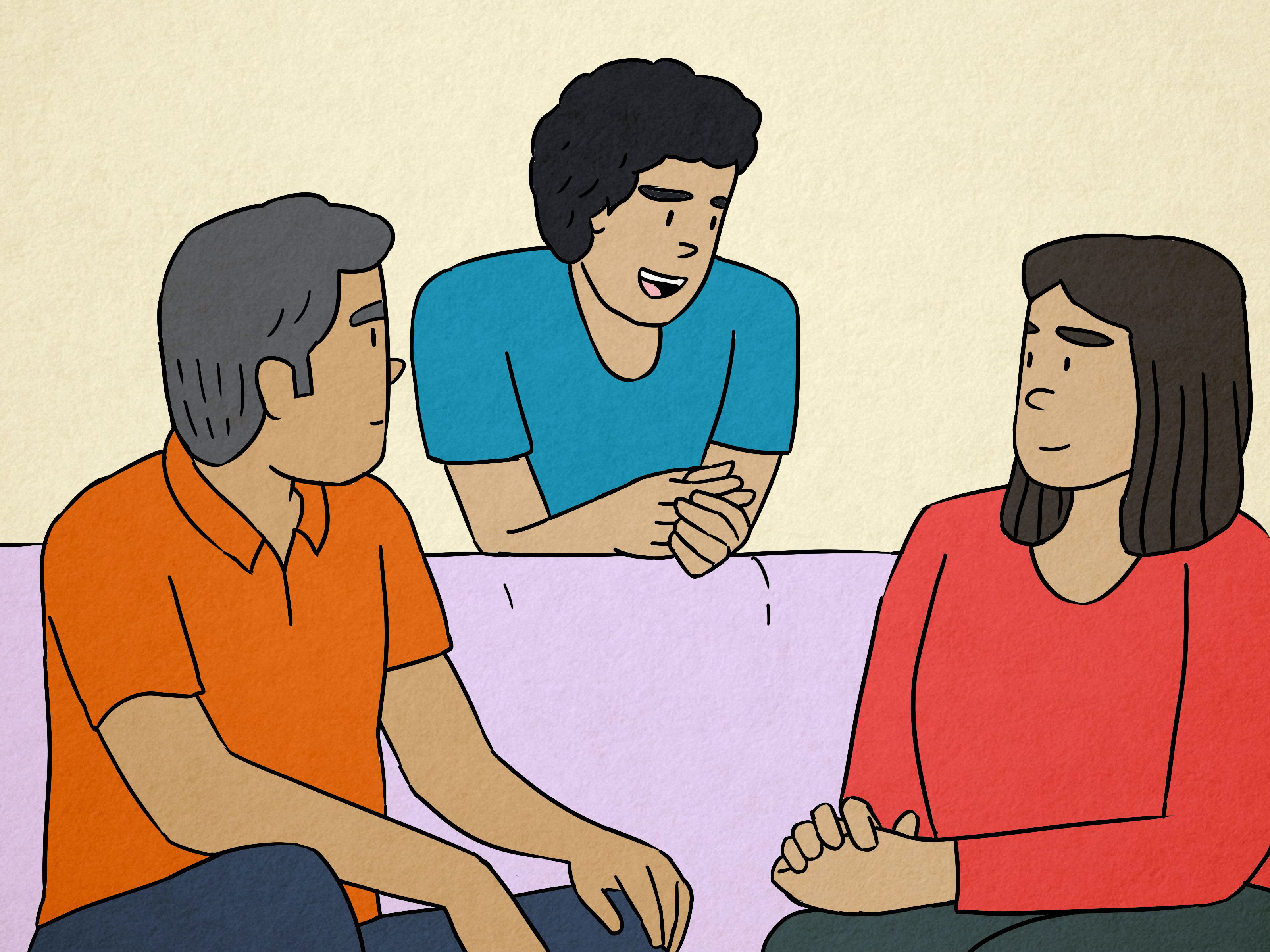
Some family patterns are so worn in that nobody can fix them alone. If every conversation turns into blame, interruption, or shouting, it can help to bring in another adult you trust. That might be a grandparent, aunt, uncle, school counselor, coach, therapist, or family friend.
This is not betrayal. It is support. Sometimes another adult can help translate what both sides are trying to say. They can also help your parents hear your concerns more clearly and help you express yourself in a way that gets results instead of punishment.
14. Know when this is more than ordinary nagging
There is a difference between “Please clean your room” and a home environment that feels constantly shaming, frightening, humiliating, or unsafe. If the problem includes threats, insults, extreme control, intimidation, physical aggression, or emotional abuse, this is no longer just about coping with annoying parents. It is about getting support.
If that sounds familiar, talk to a trusted adult outside your home as soon as you can. A school counselor, teacher, relative, coach, therapist, or another safe adult can help you think through your options. If you ever feel in immediate danger or you are struggling emotionally in a serious way, reach out for urgent local help right away. You do not have to handle a truly unsafe situation by yourself.
What to Say When You Want the Nagging to Stop
Sometimes the hardest part is finding the words. Here are a few respectful lines you can adapt:
- “I hear what you’re asking. One reminder helps me more than five.”
- “I want to do better, but I need us to talk when we’re both calmer.”
- “Can we agree on exactly what you want done and when?”
- “I feel tuned out when I hear criticism all day. I’d respond better to one clear conversation.”
- “I’m not saying your concern is wrong. I’m saying the way we’re talking about it isn’t working.”
These lines are not magic spells. But they are a lot more effective than yelling, slamming a door, or delivering a speech that begins with “First of all.”
Final Thoughts
Learning how to cope with annoying and nagging parents is partly about communication and partly about emotional endurance. Some of the tension will fade as trust grows. Some of it will improve when you become more consistent. Some of it will only get better when both sides learn new habits. But even if your parents do not transform overnight into calm, endlessly reasonable people who speak in soothing podcast voices, you can still change the pattern.
You can stay calmer. You can be clearer. You can ask for specifics. You can show responsibility in visible ways. You can choose the right time to talk. And you can get support when the situation is bigger than everyday family stress. That is real progress. That is real maturity. And honestly, it is a lot more powerful than winning one loud argument and then having the exact same one again tomorrow.
Experiences Teens Often Recognize in Real Life
One of the strangest things about nagging is that it usually does not begin with a giant issue. It begins with something tiny. A towel on the floor. A charger left in the living room. A homework assignment your parent assumes you forgot. Then, somehow, that tiny thing turns into a lecture about your future, your attitude, your priorities, and possibly the collapse of civilization. If you have ever stood there thinking, “How did we get from one dirty plate to a 20-minute speech about responsibility?” you are definitely not alone.
A lot of teens describe the same cycle. At first, they ignore the reminder because they plan to do the thing in five minutes. Their parent reads that delay as refusal. The second reminder comes with more edge. The teen feels accused and answers with attitude. The parent hears disrespect and doubles down. Suddenly, both people are reacting to tone instead of solving the original problem. By the end, nobody even remembers what the first reminder was about. They just remember the feeling of being misunderstood.
Another common experience is feeling like your parents do not notice what you do right because they are so focused on what you missed. Maybe you actually did most of your chores this week, but the one thing you forgot becomes the headline. Maybe your grades are decent, but all anyone talks about is the assignment you turned in late. That kind of pattern can make teens feel like they are living under a microscope. It is exhausting to feel as if your mistakes arrive with flashing lights while your effort sneaks in through the back door unnoticed.
There is also the mental whiplash of wanting more freedom while still needing support. Many teens honestly do want independence, but not in the dramatic “I need no one, farewell forever” way. They want room to make choices, manage their time, and be trusted. When parents keep stepping in with reminders, it can feel like that trust is missing. At the same time, teens may still need help organizing, remembering, and managing stress. That creates a confusing emotional mix: “Please stop hovering” and “Also, I am overwhelmed” can be true at the same time.
Some families improve when one person changes the script. A teen starts saying, “I heard you. I’m doing it at 6:00,” instead of arguing. A parent starts giving one reminder instead of six. A small routine gets created. The conflict does not vanish, but the house feels less tense. Other families need more help because the pattern is deeply stuck. In those homes, bringing in a counselor or another trusted adult can feel like a relief, not a defeat.
The biggest shared experience, though, is this: most teens do not actually want endless fighting. They want respect, a little breathing room, and a home that does not feel emotionally crowded. And most parents, beneath the nagging, usually want reassurance that things are okay and that their kid is growing into someone capable. That does not magically make the reminders less irritating. But it does explain why the same arguments keep happening. Once both people can see that, the conflict starts looking less like a war and more like a messy conversation that can, with effort, get better.