Some things wear disguises better than a raccoon in a trench coat. A “shooting star” is not a star. A peanut is not really a nut. White chocolate is not quite the chocolate your cocoa-loving heart thinks it is. And your brain, bless its overworked little control room, is not a camera. It is more like an enthusiastic storyteller with spotty Wi-Fi.
We live in a world full of visual tricks, clever labels, natural disguises, marketing fog, and everyday assumptions that quietly sneak into our thinking. The phrase “not what they seem” sounds dramatic, but it applies to ordinary objects, foods, weather events, animals, memories, websites, and even the way we experience pain. The more you look closely, the more reality starts acting like it has a prank channel.
This guide explores 25 surprising things that are not what they seem, with simple explanations, real examples, and a little humor to keep your brain from filing a complaint.
Why Things Are Not Always What They Seem
Human beings are quick interpreters. We see, label, judge, and move on. That is useful when avoiding danger, choosing lunch, or pretending to understand modern art at a gallery opening. But quick interpretation can also mislead us. Our brains fill gaps, nature uses camouflage, companies use clever wording, and science often classifies things differently than everyday language does.
In other words, appearances are not useless; they are just incomplete. The trick is learning when to trust them and when to say, “Hold on, suspiciously perfect muffin, what are you hiding?”
25 Things That Are Not What They Seem
1. Shooting Stars Are Not Stars
Despite the romantic name, a shooting star is usually a meteor: a bit of rock or dust burning up as it enters Earth’s atmosphere. It looks like a star sprinting across the sky, but it is really space debris making a dramatic exit. Still beautiful, just less “celestial celebrity” and more “tiny cosmic breadcrumb on fire.”
2. Black Holes Are Not Cosmic Vacuum Cleaners
Movies love to portray black holes as giant space drains that inhale everything in the neighborhood. In reality, a black hole’s gravity behaves like the gravity of any object with the same mass from far enough away. You have to get extremely close to be in trouble. So no, black holes are not roaming around the universe like angry Roombas.
3. Peanuts Are Not True Nuts
Peanuts may have “nut” in the name, but botanically they are legumes. That puts them closer to beans and lentils than to true nuts such as hazelnuts or chestnuts. The peanut has been living a double life in snack bowls everywhere, and honestly, it has done a convincing job.
4. Strawberries Are Not Botanical Berries
Strawberries look like the berry committee’s favorite child, but botanically they do not qualify as true berries. The tiny “seeds” on the outside are actually individual fruits called achenes, while the juicy red part comes from the flower’s receptacle. So the strawberry is basically a fruit wearing fruit confetti.
5. Bananas Are Botanical Berries
Here comes the plot twist: bananas are berries in botanical terms. A botanical berry develops from a single ovary and has seeds inside the fleshy part. Most commercial bananas have tiny undeveloped seeds, but structurally, they still fit the berry definition. Your smoothie has been botanically chaotic this entire time.
6. White Chocolate Is Not Regular Chocolate
White chocolate contains cocoa butter but not the cocoa solids that give dark and milk chocolate their familiar flavor and color. Under U.S. standards, white chocolate must meet specific requirements for cocoa butter, milk solids, milkfat, and sweeteners. It is creamy, sweet, and delicious, but it is not chocolate in the same way a brownie is chocolate. It is chocolate’s pale, fancy cousin.
7. Heat Lightning Is Not Caused by Heat
“Heat lightning” sounds like weather invented by a barbecue grill, but it is simply lightning from a distant thunderstorm. You can see the flash, but the thunder is too far away to hear. The heat did not create a special lightning species. The storm is just performing offstage.
8. The Blue Morpho Butterfly Is Not Really Blue Pigment
The blue morpho butterfly appears brilliantly blue, but much of that color comes from microscopic structures on its wings that reflect blue light. The wings are not painted blue like a tiny flying sports car. They create blue through structure, light, and physics. Nature did nanotechnology before humans could even assemble flat-pack furniture properly.
9. Octopuses Do Not Need Paint to Disappear
Octopuses, squid, and cuttlefish can change color and texture with stunning speed. Their skin contains specialized cells that help them blend into rocks, coral, sand, and shadow. One moment they are there; the next they look like the ocean forgot to finish rendering them.
10. Harmless Animals Can Look Dangerous
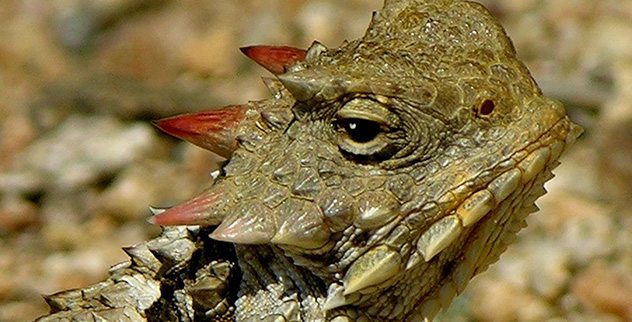
In nature, mimicry is survival theater. Some harmless species resemble toxic, venomous, or unpleasant animals to discourage predators. If a bird learns that a certain color pattern means “terrible lunch,” a harmless mimic wearing similar colors may survive. It is the animal kingdom’s version of borrowing a security guard uniform.
11. Camouflage Is Not Just “Blending In”
Camouflage can mean matching a background, breaking up an outline, resembling another object, or using behavior to avoid detection. Some animals look like leaves, bark, stones, or even bird droppings. Yes, “looking like poop” can be a career strategy. Nature is practical, not glamorous.
12. Optical Illusions Are Not Just Party Tricks
Optical illusions reveal how perception works. Your eyes collect information, but your brain organizes it, predicts patterns, fills gaps, and sometimes makes confident mistakes. Illusions do not prove that your brain is broken. They prove it is working hard with limited data and occasionally taking creative liberties.
13. A Flat Painting Can Look Three-Dimensional
Trompe l’oeil art uses realistic detail, perspective, shadow, and scale to make flat surfaces look three-dimensional. A painted window may seem open. A fake shelf may look touchable. Your hand reaches out, your dignity stays behind, and the artist wins.
14. Your Memory Is Not a Perfect Recording
Memory feels like playback, but it is closer to reconstruction. Each time you remember something, your brain may rebuild the event using details, emotion, context, and later information. That means memories can feel vivid while still being incomplete or distorted. Your brain is not lying; it is editing without asking permission.
15. Confidence Is Not the Same as Accuracy
A person can be extremely confident and still wrong. This matters in eyewitness accounts, arguments, business decisions, and group chats where someone insists the restaurant was “definitely on the left.” Confidence is useful, but it is not proof. Sometimes it is just volume wearing a suit.
16. Placebos Are Not “Nothing”
A placebo may be medically inactive, but the placebo effect can produce real changes in how people feel, especially with symptoms like pain, stress, or discomfort. Expectation, context, trust, and the body’s own response systems can influence experience. A fake treatment is not a cure-all, but the response is not imaginary either.
17. Nocebo Effects Are Not “Just Being Dramatic”
The nocebo effect happens when negative expectations contribute to worse symptoms or discomfort. If someone expects a treatment or situation to feel awful, that expectation can shape the experience. This does not mean people are faking. It means the mind and body are in constant conversation, and sometimes that conversation has terrible customer service.
18. Online Buttons Are Not Always Neutral
Some websites use deceptive design patterns, often called dark patterns, to steer users toward choices they did not intend to make. These can include confusing cancellation flows, hidden fees, preselected boxes, or buttons designed to make one choice look safer than another. The page may look simple, but the design may be nudging your wallet while smiling politely.
19. “Limited Time” Does Not Always Mean Urgent
Urgency messages can be legitimate, but they can also be marketing pressure. Countdown timers, “only two left” claims, and sudden deal warnings are designed to make decisions feel immediate. Sometimes the deal is real. Sometimes the timer has more lives than a soap opera villain.
20. Big Packaging Does Not Always Mean More Product
Large boxes, tall bottles, and heavy containers can make products feel more generous than they are. The only reliable guide is the net weight, volume, unit price, or serving count. Packaging speaks fluent drama; labels speak closer to the truth.
21. “Natural” Does Not Automatically Mean Better
The word “natural” can sound wholesome, but it does not always tell you much about safety, nutrition, sustainability, or effectiveness. Poison ivy is natural. So are hurricanes. The label may be comforting, but the details matter more than the vibe.
22. “Chemical-Free” Is Not Literally Possible
Everything made of matter is made of chemicals, including water, apples, oxygen, coffee, and your favorite “clean” shampoo. When brands say “chemical-free,” they usually mean free from certain synthetic or unwanted ingredients. The phrase sounds sciencey, but literally speaking, it is doing cartwheels away from science.
23. Expensive Does Not Always Mean Higher Quality
Price can reflect craftsmanship, materials, scarcity, branding, labor, or hype. Sometimes expensive products are excellent. Sometimes they are ordinary products wearing a luxury hat. Smart shoppers compare ingredients, construction, warranty, reviews, and use case instead of trusting price alone.
24. Minimalist Design Is Not Always Simple
A clean room, app, or product may look simple, but good minimalism often requires careful planning. Removing clutter without removing usefulness is difficult. Bad minimalism hides controls, removes context, and makes users hunt for basic functions like digital raccoons in a kitchen cabinet.
25. First Impressions Are Not Full Truths
People, places, ideas, and opportunities often become clearer with context. A quiet person may be deeply funny. A strange idea may be brilliant. A perfect-looking plan may have a basement full of raccoons. First impressions are starting points, not final verdicts.
What These Examples Teach Us
The common thread is not that reality is fake. It is that reality is layered. A meteor looks like a star because of how it appears from Earth. A banana sounds un-berry-like because everyday language and botany use different rules. A website button looks harmless because the persuasion is built into the layout. A memory feels complete because the brain is excellent at producing a seamless story.
This is why curiosity matters. Asking “What else could be going on?” is one of the simplest ways to become a sharper thinker. It helps you read labels more carefully, spot manipulative design, understand science better, and give people more room to surprise you.
Experiences Related to “25 Things That Are Not What They Seem”
One of the funniest parts of learning about things that are not what they seem is realizing how often we have confidently believed the wrong version. Everyone has a personal museum of tiny misunderstandings. Some are harmless, some are embarrassing, and some are so common that they become social facts. For example, many people grow up thinking shooting stars are actual stars because the phrase sounds poetic and nobody wants to ruin a romantic sky moment with, “Actually, that is atmospheric incandescence.” That person does not get invited on many camping trips.
Food is one of the best places to experience these surprises. You bite into a strawberry and think, “Berry.” You peel a banana and think, “Definitely not berry.” Then botany walks in wearing a lab coat and flips the table. The same thing happens with peanuts. A peanut butter sandwich feels like a nut-based lunch, but scientifically it is closer to legumes. This does not make the sandwich less delicious. It just means your lunch has a secret identity.
Shopping creates another set of “not what they seem” moments. A package may look generous until you check the net weight. A “limited-time deal” may return next week like it forgot to leave. A subscription cancellation button may hide behind five screens of emotional bargaining. These experiences teach a practical lesson: design is never just decoration. It can inform, guide, persuade, or confuse. The smartest consumers slow down, compare details, and avoid making decisions while being chased by a countdown timer.
Nature provides the most delightful examples because animals are professional illusionists. A moth that looks like bark, a butterfly that borrows warning colors, or an octopus that disappears into the seafloor can make humans look like beginners. The difference is that animals are not trying to impress us. They are trying to avoid becoming lunch. When survival is the assignment, camouflage gets very creative.
Personal relationships also remind us that appearances can mislead. A person who seems distant may simply be shy. A cheerful person may be struggling. A messy desk may belong to someone with a beautifully organized mind, though let’s not use that as an excuse forever. First impressions are fast, but they are not always fair. The more context we gather, the more accurate and compassionate we become.
Even our own minds are not always transparent to us. Memory can feel like a video file, but it is more like a living document that gets revised over time. Pain, stress, and expectation can shape what we feel. Optical illusions remind us that perception is built, not simply received. This can be humbling, but it is also freeing. Being wrong about first appearances does not mean we are foolish; it means we are human.
The best habit is gentle skepticism. Not the gloomy kind that distrusts everything, but the curious kind that asks better questions. What is the definition? What is the evidence? What does the label actually say? Who benefits if I believe this immediately? What might I be missing? Those questions turn ordinary life into a treasure hunt, except the treasure is usually clearer thinking and occasionally the discovery that bananas have been berries all along.
Conclusion
Things that are not what they seem surround us every day. Some are scientific surprises, like meteors and black holes. Some are botanical betrayals, like peanuts, strawberries, and bananas. Others are psychological reminders that perception, memory, and expectation are more complicated than they feel. And some are practical warnings about packaging, pricing, online design, and persuasive language.
The point is not to distrust everything. The point is to stay awake. Look closer. Read the fine print. Give people more context. Let science ruin a few myths and improve your conversations at the same time. Reality is still wonderful; it just has better plot twists than we expected.
SEO Tags
Note: This article is original, fully rewritten content based on reputable science, psychology, government, health, and consumer-information sources. It contains no copied passages, no raw source URLs, and no unnecessary citation placeholders.