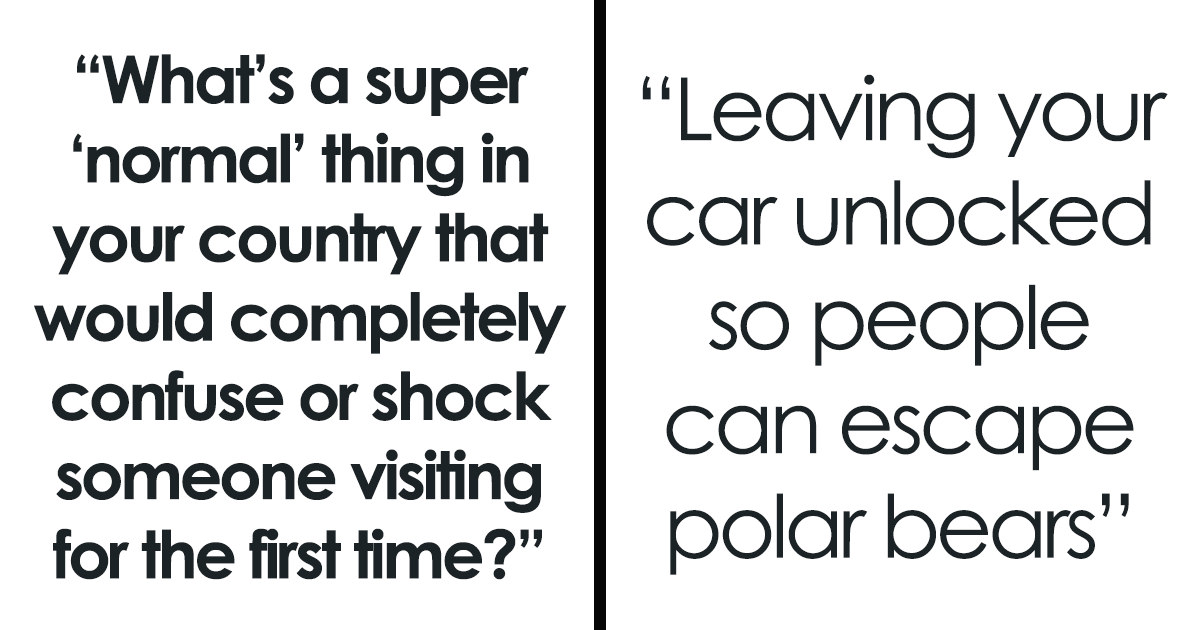
Every country has its own version of “normal.” In Japan, people may line up with the precision of a military parade. In Italy, dinner at 6 p.m. can look like a medical emergency. In the United States, meanwhile, a person can buy a gallon of milk, a phone charger, birthday balloons, cold medicine, dog treats, and a lawn chair in the same storeand nobody blinks.
That is the fun of culture shock. The things locals barely notice can feel wildly surprising to visitors. American culture, in particular, is full of habits that seem ordinary inside the country but wonderfully strange from the outside: free refills, giant roads, small talk with strangers, air conditioning set to “Arctic research station,” and public bathroom doors that apparently lost a fight with privacy.
This article explores 33 normal things in the U.S. that may not seem so normal to people from abroad. Some are funny. Some are practical. Some are deeply tied to American history, geography, business, and daily life. Together, they show how “normal” is often just another word for “what we grew up around.”
Why American “Normal” Can Feel So Different
The United States is huge, car-centered, commercially creative, regionally diverse, and proudly informal. That combination creates everyday customs that can surprise international visitors. A person from a country with compact cities, included taxes, universal public transportation, and long lunch breaks may arrive in America and wonder why everyone is driving 20 minutes to buy a sandwich the size of a small pillow.
Culture shock is not about one country being better than another. It is about expectations. When expectations meet reality, the result is often confusion, laughter, and occasionally a desperate search for the correct tip percentage.
33 Normal Things in America That Can Surprise People From Abroad
1. Sales Tax Appearing at Checkout
In many countries, the price on the shelf is the price you pay. In the U.S., sales tax is often added at the register, and the rate can vary by state, city, county, and type of product. A visitor may pick up a $9.99 item and discover that “$9.99” was more of a dramatic suggestion than a final number.
2. Tipping Almost Everywhere
Tipping in America can feel like a math quiz that arrives right after dinner. Restaurants, delivery services, rideshares, salons, hotel staff, coffee counters, and even touchscreen payment systems may ask for a tip. In some cultures, tipping is rare, modest, or included in wages. In the U.S., it is often treated as part of the service economy.
3. Free Refills
Many American restaurants refill soda, iced tea, and coffee without charging extra. To visitors from countries where every drink is individually priced, this can feel like discovering a hydration loophole. Americans, however, often treat free refills as a basic human right, somewhere between Wi-Fi and complaining about traffic.
4. Ice in Nearly Every Drink
Americans love ice. Water comes with ice. Soda comes with ice. Coffee comes iced. Even drinks that are already cold may be escorted by a glacier. Visitors from countries where beverages are served lightly chilled or at room temperature may wonder why every glass is auditioning for a winter Olympics event.
5. Huge Food Portions
American restaurant portions can be impressively large. Pancakes stack like construction materials. Sandwiches require strategy. A “small” soda may still look like it needs its own parking permit. The upside is leftovers, which Americans often take home in boxes. In some cultures, leaving with leftover restaurant food is less common, making the doggy bag another small cultural surprise.
6. Taking Leftovers Home
Asking for a box after a meal is completely normal in the U.S. It is practical, economical, and sometimes necessary because the entrée was apparently designed for a hungry lumberjack. Visitors may find this charming or odd depending on their own dining customs.
7. Grocery Stores That Sell Almost Everything
American supermarkets and big-box stores can feel like indoor cities. A shopper may find fresh fruit, motor oil, socks, prescription refills, patio furniture, greeting cards, and a rotisserie chicken under one roof. For visitors used to smaller specialty shops, the American one-stop store can be both convenient and mildly overwhelming.
8. Pharmacies That Sell More Than Medicine
In some countries, a pharmacy is mainly for medicine. In the U.S., drugstores often sell snacks, makeup, toys, batteries, seasonal decorations, milk, photo prints, and candy large enough to raise philosophical questions. Need cough drops and a Valentine’s Day teddy bear at midnight? America has prepared for this oddly specific emergency.
9. Drive-Through Everything
Drive-through restaurants are expected, but America does not stop there. There are drive-through banks, pharmacies, coffee shops, car washes, and sometimes even wedding chapels in certain places. The message is clear: why walk 12 steps when your car can participate?
10. Driving Almost Everywhere
Outside dense cities like New York, Chicago, Boston, San Francisco, or Washington, D.C., daily life in the U.S. often depends on cars. Many Americans drive to work, school, stores, gyms, and restaurants. Visitors from countries with strong public transit may be shocked to learn that a “nearby” place can still require a 15-minute drive.
11. Road Trips That Last All Day
Americans may casually describe an eight-hour drive as “not too bad.” In smaller countries, driving eight hours might involve crossing several borders, languages, and snack traditions. In the U.S., it might only get you from one part of Texas to another part of Texas, where there is still more Texas.
12. Enormous Parking Lots
American shopping centers often come with parking lots so large they deserve weather reports. For visitors from walkable cities, the distance between a store entrance and a parked car can feel like a short pilgrimage. The parking lot is not just infrastructure; it is a landscape.
13. Public Bathroom Stall Gaps
Few American design choices confuse visitors more than restroom stalls with large gaps around the doors. In many countries, public toilet stalls are more private and enclosed. In the U.S., the gap says, “We respect your privacy, but only conceptually.”
14. Strong Air Conditioning
American indoor spaces can be aggressively air-conditioned. Offices, malls, buses, restaurants, and movie theaters may feel chilly even in summer. Visitors often learn to bring a sweater in July, because outside it is Florida and inside it is February.
15. Small Talk With Strangers
Americans often chat with strangers in elevators, grocery lines, coffee shops, and waiting rooms. “How’s your day going?” may be asked by someone who does not actually need a full diary entry. In many cultures, casual friendliness with strangers can seem unusual, overly personal, or suspiciously cheerful.
16. Asking “What Do You Do?” Early in Conversation
Work identity is a major part of American social life. Asking about someone’s job is a common conversation starter, not necessarily an interrogation. Still, visitors from cultures where personal identity is less tied to occupation may find the question direct or even awkward.
17. Smiling at People You Do Not Know
In many American communities, smiling at strangers is considered polite. In other places, it may seem unnecessary, fake, or confusing. An American may think, “I’m being friendly.” A visitor may think, “Do I know this person? Did I borrow money from them?”
18. Casual Clothing in Public
Americans often dress for comfort: sneakers, leggings, hoodies, baseball caps, gym clothes, flip-flops, and T-shirts in places where other cultures might dress more formally. This casual style fits a country that values convenience, movement, and the ability to buy cereal at 11 p.m. without changing outfits.
19. Wearing Shoes Inside the House
Some American households remove shoes at the door, but many do not. Visitors from countries where shoes are always removed indoors may find this surprising. To them, outdoor shoes on carpet can feel like inviting the sidewalk in for tea.
20. Flags Everywhere
American flags appear outside homes, schools, businesses, government buildings, stadiums, car dealerships, and sometimes on clothing. In many countries, constant flag display may be linked mainly to national holidays or official events. In the U.S., it is part of the everyday visual landscape.
21. School Spirit and College Sports
College sports in America can be enormous. Stadiums fill with tens of thousands of fans, marching bands, mascots, tailgates, chants, and alumni wearing school colors with battlefield seriousness. Visitors may expect professional sports to be big, but the passion around universities can be a surprise.
22. High School Culture as a Big Life Stage
Proms, homecoming, varsity jackets, lockers, yearbooks, cheer squads, graduation ceremonies, and school mascots are familiar parts of American teen life. International visitors who know these things from movies may be surprised that many of them are real, although usually with less dramatic slow-motion hallway walking.
23. The Date Format: Month/Day/Year
Americans commonly write dates as month/day/year. To much of the world, day/month/year feels more logical. This means 04/07 can be April 7 in the U.S. and 4 July elsewhere. Add a deadline, a plane ticket, or a birthday, and suddenly date formatting becomes an international suspense thriller.
24. Measuring With Feet, Miles, Pounds, and Fahrenheit
The U.S. still commonly uses customary units in everyday life. People describe height in feet and inches, distance in miles, body weight in pounds, and temperature in Fahrenheit. Visitors from metric countries may feel like they have entered a measurement escape room.
25. Asking for Tap Water at Restaurants
In many American restaurants, servers bring free tap water automatically or offer it casually. In some countries, bottled water is the default and may cost extra. Visitors may be pleasantly surprised when water arrives with no bottle, no bill, andnaturallyenough ice to preserve a mammoth.
26. Restaurant Servers Checking In Frequently
American servers often stop by several times to ask whether everything is okay. This can feel attentive to locals but interruptive to visitors who prefer a quieter meal. The American dining style is fast, service-focused, and built around making sure nobody sits unhappy beside an empty ketchup bottle.
27. The Customer Service Voice
American customer service is often cheerful, enthusiastic, and highly scripted. “Have an awesome day!” may come from a cashier who has said it 200 times already. Visitors may find it friendly, theatrical, or both. Either way, the smile usually comes included with the receipt.
28. Prescription Drug Commercials
Television ads for prescription medicines are a very American experience. These commercials often encourage viewers to ask a doctor about a branded medication while listing risks in a calm voice over images of people gardening, hiking, or laughing near a lake. To visitors from countries where such advertising is restricted or uncommon, the whole thing can feel surreal.
29. Health Insurance Through Work
Many Americans receive health insurance through an employer. For people from countries with different healthcare systems, connecting medical coverage to a job can seem confusing or stressful. It is one of the American “normal” things that often sparks serious conversations rather than jokes.
30. Filing Your Own Taxes Every Year
Tax season is practically a national ritual. Many Americans file annual federal income tax returns, often using software or paying preparers. Visitors from countries where the government pre-fills more of the process may wonder why ordinary people must become part-time accountants every spring.
31. Limited Guaranteed Paid Vacation
Paid vacation in the U.S. is often an employer-provided benefit rather than a broad federal guarantee for all workers. People from countries with stronger national vacation laws may be surprised by how carefully some Americans ration days off. In America, “I have PTO” can sound almost like “I found buried treasure.”
32. Airport Security Rituals
Travelers in U.S. airports are used to rules about liquids, shoes, laptops, belts, bins, and security lines. Many countries have airport screening, of course, but the American routine can feel especially choreographed. Everyone becomes a temporary logistics manager while holding a boarding pass in one hand and one shoe in the other.
33. Mailboxes With Little Red Flags
In many American neighborhoods, residential mailboxes have small flags that signal outgoing mail for the postal carrier. To visitors, it can look quaint, like the mailbox is raising its hand in class. It is a small detail, but it captures something very American: a practical system that somehow also looks like a cartoon prop.
What These American Habits Reveal About U.S. Culture
These everyday habits are not random. They reflect deeper patterns in American life. The country’s size helps explain the car culture, long road trips, big parking lots, and giant stores. The service economy helps explain tipping, friendly staff, frequent check-ins, and customer-first expectations. Regional independence helps explain sales tax differences, local laws, and the uneven experience of daily life from one state to another.
American informality also plays a major role. Casual clothes, small talk, smiling at strangers, taking leftovers home, and asking direct questions all fit a culture that often values openness and practicality. This informality can feel warm and easy to some visitors, but too casual or too personal to others.
At the same time, some “normal” things reveal complicated realities. Healthcare costs, employer-based insurance, limited guaranteed paid leave, and tax-filing complexity are not just quirky customs. They are systems that affect people’s lives in serious ways. A good cultural comparison should make room for both humor and analysis. It is possible to laugh at the ice cubes while still recognizing the deeper structures behind daily life.
Personal Experiences and Everyday Culture Shock
Imagine arriving in the United States for the first time and deciding to do something simple: grab lunch. At first, everything seems easy. The restaurant host smiles, the server appears instantly, and water arrives before you ask. Then the surprises begin. The water is mostly ice. The menu has 47 variations of chicken. The entrée could feed two people, possibly three if one of them is emotionally prepared. The server returns every few minutes with the energy of a motivational speaker. At the end, the bill comes, tax appears, and now you must calculate a tip while pretending you are not panicking.
That one lunch can teach a visitor more about American culture than a textbook paragraph. It shows abundance, speed, hospitality, customization, and the hidden complexity of pricing. It also shows how Americans often blend friendliness with efficiency. The goal is not just to eat; it is to keep the whole system moving.
Now imagine the visitor tries to go shopping. A local says, “It’s closeonly ten minutes away.” The visitor prepares to walk. The local laughs gently and points to the car. Ten minutes, in much of America, means ten minutes driving. The store has a parking lot wider than a village square. Inside, the visitor sees apples, jeans, shampoo, notebooks, vitamins, tires, and inflatable holiday decorations. It is not just shopping; it is a museum of convenience.
Then comes the social part. A stranger says, “How are you?” The visitor begins to answer honestly, perhaps with details about jet lag, family, and the mysterious ice water situation. The American has already moved on, because the phrase often functions as a greeting, not a request for a documentary. Later, another stranger compliments the visitor’s shoes. In some cultures, this would be unusual. In America, it may simply mean, “Nice shoes.” No secret message. No legal obligation. Just shoes.
Public spaces bring their own lessons. Restroom stall gaps may shock visitors who expect full privacy. Air conditioning may convince them to carry a jacket in August. Airport security may turn packing a carry-on into a puzzle game. Even the mailboxes can become memorable: a little red flag standing up beside the road, calmly announcing that someone has outgoing letters. It is ordinary to Americans, but charmingly strange to someone seeing it for the first time.
The biggest experience, however, may be emotional. Many visitors find Americans welcoming, talkative, optimistic, and surprisingly willing to help. Others may find the pace fast, the choices excessive, and the social energy tiring. Both reactions can be true. The United States is not one single lifestyle; it is a collection of habits shaped by geography, history, business, immigration, technology, and regional identity.
That is why these 33 normal things are more than a funny list. They are reminders that everyday life is cultural. A refill, a road trip, a tip screen, a flag, a giant sandwich, or a chilly restaurant can all reveal how a society works. When people from abroad notice American habits, they are not just pointing out weirdness. They are holding up a mirror. And sometimes, in that mirror, America is smiling, holding a 32-ounce iced drink, and asking if you want a box for the rest of your fries.
Conclusion
Normal is local. What feels obvious in one country can feel unusual, funny, confusing, or fascinating in another. The United States has plenty of everyday customs that surprise people from abroad, from tipping and free refills to car culture, big stores, casual clothing, and intense air conditioning.
Looking at these habits with curiosity helps us understand more than cultural quirks. It shows how Americans think about convenience, friendliness, independence, work, space, service, and comfort. It also reminds travelers to stay flexible. The world is full of different versions of normal, and that is exactly what makes exploring it so entertaining.