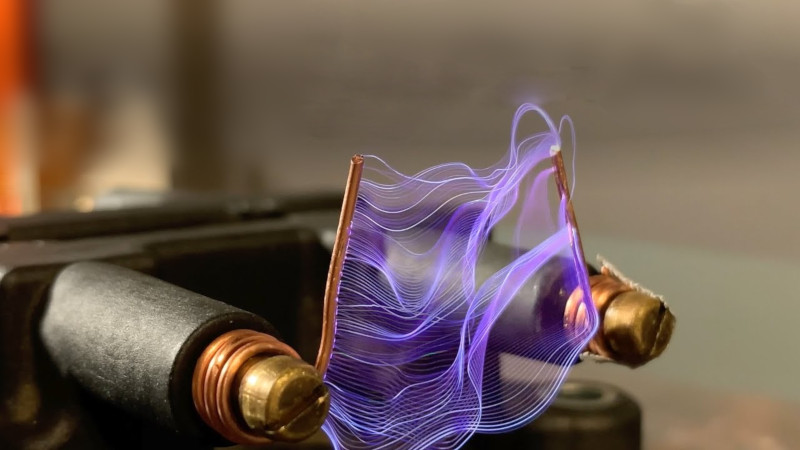
Note: This article is written for educational and editorial purposes. High-voltage electronics can cause serious injury, equipment damage, fire, or worse. This is not a wiring guide, build manual, or step-by-step project tutorial. Anyone studying high-voltage systems should do so only in a properly supervised, safety-controlled environment.
Introduction: Why a Subaru Coil Became a High-Voltage Celebrity
Some car parts live quiet lives. A cup holder holds cups. A door latch latches doors. Then there are Subaru ignition coils, which apparently looked at their job description“make sparks for an engine”and decided they were ready for a second career in high-voltage science demonstrations.
The phrase “Subaru coils make a great HV power source” has become a familiar idea among electronics hobbyists because certain Subaru coil packs are rugged, compact, widely discussed, and designed to produce the kind of high-voltage pulse needed to fire spark plugs under tough engine conditions. In their original role, they help turn ordinary battery energy into a precise, timed spark that ignites an air-fuel mixture. Outside the vehicle, experienced experimenters have examined them as compact high-voltage components for demonstrations, testing, and educational projects.
But before anyone gets starry-eyed over electric arcs, let’s be clear: high voltage is not a toy. A Subaru ignition coil is not a novelty desk gadget, and it is not something to casually “try out” on a weekend. The same characteristics that make these coils interestingfast energy release, high-voltage output, and strong insulation demandsalso make them hazardous when misused.
This article takes a practical, safety-first look at why Subaru coil packs attract attention, how ignition coils work in general terms, why wasted-spark designs are especially interesting, and what experienced builders usually learn from them. Think of it as the guided museum tour, not the “here is how to build the dinosaur” manual.
What Is an HV Power Source?
HV stands for high voltage. In simple terms, a high-voltage power source produces electrical potential far above the low-voltage levels used by typical household electronics. Phone chargers, LED strips, USB gadgets, and small sensors usually operate at modest voltages. Ignition systems, neon signs, laboratory supplies, electrostatic equipment, and spark-testing devices live in a much more dramatic neighborhood.
An automotive ignition coil is designed to create a short, intense burst of voltage. It does not behave like a regular wall adapter or bench power supply. Instead of supplying a smooth, continuous output, it stores energy magnetically and releases it quickly when triggered by the ignition system. That sudden release is what helps create a spark across a spark plug gap.
That pulse-based behavior is one reason ignition coils fascinate electronics enthusiasts. They are compact examples of electromagnetic energy storage, transformer action, insulation design, and real-world automotive engineering. They show how a vehicle can start with ordinary battery voltage and produce a spark strong enough to fire reliably inside a hot, vibrating, chemically messy engine bay.
How an Ignition Coil Works Without Getting Lost in the Lightning
At the heart of an ignition coil is a classic electrical idea: a changing magnetic field can induce voltage in a nearby winding of wire. An ignition coil contains a primary winding and a secondary winding. The primary side is connected to the vehicle’s ignition electronics. The secondary side is connected to the spark plug circuit.
When current flows through the primary winding, a magnetic field builds. When that current is interrupted, the magnetic field collapses rapidly. That collapse induces a much higher voltage in the secondary winding. The spark plug gap then becomes the dramatic little stage where electrical energy jumps through ionized air and helps combustion begin.
In a car, this process is carefully timed. The engine control system does not simply fire sparks whenever it feels festive. It coordinates ignition with piston position, engine speed, load, temperature, and other operating conditions. The spark must arrive at the right moment, not too early and not too late. A mistimed spark can reduce power, increase emissions, or damage engine components.
For readers interested in high-voltage electronics, the ignition coil’s appeal is obvious. It is a compact transformer-like device built to tolerate heat, vibration, moisture, and repeated high-voltage stress. In other words, it is not a delicate glass slipper. It is more like a work boot that happens to throw lightning.
Why Subaru Coils Get Special Attention
Subaru coil packs from certain older models have earned attention because of their physical design and wasted-spark arrangement. In a wasted-spark system, one coil output can fire two spark plugs as a pair. One spark occurs in a cylinder that is ready for combustion, while the companion spark happens in another cylinder where it does not contribute to combustion. That second spark is “wasted,” but the system reduces parts count and can be reliable when engineered correctly.
Many Subaru flat-four engines historically used ignition arrangements that enthusiasts recognize as sturdy, accessible, and educationally interesting. A coil pack designed for a four-cylinder engine may contain paired high-voltage outputs, giving it a layout that looks different from a single tower coil or a modern coil-on-plug unit. That difference is part of the charm.
For high-voltage experimenters, the attraction is not magic; it is engineering. Subaru coils are automotive parts designed for harsh duty. They must create repeatable sparks, survive thousands of heat cycles, and operate in cramped engine bays where dust, oil mist, vibration, and temperature swings are all part of daily life. That durability makes them interesting to study.
Another reason they receive attention is cultural. Online maker communities love parts that can be repurposed creatively. The Subaru coil pack sits in that sweet spot between “ordinary salvage part” and “surprisingly capable component.” It is the kind of part that makes a technically minded person say, “Wait, this is basically a compact high-voltage pulse transformer, isn’t it?” Then everyone else in the room quietly moves a safe distance away.
The Wasted-Spark Advantage in Plain English
A wasted-spark ignition system fires two spark plugs at the same time. One spark is useful because it occurs during the compression stroke, where fuel and air are ready to ignite. The other spark occurs during the exhaust stroke, where there is no fresh mixture to burn. That spark is “wasted,” but the design saves complexity because one coil can serve two cylinders.
From an engineering perspective, this arrangement can be elegant. It uses fewer coils than a full coil-per-cylinder setup and avoids the moving distributor parts found in older ignition systems. Fewer moving parts often means better reliability. For automakers, that matters. For hobbyists studying ignition systems, it also makes the coil pack easier to understand as a paired-output device.
However, “interesting” does not mean “simple.” Wasted-spark coils still rely on proper insulation, timing, polarity, spark gap behavior, and energy control. In a vehicle, these details are handled by a system designed, tested, and validated for that engine. Outside the vehicle, those protections are not automatically present. That is why safety, enclosure design, current limiting, and proper test methods matter so much in professional or supervised lab environments.
What Makes Subaru Ignition Coils Useful for Learning?
1. They Demonstrate Transformer Principles Clearly
A Subaru ignition coil can help explain electromagnetic induction better than a dry textbook paragraph. The relationship between current flow, magnetic field buildup, field collapse, and induced high voltage becomes easier to visualize when connected to a familiar real-world purpose: making a spark plug fire.
2. They Show Why Timing Matters
An ignition coil does not simply “make voltage” on command like a flashlight turns on. Energy must build, and then it must be released. In engine terms, this relates to dwell time and ignition timing. In educational terms, it shows why high-voltage systems are not only about big numbers; they are also about timing, control, and energy management.
3. They Reveal the Importance of Insulation
High voltage will exploit weak insulation the way water finds cracks in a sidewalk. Coil boots, plug wires, tower spacing, and molded housings all matter because electricity does not care about your plans. It follows physics, not optimism.
4. They Make Safety Lessons Unforgettable
Low-voltage electronics can sometimes forgive sloppy habits. High-voltage systems do not. A coil pack quickly teaches respect for distance, enclosures, discharge paths, grounding discipline, and proper protective practices. That lesson is more valuable than any flashy spark photo.
Why Automotive Coils Are Not Ordinary Power Supplies
Calling a Subaru ignition coil an “HV power source” is useful shorthand, but it can also create confusion. A coil is not a complete, general-purpose high-voltage supply by itself. It is a component in a larger system. In a car, the battery, control module, sensors, wiring, spark plugs, and engine computer all work together to create controlled ignition events.
That matters because a complete high-voltage supply needs more than a coil. It needs safe control, protection, isolation, mechanical layout, thermal management, and a clear understanding of the load. Without those elements, a high-voltage project can become unpredictable. And when electricity becomes unpredictable, it does not politely submit a calendar invite before causing trouble.
For SEO readers searching for Subaru ignition coil HV power source, the key takeaway is this: the coil is the star component, not the whole movie. Treating it as a drop-in power supply is a mistake. Treating it as a fascinating high-voltage device that requires expert handling is much closer to reality.
Common High-Level Uses Discussed by Hobbyists
Experienced electronics enthusiasts often discuss ignition coils in the context of spark visualization, insulation testing, educational demonstrations, plasma experiments, and electromagnetic principles. These uses are typically lab-style demonstrations rather than practical everyday tools.
For example, a classroom or supervised lab may use ignition concepts to explain how gasoline engines ignite fuel, how magnetic fields store energy, or why air breaks down electrically at high voltage. An automotive training program may use coil behavior to teach diagnostic thinking: weak spark, misfire symptoms, plug condition, and coil insulation failure.
In maker communities, the same concepts may appear in discussions about compact spark sources. The important distinction is that responsible discussions focus on controlled environments, proper equipment, and safety boundaries. The goal should be learning, not creating a dangerous spectacle. A bright arc may look impressive, but understanding why it happens is the real win.
Safety: The Part That Deserves the Biggest Font
High voltage can injure people, damage electronics, start fires, and create hazardous secondary effects. Even when current is limited, shock reactions can cause falls, burns, or accidental contact with other equipment. Sparks can ignite vapors. Ozone and nitrogen oxides may form around arcs. Sensitive devices nearby can be disrupted by electrical noise.
That is why high-voltage work belongs in controlled environments with trained supervision, proper barriers, rated equipment, emergency planning, and respect for applicable electrical-safety standards. A good rule of thumb is simple: if someone does not understand the hazards well enough to design the safety controls, they should not be energizing the system.
For web readers, this is not fearmongering. It is basic engineering maturity. Professionals do not treat high voltage casually. They label equipment, isolate circuits, use enclosures, avoid exposed conductors, verify de-energized conditions, and keep unauthorized people away. The safest spark is the one you fully understand before it ever appears.
Subaru Coils Versus Other Ignition Coils
Not all ignition coils are packaged the same way. Older vehicles often used one central coil and a distributor. Later systems used coil packs. Many modern engines use coil-on-plug designs, where each cylinder has its own coil mounted near or directly on the spark plug.
Subaru coil packs from certain eras stand out because their wasted-spark layout is visually and electrically interesting. Compared with a single traditional can-style coil, a multi-output Subaru pack can seem more versatile for conceptual demonstrations. Compared with modern coil-on-plug units, it may be easier to discuss as one compact assembly rather than several individual coils.
That does not automatically make it “better” in every situation. Automotive components are optimized for engines, not for every high-voltage experiment someone can imagine. A coil-on-plug unit may be ideal in a modern engine because it reduces wire losses and improves packaging. A wasted-spark coil pack may be great for teaching older ignition architecture. The best component depends on the purpose, the safety controls, and the expertise of the person using it.
What Readers Often Misunderstand
“High Voltage Means Unlimited Power”
Nope. Voltage and power are related, but they are not the same. A high-voltage pulse can be dramatic without delivering continuous high power. Ignition coils are designed for short bursts, not endless output like an industrial supply.
“If It Came From a Car, It Must Be Safe”
Also nope. In a car, the coil is part of a managed system. Removed from that system, it no longer has the same protective context. A seat belt is safe when installed properly in a car; it is less useful when tied to a ceiling fan. Context matters.
“A Bigger Spark Means a Better Design”
A bigger spark may only mean more stress, worse insulation control, or poor matching to the load. In engineering, repeatability and safety matter more than dramatic visuals. The internet may reward fireworks, but physics rewards discipline.
SEO-Friendly Summary for Technical Readers
The main reason Subaru coils make a great HV power source topic is that they combine automotive durability, compact design, and wasted-spark high-voltage architecture. They are interesting because they demonstrate ignition-coil principles in a visible, memorable way. They show how low-voltage electrical energy can be transformed into a high-voltage pulse, how paired-cylinder ignition systems work, and why insulation and timing are critical.
For anyone researching Subaru ignition coil high voltage, wasted spark coil pack, or automotive ignition coil power source, the safest and most useful angle is educational. These coils are excellent examples of applied electromagnetism. They are not beginner toys, party tricks, or casual DIY accessories.
Experience Notes: What Working Around Subaru Coils Teaches You
One of the first experiences people describe when studying Subaru coils is surprise. The part looks ordinary. It is not huge, exotic, or covered in mad-scientist brass knobs. It looks like something that belongs under a hood, because it does. That ordinary appearance can make the device easy to underestimate. Then you learn what an ignition coil is built to do, and suddenly the little black module deserves much more respect.
In supervised educational settings, Subaru-style coil packs are useful conversation starters. They invite questions. Why are there multiple towers? Why do two plugs fire together? Why does a four-cylinder engine not always need four separate coils? Why does spark polarity matter? These questions lead naturally into engine cycles, induction, magnetic fields, dielectric breakdown, and system design. A good instructor can turn one coil pack into an entire lesson on automotive electronics.
Another experience is learning that high voltage is as much about layout as theory. On paper, a circuit may look clean and simple. In the real world, sharp points, moisture, dust, carbon tracking, cracked insulation, and poor spacing can change behavior quickly. Automotive engineers know this, which is why ignition components are molded, sealed, shaped, and routed carefully. When you examine a Subaru coil pack closely, you begin to notice these design decisions. The towers are spaced for a reason. The housing shape is not random. The boots, wires, and plug connections are part of a complete insulation strategy.
People also learn humility. High-voltage projects have a way of exposing overconfidence. A person may understand Ohm’s law, solder neatly, and own a drawer full of components, yet still be unprepared for the hazards of pulse energy and insulation failure. The coil becomes a reminder that electronics is not only about making something work. It is about making something work safely, repeatedly, and predictably.
From an automotive perspective, Subaru coils also teach diagnostic patience. A weak spark or misfire is not always “the coil’s fault.” Spark plugs, wires, connectors, grounds, engine control signals, moisture intrusion, and mechanical engine conditions can all affect performance. That lesson transfers beautifully into electronics troubleshooting: never blame the most dramatic component first. Follow the system.
The most valuable experience, however, is respect. Once you understand what an ignition coil can do, you stop treating sparks as entertainment and start seeing them as evidence of stored energy, controlled release, and real hazards. That shift in mindset is what separates a careful learner from a reckless tinkerer. Subaru coils may make a great HV power source for discussion and supervised study, but the real power source is curiosity guided by caution.
Conclusion
Subaru coils are popular in high-voltage discussions because they are compact, rugged, and rooted in clever automotive ignition design. Their wasted-spark architecture makes them especially interesting for understanding how one coil assembly can serve paired cylinders and produce the intense voltage needed for spark ignition.
Still, the most important lesson is not “look at the spark.” It is “understand the system.” A Subaru ignition coil is a serious electrical component designed for a controlled automotive environment. Outside that environment, it demands caution, expertise, and proper safety controls. For readers, students, and enthusiasts, the best use of this topic is to appreciate the engineering: electromagnetic induction, timing, insulation, energy storage, and the practical genius hidden inside everyday car parts.