Note: This article is written for web publishing and is based on real product information, educational play principles, and practical parent-and-classroom use cases.
The Dado Squares Building Set is one of those toys that looks almost suspiciously simple at first glance. A stack of colorful squares with slots on the edges? That’s it? No batteries, no blinking lights, no tiny voice yelling “Great job!” every four seconds? Exactly. And that is the charm. Dado Squares invites children to build, test, wobble, rebuild, and occasionally create something that looks like a parking garage designed by a very imaginative raccoon.
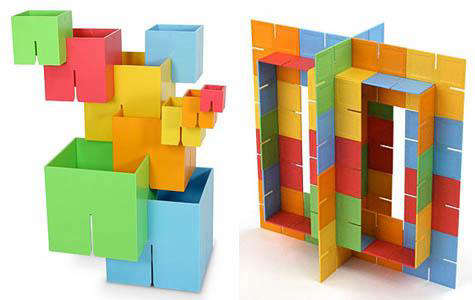
Created by Fat Brain Toy Co., Dado Squares belongs to the best kind of educational toy category: open-ended construction play. The set uses interlocking square panels that slide together through edge slots, allowing kids to create towers, fences, houses, animals, rockets, abstract sculptures, and whatever else their busy little engineering departments decide is important before snack time.
Unlike building toys that tell children exactly what to make, Dado Squares asks a more interesting question: “What can you figure out?” That question is powerful. It encourages spatial reasoning, fine motor skills, problem-solving, creativity, balance, patience, and early STEM thinkingall wrapped in a toy that is refreshingly screen-free.
What Is the Dado Squares Building Set?
The Dado Squares Building Set is a hands-on construction toy made of colorful interlocking square pieces. Each square has slots cut into the sides, so children can slide pieces together at different angles and build three-dimensional structures from flat shapes. The design is minimal, but the play possibilities are impressively wide.
Most product descriptions list the set as including 35 or 36 square pieces, depending on the retailer or edition. The squares are commonly described as three-inch pieces made from durable, heavy-duty plastic. The recommended age is generally 3 years and up, making the toy suitable for preschoolers, early elementary children, and even adults who claim they are “just helping” but are secretly building a modernist skyscraper.
Core Features
- Interlocking square panels with edge slots
- Bright, kid-friendly colors
- Open-ended building with no fixed instructions
- Designed to support spatial reasoning and problem-solving
- Suitable for individual or collaborative play
- Compact, lightweight, and easy to store
- Recommended for children ages 3 and older
The beauty of Dado Squares is that the pieces are not trying to do too much. They do not need magnets, gears, motors, or an app. The “technology” is the child’s brain, which is honestly still the most impressive processor in the room.
Why Dado Squares Works So Well as an Educational Toy
Great educational toys do not feel like homework wearing a colorful hat. They feel like play. Dado Squares succeeds because it gives children freedom while quietly encouraging important developmental skills. When a child tries to make a tall tower and it collapses, that is not failure. That is physics sending a polite memo.
With every build, children experiment with structure, balance, symmetry, shape, direction, and cause and effect. They learn that one piece can support another, that weight must be distributed, and that some designs look brilliant in the mind but dramatically less brilliant on the carpet.
Spatial Reasoning
Spatial reasoning is the ability to understand how objects fit, move, rotate, and relate to one another in space. Dado Squares naturally supports this skill because children start with flat two-dimensional panels and transform them into three-dimensional objects. That transition from “flat square” to “standing structure” is a big mental leap, especially for younger kids.
Children must think about orientation: Should the next square go up, sideways, across, or at a right angle? They also learn that tiny changes can affect the whole structure. Slide a piece into a different slot, and suddenly the castle becomes a bridge. Or a chair. Or something the child insists is “a dinosaur hotel,” and frankly, who are we to argue?
Fine Motor Skills
The interlocking design requires children to align the slots and push the pieces together with control. This helps strengthen hand muscles, hand-eye coordination, and bilateral coordinationthe ability to use both hands together. These skills are important for everyday tasks such as writing, cutting with scissors, buttoning clothing, opening containers, and other real-life activities that adults forget were once Olympic-level challenges.
Problem-Solving and Critical Thinking
Dado Squares does not come with one correct answer. That is a major advantage. Children must test their ideas, notice what works, and adjust when something does not. If a structure leans, they may add a wider base. If a roof will not stay on, they may experiment with another angle. If the whole thing falls down, they learn that rebuilding is part of the process.
This kind of trial-and-error learning builds persistence. It also encourages flexible thinking, which is essential for school readiness and later STEM learning. A child who says, “That didn’t work, so I’ll try another way,” is practicing a skill that reaches far beyond the toy shelf.
How Dado Squares Encourages Open-Ended Play
Open-ended toys are toys without a single fixed outcome. A puzzle has one completed picture. A board game has rules and winners. Dado Squares, on the other hand, can become almost anything. That makes it especially valuable for creative play.
One day, the pieces might become a zoo enclosure. The next day, they might turn into a robot city, a dollhouse, a marble maze wall, a spaceship launch platform, or a very questionable hat. Open-ended play lets children combine building with storytelling, which means the toy supports both engineering and imagination.
Examples of Things Kids Can Build
- Simple towers and walls
- Parking garages for toy cars
- Animal pens or fences
- Mini houses for figures and dolls
- Bridges and tunnels
- Abstract sculptures
- Color patterns and symmetrical designs
- Castles, forts, and pretend cities
The set is particularly good for children who enjoy figuring things out independently. There are no step-by-step instructions demanding obedience. Instead, Dado Squares gives children permission to invent. That can be refreshing in a world where so many toys are scripted from start to finish.
Dado Squares and Early STEM Learning
Parents often hear the phrase “STEM toy” and imagine something expensive, robotic, and possibly requiring a family meeting to assemble. But early STEM learning can begin with simple materials that invite children to observe, predict, test, and improve. Dado Squares fits beautifully into that category.
When children build with Dado Squares, they are exploring basic engineering concepts. They learn that a wider base provides better support. They discover that tall structures need balance. They notice that certain shapes are more stable than others. They may even begin to understand symmetry and pattern without needing a lecture titled “Welcome to Geometry, Tiny Humans.”
Science
Children test gravity, weight distribution, and stability. They ask questions through action: What happens if I stack this higher? What happens if I connect this side? Why did that fall?
Technology
There is no screen, but technology is not limited to electronics. In early childhood, technology can mean tools and design solutions. Dado Squares helps children understand how simple parts can be used to solve building challenges.
Engineering
Every structure is a design challenge. Children plan, build, revise, and improve. That is engineering in its most playful form.
Math
Kids naturally count pieces, compare heights, create patterns, explore symmetry, and think about shape relationships. The math is built into the play, not stapled on afterward like a worksheet nobody asked for.
Who Is the Dado Squares Building Set Best For?
The Dado Squares Building Set is best for children who enjoy building, experimenting, and imaginative play. It is especially useful for preschoolers and early elementary children who are developing fine motor skills and spatial awareness. However, older children may still enjoy using the set for more complex structures, especially if multiple sets are combined.
Great For
- Preschoolers learning shape and space concepts
- Kids who like construction toys but need something simpler than small brick systems
- Children who enjoy quiet, focused play
- Classrooms, playrooms, therapy rooms, and homeschool spaces
- Parents looking for a screen-free STEM toy
- Families who prefer toys with long replay value
It may be less ideal for children who only enjoy toys with characters, sounds, or highly specific instructions. Dado Squares requires imagination. That is a strength, but it also means some children may need a few starter ideas before they fully dive in.
How Parents Can Make Dado Squares More Engaging
Although Dado Squares works well as independent play, adults can make the experience even richer with simple prompts. The goal is not to take over the build. Nobody needs a grown-up project manager hovering over a preschool tower. Instead, ask questions that help children think more deeply.
Try These Prompts
- “How can we make it taller without falling?”
- “Can you build something that has a door?”
- “What happens if the base is wider?”
- “Can you make a pattern with the colors?”
- “Can this become a garage for your cars?”
- “What would you change if you built it again?”
These questions encourage observation, planning, language development, and persistence. They also help children explain their ideas, which is an underrated part of learning. When a child describes a structure, they are practicing vocabulary, sequencing, and reasoning.
Dado Squares in the Classroom
Teachers can use Dado Squares in learning centers, STEM stations, quiet play areas, or small-group activities. Because the pieces are simple and open-ended, they can support multiple learning goals without needing a complicated setup.
In a preschool classroom, children might build fences for farm animals during a unit on animals. In kindergarten, students might create bridges during a transportation theme. In a first-grade classroom, children could build symmetrical structures or compare which designs are tallest, widest, or most stable.
Classroom Activity Ideas
- Build a bridge: Ask children to create a bridge that a small toy car can pass under.
- Color pattern challenge: Invite students to repeat colors in a sequence.
- Strong tower test: See which structure can stand the tallest without tipping.
- Story building: Have children build a setting, then tell a story about it.
- Team construction: Pair students and ask them to plan one structure together.
Because Dado Squares can be built, taken apart, and rebuilt quickly, they are excellent for short classroom rotations. Cleanup is also easier than with tiny bricks that mysteriously migrate into shoes, backpacks, and possibly another dimension.
Dado Squares vs. Other Building Toys
Dado Squares occupies an interesting space among building toys. It is more abstract than magnetic tiles, less detailed than LEGO-style bricks, and more architectural than basic wooden blocks. That makes it a strong choice for children who enjoy structure but do not need miniature accessories, characters, or themed kits.
Compared With Wooden Blocks
Wooden blocks are wonderful for stacking and balancing, but they do not usually connect. Dado Squares adds an interlocking element, allowing children to build outward and upward in different ways.
Compared With Magnetic Tiles
Magnetic tiles snap together quickly and are visually satisfying. Dado Squares require more manual alignment and problem-solving because children must slide the slots together. That extra challenge can be beneficial for fine motor development and planning.
Compared With LEGO-Style Bricks
Brick systems are excellent for detailed builds, but small pieces can be tricky for younger children. Dado Squares are larger and simpler, making them easier for preschoolers while still offering meaningful construction play.
Pros and Cons of the Dado Squares Building Set
Pros
- Encourages open-ended creativity
- Supports spatial reasoning and early STEM skills
- Good for fine motor development
- No batteries, screens, or noisy features
- Compact and easy to store
- Works for solo or group play
- Appeals to a wide age range
Cons
- Some younger children may need help at first
- The set may feel limited for kids who prefer themed instructions
- Large builds may require more than one set
- Pieces can slide apart if structures are handled roughly
Overall, the pros outweigh the cons for families looking for a thoughtful, durable, creative building toy. Dado Squares is not trying to entertain children passively. It gives them materials and lets them do the interesting part.
Safety and Age Considerations
Dado Squares is generally recommended for children ages 3 and up. As with any toy, adult supervision is smart, especially with younger children or group settings. The pieces are larger than many small construction toys, which makes them easier to handle, but children should still be guided to use them appropriately.
Parents should check pieces regularly for cracks or damage, especially if the toy is used in classrooms or daycare environments where it may receive the kind of enthusiastic treatment usually reserved for demolition sites.
Practical Storage and Cleanup Tips
One of the underrated advantages of Dado Squares is that cleanup can be quick. The flat square pieces stack neatly and do not take up much space. A small bin, drawstring bag, or clear storage container works well.
Simple Storage Ideas
- Use a labeled plastic bin for playroom shelves.
- Store the pieces in a zippered pouch for travel.
- Keep them near toy cars, animal figures, or dolls to inspire pretend play.
- Combine them with other open-ended toys, but avoid mixing them with tiny parts that make cleanup harder.
For classrooms, a photo label showing the pieces stacked neatly can help children understand where the toy belongs. Visual labels are surprisingly effective. They are also less exhausting than saying, “Please put the squares back,” 47 times before lunch.
Creative Play Ideas for Dado Squares
If your child opens the box and asks, “What do I make?” try offering a challenge rather than an instruction. Challenges preserve creativity while giving kids a starting point.
Five-Minute Challenges
- Build the tallest tower you can.
- Create a house with at least two rooms.
- Make a bridge for a toy car.
- Build a fence that can hold five toy animals.
- Create something using only two colors.
Story-Based Challenges
- Build a rocket for a mission to the moon.
- Create a castle for a tiny dragon.
- Design a city where toy cars can park.
- Make a zoo, farm, or rescue center.
- Build a stage for a puppet show.
The best challenges are simple enough to begin immediately but flexible enough to become something unexpected. Children often start with one idea and end with another. That is not distraction; that is creative evolution with juice-box energy.
Buying Advice: Is Dado Squares Worth It?
The Dado Squares Building Set is worth considering if you want a toy that grows with your child’s imagination. It does not rely on trends, characters, batteries, or complicated parts. Instead, it offers repeatable, hands-on building play with real developmental value.
For families, it works well as a quiet-time toy, a rainy-day activity, or a screen-free option for children who need something engaging but not overstimulating. For educators, it fits naturally into STEM centers and block play areas. For grandparents, it is the rare gift that feels fun, smart, and not likely to make parents quietly remove the batteries after bedtime.
If your child already enjoys building toys, Dado Squares can add variety. If your child is new to construction play, it can serve as an accessible introduction. The only major limitation is scale: children who love big builds may eventually want a second set. That is not necessarily a flaw. It is more like the toy saying, “Your architect has expanded operations.”
Hands-On Experience With the Dado Squares Building Set
Using the Dado Squares Building Set feels different from using many modern toys because it slows play down in a good way. There is no instant reward sound, no flashing button, and no animated character telling the child what to do next. At first, some kids may simply stack the squares, slide two pieces together, pull them apart, and study the slots. That exploration phase matters. It is the child learning the logic of the toy.
In a home setting, Dado Squares often works best when placed on the floor or a low table with plenty of open space. The first few builds may be small: a wall, a corner, a simple box shape. Then children usually begin experimenting. A wall becomes a garage. A garage becomes a house. A house becomes a “secret robot factory,” and suddenly you are being asked to inspect the roof for robot safety compliance.
One of the most noticeable experiences is how naturally the toy encourages concentration. Children may become quiet not because they are bored, but because they are thinking. They rotate pieces, line up slots, test angles, and adjust designs. The small struggle of fitting the pieces together is part of the value. It requires patience and coordination, but it is not so difficult that children feel defeated after one attempt.
Dado Squares also creates great opportunities for shared play. Two children can work together on one structure, though cooperation may begin with the classic preschool negotiation: “That’s my square.” With gentle guidance, the set can support turn-taking and planning. One child might build the base while another adds walls. They may compare ideas, trade colors, or create separate structures that become part of one larger city.
Parents can join without taking control. The best approach is to build beside the child rather than correcting the child’s design. If a tower falls, resist the urge to fix it immediately. Ask, “What do you think happened?” or “How could we make the bottom stronger?” This turns a collapse into a learning moment instead of a tiny architectural tragedy.
Another practical experience: Dado Squares pairs beautifully with other simple toys. Add toy cars, and the pieces become garages, tunnels, ramps, or parking lots. Add animal figures, and children build fences, barns, or habitats. Add small dolls, and suddenly the squares become rooms, beds, stages, and furniture. The set’s simplicity makes it easy to blend into pretend play without forcing a theme.
Cleanup is usually painless because the pieces are flat and stackable. That matters more than toy companies sometimes admit. A toy that supports learning but takes 25 minutes to clean up can quickly become a “special occasion” item, which is parent language for “hidden in the closet.” Dado Squares is simple enough to bring out often.
The overall experience is calm, creative, and surprisingly satisfying. Children get the joy of making something real with their hands. Adults get a toy that does not shout, sing, or require a firmware update. Everyone wins.
Conclusion
The Dado Squares Building Set proves that a toy does not need to be complicated to be meaningful. With a simple set of interlocking square panels, children can explore architecture, balance, color, pattern, storytelling, and early engineering concepts. It supports fine motor skills, spatial reasoning, creativity, and problem-solving in a way that feels like playnot a lesson wearing uncomfortable shoes.
For parents, teachers, and gift-givers searching for a smart, durable, screen-free construction toy, Dado Squares is a strong choice. It is flexible enough for open-ended imagination, structured enough to challenge young builders, and compact enough that cleanup will not ruin everyone’s afternoon. In a toy world full of noise and novelty, Dado Squares stands out by doing something refreshingly simple: giving children the pieces and letting their ideas take the lead.