The COVID-19 pandemic did not politely knock on the door of medical education. It kicked it open, rearranged the furniture, unplugged the lamp, and told everyone to figure it out on Zoom. For residency applicants, the disruption was especially dramatic. Clinical rotations were paused or shortened, away rotations were restricted, interviews moved online, and the usual rhythm of the application season suddenly felt like it had been written by a committee of stressed-out squirrels.
And yet, for all the chaos, the pandemic-era residency application cycle was not a pure disaster. It was a rain cloud, yes, but one with a very real silver lining for some applicants. Virtual interviews cut costs, reduced travel, saved time, and made the process more accessible for candidates who previously had to stretch finances, vacation days, and emotional bandwidth to the breaking point. At the same time, the changes also exposed new inequities and made it harder for many students to prove interest, secure strong letters, and judge whether a program actually fit their goals. In other words, COVID-19 did not make residency applications easier. It made them different. And in those differences, some applicants found relief while others found new barriers.
The moment the traditional playbook stopped working
Before the pandemic, the residency application process depended heavily on in-person experiences. Students built relationships on clerkships, traveled for away rotations, and boarded enough flights for their frequent-flyer accounts to develop residency-level fatigue of their own. Interview season was expensive, time-consuming, and often exhausting, but it gave applicants a chance to walk hospital halls, read the room, and decide whether a place felt like home.
COVID-19 disrupted all of that. Medical schools and national organizations moved quickly to protect learners and patients. Rotations were paused, travel became risky, and the Coalition for Physician Accountability recommended major changes for the 2020-2021 cycle: discourage away rotations for most students, conduct interviews virtually, and delay the ERAS timeline. That guidance was meant to reduce confusion and promote fairness, but it also forced applicants and programs into a giant national experiment.
For more than 40,000 people applying to residency in the United States during that period, the old system vanished almost overnight. Suddenly, the questions were different. How do you stand out if no one sees you in person? How do you know whether a residency program is welcoming, intense, supportive, chaotic, or quietly held together with cold brew and optimism? And if you are applying from a school without a home program in your specialty, how do you get exposure when away rotations are suddenly limited?
Why the process felt like a rain cloud
1. Away rotations were no longer a reliable ladder
For many applicants, away rotations had served as both audition and education. They offered a chance to demonstrate work ethic, collect specialty-specific letters, test compatibility, and make an impression that no personal statement could fully replicate. During COVID-19, those opportunities shrank sharply. Students in specialties that leaned heavily on away rotations, especially competitive or smaller fields, felt the loss immediately.
That mattered because away rotations were never just résumé decorations. They were often the bridge between “interesting applicant on paper” and “person I would trust on my team at 3 a.m.” When those bridges disappeared, applicants without home programs or strong institutional networks often faced a steeper climb than classmates who already had local mentors and built-in exposure.
2. Letters of recommendation became trickier
When in-person clinical experiences are reduced, letters of recommendation do not magically write themselves. Students worried that fewer face-to-face encounters meant fewer chances for attendings to know them well enough to produce detailed, enthusiastic evaluations. A polite letter is fine. A generic letter is the academic equivalent of being called “nice.” Nobody wants that in a competitive match.
This challenge hit hardest for students trying to pivot into a specialty late, applicants from schools with limited specialty access, and those who had planned away rotations as a crucial part of their application strategy.
3. Program “fit” became much harder to read
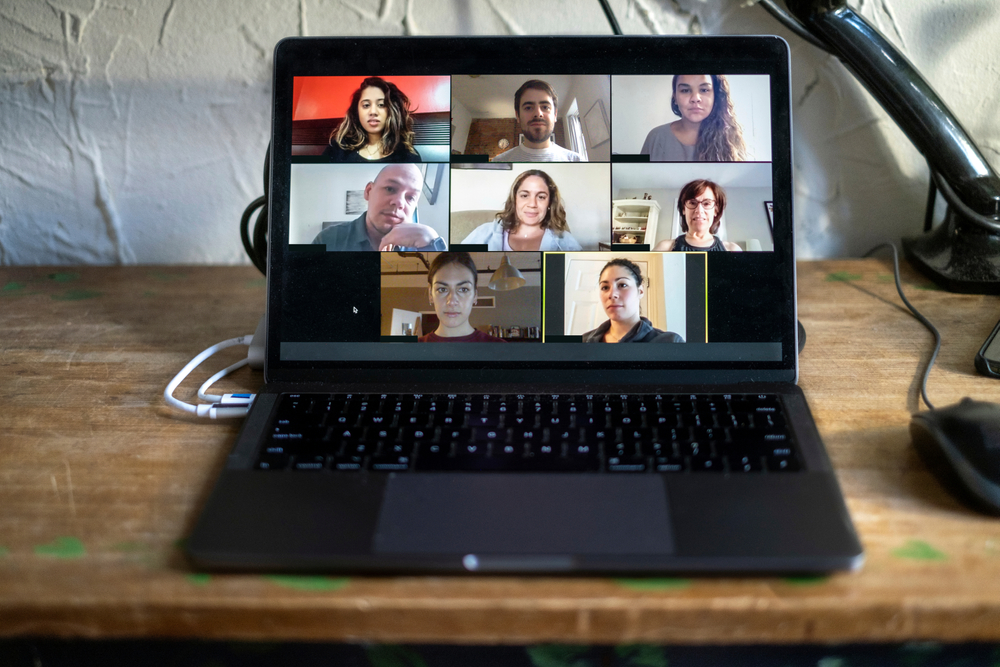
Virtual interviews solved one problem and created another. They made access easier, but they also flattened the experience. Programs could start to blur together when every interview happened through the same laptop, in the same chair, with the same ring light and the same suspiciously cheerful backdrop. Applicants consistently reported difficulty assessing culture, resident camaraderie, diversity, fairness, and the overall vibe of a place through web pages and video calls alone.
That loss of informal data mattered. Applicants do not choose residency based only on curriculum charts and fellowship match graphics. They choose based on people, atmosphere, geography, lifestyle, and the feeling that a program’s values are real rather than beautifully typeset. COVID-era applicants had to make life-shaping decisions with less texture than previous classes.
4. International medical graduates faced extra uncertainty
International medical graduates dealt with the same virtual shift as everyone else, but often with extra complexity layered on top. The pandemic disrupted testing, travel, and certification pathways, including the suspension and later discontinuation of Step 2 CS. New pathways were created so qualified IMGs could continue toward certification and Match participation, but the uncertainty added stress to an already demanding process.
For IMGs, the pandemic did not simply change interview format. It complicated logistics, documentation, timelines, and confidence in the path ahead.
Where the silver lining appeared
1. Money finally stopped being the star of the horror movie
One of the clearest benefits of virtual interviewing was cost. In the pre-pandemic world, residency interview season could drain thousands of dollars through flights, hotel stays, rideshares, suits, meals, and all the little expenses that quietly gang up on a student budget. During COVID-19, much of that spending vanished. Several studies and surveys found that applicants viewed the reduction in travel costs as one of the biggest advantages of the virtual format, and one study reported an approximately 80% drop in applicant interview costs.
That is not a tiny footnote. It is a structural shift. For applicants from lower-income backgrounds, first-generation students, students supporting families, and anyone already carrying heavy debt, virtual interviews were not just convenient. They were liberating.
2. Time became less of a luxury item
In-person interview season used to require missed clinical days, complicated scheduling, red-eye flights, and the kind of suitcase-packing routine that could qualify as a subspecialty. Virtual interviews returned some of that time to applicants. AAMC noted that in-person interviewing had historically pulled students away from medical school for significant stretches. COVID-era interviews, by contrast, reduced travel burdens and gave students more flexibility.
That mattered for students balancing rotations, research, caregiving, or basic human survival. It also helped those who interviewed better when they were not sprinting through airports and reheating sad hotel coffee at 5:30 a.m.
3. Accessibility improved for some applicants
Virtual interviews also benefited applicants who may have been disadvantaged by the traditional format. Students with disabilities, chronic health concerns, caregiving responsibilities, financial limitations, or geographic distance from major interview hubs could suddenly participate with fewer logistical barriers. That does not mean the virtual process was perfectly equitable. It absolutely was not. But it did remove several old barriers that had long been treated as normal just because they were familiar.
In fact, many applicants said the virtual process reduced financial disparities, even while others worried that new forms of inequality appeared through technology access, home interview environment, and the difficulty of standing out online. That tension captures the whole story: old inequities shrank, new inequities emerged.
The unintended side effects of the silver lining
Here is where the plot gets complicated. When interviews became cheaper and easier to attend, many applicants applied to more programs. That made emotional sense. In an uncertain year, people hedged. But the data suggest that applying to more programs did not necessarily translate into more interviews or more interviews attended. Instead, it fed concerns about application inflation and interview hoarding.
In plain English, applicants could cast wider nets because the cost of doing so fell. But interview slots did not suddenly become infinite. The result was a cycle of fear: students applied broadly because they worried others would do the same, and programs faced even larger piles of applications. The process became more efficient in one sense and more crowded in another.
Programs also had to become marketers almost overnight. Websites, virtual tours, social media, resident panels, online open houses, and polished digital materials grew in importance because they had to substitute for hallways, handshakes, and hospital tours. Some programs adapted brilliantly. Others looked as if their website had last been updated during the pager era. Applicants noticed.
Who gained the most, and who lost the most?
The silver lining was real, but it was not shared equally.
Applicants most likely to benefit from virtual interviewing included those with limited finances, strong home-school support, caregiving responsibilities, or the need for flexible scheduling. Students who were organized, comfortable on camera, and able to interview from a quiet, professional environment often adapted quickly.
Applicants who faced the greatest disadvantages included those without home programs, students relying on away rotations to signal interest, candidates needing stronger in-person mentorship, and IMGs navigating extra certification uncertainty. Some applicants also struggled with internet reliability, shared living spaces, time zone complications, or the awkward reality of trying to sound natural while staring at a thumbnail of their own face for six straight hours.
In some specialties, concerns also grew that home-program or geographically connected applicants may have had an edge when travel and away opportunities were reduced. That does not mean virtual interviewing was unfair across the board. It means the ground shifted, and when the ground shifts, not everyone keeps the same footing.
What residency programs learned from the COVID-era application cycle
The pandemic-era application process taught programs an important lesson: convenience matters, cost matters, and applicants notice whether a program respects both. Virtual interviews showed that programs do not need to require expensive travel to evaluate candidates seriously. They also revealed that digital presence is now part of recruitment, not a side hobby for the chief resident who knows how Instagram works.
At the same time, the experience reminded everyone that residency selection is deeply human. Applicants want authentic interactions with residents. They want candid answers. They want to understand culture, workflow, support systems, and whether wellness language exists only in brochures or also in real life. Programs that communicated clearly, created meaningful online experiences, and acknowledged the limitations of the format generally fared better.
The likely long-term lesson is not that everything should stay virtual forever. It is that the pre-pandemic process was too expensive and too inefficient, while the fully virtual process made culture and fit too hard to assess. The smartest future probably lives somewhere in the middle.
Experiences from the virtual trail: what the season felt like for applicants
For many applicants, the COVID-era residency season felt like living in two realities at once. On one hand, there was relief. No frantic airport transfers. No spending half a loan disbursement on flights and hotel rooms. No arriving in a new city at midnight, ironing a shirt with the steam from a shower, and pretending that four hours of sleep counts as “well rested.” Virtual interviews made the process less punishing in ways that were immediate and obvious. Applicants could interview from home, keep expenses down, and preserve more of their time and energy. For students with tight budgets, caregiving responsibilities, or health concerns, that was not a small perk. It was a major source of stability during an already unstable year.
But convenience came with a strange emotional tradeoff. Many applicants described the season as efficient, yet oddly flat. Every program could begin to feel like it existed inside the same rectangle on a laptop screen. The greetings were warm, the PowerPoints were polished, the resident socials were friendly, but the texture of a place was harder to feel. You could hear about the collegial culture, but could you sense it? You could see the city skyline in a slideshow, but could you imagine living there after a brutal call shift? You could meet residents online, but it was harder to know whether their chemistry was real or simply the product of a very professional Zoom routine.
There was also the pressure of performing in a new medium. Some applicants loved being able to control their environment. Others found virtual interviews surprisingly draining. Eye contact became a technical skill. Smiling at the camera felt different from connecting with a human being across a table. A bad Wi-Fi moment could feel like a tiny personal tragedy. Even the most prepared applicants sometimes felt that the format favored people who were naturally polished on screen or fortunate enough to have a quiet, well-lit interview space.
Then there was the matter of abundance. Because interviews were easier to schedule and cheaper to attend, some applicants felt tempted to say yes to more of them. That brought reassurance at first. More interviews seemed like more security. But it also created a low-grade anxiety that everyone else was doing the same thing. The process could feel less like a clear path and more like a digital land rush.
Still, many applicants came away with a balanced view. They did not want to romanticize the old process, because the old process was expensive and often unfair in its own ways. But they also did not want to pretend that virtual recruiting fully replaced in-person experience. The most common sentiment was not “virtual was perfect” or “virtual was terrible.” It was something more honest: virtual interviews solved some old problems brilliantly, created some new ones immediately, and forced medical education to admit that tradition is not always the same thing as wisdom.
Conclusion
Residency applications during COVID-19 were unquestionably shaped by disruption, uncertainty, and loss. Applicants had fewer traditional ways to explore programs, prove themselves in person, and gather the kind of nuanced information that makes a rank list feel informed rather than hopeful. That was the rain cloud, and it was real.
But the silver lining was real too. Virtual interviews reduced costs, gave time back to applicants, widened access for some, and proved that a high-stakes process does not have to be so financially punishing to function. The pandemic did not make residency recruitment fair. It did, however, expose which parts of the old system were unnecessarily burdensome and which parts of the process still require genuine human connection.
If there is a lasting lesson here, it is this: the best future for residency applications will borrow the strongest features from both worlds. Keep the accessibility. Keep the cost savings. Keep the efficiency. But do not pretend applicants can choose the next chapter of their lives based on pixels alone. Medicine is still a people profession. Residency recruitment should remember that.