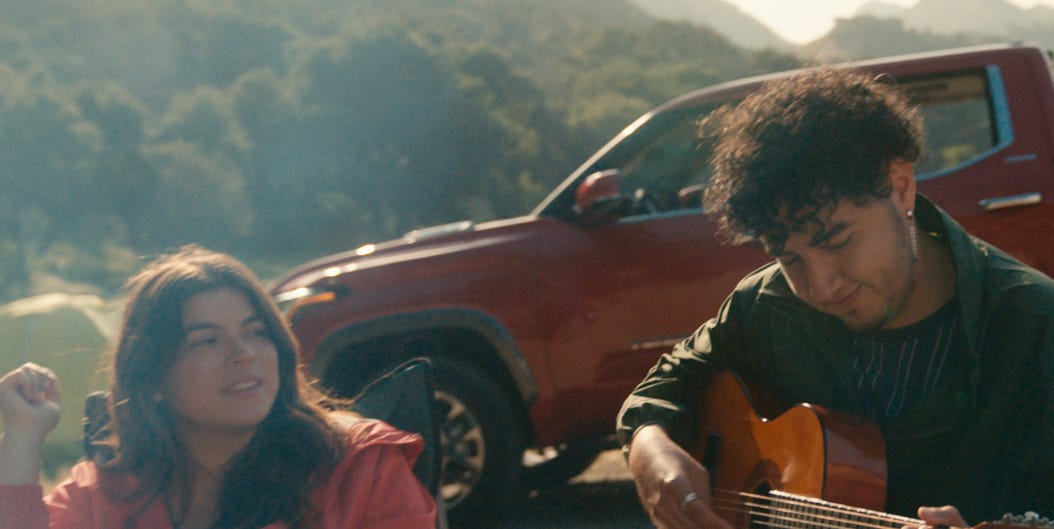
Some hikes begin with birdsong, a sunrise, and a backpack that somehow feels heavier than last night. Others begin with five friends staring at a mountain trailhead map, a cooler full of sandwiches, muddy boots, camera bags, trekking poles, a dog that thinks every trip is about him, and one very important question: “Is all of this actually going to fit?”
That is where the 2022 Toyota Tundra enters the story like the dependable friend who brings extra batteries, extra snacks, and somehow remembers where everyone parked. Redesigned for 2022, the Tundra became more than a full-size pickup with a tough stance. It became a serious adventure partner, especially for groups who need power, cargo space, comfort, smart technology, and confidence on the road to the trail.
This article explores how the 2022 Toyota Tundra powers a group hike from driveway to dirt road, from packing chaos to post-hike recovery. We will look at real specs, useful features, road-trip practicality, hiking safety, and the little moments that make an outdoor day feel unforgettable.
Why the 2022 Toyota Tundra Fits the Adventure Lifestyle
The 2022 Toyota Tundra arrived as a major redesign, replacing the long-running previous generation with fresh engineering, a stronger frame, updated technology, and new powertrain options. For hikers, campers, photographers, weekend explorers, and families who treat Saturday like a mini-expedition, that redesign matters.
A hiking trip rarely involves just people. It involves backpacks, water jugs, extra socks, rain jackets, first-aid kits, trekking poles, blankets, camp chairs, portable stoves, snacks, camera gear, and at least one mystery bag nobody admits belongs to them. A compact car may survive this mission, but it will complain silently the whole way. The Tundra, on the other hand, seems built for this kind of organized chaos.
With its full-size pickup layout, available CrewMax cabin, useful bed configurations, strong towing and payload capability, and available off-road-focused trims and packages, the 2022 Tundra gives a hiking group the room and muscle to travel with confidence. It is not just about getting to the trail. It is about arriving prepared.
The Power Behind the Trip: i-FORCE and i-FORCE MAX
The heart of the 2022 Toyota Tundra story is power. Toyota replaced the older V8 with new twin-turbo V6 powertrains, including the standard i-FORCE engine and the available i-FORCE MAX hybrid system.
Standard Twin-Turbo Strength
The standard i-FORCE 3.5-liter twin-turbo V6 produces up to 389 horsepower and 479 lb-ft of torque, depending on configuration. For a hiking group, that means the truck has plenty of strength for highway merging, mountain grades, loaded cargo, and those long stretches where the road climbs like it is training for a marathon.
Torque is especially important in a truck. It is the low-end pulling force that helps when the vehicle is loaded with passengers, gear, coolers, recovery equipment, and maybe a small trailer. On a group hike, the Tundra’s torque helps make the drive feel composed rather than strained.
i-FORCE MAX Hybrid Muscle
The available i-FORCE MAX hybrid powertrain increases output to 437 horsepower and 583 lb-ft of torque. This is not a gentle hybrid designed only to sip fuel in silence at a stoplight. It is a performance-focused hybrid system built to add serious low-end pull.
For outdoor adventures, that extra torque can feel especially helpful when climbing to a high-elevation trailhead, towing a small camping trailer, or carrying a bed full of equipment. In real-world hiking terms, it is the difference between “we will probably make it” and “yes, bring the bigger cooler.”
Hauling Hiking Gear Without Playing Cargo Tetris
Every group hike has a packing moment. Someone brings too much water. Someone else brings a full camera setup. Another person brings three jackets because “mountain weather is weird,” which is both funny and completely correct. The 2022 Toyota Tundra helps turn this pile of good intentions into a manageable load.
Properly equipped, the 2022 Tundra offers up to 1,940 pounds of payload capacity. That figure depends on configuration, but the big idea is simple: this truck is designed to carry real weight. For a hiking group, payload can include people, backpacks, water, food, emergency supplies, tools, pet gear, and trail cleanup bags.
The aluminum-reinforced composite bed is another useful feature. It is designed to resist dents and corrosion better than a traditional steel bed, which matters when hiking equipment gets tossed in after a long day. Muddy boots, trekking poles, folding chairs, and plastic storage bins are not exactly gentle guests.
Towing Capacity for Bigger Weekend Plans
Sometimes a hike is not just a hike. It becomes a full weekend: camping near the trail, bringing bikes, towing a small adventure trailer, or hauling a lightweight camper. Properly equipped, the 2022 Toyota Tundra can tow up to 12,000 pounds, which opens the door for more ambitious outdoor plans.
Not every hiking group needs that much towing capacity, of course. Many will simply use the truck bed and cabin. But the capability is useful because it gives flexibility. A group could tow a utility trailer with camping gear, a small overlanding trailer, kayaks, or extra equipment for a multi-day trip.
The Tundra also offers helpful towing technology, depending on trim and equipment. Features such as Tow/Haul drive modes, available trailer backup guidance, camera views, and integrated trailer brake control can make towing more manageable. For hikers who are also campers, anglers, cyclists, or paddlers, this matters.
Comfort Counts Before and After the Trail
Many people judge a hiking vehicle by how well it handles dirt, rocks, and gear. That is fair. But comfort matters too, especially after six miles of switchbacks, a surprise rain shower, and one person saying “we are almost there” four times when they were absolutely not almost there.
The 2022 Tundra’s redesigned multi-link rear suspension with coil springs was a major change. Traditional truck leaf springs can be tough and capable, but coil springs can improve ride comfort and stability. For a group heading to a trailhead several hours away, that smoother ride can make the journey more pleasant.
Inside, available features such as a large 14-inch touchscreen, wireless smartphone connectivity, available premium audio, supportive seating, and generous cabin space help transform the drive into part of the adventure rather than a chore. The cabin becomes the planning room, snack zone, weather-check station, playlist headquarters, and post-hike recovery lounge.
Technology That Helps the Group Stay Organized
Good hiking days are built on planning. You need directions, weather updates, trail maps, emergency contacts, fuel stops, and possibly a restaurant picked before everyone gets hungry enough to start negotiating with squirrels.
The 2022 Toyota Tundra’s available 14-inch touchscreen is one of its most eye-catching interior features. A large display makes navigation easier to read, especially when the group is searching for a trailhead in an area with confusing forest roads or limited signage. Wireless Apple CarPlay and Android Auto compatibility also help drivers use familiar map and communication apps.
For hiking groups, technology is not just entertainment. It helps coordinate meeting points, check traffic, monitor weather, and avoid wrong turns. A wrong turn on city streets is annoying. A wrong turn on a remote mountain road can become an unplanned scenic tour with decreasing cell service and increasing silence in the cabin.
Off-Road Confidence for Trailhead Roads
Many popular hikes begin at paved parking lots. Others require washboard roads, gravel climbs, muddy access routes, or rutted paths that seem personally offended by low-clearance vehicles. This is where the Tundra’s off-road features become especially relevant.
Available TRD Off-Road and TRD Pro equipment can add useful trailhead confidence. Depending on configuration, features may include off-road suspension tuning, skid plates, all-terrain tires, Multi-Terrain Select, Crawl Control, and an electronically controlled locking rear differential. The TRD Pro model, in particular, was designed for tougher terrain with FOX shocks and rugged hardware.
No truck makes a driver invincible. Trailhead roads still require judgment, slow speeds, proper tires, and respect for weather conditions. But a well-equipped 2022 Tundra gives hikers more confidence when the pavement ends and the adventure begins.
Safety Matters More Than Bragging Rights
A great hiking vehicle should not only be powerful. It should also help protect the people inside. The 2022 Toyota Tundra comes standard with Toyota Safety Sense 2.5, a suite of active safety technologies. Depending on conditions, these systems can support the driver with features such as pre-collision assistance, lane-related support, adaptive cruise control, and road sign assistance.
The 2022 Tundra Crew Cab also performed strongly in IIHS testing, with good ratings in several major crashworthiness categories. For families and groups traveling long distances to outdoor areas, safety is not a bonus feature. It is part of the trip plan.
Of course, safety technology does not replace responsible driving. Mountain roads, wildlife crossings, fog, rain, loose gravel, and tired post-hike drivers all demand attention. The best safety system is still a rested, focused driver who knows when to take a break.
Fuel Economy and Realistic Road-Trip Planning
Fuel economy depends on trim, drivetrain, tires, load, terrain, and driving style. EPA ratings for the 2022 Tundra vary by configuration, with some models reaching up to the low-20s on the highway. The i-FORCE MAX hybrid can also deliver competitive efficiency for a powerful full-size truck, depending on model grade and drivetrain.
For hiking groups, fuel planning is simple but important. Fill up before heading into remote areas, especially if the trailhead is far from major roads. Mountain driving, towing, heavy cargo, off-road tires, and steep climbs can reduce real-world fuel economy. A smart group treats the fuel gauge the same way it treats water bottles: do not wait until things get dramatic.
How the Tundra Powers a Group Hike From Start to Finish
1. The Night-Before Packing Session
The trip starts before the engine does. Everyone brings gear to one driveway: packs, poles, coolers, jackets, cameras, food, hydration systems, maps, sunscreen, bug spray, and a first-aid kit. The Tundra’s truck bed makes it easier to organize supplies by category. Wet or dirty items can stay separate from the cabin, while valuables and smaller bags can ride inside.
2. The Early-Morning Drive
At 6:00 a.m., enthusiasm is still negotiating with coffee. The Tundra’s roomy cabin gives passengers space to wake up slowly. Navigation runs on the touchscreen. The playlist begins with calm optimism and eventually turns into trailhead hype music. The driver appreciates the strong acceleration and stable highway feel.
3. The Gravel Road Test
As the pavement gives way to gravel, the truck’s suspension and ground clearance become more important. A capable Tundra configuration can handle uneven access roads with confidence, especially when driven carefully. The group avoids arriving rattled, dusty, and emotionally suspicious of every pothole.
4. The Trailhead Base Camp
Once parked, the Tundra becomes a mobile staging area. The tailgate turns into a gear bench. The bed holds extra water, clean shoes, towels, snacks, and emergency items. Everyone checks packs, adjusts straps, applies sunscreen, and pretends not to notice who brought the heaviest lunch.
5. The Post-Hike Reset
After the hike, the truck earns its keep again. Muddy boots go in the bed. Tired legs get cabin space. Cold drinks emerge from the cooler like treasure. The group compares photos, exaggerates the steepest climb by approximately 40 percent, and agrees the Tundra was more than transportation. It was the anchor of the day.
Smart Hiking Gear to Carry in the Tundra
A powerful truck is useful, but preparation makes the trip safer. The National Park Service, REI, and hiking organizations often emphasize essentials such as navigation, sun protection, insulation, lighting, first aid, fire-starting tools, extra food, water, emergency shelter, and repair items.
For a group hike, the Tundra can carry shared supplies that may be too bulky for individual packs. These can include extra water, a larger first-aid kit, dry socks, blankets, portable phone chargers, tire inflator, traction boards, trash bags, and a printed map. The truck should not replace personal preparedness, but it can support the whole team.
One practical tip is to use stackable bins in the bed. Label one for food, one for emergency gear, one for footwear, and one for wet or dirty items. This keeps the group from creating a gear volcano every time someone needs a granola bar.
Respecting the Trail: Power With Responsibility
The 2022 Toyota Tundra may help a group reach beautiful places, but getting there comes with responsibility. Outdoor recreation should follow Leave No Trace principles: plan ahead, travel on durable surfaces, dispose of waste properly, leave natural objects where they are, minimize campfire impacts, respect wildlife, and be considerate of other visitors.
That means parking only in approved areas, avoiding fragile roadside vegetation, packing out trash, keeping food secured, and not using a truck’s capability as an excuse to drive where vehicles are not allowed. The best adventure vehicle is one that helps people enjoy nature without damaging it.
Specific Example: A Weekend Hike With Five Friends
Imagine five friends planning a day hike in the Rocky Mountains. They choose a trail with a 7-mile loop, moderate elevation gain, and a gravel access road. Their 2022 Toyota Tundra CrewMax carries five adults, five daypacks, two coolers, extra water, trekking poles, a camera tripod, a dog crate, rain layers, and a bin of emergency supplies.
On the highway, the twin-turbo V6 has enough passing power for loaded travel. On the climb toward the trailhead, the truck feels steady. Once the group reaches the gravel road, the driver slows down, uses appropriate drive settings, and avoids rushing. At the trailhead, the Tundra bed becomes the group’s staging area.
After the hike, the group returns tired but happy. Dirty gear goes in the bed instead of the cabin. The large interior gives everyone space to stretch out. The navigation system finds the nearest diner. Nobody has to hold a muddy boot in their lap, which may be the highest form of friendship.
What Makes the 2022 Tundra Different From a Regular Hiking Vehicle?
Many vehicles can take hikers to a trailhead. The 2022 Toyota Tundra stands out because it combines full-size truck capability with modern comfort and technology. It is especially useful when the group is larger, the gear is bulkier, the trailhead road is rougher, or the trip includes camping, towing, photography, pets, or outdoor equipment.
A smaller SUV may be easier to park in tight urban areas. A crossover may offer better fuel economy. But when the mission involves people, gear, distance, uneven roads, and flexibility, the Tundra makes a strong case for itself.
Real-World Ownership Considerations
Before choosing any truck for adventure use, buyers should consider their actual needs. A 2022 Tundra with the standard engine may be plenty for most hiking groups. The i-FORCE MAX hybrid may appeal to drivers who want maximum torque and stronger performance. Four-wheel drive is useful for rough access roads, snow, mud, and remote travel, but it does not replace proper tires or common sense.
Used buyers should also check maintenance history, tire condition, recalls, software updates, trim-specific equipment, towing package details, and payload ratings on the door sticker. Truck capability varies by configuration, so the exact model matters.
500-Word Experience Section: What It Feels Like When the 2022 Toyota Tundra Powers the Hike
The real charm of using the 2022 Toyota Tundra for a group hike is not found only in horsepower charts or towing numbers. It is found in the rhythm of the day. It begins when everyone meets before sunrise and the truck is already sitting there like a promise: big enough for the plan, strong enough for the route, and comfortable enough for the people who forgot how early “early” feels.
Loading the Tundra becomes part of the ritual. One person organizes the cooler. Another claims responsibility for navigation. Someone else brings enough trail mix to feed a small national park. The bed swallows gear without drama, and the cabin stays clean enough for humans instead of becoming a rolling storage closet. That separation between people space and gear space is one of the truck’s biggest advantages.
On the road, the Tundra changes the mood. The group is not cramped. Nobody has a backpack handle poking their ribs. The driver has the power to merge confidently and climb steadily. The available large touchscreen keeps the route visible, while the cabin becomes a rolling conversation pit. People talk about the trail, the weather, the best overlook, and whether the dog looks excited or just deeply confused.
When the road narrows and turns rough, the Tundra feels like it belongs. The point is not to drive aggressively. In fact, the best trailhead driving is slow, careful, and respectful. But the truck’s stance, torque, suspension design, and available off-road hardware make rougher access roads feel less intimidating. You still avoid deep ruts when possible. You still respect signs and closures. But you do not feel like the vehicle is one pothole away from writing a resignation letter.
At the trailhead, the Tundra becomes the group’s outdoor command center. The tailgate is where boots are tied, sunscreen is passed around, and last-minute snacks are negotiated. Extra water stays in the bed. Clean clothes wait for later. A larger first-aid kit sits within reach. The group starts the hike feeling organized instead of scattered.
After the hike, the truck’s value becomes even more obvious. People return sweaty, dusty, hungry, and slightly more philosophical than when they left. The Tundra offers space to change shoes, stash muddy gear, sit comfortably, and recover. Cold drinks come out. The best photos are reviewed. Someone says the climb was “not that bad,” and everyone else immediately protests.
That is how the 2022 Toyota Tundra powers a group’s hike. It does not replace the trail, the planning, or the people. It supports them. It turns logistics into something easier. It carries the weight, handles the road, and gives the group a reliable base before and after the adventure. In the end, the best outdoor vehicle is not just the one that looks rugged in a parking lot. It is the one that helps everyone get outside, stay prepared, enjoy the day, and come home with stories worth retelling.
Conclusion
The 2022 Toyota Tundra is more than a redesigned pickup with bold styling and big numbers. For a hiking group, it can be the backbone of the entire adventure. Its twin-turbo powertrains, available i-FORCE MAX hybrid torque, useful towing and payload ratings, comfortable cabin, available off-road equipment, and smart technology make it a strong companion for trail days, camping weekends, and outdoor road trips.
It carries gear without turning the cabin into a puzzle. It handles long drives with comfort. It supports rougher trailhead access when properly equipped. Most importantly, it helps the group focus on the experience: the climb, the view, the laughs, the snacks, and the post-hike meal that tastes better because everyone earned it.
For hikers who need a capable full-size truck with modern features and real adventure utility, the 2022 Toyota Tundra deserves a serious look. Just remember: the truck can bring you to the trail, but it is still your job to bring enough water.