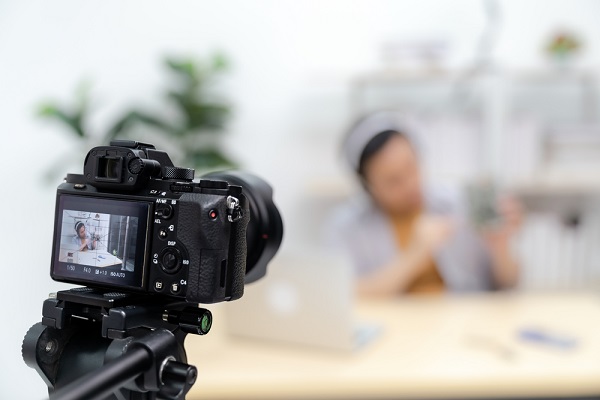
There was a time when “media liability” sounded like something reserved for newspapers, television stations, radio hosts, and the occasional magazine editor sweating over a headline at midnight. Today, the media machine fits in a pocket, posts before breakfast, livestreams from the kitchen, and can accidentally create a lawsuit before the coffee finishes brewing.
Social media has turned influencers, podcasters, bloggers, creators, agencies, brands, and even local businesses into publishers. That is exciting, profitable, chaotic, and legally spicy. A single post can sell out a product, start a movement, damage a reputation, misuse copyrighted work, mislead consumers, or trigger a nasty demand letter from someone’s lawyer who has clearly had too much espresso.
The IA Magazine theme “Under the Influence: Media Liability in the Age of Social Media” captures a very real shift in risk. Content creation is no longer limited to traditional media companies. Anyone who publishes, promotes, reviews, edits, reposts, reacts, or monetizes online content may carry a media exposure. In plain English: if your business talks to the internet, the internet may talk backwith invoices, subpoenas, screenshots, and legal claims.
What Is Media Liability?
Media liability refers to legal exposure created by publishing or distributing content. That content may be an article, video, podcast, social post, product review, newsletter, ad campaign, livestream, meme, photo, infographic, or influencer endorsement. The risk does not depend on whether the creator wears a blazer in a newsroom or sweatpants in a home studio. The key issue is whether the content reaches an audience and potentially harms someone’s rights.
Common media liability claims include defamation, libel, slander, invasion of privacy, copyright infringement, trademark infringement, plagiarism, misappropriation of likeness, false advertising, and misleading endorsements. For businesses, the danger is not only losing a lawsuit. Defense costs alone can be painful enough to make the marketing team suddenly very interested in “approval workflows.”
Why Social Media Changed the Risk Game
Social media made publishing instant, global, and emotionally caffeinated. Traditional media usually has layers: editors, fact-checkers, legal review, production schedules, and people whose job is to say, “Maybe we should not post that.” Social media often has one person, one phone, and one dangerous button labeled “publish.”
That speed creates exposure. A brand manager may repost a customer photo without permission. An influencer may claim a supplement “works for everyone” without evidence. A podcaster may accuse a competitor of fraud based on rumors. A freelancer may use background music without a license. A company may bury a paid partnership disclosure under a pile of hashtags like a raccoon hiding snacks.
The result is a modern media environment where creators behave like publishers, brands behave like broadcasters, and audiences behave like investigators. Screenshots never sleep. Deleted posts often live forever. And the phrase “I didn’t think anyone would notice” is not a risk management strategy.
Influencers Are Not Outside the Rules
Influencer marketing feels casual because it looks casual. A creator films in natural light, talks like a friend, and recommends a product between errands. But when compensation, free products, affiliate links, discounts, trips, sponsorships, employment relationships, or brand relationships are involved, the content can become advertising.
In the United States, the Federal Trade Commission expects material connections between brands and endorsers to be disclosed clearly and conspicuously. That means the disclosure should be hard to miss and easy to understand. Vague tags, hidden captions, or disclosure language placed where users must click “more” may create problems. The internet loves mystery, but regulators do not love mysterious advertising relationships.
For agencies and insurance professionals, this matters because clients may assume influencer risk belongs only to the influencer. In reality, brands, agencies, creators, and media partners can all become part of the liability chain. If a campaign makes deceptive claims, uses fake reviews, misrepresents results, or fails to disclose sponsorship, the problem may land on more than one desk.
Defamation: The Classic Risk with a New Megaphone
Defamation is one of the oldest media risks, but social media gives it rocket boosters. In general terms, defamation involves a false statement of fact about a person or organization that is communicated to others and causes harm. Written defamation is commonly called libel, while spoken defamation is often called slander.
Online, the line between opinion and factual claim can get blurry. “I had a terrible experience” is different from “this company steals from customers” if the second statement is false and presented as fact. Creators sometimes think adding “allegedly” is a magic shield. It is not. “Allegedly” is not legal bubble wrap if the post still communicates a damaging false claim.
Public officials and public figures face a higher burden in many U.S. defamation cases because of the actual malice standard, which generally requires showing that the publisher knew a statement was false or acted with reckless disregard for the truth. That protection supports robust public debate, but it does not give creators permission to publish rumors with confetti cannons attached.
Copyright and the Myth of “Found It Online”
Another major social media liability risk is copyright infringement. Photos, videos, music, illustrations, articles, graphics, and audio clips may be protected even when they are easy to copy. “It was on the internet” is not a license. It is just a confession with Wi-Fi.
Fair use can protect limited use of copyrighted material for purposes such as commentary, criticism, news reporting, teaching, or scholarship. However, fair use is evaluated based on circumstances, including the purpose of use, nature of the work, amount used, and market effect. There is no universal rule that says using ten seconds, one paragraph, or a small image is automatically safe.
Brands and influencers should confirm rights before using music, images, clips, screenshots, or user-generated content. Permission should be documented. Licenses should match the actual use, platform, geography, duration, paid advertising status, and editing rights. A song cleared for one organic TikTok-style post may not be cleared for a paid ad campaign across multiple platforms.
Privacy, Publicity, and the Human Face Problem
People are not props. Using someone’s name, image, voice, likeness, private facts, or personal story can create privacy and publicity issues. A customer appearing in the background of a video, a child visible in a school-related post, an employee featured in promotional content, or a patient mentioned in a health-related testimonial may trigger legal and ethical concerns.
Businesses should be especially careful with sensitive contexts: health, finance, education, minors, employment matters, private locations, and personal hardship stories. Consent should be specific and written whenever possible. A general “sure, that’s fine” at an event may not cover future paid ads, edited clips, national distribution, or use in a campaign six months later.
Fake Reviews and Manufactured Influence
Online reviews influence buying decisions, so fake reviews have become a major regulatory target. U.S. rules now focus heavily on deceptive reviews, fake testimonials, undisclosed insider reviews, review suppression, and artificially inflated social proof. Buying fake followers, fake engagement, or fake praise may look like a shortcut, but it can become an expensive scenic route through compliance trouble.
The same principle applies to influencer campaigns. If the audience would care that a creator was paid, received free products, has a family relationship with the company, owns part of the business, or earns commissions, that connection should be disclosed. Clear disclosure is not a vibe killer. It is the seatbelt.
Section 230 and Platform Liability: Helpful, But Not a Magic Cloak
Section 230 of the Communications Decency Act generally protects online platforms from liability for certain user-generated content. That protection helped the modern internet grow by allowing platforms to host massive amounts of speech without being treated as the publisher of every user post.
However, Section 230 does not solve every problem. It does not automatically protect the original creator of unlawful content. It does not eliminate intellectual property claims in the same way. It does not prevent regulators from enforcing advertising rules. And it does not mean platforms have no First Amendment interests when they curate or moderate content.
Recent Supreme Court cases have kept the platform-liability debate active. In cases involving terrorism-related claims, the Court avoided rewriting Section 230 and focused on whether the plaintiffs had properly alleged aiding-and-abetting liability. In the NetChoice litigation involving state social media laws, the Court emphasized that content moderation and feed curation can involve editorial discretion protected by the First Amendment. For businesses, the practical lesson is simple: platform rules, federal law, state law, and insurance coverage all matter at the same time. Fun, right?
Where Insurance Fits Into Social Media Risk
Media liability insurance is designed to address content-related risks such as defamation, invasion of privacy, copyright infringement, plagiarism, and related advertising injuries. Coverage varies by policy, insurer, exclusions, definitions, territory, and whether the policy is written on a claims-made basis. In other words, read the policy like it contains the map to buried treasurebecause sometimes it does.
General liability insurance may include limited personal and advertising injury coverage, but it may not be enough for businesses that create, publish, distribute, or monetize content regularly. Cyber insurance may address data breaches and security incidents, but it usually does not replace media liability coverage. Errors and omissions insurance may cover professional mistakes, but not every content claim fits neatly into E&O language.
Independent agents and brokers can add real value by helping clients identify where content exposure lives. A restaurant that reposts customer images, a fitness coach who sells online programs, a real estate team producing neighborhood videos, a medical spa using testimonials, a software company publishing comparison ads, and a creator selling sponsored content may all need a closer look.
Common Social Media Liability Scenarios
1. The “Hot Take” That Becomes a Defamation Claim
A creator posts that a local business is “scamming customers” after hearing one complaint. The post gets shared widely. If the claim is false or not properly supported, the creator may face a defamation demand. Emotional certainty is not the same as evidence.
2. The Unlicensed Music Problem
A brand uses a trending song in a promotional video. The song is available in a social app’s library, but the license may not cover commercial advertising. The post performs beautifully, right up until the rights holder notices. Popular music can be a marketing sugar rush with a legal aftertaste.
3. The Hidden Sponsorship
An influencer praises a skincare product without disclosing that the brand paid for the post and provided free products. The caption includes twenty hashtags, but none clearly say the post is sponsored. That may raise FTC disclosure concerns because consumers should not need a treasure map to understand an ad.
4. The Customer Photo Repost
A company reposts a customer’s photo in a paid campaign because the customer tagged the brand. Tagging a brand does not always grant permission for commercial use. A quick message and written release can prevent a slow, expensive headache.
5. The AI-Generated Review
A business uses artificial intelligence to create glowing testimonials from imaginary customers. That is not “efficient marketing.” That is deceptive review content wearing a robot costume.
Risk Management for Brands, Creators, and Agencies
Good social media risk management does not require turning every post into a legal dissertation. It requires habits. Build a content approval process for high-risk claims. Keep records of permissions, licenses, influencer contracts, edits, substantiation, and disclosures. Train teams on what they can and cannot say. Create a checklist for sponsored posts. Review insurance annually as content volume grows.
Contracts should clarify who owns content, who approves claims, who handles takedown requests, who is responsible for disclosures, who indemnifies whom, and what insurance is required. Influencer agreements should include disclosure obligations, prohibited claims, intellectual property warranties, usage rights, morality clauses, confidentiality terms, and recordkeeping requirements.
Brands should also monitor campaigns after launch. A creator may add claims that were not approved. A comment thread may create new issues. A platform may change its disclosure tools. A viral post may travel far beyond the intended audience. Risk management is not just pre-publication. It is ongoing supervision with fewer panic snacks.
Why Independent Agents Should Pay Attention
For insurance agents, social media liability is not a niche issue anymore. The modern client may not call itself a media company, but it may publish like one. A small business can produce videos, send newsletters, sponsor influencers, host podcasts, run paid ads, and build a loyal audience without ever thinking, “We are in the publishing business.”
That creates an advisory opportunity. Agents can ask practical questions: Who creates your content? Do you use influencers? Do you post customer photos? Do you make product performance claims? Do you use copyrighted music or images? Do you collect user content? Do you have written contracts? Do you have a takedown process? Have you reviewed your general liability, cyber, E&O, and media liability coverage together?
Those questions help uncover gaps before a claim arrives. They also position the agent as a strategic partner, not just the person who appears once a year with renewal documents and heroic patience.
The Future: AI, Deepfakes, and Faster Mistakes
Artificial intelligence is making content easier to create and harder to verify. AI tools can generate articles, images, product reviews, voices, videos, and synthetic endorsements. That creates efficiency, but also new risks: fake testimonials, deepfakes, unauthorized likeness use, inaccurate claims, copyright disputes, and reputational damage.
Businesses should treat AI-generated content like any other content: review it, verify it, document it, and avoid publishing claims that cannot be supported. “The AI wrote it” is not a reliable defense. It is more like blaming the toaster for burning your taxes.
Experience-Based Perspective: What This Looks Like in the Real World
In practical content work, the biggest social media liability risks usually do not begin with bad intentions. They begin with speed, excitement, and assumptions. A team is trying to ride a trend. A founder wants to respond quickly to criticism. A creator wants to make the sponsor happy. A designer grabs a photo because it “looks free.” A marketing assistant copies a competitor comparison chart because it seems useful. Nobody wakes up planning to create a media liability issue. Yet the post goes live, the audience reacts, and suddenly everyone becomes very interested in whether the company has a media policy.
One experience that comes up often is the difference between brand voice and factual claims. Businesses love bold language. “Best in the industry,” “guaranteed results,” “doctor-approved,” “risk-free,” “clinically proven,” and “customers always save money” all sound powerful in a caption. The problem is that strong claims need strong support. Puffery may be acceptable in some contexts, but specific performance claims can require evidence. The more serious the product categoryhealth, finance, legal services, insurance, education, safety, or children’s productsthe more careful the review should be.
Another common lesson is that disclosure must be designed for real human behavior. People scroll fast. They watch videos without sound. They skim captions. They may not click through. If a sponsorship disclosure only appears at the end of a long video or after several lines of unrelated text, many users may miss it. A safer approach is to make the relationship visible early, in plain language, and in the same format as the endorsement. If the endorsement is spoken, say the disclosure. If the endorsement is written, write it clearly. If the content is visual, use clear on-screen disclosure as well.
Copyright mistakes are also surprisingly easy. A creator may assume that tagging the photographer is enough. It usually is not. A brand may believe that because a customer posted a photo featuring its product, the brand can use that photo in ads. Not automatically. A podcast editor may think a short music clip is harmless. Maybe, maybe not. The safest workflow is boring but beautiful: confirm ownership, get permission, store the license, define the usage, and avoid relying on myths passed around in marketing group chats.
The best organizations build a culture where people are allowed to slow down before publishing. That does not mean every post goes through a committee wearing powdered wigs. It means high-risk content gets a second look. Claims are substantiated. Disclosures are obvious. Sensitive subjects are reviewed. Permissions are documented. Contracts are not treated as decorative PDFs. Insurance is reviewed before the company becomes internet-famous for the wrong reason.
For creators, the lesson is empowering rather than scary. Media liability awareness does not kill creativity. It protects it. When creators understand the rules, they can pitch better campaigns, negotiate clearer contracts, preserve ownership rights, and avoid preventable disputes. A creator who knows how to disclose sponsorships, license content, avoid defamatory claims, and document approvals is more professionaland more attractive to serious brands.
For insurance professionals, the experience-based takeaway is simple: ask clients about content before content becomes a claim. Social media exposure often hides in plain sight. The client may say, “We just post online sometimes,” but that could mean paid influencer campaigns, affiliate links, customer testimonials, product claims, staff-created videos, AI-generated images, and weekly newsletters. The phrase “just social media” should set off a tiny risk-management alarm bell. Not a screaming alarm. More like a polite but persistent doorbell.
Conclusion
Media liability in the age of social media is not just a publisher problem. It is a business problem, a creator problem, an agency problem, and an insurance problem. The modern content economy rewards speed, personality, and reach, but legal responsibility still comes along for the ride.
The safest path is not silence. It is smarter publishing. Brands and creators should disclose material connections, verify factual claims, respect copyrights, secure permissions, avoid reckless accusations, review contracts, and match insurance coverage to real content activity. Insurance agents should treat social media as a serious exposure and help clients understand where general liability, cyber, E&O, and media liability coverage may overlapor leave gaps.
Influence is powerful. Liability is patient. The organizations that win will be the ones that create boldly, publish carefully, and remember that every post is a tiny public document wearing casual shoes.
Note: This article is for general informational and SEO publishing purposes only. It is not legal, insurance, or financial advice. Businesses and creators should consult qualified professionals for advice on specific claims, contracts, compliance duties, and insurance coverage.