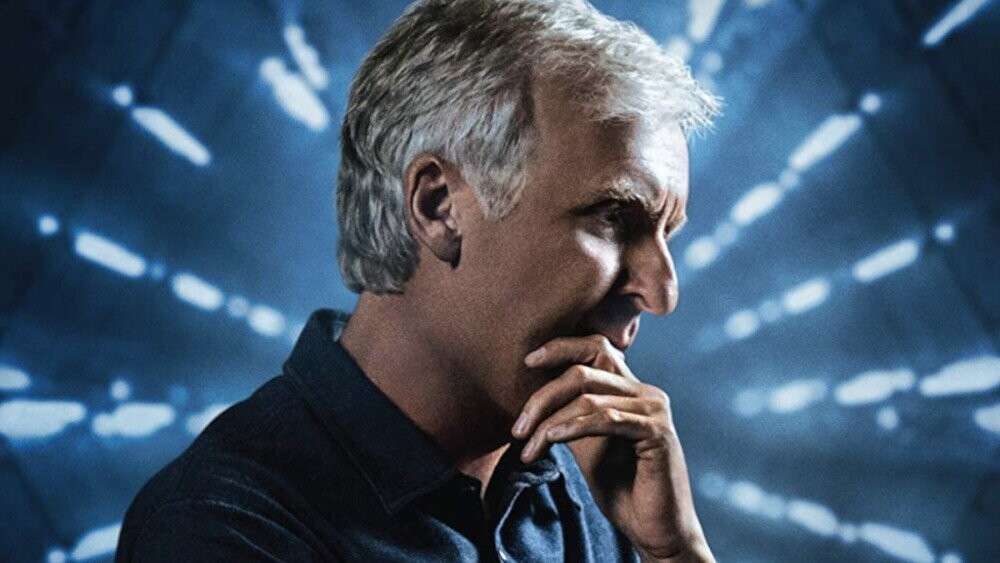
Calling James Cameron a “maniac” is, of course, playful exaggerationnot a medical diagnosis. Still, when a director builds an ocean inside an abandoned nuclear facility, personally operates a camera during a dangerous helicopter stunt, and persuades actors to perform scenes while holding their breath underwater, ordinary words such as “committed” begin to feel slightly underpowered.
Cameron’s behind-the-scenes reputation is built on a fascinating contradiction. He can be extraordinarily demanding, impatient, and obsessive, yet he also learns enough about engineering, diving, weapons, visual effects, and camera systems to understand the jobs he is asking other people to perform. He does not merely point toward an impossible shot and request magic. He frequently helps invent the magic, tests it, climbs into it, or gets dangerously close while somebody else drives it beneath a bridge.
The following five James Cameron behind-the-scenes stories reveal why his movie sets have inspired admiration, frustration, fear, and some excellent crew T-shirts.
1. He Went to War With the British Crew of Aliens
When Cameron arrived at England’s Pinewood Studios to direct Aliens, he was not yet the untouchable blockbuster emperor who could casually ask a studio to purchase land and build an ocean liner. He was a young Canadian director whose major calling card was The Terminator, a low-budget science-fiction hit that many members of the experienced British crew had not seen.
The crew had worked on Ridley Scott’s original Alien, respected Scott deeply, and reportedly regarded Cameron as an unproven outsider attempting to take control of somebody else’s universe. Sigourney Weaver later recalled that some crew members were dismissive enough to skip screenings Cameron arranged to demonstrate his ability. She also acknowledged that the crew entered the production with an attitude toward him.
The Tea-Break Rebellion
Cameron’s rapid, intensely focused working style collided with the traditions of a unionized British studio crew. Scheduled tea breaks became a surprisingly serious source of conflict. To the crew, the breaks were a normal part of the workday. To Cameron, interrupting a complicated lighting setup or effects sequence because the clock said “tea” was like asking a space marine to pause an alien attack for cookies.
Tensions increased after Cameron dismissed cinematographer Dick Bush over creative disagreements. Some crew members viewed the decision as another example of an aggressive young director disrespecting an established professional. Cameron, meanwhile, believed resistance from the crew was slowing production and undermining the movie.
The relationship became so hostile that Cameron’s reported farewell speech at the end of filming was less “thank you for your artistry” and more “I am delighted never to see this building again.” It was hardly a leadership seminar, but the finished film demonstrated that Cameron knew exactly what he wanted: a faster, more militarized sequel that preserved the original’s horror while turning the pressure dial until it snapped off.
Over time, many crew members reportedly came to respect his technical command. Cameron could explain the mechanics of a miniature, camera move, weapon, lighting effect, or creature shot in precise detail. He might have been exhausting, but he was not bluffing. Aliens became one of the most influential action sequels ever made, proving that sometimes the new guy arguing about tea has a plan.
2. He Turned The Abyss Into an Actual Underwater Ordeal
A conventional filmmaker might have created the underwater world of The Abyss with smaller tanks, miniatures, short submerged shots, and careful editing. Cameron instead looked at an unfinished nuclear power facility in South Carolina and apparently thought, “This could use eight million gallons of water.”
The production transformed the containment structure of the abandoned plant into an enormous freshwater filming tank. Actors became scuba certified, specialized helmets were engineered so their faces could be photographed and their dialogue recorded, and underwater communication systems were developed so Cameron could direct beneath the surface. The equipment could not merely look futuristic; it had to function reliably enough to keep people alive.
A Movie Set With Decompression Stops
The physical demands were punishing. Cameron and members of the underwater crew sometimes worked at greater depths and for longer periods than the principal actors, requiring decompression procedures before returning to the surface. Filming stretched across months of long workweeks in an isolated location. Chlorinated water irritated skin and damaged hair, visibility could deteriorate, equipment malfunctioned, and even simple adjustments became slow underwater operations.
Ed Harris endured one especially frightening sequence in which his character swims without a breathing helmet. Harris later described moments during production when he felt genuinely endangered. Mary Elizabeth Mastrantonio faced repeated takes of the emotionally and physically brutal resuscitation scene, only for the camera to run out of film during one attempt. She left the set after declaring that the performers were not animals.
That statement captures the central controversy surrounding Cameron’s reputation. His determination can produce extraordinary images, but determination does not erase the physical and emotional costs paid by actors and crew members. The Abyss remains visually remarkable, yet its production is also frequently cited as an example of how cinematic ambition can cross into unhealthy working conditions.
Cameron did not observe all this hardship from a comfortable chair beside the snack table. He spent extensive time underwater, wore the same kind of functional equipment, and exposed himself to significant risk. Crew member Leo Burmester summarized Cameron’s approach by explaining that the director pushed people toward their limits but generally did not demand something he was unwilling to attempt himself.
That distinction does not excuse every decision. It does, however, explain why Cameron inspires a peculiar combination of anger and loyalty. He was not ordering troops from a distant hill. He was underwater with them, probably discussing lens placement while everyone’s fingers turned into raisins.
3. He Filmed the Dangerous Terminator 2 Helicopter Stunt Himself
Terminator 2: Judgment Day contains enough practical destruction to make an insurance adjuster quietly leave the theater. Vehicles crash, buildings explode, trucks flip, motorcycles leap, and a helicopter pursues the heroes through the Los Angeles River system.
For one of the helicopter chase shots, stunt pilot Chuck Tamburro flew beneath an overpass with only a few feet of clearance above and below the aircraft. The helicopter had to maintain considerable speed because moving too slowly could reduce control. When camera operators reportedly considered a close tracking shot too dangerous, Cameron took over the camera and filmed it from a moving vehicle himself.
When “We Can Fix It in Post” Was Not the Plan
Today, a comparable sequence might be assembled from a digital helicopter, computer-generated traffic, virtual environments, and a pilot who performs the entire chase while drinking coffee in an air-conditioned motion-capture studio. Cameron had digital effects available in 1991Terminator 2 famously advanced computer-generated imagery through the liquid-metal T-1000but he still relied heavily on physical stunts and practical photography.
The helicopter stunt reflects his belief that audiences instinctively recognize real mass, real speed, and real danger. Even when viewers cannot explain why a shot feels convincing, the physics leave fingerprints on the image. Rotor wash moves actual dust. The aircraft vibrates. Reflections shift naturally. The pilot makes tiny corrections that would be difficult to imagine in advance.
Cameron’s willingness to operate the camera also sent a blunt message: he was not asking somebody else to accept a danger he considered unacceptable for himself. That is admirable in one sense and completely bananas in another. A director’s responsibilities generally include protecting the production, not volunteering to become its most expensive potential accident.
The broader Terminator 2 shoot was so demanding that crew members wore shirts reading, “You can’t scare meI work for Jim Cameron.” Arnold Schwarzenegger described him as supportive but fanatically focused on physical and visual detail. Cameron could spend days capturing close-ups, work through holidays, and insist on additional takes long after the performers believed the scene had been secured.
The result was an action film whose craftsmanship still holds up decades later. It also established one of Cameron’s unofficial directing principles: when an ambitious shot appears impossible, first ask the engineers, then ask the stunt team, and finally grab the camera yourself.
4. He Risked His Paycheckand Much Moreto Make Titanic
Before dramatizing the sinking of the Titanic, Cameron traveled roughly 2.5 miles beneath the North Atlantic to visit the actual wreck. His team conducted 12 dives in 1995 using Russian MIR submersibles and specialized remotely operated cameras designed to enter parts of the ship. This was not a quick research excursion with a waterproof phone case. Every descent involved extreme pressure, specialized engineering, complex logistics, and hours inside a cramped submersible.
The footage gave the film’s modern-day sequences a haunting authenticity, but the dives also reveal something essential about Cameron: he did not want to make a movie merely inspired by the Titanic. He wanted a physical relationship with the ship, its environment, and its remains.
Then He Built the Ship Again
For principal photography, the production developed a new studio complex in Baja California and constructed an enormous exterior replica of the ocean liner beside a large tank. Producer Jon Landau recalled standing on barren land and then seeing the ship set rise in roughly 100 days. Cameron had essentially asked a studio to finance a temporary coastal industrial zone because ordinary soundstages were too small for his imagination.
The budget expanded dramatically. The press predicted a historic failure, executives worried about the film’s length, and Cameron refused to solve the crisis by removing the scale and emotional detail that justified making the movie. He offered to surrender his directing fee and portions of his financial participation, accepting personal financial consequences for the overruns.
His obsession extended to details most viewers would never consciously notice. Sets, clothing, tableware, woodwork, mechanical systems, and room layouts were recreated from historical research. Cameron even supplied the hand seen drawing Rose’s portrait because the sketching hands in the movie are his, not Leonardo DiCaprio’s. Apparently directing, writing, producing, editing, deep-sea diving, and supervising a floating city were not enough hobbies for one production.
The remarkable part is not simply that Titanic became successful. It is that the movie’s greatest commercial liabilitiesits length, historical detail, emotional sincerity, elaborate practical sets, and enormous sinking sequencebecame the reasons audiences returned repeatedly.
Cameron was not casually confident. He was trapped inside a colossal production that could only survive if the completed film became an event. His response was not to make it safer, smaller, or more conventional. His response was to push through the disaster with the energy of a man repairing a ship after it has already hit the iceberg.
5. He Made the Avatar Cast Learn to Perform Underwater Without Bubbles
Cameron began developing Avatar long before filmmaking technology could fully deliver the world he imagined. Rather than significantly reduce the concept, he waited, experimented, and helped develop new camera systems, stereoscopic tools, facial-performance methods, and a virtual camera that allowed him to move through a digital environment as though he were filming a physical set.
For Avatar: The Way of Water, he encountered another problem: conventional performance capture did not work properly underwater. Scuba equipment produced bubbles, and bubbles interfered with the cameras tracking performers’ facial and body markers. Cameron’s solution was beautifully simple in the way that launching yourself from a catapult is beautifully simple: remove the scuba equipment and train the actors to free dive.
More Than 250,000 Free Dives
During an approximately 18-month performance-capture shoot, actors, stunt performers, safety specialists, camera teams, and other crew members reportedly completed more than 250,000 free dives. At the busiest moments, dozens of people could be underwater while motorized devices stood in for Pandora’s sea creatures.
The cast trained with elite breath-hold specialists. Zoe Saldaña reached about five minutes. Sigourney Weaver, already in her seventies during production, trained extensively and achieved impressive breath holds. Kate Winslet exceeded seven minutes during a static breath hold, a feat so startling that it became one of the production’s most publicized behind-the-scenes facts.
These were not simply athletic demonstrations. The performers had to remember dialogue, movement, eyelines, emotional beats, and imaginary environmental details while submerged. Holding one’s breath calmly is difficult. Acting as a nine-foot-tall alien warrior while holding one’s breath is a separate category of workplace challenge.
Cameron’s obsession expanded beyond underwater photography. While planning the sequels, he generated approximately 1,300 pages of world-building and story material, later reducing it to around 800 pages for a writers’ room. He was not merely drafting sequels; he was constructing cultures, ecosystems, family histories, technologies, and narrative paths for a multi-film saga.
The lengthy gap between the first two Avatar films therefore was not simply procrastination. It reflected years of writing, experimentation, ocean exploration, technology development, performance capture, and simultaneous planning for multiple sequels. Most directors make a movie when the necessary tools exist. Cameron occasionally decides the tools are being lazy and should be invented.
The Experience of Working Inside a James Cameron Production
Behind-the-scenes James Cameron stories are entertaining because they sound like legends about an unusually intense sea captain. However, they also illustrate the complicated experience of working for a perfectionist whose standards can produce both creative breakthroughs and serious strain.
You Must Understand the Mission
On a Cameron production, individual tasks are usually connected to a larger technical and emotional objective. A performer is not learning to free dive merely because underwater footage looks impressive. The training allows performance capture to record unobstructed facial expressions, which helps digital characters feel emotionally present. A gigantic ship set is not built solely to appear expensive. It gives actors consistent geography and allows the sinking to unfold with physical continuity.
Workers who understand that larger purpose may find the difficulty meaningful. Those who receive only the demandanother take, another adjustment, another hour underwatermay experience the same production as arbitrary punishment. This is where communication becomes as important as ambition.
Preparation Becomes a Survival Skill
Cameron’s filmmaking rewards people who arrive with deep technical knowledge. He studies the subjects behind his stories, whether that means deep-sea engineering, military equipment, firearms, performance capture, or historical ship construction. Crew members cannot easily dismiss a request by claiming it is technically impossible because Cameron may already have spent months speaking with the engineers who believe it can be done.
That creates an exhilarating environment for specialists. They are invited to solve problems that have not been solved before. It can also create pressure because every successful innovation raises expectations for the next challenge. Yesterday’s miracle becomes today’s minimum requirement.
Physical Authenticity Changes Performance
Real water, real vehicles, functional machinery, and large practical sets affect how actors move and react. A performer climbing a tilted deck does not have to imagine gravity pulling in the wrong direction. Somebody being blasted by rotor wash does not need a motivational speech about pretending it is windy.
This authenticity can generate spontaneous details that make scenes convincing, but it must be balanced against safety and humane working conditions. A genuine reaction is not automatically better if it results from avoidable distress. Modern audiences can admire the artistry of older productions while still questioning the methods used to create it.
Perfectionism Has a Human Price
The stories from The Abyss and other difficult shoots demonstrate that artistic success does not retroactively make every production decision acceptable. Exhaustion can reduce safety, damage trust, and impair the creativity that a director is attempting to capture. Leadership is not measured only by the quality of the final image; it is also measured by how people are treated while producing it.
Cameron has publicly acknowledged that his earlier directing style could be overly harsh and has described efforts to become more collaborative. That evolution matters. Great filmmakers are not required to remain trapped inside the most dramatic version of their reputation.
The Impossible Shot Must Still Serve the Story
The most useful lesson from Cameron’s career is not “risk everything for a cool image.” It is that technology, spectacle, and physical effort work best when attached to a clear emotional goal. The Titanic wreck footage creates a bridge between history and memory. The underwater performance capture in The Way of Water supports a story about a family entering an unfamiliar culture. The helicopter chase in Terminator 2 communicates the T-1000’s relentless pursuit.
Without narrative purpose, technical ambition becomes an expensive demonstration reel. Cameron’s greatest strength is his ability to combine engineering-scale production with simple emotional stakes: protect the child, survive the sinking, defend the family, save the world, or attempt to communicate with something unknown.
That combination explains why his excesses repeatedly connect with enormous audiences. The machinery may be unprecedented, but the emotion beneath it is immediately recognizable.
Conclusion: A Maniac With a Blueprint
James Cameron’s behind-the-scenes reputation cannot be summarized by calling him fearless, reckless, brilliant, difficult, or obsessive. Depending on the day, the production, and the person telling the story, all those descriptions may apply.
He fought a skeptical crew while making Aliens, submerged an entire production for The Abyss, personally filmed a hazardous helicopter stunt for Terminator 2, risked his compensation to protect Titanic, and waited years for technology capable of delivering the underwater world of Avatar.
The results demonstrate what happens when a filmmaker treats “impossible” as the opening stage of a design meeting. Yet the difficult experiences of cast and crew also remind us that cinematic greatness does not eliminate the need for safety, respect, and sustainable leadership.
So, is James Cameron a maniac? In the humorous language of movie fans, absolutely. But he is a maniac with engineering diagrams, historical research, a camera housing, three backup plans, and a detailed explanation of why your proposed shortcut will not survive water pressure.
Editorial note: The word “maniac” is used humorously to describe Cameron’s extreme filmmaking ambition and perfectionism. It is not intended as a statement about his mental health.