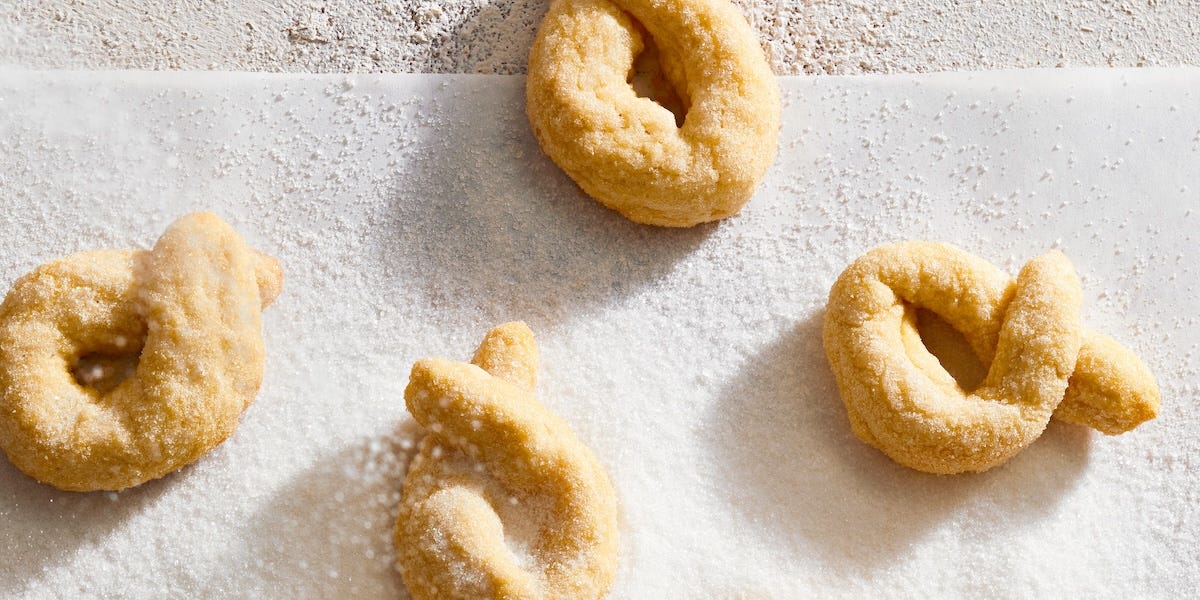
Ciambelline al vino are the kind of Italian cookies that make you wonder why every dessert does not come shaped like a tiny edible bracelet. Crisp, lightly sweet, rustic, and rolled in sugar before baking, these traditional Italian wine cookies are simple enough for a weeknight baking project but charming enough to land on a holiday cookie tray with dramatic main-character energy.
The name ciambelline al vino roughly means “little wine rings,” and the cookies are especially associated with central Italy, including Lazio and the Roman countryside. Traditional versions are made with flour, sugar, olive oil, wine, and sometimes anise seeds. The dough is rolled into small ropes, shaped into rings, dipped in sugar, and baked until crisp. No frosting. No pastry bag. No tiny kitchen torch. Just humble pantry ingredients doing a surprisingly elegant little dance.
This recipe keeps the classic crunchy texture and old-world flavor while making the method friendly for American home kitchens. For a family-friendly version, use non-alcoholic wine or white grape juice with a small splash of vinegar. For adult cooking where appropriate, a dry red or white wine is traditional. Either way, the goal is the same: crisp cookies with a lightly fruity aroma, a sandy sugar crust, and the dangerous ability to disappear every time someone walks past the counter.
What Are Ciambelline al Vino?
Ciambelline al vino are rustic Italian ring cookies made with a simple oil-based dough. They are not soft, chewy cookies like chocolate chip cookies. They are closer to biscotti’s relaxed cousin: crisp, sturdy, and excellent with coffee, tea, or a sweet dessert beverage. Their charm comes from contrast. The inside is lightly crumbly and crunchy, while the outside gets a sparkling sugar coating that gives every bite a delicate crackle.
Unlike many American cookies, ciambelline al vino usually contain no butter and no eggs. That means the dough is easy to mix, easy to shape, and naturally dairy-free depending on the ingredients used. The olive oil gives richness without heaviness, while the wine or non-alcoholic substitute adds aroma and helps create the cookie’s signature texture.
Why This Is the Best Ciambelline al Vino Recipe
The best ciambelline al vino recipe should taste traditional without making you feel like you need an Italian grandmother watching over your shoulder and judging your flour measuring technique. This version is designed to be practical, balanced, and reliable. The dough is firm but not dry. The cookies hold their shape. The sugar crust sticks. The finished texture is crunchy, not rock-hard enough to threaten dental insurance.
Many traditional recipes use the “one glass” method: one glass of wine, one glass of oil, one glass of sugar, and enough flour to make a workable dough. That method is charming, but glasses vary. A tiny juice glass and a dramatic goblet are not the same baking tool, no matter how confidently someone’s nonna says, “You will know.” This recipe gives exact measurements while still preserving the spirit of the classic cookie.
Ingredients for Ciambelline al Vino
For the Dough
- 3 cups all-purpose flour, plus more as needed
- 3/4 cup granulated sugar
- 2 teaspoons baking powder
- 1/2 teaspoon fine sea salt
- 1 teaspoon anise seeds, lightly crushed, optional
- 1/2 cup extra-virgin olive oil or mild olive oil
- 3/4 cup non-alcoholic wine, or white grape juice mixed with 1 teaspoon vinegar
- 1 teaspoon vanilla extract, optional
- 1 teaspoon finely grated orange zest or lemon zest, optional
For Coating
- 1/2 cup granulated sugar
- 1 tablespoon coarse sugar, optional, for extra crunch
Anise seeds are traditional in many versions, but they are not mandatory. They bring a gentle licorice-like aroma that works beautifully with the fruity dough. If anise is not your thing, orange zest is a wonderful alternative. It makes the cookies sunny, fragrant, and just fancy enough to make you feel like you own matching linen napkins.
How To Make Ciambelline al Vino
Step 1: Prepare the Baking Sheets
Preheat the oven to 350°F. Line two large baking sheets with parchment paper. Parchment keeps the sugar from sticking to the pan and makes cleanup easier, which is important because baking should end with cookies, not a sink full of regret.
Step 2: Mix the Dry Ingredients
In a large mixing bowl, whisk together the flour, sugar, baking powder, salt, and anise seeds if using. Whisking helps distribute the baking powder evenly so the cookies bake with a consistent texture. If you are adding citrus zest, rub it into the sugar first with your fingers. This releases the fragrant oils and makes the dough smell like an Italian bakery decided to move into your kitchen.
Step 3: Add the Olive Oil and Wine Substitute
Make a well in the center of the dry ingredients. Add the olive oil, non-alcoholic wine or grape juice mixture, and vanilla if using. Stir with a wooden spoon or flexible spatula until a shaggy dough forms. The dough should feel soft but not sticky. If it clings aggressively to your fingers like it has abandonment issues, add flour one tablespoon at a time.
Step 4: Knead Gently
Turn the dough onto a lightly floured surface and knead it gently for about one minute. Do not overwork it. You are not building pizza dough. You simply want the ingredients to come together into a smooth, manageable ball. If the dough cracks slightly, that is fine. If it crumbles apart, sprinkle in one teaspoon of liquid at a time until it holds.
Step 5: Shape the Rings
Pinch off a small piece of dough, about the size of a walnut. Roll it into a rope about 5 inches long and 1/2 inch thick. Bring the ends together and pinch them to form a small ring. Place it on the counter and gently roll the joined seam so it seals. Repeat with the remaining dough.
The rings do not need to look identical. In fact, part of the appeal of homemade ciambelline al vino is that they look handmade. A little unevenness says “rustic.” Too much perfection says “factory,” and nobody invited the factory to dessert.
Step 6: Dip in Sugar
Pour the coating sugar into a shallow bowl. Dip one side of each ring into the sugar, pressing lightly so it sticks. Place the cookies sugar-side up on the prepared baking sheets, leaving about 1 inch between them. They will puff slightly but will not spread much.
Step 7: Bake Until Crisp and Golden
Bake for 22 to 28 minutes, rotating the pans halfway through. The cookies are done when they feel firm, look lightly golden around the edges, and have a dry, crisp surface. If you prefer a crunchier cookie, turn off the oven, crack the door, and let the cookies sit inside for 5 to 8 minutes before removing them.
Step 8: Cool Completely
Transfer the cookies to a wire rack and let them cool completely. Ciambelline al vino become crunchier as they cool, so do not panic if they feel slightly tender when they first leave the oven. Cookies, like people, sometimes need a few minutes to get themselves together.
Recipe Card: Ciambelline al Vino
Prep Time: 25 minutes
Cook Time: 22 to 28 minutes
Total Time: About 55 minutes
Yield: 36 to 42 cookies
Texture: Crisp, rustic, lightly crumbly
Flavor: Mildly sweet, fruity, aromatic, with optional anise or citrus
Tips for Perfect Italian Wine Cookies
Use Good Olive Oil, But Not Overpowering Oil
Olive oil is a major ingredient, so choose one with a pleasant flavor. Extra-virgin olive oil gives the cookies a traditional richness, but if your oil tastes intensely grassy or peppery, it may dominate the dough. A mild olive oil is often the safest choice for a balanced cookie.
Do Not Add Too Much Flour
The most common mistake is adding too much flour. The dough should be easy to handle, but it should not be stiff like modeling clay. Too much flour makes the cookies dry and hard instead of crisp and pleasantly crumbly. Add flour gradually only when needed.
Keep the Rings Small
Small rings bake more evenly and become crisp without drying out. Aim for cookies that are about 2 inches wide after shaping. Oversized ciambelline may look impressive, but they can bake unevenly, leaving the center too soft while the outside gets too brown.
Let Them Cool Before Judging Texture
These cookies firm up as they cool. Taste one warm if you must, because patience is not always available in the pantry, but judge the final texture only after the cookies have cooled completely.
Flavor Variations
Classic Anise Ciambelline
Add 1 teaspoon of lightly crushed anise seeds to the dough. This gives the cookies a traditional aroma that pairs beautifully with their crunchy texture. If you love old-school Italian bakery flavors, this is the version to make first.
Citrus Olive Oil Ciambelline
Add 1 teaspoon of orange zest or lemon zest. Citrus brightens the dough and makes the cookies especially good with tea. Orange zest brings warmth, while lemon zest gives a cleaner, sharper fragrance.
Cinnamon Sugar Ciambelline
Add 1/2 teaspoon cinnamon to the coating sugar. This is not the most traditional version, but it is cozy, especially during fall and winter. It tastes like an Italian cookie shook hands with a snickerdoodle and decided to keep things classy.
Red Grape Ciambelline
Use non-alcoholic red wine or red grape juice with a tiny splash of vinegar. The cookies will have a deeper color and a slightly richer fruit note. This variation looks beautiful on a cookie platter and pairs nicely with dark coffee.
How To Serve Ciambelline al Vino
Ciambelline al vino are traditionally served as an after-meal treat, often with coffee or a dessert beverage. For a family-friendly table, serve them with espresso-style coffee, cappuccino, black tea, herbal tea, or warm milk. Their crisp texture makes them excellent for dipping, and their mild sweetness means they do not overwhelm other desserts.
They also make a lovely addition to holiday cookie boxes. Because they are sturdy and not frosted, they travel well. Stack them in a tin lined with parchment, tuck in a handwritten label, and suddenly you are the kind of person who gives thoughtful homemade gifts. Nobody needs to know you ate six “quality control” cookies before packing the tin.
How To Store Ciambelline al Vino
Store cooled cookies in an airtight container at room temperature for up to two weeks. Their crisp texture actually improves after a day, which makes them ideal for make-ahead baking. If the cookies soften, place them on a baking sheet in a 300°F oven for 5 to 7 minutes, then cool completely before storing again.
You can also freeze the baked cookies for up to two months. Place them in a freezer-safe container with parchment between layers. Thaw at room temperature, then refresh briefly in a low oven if needed.
Common Mistakes and How To Fix Them
The Dough Is Too Sticky
Add flour one tablespoon at a time until the dough is soft and workable. Avoid dumping in a large amount all at once. A slightly soft dough creates a better cookie than a dry dough.
The Dough Is Cracking Too Much
Add a teaspoon of liquid and knead gently. Cracking usually means the dough needs a little more moisture or has been sitting uncovered too long. Keep the dough covered with a towel while shaping the cookies.
The Cookies Are Too Hard
They may have baked too long or contained too much flour. Next time, measure flour carefully, stop baking when the edges are lightly golden, and remember that the cookies continue firming as they cool.
The Sugar Is Not Sticking
If the dough feels dry on the surface, lightly brush the top of each ring with a tiny amount of water before dipping in sugar. Do not soak them. A little moisture is enough to help the sugar cling.
Why Ciambelline al Vino Belong in Your Baking Rotation
Modern baking often leans dramatic: towering cakes, glossy glazes, cookies stuffed with three kinds of candy and a personality crisis. Ciambelline al vino go the other direction. They are quiet, simple, and confident. They do not need sprinkles to be invited back.
Their biggest advantage is balance. They are sweet but not sugary, crisp but not heavy, flavorful but not fussy. They work for holidays, afternoon snacks, coffee breaks, brunch trays, and edible gifts. They are also budget-friendly because they rely on pantry staples rather than specialty ingredients.
If you enjoy Italian cookie recipes, this one is especially rewarding because it teaches a different style of cookie making. There is no creaming butter, chilling dough for hours, or worrying about spread. You mix, shape, sugar, and bake. The result tastes like something that has been made in home kitchens for generations, because it has.
Experience Notes: What Baking Ciambelline al Vino Teaches You
Making ciambelline al vino is one of those baking experiences that feels wonderfully low-pressure once you understand the dough. The first time you make them, you may be tempted to overthink everything. Is the rope long enough? Is the ring round enough? Did the seam close properly? Then you bake the first tray and realize the cookies are charming because they are handmade, not despite it. A slightly oval ciambellina still tastes fantastic. A seam that looks a little bumpy still gets eaten. The cookie world is forgiving, and frankly, we should all take notes.
One useful experience is learning how the dough should feel. It is not supposed to be wet like muffin batter or elastic like bread dough. It should feel smooth, soft, and slightly oily from the olive oil. When you roll it into ropes, it should cooperate without sticking all over your hands. If the dough tears, it needs a touch more moisture. If it smears, it needs a spoonful of flour. After one batch, your hands understand the texture better than any written description can explain.
Another lesson is that simple ingredients create surprisingly complex flavor. Flour, sugar, oil, and a fruity liquid do not sound dramatic on paper. Yet once baked, the cookies develop a toasted aroma, a crisp bite, and a gentle sweetness that feels more grown-up than a typical sugar cookie. Add anise seeds and the flavor becomes old-fashioned in the best way. Add citrus zest and the cookies become brighter and more modern. The recipe gives you room to choose your own little personality upgrade.
Shaping the rings can also become oddly relaxing. Rolling each piece of dough into a rope and joining the ends feels repetitive in a soothing way, like folding laundry if laundry ended with cookies. This is a great recipe to make with family because the shaping does not require perfection. Everyone can make a few rings, and the finished tray will look like a happy collection of tiny golden wreaths.
The sugar coating is another small detail that makes a big difference. Pressing only one side into sugar keeps the cookies balanced. You get sparkle and crunch on top without making the whole cookie overly sweet. Coarse sugar adds more texture, but regular granulated sugar works beautifully. When the cookies bake, the sugar forms a delicate crust that catches the light and makes them look more festive than the ingredient list suggests.
The best part of the experience may be how well these cookies keep. Many homemade cookies peak within a few hours and then begin their sad journey toward softness. Ciambelline al vino are different. They stay crisp for days and often taste even better the next morning. That makes them perfect for planning ahead, gifting, or keeping in a tin for coffee breaks. In a world full of high-maintenance desserts, these cookies are refreshingly dependable.
Baking ciambelline al vino also gives you a tiny window into Italian home cooking philosophy: use what you have, keep it simple, and make something worth sharing. There is no need for complicated decoration or expensive equipment. A bowl, a spoon, a baking sheet, and your hands are enough. The result is humble, practical, and deeply satisfying. That is the magic of this recipe. It does not shout for attention. It simply sits on the table, crisp and golden, waiting for someone to take one cookie, then another, then pretend they are “just evening out the pile.”
Final Thoughts
The best ciambelline al vino recipe is not about perfection. It is about texture, aroma, and tradition. These Italian wine cookies are crisp, lightly sweet, easy to shape, and endlessly snackable. Whether you make the classic anise version, a citrus variation, or a family-friendly batch with non-alcoholic wine or grape juice, the result is a rustic cookie that feels both simple and special.
Keep them in a tin, serve them with coffee or tea, pack them into holiday boxes, or bake them on a quiet afternoon when you want your kitchen to smell like sugar, olive oil, and good decisions. Ciambelline al vino prove that a cookie does not need to be flashy to be unforgettable. Sometimes all it needs is a ring shape, a sugar coat, and the confidence of a recipe that has been loved for generations.