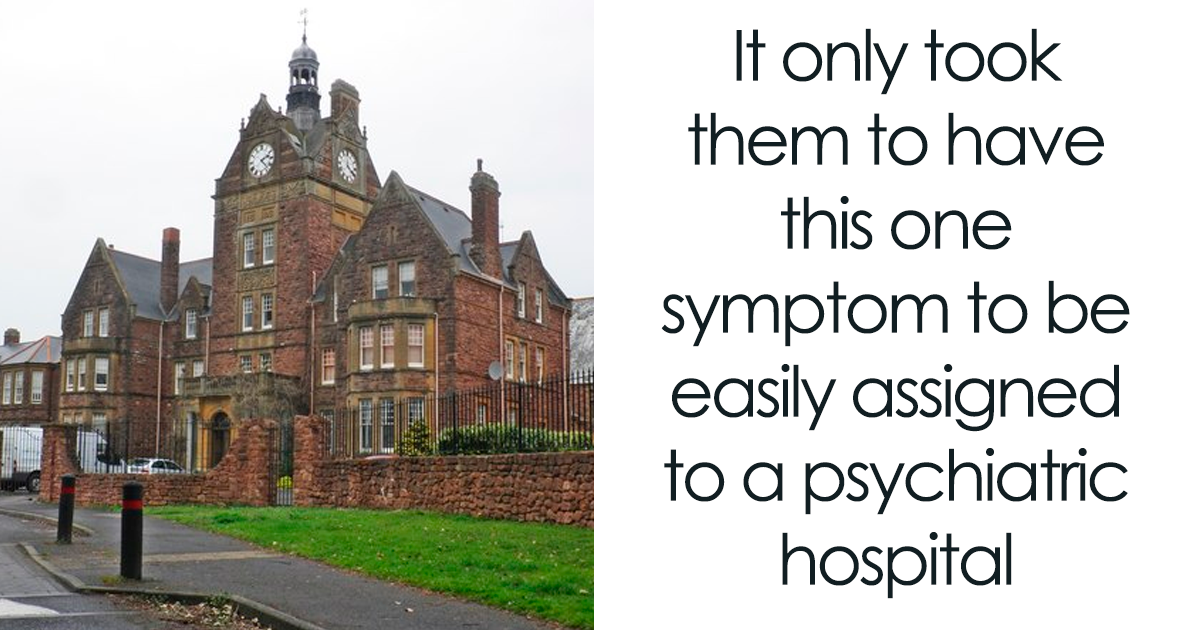
In the early 1970s, a psychology professor walked into a psychiatric hospital and said he heard a voice. Not a dramatic movie-trailer voice. Not a villain whispering from a basement. Just a vague, unsettling word: “thud.” Soon, he and seven other peoplereported as mentally healthy volunteerswere admitted to psychiatric hospitals. The shocking part was not that they got in. It was that once they started acting completely normal, they struggled to get out.
This famous episode is known as the Rosenhan experiment, published in 1973 under the title On Being Sane in Insane Places. It became one of the most discussed, debated, and later criticized studies in the history of psychiatry. For decades, the story has sounded like a dark joke: eight sane people entered hospitals to test psychiatric diagnosis, then discovered the exit door was not operated by common sense, but by labels, paperwork, authority, and institutional routines.
But the real story is more complicated than the viral version. It is part psychology experiment, part social warning, part historical controversy, and part reminder that human beings can become invisible once a system decides what box they belong in.
What Was the Rosenhan Experiment?
The Rosenhan experiment was led by David L. Rosenhan, a Stanford psychologist who wanted to test whether psychiatric professionals could reliably distinguish between people with mental illness and people without it inside hospital settings. According to Rosenhan’s published account, eight “pseudopatients” went to twelve psychiatric hospitals in the United States. They included people with respectable everyday roles, such as psychologists, a pediatrician, a psychiatrist, a painter, and a homemaker.
The plan was simple, almost absurdly simple. Each person would request admission and report hearing voices that said words such as “empty,” “hollow,” or “thud.” After admission, they would stop pretending. They would behave normally, speak normally, cooperate with staff, and say that the voices had disappeared.
In Rosenhan’s telling, every pseudopatient was admitted. Seven were diagnosed with schizophrenia, while one was diagnosed with manic-depressive psychosis, the term then commonly used for what is now associated with bipolar disorder. Their hospital stays reportedly ranged from seven to fifty-two days, with an average stay of nineteen days. That is a long time to sit around proving you are fine while everyone else is convinced your insistence that you are fine is probably part of the problem.
Why Getting In Was So Easy
At first glance, the experiment seems to say, “Anyone can fake one symptom and end up hospitalized.” That conclusion is tempting, but a little too neat. Psychiatric evaluation depends heavily on what a person reports, especially when symptoms involve inner experiences such as voices, fear, despair, or intrusive thoughts. A doctor cannot run a simple X-ray for “I hear the word thud.” Medicine often begins by believing the patient’s story.
That does not make psychiatry foolish. It makes psychiatric diagnosis uniquely difficult. A person with chest pain might be tested with an EKG, bloodwork, and imaging. A person reporting hallucinations must be evaluated through conversation, behavior, history, risk assessment, and clinical judgment. In 1973, diagnostic standards were less structured than they are today, and mental hospitals were under enormous pressure from overcrowding, limited staffing, and outdated institutional habits.
The pseudopatients did not enter the system by shouting, juggling lamps, or announcing they were Napoleon’s roommate. They presented a narrow symptom that clinicians were trained to take seriously. The hospitals responded as hospitals often do: they prioritized caution.
Why Getting Out Was So Hard
The truly unsettling part of the Rosenhan experiment was not admission. It was discharge. Once the pseudopatients had been labeled mentally ill, ordinary behavior was reportedly interpreted through that label.
Normal Behavior Became “Symptoms”
Rosenhan described how everyday actions could appear suspicious inside the hospital. Taking notes, for example, was reportedly recorded by one staff member as “writing behavior.” Outside a hospital, note-taking means you are organized, bored, or trying to remember whether you already paid the electric bill. Inside the institution, it could become evidence of pathology.
This is the power of context. If a person in a café writes in a notebook, they might be a poet, a student, or someone pretending to work while waiting for a muffin. If a person in a psychiatric ward writes in a notebook, staff may read the behavior through the diagnosis already attached to the chart.
The Label Followed Them Everywhere
The pseudopatients’ personal histories were also reportedly interpreted in ways that supported the diagnosis. Ordinary family tension, childhood frustration, or emotional complexity could be shaped into a psychiatric narrative. This does not mean clinicians were cruel or unintelligent. It means human beings are pattern-making machines. Once we are given a label, we often search for supporting evidence without realizing we are doing it.
That lesson reaches far beyond psychiatry. In schools, workplaces, families, and online comment sectionshumanity’s most chaotic laboratorypeople often interpret behavior based on the story they already believe. If someone is labeled “difficult,” directness becomes rudeness. If someone is labeled “brilliant,” lateness becomes creative eccentricity. Same behavior, different frame.
The Human Experience Inside the Hospital
Rosenhan’s paper also focused on the emotional experience of being a psychiatric patient. The pseudopatients reported boredom, loss of privacy, and a sense of depersonalization. Their belongings could be searched. Their movements were limited. Staff sometimes discussed patients as if they were not present. The most painful part was not always medication or diagnosis; it was being treated less like a person and more like a case file with shoes.
To be fair, many hospital workers were likely doing their best inside difficult systems. Psychiatric hospitals of the era often faced high patient loads, limited resources, and social attitudes that made mental illness seem frightening or shameful. Still, Rosenhan’s account exposed how easily institutions can flatten people. A patient becomes “the schizophrenic in room three.” A person becomes a chart. A voice becomes a diagnosis. A life becomes a label.
The Second Part of the Experiment: The Impostor Trap
Rosenhan also described a second phase. After one hospital heard about the study, its staff reportedly said they would not be fooled. Rosenhan told them pseudopatients might attempt admission over a three-month period. Staff then identified many real patients as possible impostors. The twist? Rosenhan said he had sent no pseudopatients at all.
If true, this second phase created a mirror-image problem. In the first phase, sane people were labeled mentally ill. In the second, real patients were suspected of faking. The broader message was that expectation can distort judgment in both directions. When staff expected illness, they saw illness. When staff expected deception, they saw deception.
Why the Study Changed Psychiatry
The Rosenhan experiment landed during a period when American psychiatry was already under pressure. Critics argued that psychiatric diagnoses were too subjective and too dependent on the clinician’s theoretical beliefs. The study became a cultural thunderclap. It challenged the authority of psychiatric institutions and contributed to public conversations about patient rights, diagnostic reliability, and mental health reform.
In 1980, the publication of DSM-III marked a major shift in psychiatric diagnosis. It introduced more explicit diagnostic criteria and aimed to make diagnosis more consistent across clinicians. Rosenhan’s study was not the only reason for this change, but it became part of the climate that pushed psychiatry toward clearer standards.
Modern psychiatric care is not the same as psychiatric care in 1973. Today, clinicians use more structured criteria, risk assessments, legal protections, consent rules, and discharge procedures. That does not mean the system is perfect. It means the conversation sparked by studies like Rosenhan’s helped force psychiatry to defend, refine, and improve its methods.
The Big Controversy: Was Rosenhan’s Study Reliable?
Here is where the story gets less tidy and much more interesting. In recent years, the Rosenhan experiment has faced serious criticism. Journalist Susannah Cahalan, in her book The Great Pretender, investigated Rosenhan’s archives and argued that parts of the famous account may have been incomplete, exaggerated, or inconsistent with available records. Other scholars have also questioned whether all pseudopatients existed as described and whether the published narrative left out inconvenient details.
Psychiatrist Robert Spitzer criticized Rosenhan soon after publication, arguing that if people fake symptoms, clinicians should not be blamed for taking them seriously. In other words, if someone walks into a hospital claiming a serious symptom, the hospital’s job is not to assume they are secretly running a social experiment. That would be a terrible admissions policy and also a great way to get sued before lunch.
So should we throw the Rosenhan experiment into the historical trash can? Not exactly. The study may be flawed, and possibly deeply flawed, but the questions it raised remain important. How do labels influence perception? How can institutions protect patients’ dignity? How do clinicians balance trust, skepticism, safety, and freedom? How do we avoid turning diagnosis into destiny?
What the Rosenhan Experiment Teaches Us Today
1. Labels Can Help, But They Can Also Harm
A diagnosis can be life-changing in a good way. It can explain suffering, open access to treatment, guide medication, support therapy, and help families understand what is happening. But a diagnosis can also become a cage when people are reduced to it. The lesson is not “diagnosis is bad.” The lesson is “diagnosis must stay attached to humility.”
2. Context Shapes What We See
The same behavior can look different depending on where it happens. Silence in a library is normal. Silence during a job interview is awkward. Silence in a psychiatric ward may be clinically noted. Context does not just surround behavior; it changes how behavior is interpreted.
3. Patient Rights Matter
The difficulty of discharge in Rosenhan’s account highlights why patient rights are essential. People need clear explanations, appeal processes, legal protections, and respectful communication. A hospital stay should never feel like being trapped in a maze designed by a committee that lost the map.
4. Mental Health Professionals Need Support Too
It is easy to make clinicians the villains in this story, but that would be lazy. Good mental health care requires time, staffing, training, supervision, and humane working conditions. A rushed professional in an overcrowded facility is more likely to rely on shortcuts. Better systems help both patients and providers.
Why This Story Still Goes Viral
The Rosenhan experiment remains popular because it touches a universal fear: What if people stop believing us about who we are? What if one misunderstanding becomes our identity? What if the harder we try to explain ourselves, the more suspicious we sound?
That fear is not limited to psychiatric hospitals. Anyone who has been wrongly accused, misunderstood, mislabeled, or trapped in bureaucracy knows the feeling. You say, “This is not what it looks like,” and the system replies, “Interesting denial pattern.” Congratulations, you are now in paperwork purgatory.
The story also survives because it has a perfect narrative shape. Eight healthy people enter hospitals. They act normal. They cannot easily leave. It feels like a psychological thriller written by Kafka after a long day at the DMV. But the responsible version of the story must include both sides: Rosenhan exposed real concerns about labeling and institutional power, while later critics exposed real concerns about Rosenhan’s own methods and truthfulness.
Experience-Based Reflection: What It Might Have Felt Like to Be a Pseudopatient
Imagine walking into a psychiatric hospital with a secret. You know you are not experiencing the symptom you report. You know the whole thing is supposed to be temporary. In your mind, the plan probably seems manageable: say the word, get admitted, act normal, observe, leave. It sounds almost like a strange academic field trip, except instead of a clipboard and a museum badge, you receive a hospital bracelet and a diagnosis.
At first, you may feel confident. You understand the experiment. You know the exit should be simple because you are not actually ill. Then the doors closenot necessarily with dramatic movie thunder, but with the quiet force of routine. Meals arrive on schedule. Staff members change shifts. People ask questions that seem to already contain answers. Your normal sentence is filtered through an abnormal label. You say you feel fine, and someone writes it down as part of the clinical picture.
That is where the experience becomes psychologically heavy. It is not just confinement. It is the loss of interpretive control. Outside the hospital, you own your explanations. Inside, someone else may own the meaning of your behavior. If you pace, perhaps you are anxious. If you sit still, perhaps you are withdrawn. If you take notes, perhaps that is suspicious. If you complain, perhaps you lack insight. If you cooperate, perhaps you are merely stable enough to remain under observation.
The strangest part might be how quickly a person can become accustomed to being watched. Privacy shrinks. Time stretches. Boredom becomes a second mattress. You begin to notice small details: the tone of a nurse’s voice, the sound of keys, the way patients wait for meals long before mealtime simply because waiting is one of the few activities available. You may start with the mindset of a researcher, but the environment works on you. Even if you entered as an observer, you are now being observed.
There is also the social awkwardness of the role. Other patients might sense something different about you. Rosenhan reported that some real patients suspected the pseudopatients were journalists or researchers. That detail is almost comic, but also profound. The people labeled “insane” may have been more perceptive than the experts in that particular setting. It is the kind of twist that makes the story unforgettable.
Eventually, the main goal becomes discharge. The experiment fades behind a more basic human desire: let me leave. To get out, Rosenhan’s pseudopatients reportedly had to accept the diagnosis or cooperate with treatment expectations. That creates a disturbing paradox. To prove you are sane, you may need to agree that you are ill. To win freedom, you may need to stop arguing with the label.
This experience-based reading is why the Rosenhan story still matters. It reminds readers that mental health systems must be built around dignity, not just diagnosis. Hospitals need authority to protect people in crisis, but authority must be balanced with humility, review, and compassion. Nobody should be reduced to one symptom, one chart, one frightened sentence, or one misunderstood moment.
Conclusion: The Door Swung Open Easily, But Not Both Ways
The story of eight healthy people entering psychiatric hospitals and struggling to leave remains one of the most haunting tales in modern psychology. Whether viewed as a landmark experiment, a flawed study, or a controversial legend with a core of truth, the Rosenhan experiment forces us to ask uncomfortable questions. How do we know what we know about another person’s mind? How much power should a diagnosis carry? How can care avoid becoming control?
The best answer is not to distrust psychiatry. Mental health treatment saves lives every day. The better answer is to demand careful diagnosis, humane institutions, patient rights, and professionals who remember that every chart represents a human being with a full life outside the hospital walls. Labels can guide treatment, but they should never swallow the person.
Note: This article is based on real historical information about the Rosenhan experiment, later psychiatric reforms, and modern critiques of the study. It is educational content, not advice to fake symptoms, test hospitals, or avoid mental health care when help is needed.