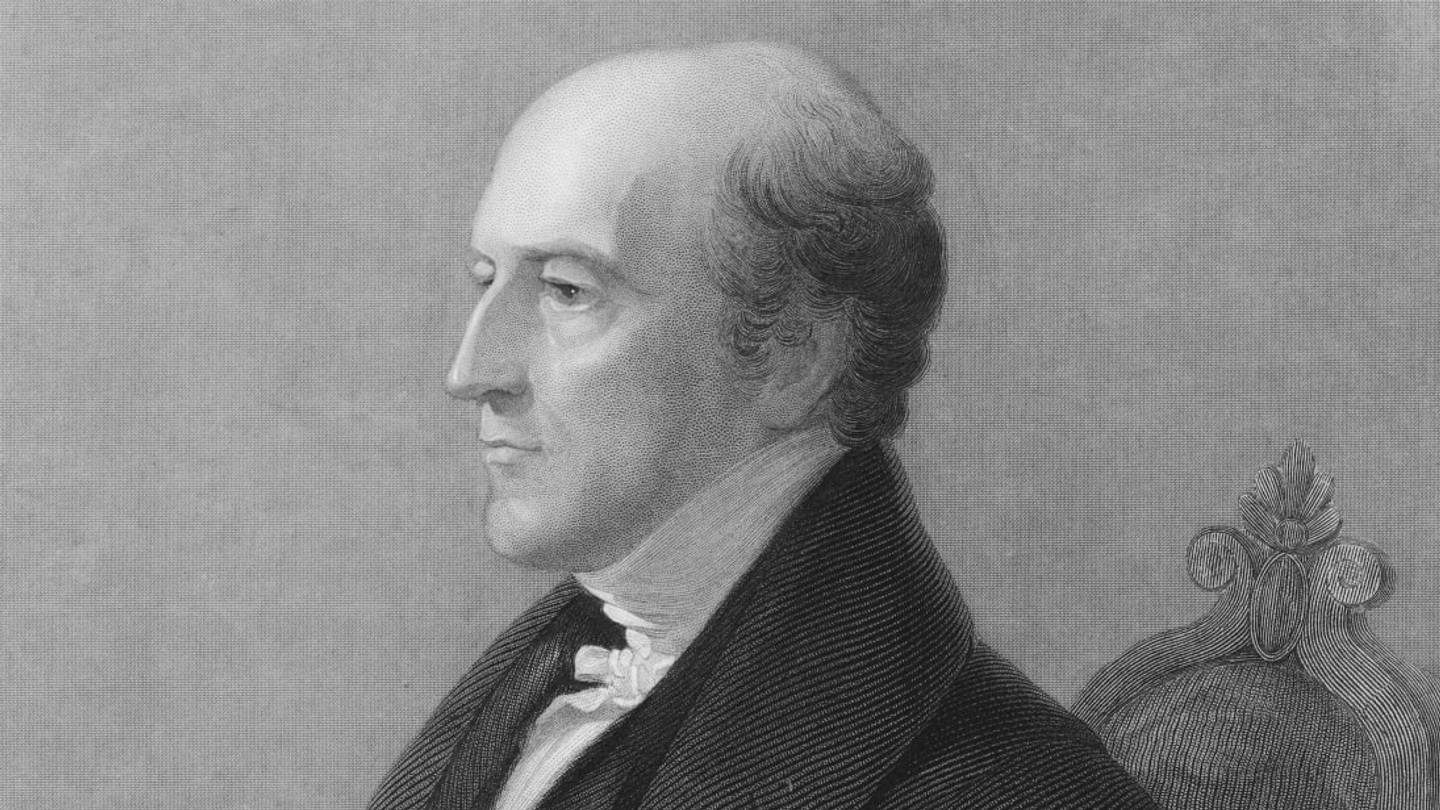
Before Mr. Darcy became the internet’s favorite brooding gentleman with a magnificent estate and an emotional range that slowly defrosts like butter on toast, there was Thomas Langlois Lefroy: an ambitious Irish law student, a sharp conversationalist, and, possibly, the young man who helped spark one of literature’s most beloved romantic heroes.
Jane Austen never left us a neat confession saying, “Yes, dear reader, Tom Lefroy equals Darcy.” That would have been convenient, but Austen was far too cleverand perhaps too privatefor that. What we do have is a fascinating trail: playful letters, a brief flirtation during the winter of 1795–1796, later family recollections, and the timing of Austen’s early work on what became Pride and Prejudice. Add in a young man with charm, pride, polish, and financial complications, and you can see why literary detectives have been happily polishing their magnifying glasses for generations.
This article explores seven important facts about Thomas Lefroy, the man often linked to Mr. Darcy, while keeping one foot firmly on documented history and the other in the delightful mud of literary speculation. Because when Jane Austen is involved, even gossip arrives wearing gloves.
Who Was Thomas Lefroy?
Thomas Langlois Lefroy was born in Limerick, Ireland, in 1776, one year after Jane Austen. He came from an Anglo-Irish Protestant family with expectations larger than a Regency dinner table. His family was not poor in the modern sense, but their hopes rested heavily on him. As the eldest son, Tom was expected to rise, earn, marry sensibly, and help secure the futures of those around him.
That pressure matters. In Austen’s world, romance did not float freely like a pink ribbon in a summer breeze. Love had to survive money, family duty, class, inheritance, and the ever-watchful eyes of neighbors who had nothing better to do than notice who danced with whom. Tom Lefroy’s story fits that world almost too perfectly.
1. Thomas Lefroy Met Jane Austen During a Holiday Visit
Thomas Lefroy met Jane Austen in December 1795 while visiting his uncle and aunt, the Reverend George Lefroy and Anne Lefroy, at Ashe, near Austen’s home in Steventon, Hampshire. Tom had been studying law in London at Lincoln’s Inn and appears to have taken a break during the Christmas season. Jane had just turned 20. Tom was also young, bright, educated, and sociablethe kind of person who could make a local ball feel suddenly less local.
The setting was ideal for a flirtation. Country dances, nearby families, shared acquaintances, and a small social circle gave young people repeated opportunities to meet without ever appearing too intentional. In other words, the Regency version of “accidentally” refreshing someone’s profile.
Jane’s surviving letters to her sister Cassandra show that she noticed Tom. More than that, she joked about him with the sparkling irony that would later make Elizabeth Bennet such a joy to read. Her tone was playful, but the fact that she wrote about him at all tells us he had made an impression.
2. Austen’s Letters Reveal a Playful, Possibly Serious Flirtation
The strongest evidence for Jane Austen’s relationship with Thomas Lefroy comes from her own letters. In January 1796, Austen wrote to Cassandra about her “Irish friend” and teased that their behavior involved dancing and sitting together in a way she described, with comic exaggeration, as shocking. In another letter, she wrote about “flirting my last” with Tom Lefroy before his departure.
These lines are famous because they feel unmistakably Austen-like: funny, self-aware, dramatic, and impossible to pin down completely. Was Jane genuinely heartbroken? Was she teasing Cassandra? Was she both amused and wounded? The answer may be yes, yes, and yes.
What makes the letters so intriguing is not that they prove a grand romance. They do not. Instead, they show a young Jane Austen enjoying admiration, wit, and flirtation with a man whose company she clearly found entertaining. That is enough to matter. Great fiction often begins not with a thunderbolt but with a charged conversation, a dance, an unfinished sentence, or a young woman noticing that a young man’s coat is not quite to her taste.
3. Lefroy Was Studying Law When He Met Austen
Thomas Lefroy was not merely a handsome visitor drifting through Hampshire with nothing to do but attend balls and inspire future literary icons. He was a serious student preparing for a legal career. He had studied at Trinity College Dublin and entered Lincoln’s Inn in London as part of his legal education.
This detail helps explain why his time with Austen was brief. Tom was not settled in Hampshire. He was on a temporary visit, and his future depended on discipline, professional advancement, and family expectations. A charming flirtation with a clever clergyman’s daughter might have been emotionally tempting, but it was not necessarily practical.
That practical barrier feels deeply Austenian. In Pride and Prejudice, marriage is never just a private matter between two people. It is social strategy, financial negotiation, family survival, and emotional risk all wearing the same bonnet. Tom Lefroy’s situation illustrates the real pressures behind Austen’s fictional worlds.
4. Money Probably Helped End the Romance Before It Began
One of the most repeated explanations for why Jane Austen and Thomas Lefroy did not marry is brutally simple: neither had enough money. Jane came from a respectable but not wealthy family. Tom needed to build a career and support family ambitions. A love match without financial stability could have been viewed as irresponsible, especially for a young man whose relatives expected him to “rise.”
This is where the possible Darcy connection becomes especially interesting. Fitzwilliam Darcy is wealthy enough to marry for love after he overcomes his pride. Tom Lefroy, by contrast, was not in that position as a young man. If he influenced Austen’s imagination, perhaps he did so not as a direct model but as an emotional problem: What happens when attraction is real, but society makes it inconvenient?
Austen’s genius was not in copying life like a photocopier with a lace collar. She transformed social reality into comedy, tension, and moral insight. The young Lefroy may have provided a spark, but Darcy became far more than Tom. Darcy is pride, privilege, self-correction, vulnerability, and a very large house in Derbyshire. Tom was a young Irish lawyer with obligations and, according to Jane, a questionable white coat.
5. Thomas Lefroy Later Became a Powerful Judge and Politician
After his youthful encounter with Jane Austen, Thomas Lefroy went on to build a distinguished public career. He became a barrister, served as a Member of Parliament for Dublin University, and eventually rose to become Lord Chief Justice of Ireland. His life was long, public, and professionally successful.
This later career complicates the romantic image of Lefroy as simply “Jane Austen’s almost-Darcy.” He was not merely a footnote in Austen biography. He was a significant legal and political figure in 19th-century Ireland. His career suggests intelligence, ambition, discipline, and social confidenceall qualities that, when softened and morally refined, might remind readers of certain Darcy-like traits.
Still, it is important not to flatten Tom into fiction. The real Lefroy had his own beliefs, career controversies, family life, and historical context. The Mr. Darcy readers love is Austen’s creation. If Tom helped inspire him, he did so as raw material, not as a finished blueprint.
6. Lefroy Later Admitted He Had Loved Jane Austen
One of the most tantalizing pieces of evidence comes from later family testimony. Years after Austen’s death, Lefroy reportedly admitted that he had loved Jane, though he qualified it as a “boyish love.” That phrase has launched oceans of speculation. “Boyish love” could mean a passing youthful attachment, tender but not life-defining. It could also be an old man’s careful way of shrinking a private feeling into something socially safe.
Either way, the admission matters because it confirms that Austen was not the only one who noticed the connection. Tom remembered her. He remembered enough to speak of love, even if he placed it in the category of youth.
For readers, the phrase is both satisfying and maddening. It gives us something, but not everything. It opens a window and then immediately hangs a curtain. In that sense, it is perfectly suited to Austen biography, where the most interesting facts often arrive carrying a fan and refusing to explain themselves.
7. The Mr. Darcy Connection Is Plausible, But Not Proven
So, was Thomas Lefroy the real-life inspiration for Mr. Darcy? The best answer is: possibly, partly, and not in a simple one-to-one way.
The timing is suggestive. Austen completed the first version of Pride and Prejudice, then titled First Impressions, between 1796 and 1797, not long after her flirtation with Lefroy. The novel’s concernsfirst impressions, pride, class, marriage, money, and emotional misjudgmentfit the world in which Jane and Tom briefly moved around each other.
But Austen was too skilled to merely transplant a person into a novel. Darcy may contain traces of Lefroy, but he also reflects broader social types: the wealthy gentleman, the proud landowner, the man educated into superiority who must learn humility. In the same way, Elizabeth Bennet is not simply Jane Austen in a muslin dress. She is a literary heroine shaped by observation, wit, imagination, and artistic control.
Calling Lefroy “the real Mr. Darcy” is catchy, SEO-friendly, and fun at parties. But the more accurate version is richer: Thomas Lefroy may have been one of the real-life sparks that helped Austen imagine the emotional electricity between Elizabeth Bennet and Fitzwilliam Darcy.
Thomas Lefroy vs. Mr. Darcy: What They May Have Shared
Thomas Lefroy and Mr. Darcy occupy different worlds: one historical, one fictional. Yet the overlap is irresistible. Both were educated men connected to status and expectation. Both existed in a society where marriage was shaped by money as much as feeling. Both have been associated with pride, polish, and the social choreography of courtship.
However, the differences are just as revealing. Darcy is extraordinarily wealthy from the beginning. Tom was ambitious but still building his future when he met Austen. Darcy can afford to make a romantic choice after personal growth. Tom, as a young man, may not have had that freedom. Darcy’s emotional journey ends in marriage. Tom’s connection with Jane ended in memory, silence, and later speculation.
That contrast may be exactly why the Lefroy theory has lasted. Readers sense that Pride and Prejudice is not a diary, but it does feel emotionally informed by life. Austen understood the ache of attraction constrained by circumstance. Whether Tom was the source, one source, or merely a convenient symbol, he helps us see the human weather behind the novel’s brilliant social comedy.
Why Austen Fans Still Care About Thomas Lefroy
Thomas Lefroy fascinates readers because he gives a face to a question: did Jane Austen experience the kind of romantic tension she wrote so well? We do not need Austen to have lived every plot she created. No one asks whether she personally hid a scandalous elopement in every shrubbery. But knowing that she had admirers, flirtations, disappointments, and emotional complexity makes her art feel even more alive.
Lefroy also represents the delicious uncertainty of literary history. There is enough evidence to keep the story alive, but not enough to close the case. That gap invites imagination. It is the perfect Austen mystery: polite, emotionally loaded, and impossible to solve without someone’s aunt raising an eyebrow.
Experience Section: How to Read Thomas Lefroy’s Story Like an Austen Fan
Reading about Thomas Lefroy is not just a history lesson; it is an experience in learning how fact, fiction, and longing talk to one another. The best way to approach the story is not to ask, “Was he definitely Mr. Darcy?” but “What does his story help us notice about Austen’s world?” That shift makes everything more interesting.
Start by rereading the early chapters of Pride and Prejudice. Watch how quickly Elizabeth Bennet forms an opinion of Darcy. Watch how Darcy judges the society around him. Then imagine a young Jane Austen attending local dances, observing manners, vanity, attraction, embarrassment, and the strange little performances people give when they want to be admired. Suddenly, the ballroom scenes feel less like invented set pieces and more like sharpened social memory.
Next, pay attention to money. Modern readers often hurry toward romance, but Austen’s original audience would have heard the financial stakes ringing like a dinner bell. A man’s income, a woman’s portion, a family’s connections, an estate’s inheritancethese details are not decorative. They are the machinery of the plot. Thomas Lefroy’s likely inability to pursue Jane because of financial and family pressure helps modern readers understand why Austen treats marriage with both humor and seriousness.
Another rewarding experience is comparing the playful Jane of the letters with the controlled brilliance of the novelist. In her letters about Lefroy, Jane jokes, teases, exaggerates, and performs for Cassandra. In Pride and Prejudice, that same comic intelligence becomes art. The private wit becomes public literature. The young woman laughing about a flirtation becomes the author who can build an entire moral universe from first impressions and corrected judgments.
For fans visiting Austen-related places, the Lefroy story adds emotional texture. Steventon, Ashe, Chawton, and the broader Hampshire landscape are not just pretty heritage locations. They were social environments where people met, danced, gossiped, hoped, and calculated. Walking through that world in imagination helps readers understand why a single dance could matter. In a small community, a dance was not just a dance. It was a signal, a rumor, a possibility, and occasionally a disaster wearing gloves.
Finally, the Lefroy story teaches a useful lesson about biography: uncertainty is not failure. We may never know exactly how Jane felt, how Tom felt, or whether Darcy owes him a literary debt. But the unanswered questions are part of the pleasure. Austen’s novels endure because they understand that people rarely know themselves completely at first. Elizabeth misreads Darcy. Darcy misreads Elizabeth. Readers may misread Tom Lefroy, tooand that is oddly appropriate.
In the end, Thomas Lefroy’s greatest gift to Austen fans may not be that he “was” Mr. Darcy. It may be that he reminds us how real life becomes fiction: not by direct copying, but by pressure, memory, transformation, and wit. A brief flirtation becomes a question. A question becomes a theory. A theory sends readers back to the novel. And the novel, being Pride and Prejudice, rewards the return every time.
Conclusion: The Man Behind the Maybe
Thomas Lefroy remains one of the most intriguing figures in Jane Austen’s personal history because he stands at the crossroads of evidence and imagination. We know that he met Austen, danced with her, amused her, and later remembered her with affection. We know that Austen began shaping First Impressions soon after this period. We also know that Mr. Darcy is too complex, too artfully constructed, and too morally developed to be reduced to any single real person.
That is what makes the story so satisfying. Lefroy does not need to be the complete Mr. Darcy to matter. He may have been a spark, a challenge, a memory, or simply one young man who helped Jane Austen observe the complicated dance between attraction and social reality. And from such dances, Austen made literature that still has readers sighing, laughing, arguing, and secretly hoping for a letter from Pemberley.