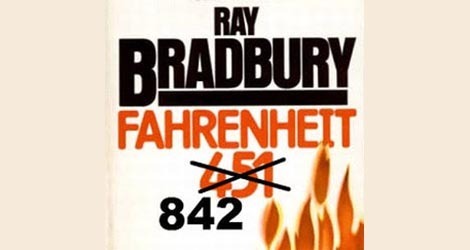
Some books do not suffer from bad writing. They suffer from bad summaries.
Give a novel a few decades in the school system and it will often be flattened into a bumper sticker. The Great Gatsby becomes “the American Dream book.” Fahrenheit 451 becomes “the censorship book.” The Catcher in the Rye becomes “that whining teenager book.” Before long, entire novels are reduced to one neat classroom takeaway, usually written in dry-erase marker by a teacher who is doing their best while also trying to stop Trevor from eating the cap off a highlighter.
To be fair, this flattening happens because classic books are messy, layered, and annoyingly unwilling to behave. They are full of contradictions, ugly motives, social criticism, emotional wreckage, and characters who refuse to serve as simple morality puppets. That is exactly what makes them worth reading. But it also means they are easy to misread when we are in a rush to turn them into themes, lesson plans, or multiple-choice questions.
So let’s revisit six classic books that readers often get wrong. Not because generations of students were foolish, and not because teachers are villains in cardigans, but because the most famous books in the language tend to attract lazy interpretations. These novels are bigger, stranger, sadder, and smarter than the simplified versions many of us first met in class.
1. The Great Gatsby Is Not a Glamorous Love Story About Dreaming Big
What people get wrong
A lot of readers treat Fitzgerald’s novel like a tragic romance wrapped in champagne. Gatsby is seen as the ultimate dreamer: a self-made man who throws legendary parties, loves one woman forever, and proves that ambition can build a dazzling new identity.
What the book is actually doing
The Great Gatsby is far less interested in admiring Gatsby than in exposing the rot under the gold leaf. Gatsby is not simply a heroic dreamer. He is a man who builds himself around illusion, trying to buy his way into a world that will always see him as an outsider. The novel is a brutal examination of class, wealth, status, and the fantasy that money can rewrite history.
That matters because Gatsby’s tragedy is not just that Daisy does not choose him. It is that he misunderstands the system he worships. He thinks wealth is a key, but in Fitzgerald’s world, there is a difference between having money and belonging to money. Tom and Daisy are not merely rich; they are insulated by old status, inherited confidence, and social permission. Gatsby may have the mansion, the car, and the pink suit, but he is still performing acceptance rather than possessing it.
And Daisy? She is not the great lost love of a noble soul. She is part of the machinery the novel criticizes: charming, careless, attractive, destructive. Gatsby’s dream is doomed because it is built on a fantasy of the past and a fantasy of class mobility at the same time. He does not love Daisy as she is. He loves what she represents: legitimacy, elegance, arrival. In other words, he is not chasing a woman so much as a symbolic receipt that says Congratulations, you now count.
That is what makes the novel sting. It is not saying “dream bigger.” It is saying that the American Dream, once mixed with status anxiety and moral emptiness, can turn into a beautiful disaster.
2. Fahrenheit 451 Is Not Only About Government Censorship
What people get wrong
Most readers remember one thing about this novel: books are banned, firemen burn them, and therefore the message is “censorship is bad.” That is true as far as it goes. But it does not go nearly far enough.
What the book is actually doing
Bradbury’s novel is also about what happens when people willingly trade depth for speed, noise, comfort, and distraction. This is what makes the book feel weirdly current. The danger in Fahrenheit 451 is not just top-down repression. It is a culture that loses its appetite for reading, complexity, solitude, and thought.
Montag’s world is full of wall-sized entertainment, nonstop stimulation, shallow chatter, and emotional sedation. People are not only controlled by force; they are softened by convenience. Books become threatening because they slow things down. They ask questions. They create disagreement. They resist the cheerful, numbing flood of empty content.
That distinction matters. A lazy reading turns the novel into a simple anti-authoritarian slogan. A better reading sees that Bradbury is warning about cultural self-censorship too: the kind that happens when a society stops wanting demanding art because it prefers being entertained, affirmed, and gently tranquilized.
In that sense, the fire is symbolic long before it is political. Books do not disappear only because a state orders them burned. They disappear when a culture stops defending the habits that make books matter in the first place: patience, memory, argument, and curiosity. Bradbury’s nightmare is not merely a boot on the neck. It is a smile on the screen saying, “Why bother thinking so hard?”
3. Frankenstein Is Not a Simple “Science Is Bad” Story
What people get wrong
First, pop culture still confuses Frankenstein with the creature, which is like confusing a chef with the lasagna. Second, many people reduce the novel to a blunt anti-science warning: Victor experiments, creates life, science goes bonkers, everyone dies, the end.
What the book is actually doing
Mary Shelley’s novel is much more morally complex than that. It is not anti-curiosity. It is anti-irresponsibility. The horror begins not when Victor creates life, but when he refuses to care for what he has made.
That is a crucial difference. Victor is not punished simply for learning too much. He is punished for acting without humility, foresight, accountability, or love. He wants the glory of creation without the burden of relationship. The moment the creature exists as a dependent being with needs, Victor recoils. He abandons him emotionally, socially, and ethically. The result is not “science created a monster.” The result is “neglect helped make one.”
The creature himself is also regularly misread as a pure symbol of evil. In the novel, he begins as intelligent, sensitive, lonely, and painfully aware of rejection. He becomes violent, yes, but Shelley forces readers to confront the role that exclusion, disgust, and abandonment play in that transformation. That does not excuse his crimes. It does make the novel far more unsettling. The real terror is not a stitched body staggering around a lab. It is a creator who refuses responsibility once his creation becomes inconvenient.
That is why Frankenstein still works in modern debates about technology, medicine, and innovation. It is not yelling, “Do not invent.” It is asking, “What do you owe the lives, systems, and consequences you set in motion?” That question is much scarier, because it does not belong safely in 1818. It belongs to every century that thinks invention is the same thing as wisdom.
4. The Catcher in the Rye Is Not Just a Book About a Complaining Teenager
What people get wrong
Holden Caulfield is often summarized as immature, cynical, and annoying. He hates phonies, wanders around New York, makes bad decisions, and complains about nearly everyone he meets. For some readers, that is where the analysis ends.
What the book is actually doing
But Holden is not merely bratty. He is grieving, frightened, lonely, and psychologically frayed. If you read the novel carefully, his sarcasm is less a personality brand than a defense system. His obsession with innocence, especially in children, is tied to his inability to process death, corruption, sexuality, and adulthood.
Allie’s death hangs over the book like bad weather. Holden’s language is jumpy because his mind is jumpy. He lies because he is unstable. He fixates because he cannot settle. He lashes out because the adult world feels false, predatory, or emotionally vacant. Even his fantasy of being the “catcher in the rye” is not just poetic teenage weirdness. It is a desperate wish to stop children from falling into the painful knowledge he has already encountered and cannot manage.
That makes the novel far sadder than its reputation suggests. Holden is not a cool rebel. He is a wounded kid who keeps trying and failing to connect. He reaches toward people, then recoils. He wants comfort, then mocks it. He wants honesty, but he can barely speak honestly himself. That contradiction is the point. Salinger gives us a narrator whose instability is inseparable from his humanity.
So yes, Holden can be exhausting. Grief usually is. The mistake is treating his exhaustion as proof that the book is shallow, when it is actually proof that the book understands what pain sounds like when it has not yet learned better grammar.
5. The Scarlet Letter Is Not a Lecture About Why Adultery Is Bad
What people get wrong
Many readers remember this novel as a moral punishment story: Hester sins, society shames her, everyone broods in bonnets, and the book sternly warns against sexual wrongdoing.
What the book is actually doing
Hawthorne is doing something far sharper. He is exposing the hypocrisy, cruelty, and gendered double standards of a society obsessed with public virtue and private control. The novel does not simply present shame. It studies how shame is weaponized.
Hester is publicly marked, turned into a spectacle, and forced to carry a social meaning on her body. Meanwhile, the men around her occupy very different moral positions. Dimmesdale hides behind spiritual authority. Chillingworth turns injury into cold vengeance. The community claims righteousness while feeding on humiliation. If the novel were only interested in condemning Hester, it would not make her the strongest, most durable consciousness in the story.
In fact, one of the most subversive things about the novel is how Hester grows while the supposedly respectable men shrink. Her punishment is real, but it becomes the lens through which Hawthorne criticizes the culture that imposes it. Over time, Hester acquires depth, endurance, competence, and moral seriousness. The scarlet letter does not merely brand her; it becomes a symbol whose meaning shifts because she outgrows the tiny judgment society tried to trap her in.
That is why the novel still feels modern. It understands that communities often pretend to be protecting morality when they are really protecting hierarchy. Public shame is rarely just about ethics. It is about power: who gets to define sin, who gets crushed by it, and who gets to hide behind a polished reputation while someone else pays the social price.
6. Lord of the Flies Is Not Just “Boys Are Secretly Little Monsters”
What people get wrong
This novel is often taught as a simple demonstration that human beings, especially boys, become savage the minute adult supervision disappears. It gets reduced to a survival story with a dark moral: civilization is thin, kids are chaos goblins, pass the conch.
What the book is actually doing
Golding’s novel is more than a gloomy campfire warning. It is an allegory shaped by war, power, fear, and the collapse of social order. The island is not just a setting where children go wild. It is a pressure chamber for seeing what happens when institutions fail, fear gets mythologized, and violence becomes emotionally useful.
The “beast” is the key. The boys keep looking for an external monster because that is easier than admitting the threat might come from within themselves. That is not just a point about children. It is a point about societies. Humans love inventing outside enemies to avoid facing their own appetite for domination, cruelty, and group hysteria.
That is also why the novel should not be read as a cheerful excuse for cynicism. Golding is not saying civilization is fake and savagery is the only truth. He is showing how fragile order becomes when reason, moral restraint, and shared responsibility lose legitimacy. The violence on the island is not random. It grows through ritual, hierarchy, performance, and fear. In other words, it looks disturbingly social.
The boys do not become monsters because they are children. They become dangerous because they create a culture in which violence starts to feel thrilling, useful, and normal. That distinction turns the novel from a survival adventure into a postwar meditation on the terrifying speed with which groups can teach themselves to love brutality.
What It Feels Like to Revisit These Books and Realize You Missed the Point
One of the strangest reading experiences is going back to a book you met in school and discovering that the book did not change nearly as much as you did. On the first read, a lot of classic literature feels like homework wearing a fake mustache. You are looking for the symbols your teacher mentioned, underlining something about society, and pretending that you fully understand why a green light, a red letter, or a dead brother’s baseball mitt should matter so much. Then you reread the same book years later and suddenly it is not a school object anymore. It is a human object.
That shift can be embarrassing. Plenty of adults reread The Catcher in the Rye and realize Holden was not just being dramatic; he was drowning in grief. Plenty of readers return to The Great Gatsby and notice that the parties feel less glamorous once you have spent time around people trying too hard to impress strangers. Frankenstein lands differently once you understand that the scariest failures in life are often not dramatic acts of evil, but acts of abandonment. The Scarlet Letter hits harder once you have seen how public judgment works in real communities, real offices, and real online pile-ons. And Fahrenheit 451 gets alarmingly sharp once you have lived inside an age of constant distraction and algorithmic sedation.
There is also a classroom experience many readers share: the weird moment when a book seemed boring only because it was being taught as a sealed container with one approved meaning. Students are often handed a classic as if its job is to deliver a tidy moral. But great books are not tidy. They are messy on purpose. They generate discomfort, divided loyalties, and arguments that refuse to die. When a novel survives for generations, it is usually because it keeps resisting the summary printed on the back of the worksheet.
That is why rereading can feel almost personal. You are not just discovering what the author meant. You are discovering what younger you could not yet see. Maybe you had not been betrayed by class dynamics, so Gatsby looked romantic. Maybe you had not watched technology flatten attention, so Bradbury looked exaggerated. Maybe you had not experienced grief, so Holden looked ridiculous. Maybe you had not yet learned how often moral language is used to control women, so Hester looked like a warning instead of a challenge.
And honestly, this is the fun part. Real reading begins when the book stops behaving like a monument and starts acting like a mirror, a scalpel, or a very rude dinner guest. The classics people call “overrated” are often just books that were introduced badly the first time around. Read them again with more life behind your eyes, and they stop being museum pieces. They start getting uncomfortably alive.
Conclusion
The best way to misread a classic is to treat it like a slogan. These six books have all been trapped inside overly neat summaries that miss what makes them powerful. The Great Gatsby is not just about dreaming; it is about class and illusion. Fahrenheit 451 is not just about banning books; it is about a culture that stops wanting them. Frankenstein is not a blunt anti-science fable; it is a nightmare about responsibility. The Catcher in the Rye is not only teenage complaining; it is grief in motion. The Scarlet Letter is not merely moral punishment; it is social criticism with teeth. Lord of the Flies is not a simple “kids go savage” story; it is a cold warning about fear, power, and the beast groups prefer to imagine as external.
So the next time someone gives you the one-sentence version of a famous book, be suspicious. The novels that survive usually do so because they resist being tamed. Which is inconvenient for quizzes, wonderful for readers, and probably very annoying for any English teacher trying to get through third period before lunch.