Note: This article is written in standard American English, based on real travel information, and rewritten in an original editorial style for web publication.
There are road trips, and then there are Arctic negotiations with the weather. Going to Nordkapp in winter is the second kind. You do not simply “pop up” to the North Cape like you are grabbing coffee and a muffin. You commit. You layer up. You stare at a map of Northern Norway and think, “That cannot possibly be a normal road,” and then you go anyway.
That is exactly what makes this journey so unforgettable. The route to Nordkapp, the dramatic North Cape plateau on Norway’s far northern edge, feels like driving through the last chapter of the earth. The landscape gets barer, whiter, windier, and somehow more beautiful with every mile. By the time you push through what feels like a thousand kilometers of snow land, your everyday brain has been replaced by a simpler, Arctic version that only thinks about four things: road conditions, hot coffee, reindeer, and whether your face still works.
And yet, this wild winter trip is not just about survival with better gloves. It is about the strange, theatrical beauty of Finnmark in cold season. It is about the approach to Honningsvåg, the gateway town to Nordkapp. It is about the final convoy behind a snowplow, crawling across an exposed white plateau toward a cliff above the Barents Sea. It is about arriving at the globe monument with wind in your ears and the distinct feeling that you have driven to the edge of the map.
If you have ever wondered what it is really like to visit Nordkapp in winter, here is the long version, frostbite not included.
Why Nordkapp in Winter Feels Like a Different Planet
Nordkapp is one of those places that already sounds mythical before you even get there. Perched on the island of Magerøya in Norway’s far north, it is famous for its cliffside plateau, Arctic Ocean views, and bragging rights as one of Europe’s great end-of-the-road destinations. In summer, people come for the midnight sun. In winter, they come for something moodier, stranger, and far more cinematic.
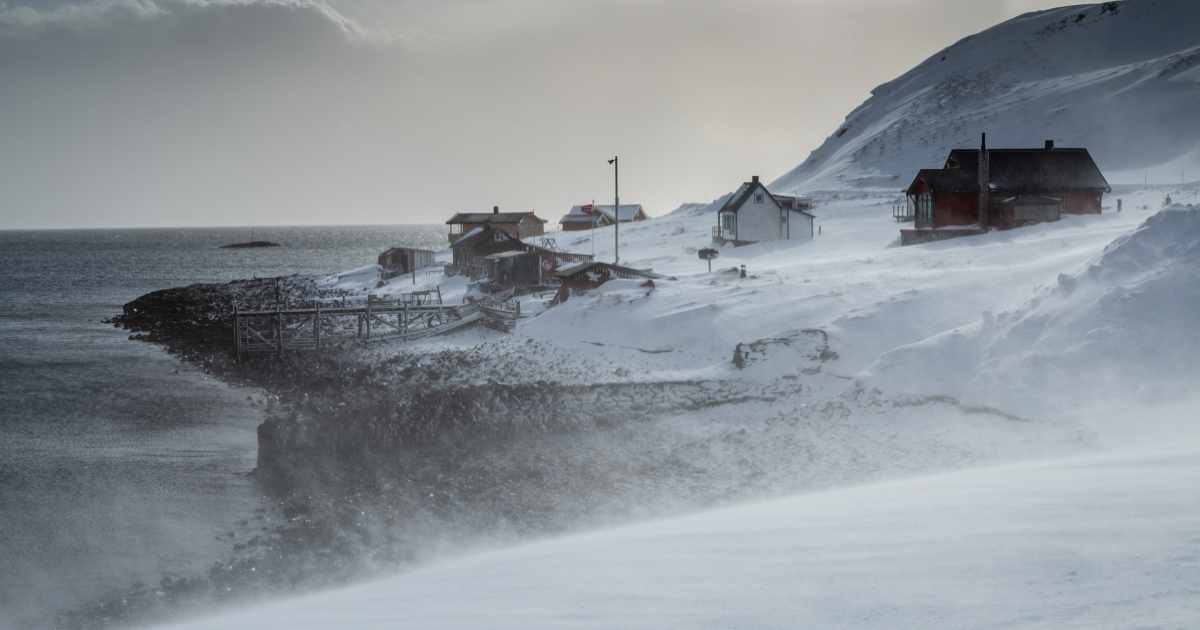
Winter strips the landscape down to its bones. The colors are reduced to snow, sea, sky, and the occasional red fishing cabin that looks like it was added by a set designer who felt the frame needed one bold accent. Trees become scarce. The tundra takes over. The weather shifts quickly enough to humble anyone who has ever said, “I’m sure the drive will be fine.”
That is the magic of Nordkapp in winter travel. It does not feel polished or overly produced. It feels immense. The silence has weight. The wind has opinions. Even the road seems to understand that you are entering a place where nature still makes the rules.
For travelers who love the northern lights, winter also brings a major advantage. The dark season turns the sky into part of the itinerary. You are not just going somewhere scenic; you are heading into one of Arctic Norway’s classic aurora zones, where the long nights add a sense of suspense to every evening. Nothing teaches patience quite like staring into a black Arctic sky and hoping it suddenly starts performing.
The Long Drive Through the 1000 Km Snow Land
The phrase “1000 km snow land” sounds dramatic, but on this trip it feels accurate. The farther north you drive, the more distance starts to play tricks on your brain. A stretch that looks short on a map unfolds into hours of white space, frozen shoreline, open plateau, and small settlements that seem to survive on pure stubbornness and excellent insulation.
This is not the kind of road trip built around cute detours every 20 minutes. It is built around endurance, rhythm, and the quiet thrill of moving deeper into the Arctic. You drive past fjords dusted in snow. You follow roads that bend around dark water and climb toward windblown heights. You pass reindeer as if they are traffic cones designed by nature. Somewhere along the way, you stop checking your hair in the mirror because winter has made that issue irrelevant.
What makes the drive to Nordkapp so memorable is that the route itself becomes the destination. The final approach is not a boring obligation before the “real attraction.” It is the whole point. You feel the remoteness building gradually. The road narrows your focus. The weather sharpens your senses. Every hot drink tastes heroic. Every gas station feels like a diplomatic success.
There is also something oddly emotional about seeing how people live here. Fishing villages cling to the coast. Houses glow warmly against the blue-white cold. Life continues in conditions that would cause most of us to dramatically question our choices after eight minutes. In that sense, the journey is not just scenic. It is humbling.
What the landscape actually feels like
It feels huge. Not postcard huge. Existentially huge. The kind of huge that makes you lower your voice even when nobody else is around. The tundra stretches out in pale, open sweeps. The sea appears suddenly, dark and cold and iron-colored. Then the land rises again and the wind comes across it with the confidence of something that has been in charge for a very long time.
That constant contrast is what gives a Nordkapp road trip its character. One hour you are hugging the coast. The next you are on an exposed plateau, driving through blowing snow with the horizon blurred into one endless band of white. It is not flashy beauty. It is elemental beauty.
Honningsvåg: The Small Town Before the Edge
Before you reach Nordkapp itself, you meet Honningsvåg, the compact Arctic town that acts as the main gateway to the North Cape. It is the kind of place that instantly improves your opinion of humanity because it offers exactly what a winter traveler needs: shelter, warmth, food, and the comforting sight of ordinary life continuing at 71 degrees north.
Honningsvåg is not a giant tourism machine. That is part of its charm. It feels practical, lived-in, and real. In winter, that matters. Grand landscapes are wonderful, but eventually you want soup, a dry place to sit, and a town that does not pretend the weather is cute. Honningsvåg understands the assignment.
It also serves as the psychological halfway point of the trip. Once you get here, Nordkapp no longer feels theoretical. It feels close enough to taste, even if the last stretch still depends on winter road conditions and Arctic patience. You start checking the sky more carefully. You start imagining the globe monument. You start saying things like, “Tomorrow, we go to the end.” Which is admittedly dramatic, but also earned.
The Final Stretch: Convoy Driving to Nordkapp in Winter
This is where the trip stops pretending to be a normal drive.
In winter, the last section of road to the North Cape plateau may operate under convoy conditions, with vehicles following a snowplow across the final stretch. It sounds intense because it is. But it is also one of the most memorable parts of the whole journey.
You line up. The vehicles gather. The weather decides whether everyone is feeling optimistic or mildly religious. Then the convoy begins moving, and suddenly the road trip turns into an expedition. Snow lifts across the ground in ghostly ribbons. Visibility can change in a hurry. The plateau feels exposed and otherworldly, as if the land has thinned out and left only wind, ice, and direction.
Oddly enough, there is comfort in the structure of it. The convoy is a reminder that winter in the Arctic is not about bravado. It is about respect. You do not “conquer” this road. You cooperate with it. You bring the right clothing, a full tank, snacks, and enough humility to understand that the weather always gets the final vote.
And when you finally arrive, it feels earned in a way a simple park-and-walk visit never could.
Why this part matters so much
The convoy transforms the destination into a story. It gives the visit tension, buildup, and a real sense of crossing into somewhere special. By the time you step out at Nordkapp, you are not just sightseeing. You have arrived through winter, through distance, through a landscape that demanded your full attention.
Standing at Nordkapp in Winter
Then there it is: Nordkapp in winter. The famous plateau. The Arctic wind. The globe monument that somehow looks both iconic and slightly unreal when surrounded by snow and sea mist.
In photographs, the North Cape often looks triumphant and tidy. In real life, winter gives it more personality. It can be moody, foggy, brilliant, severe, and absurdly beautiful within the same hour. Sometimes the sea appears clearly below the cliff. Sometimes the weather wraps the whole cape in white and turns the scene minimalist enough to make a modern art gallery nervous.
The power of the place comes from that exposure. You are standing on a cliff above the Barents Sea, looking out into a hard northern horizon. There is no clutter. No urban noise. No sense that the world is trying to entertain you every second. Nordkapp does not perform for visitors. It simply exists, and that is why it hits so hard.
If you step into North Cape Hall, the experience shifts from raw weather to context. The visitor center adds some welcome warmth, along with exhibits and a panoramic film that helps frame the landscape across seasons. That contrast works beautifully. Outside, you feel the Arctic. Inside, you understand it a little better.
And then you go back out one more time, because no heated building can compete with the urge to stand on that edge again and think, “Well, this was worth every frozen toe.”
Northern Lights, Arctic Silence, and the Mood of the Journey
No article about Nordkapp winter adventure would be complete without mentioning the northern lights, because the aurora changes the emotional temperature of the trip even before it appears. You spend the whole journey half expecting the sky to do something dramatic.
That anticipation alters the nights. Suddenly darkness is not empty; it is full of possibility. You walk outside after dinner for “just a quick look” and return 45 minutes later with numb fingers and the spiritual energy of someone who has seen green ribbons move above the harbor. Even on nights when the aurora stays shy, the darkness itself feels rich. The stars come out hard and clear. The cold air makes everything feel sharply outlined. Silence stretches farther.
That silence is one of the most underrated parts of the Nordkapp experience. Modern life is full of noise pretending to be importance. The Arctic has a more convincing argument. Out here, quiet feels substantial. It does not empty you out; it clears you up.
And perhaps that is why people remember this trip so vividly. Yes, the views are spectacular. Yes, the winter road is thrilling. Yes, the North Cape is famous. But the deeper memory is often the mood: the restraint of the landscape, the dignity of the weather, and the way the far north makes your normal internal chatter finally sit down and be quiet for a minute.
Practical Lessons I Learned the Hard, Cold Way
A romantic Arctic road trip remains romantic only if you prepare properly. Nordkapp in winter is not the place for optimism without gloves.
First, dress for stillness, not just movement. Walking keeps you warm; standing at a windy cliff trying to take photos is another matter entirely. Good boots, proper layers, insulated outerwear, and real winter accessories matter more than fashion. This is excellent news for anyone who has always wanted to dress like a stylish marshmallow.
Second, leave room for flexibility. In Arctic Norway, weather can rearrange your plans without apology. Roads can close, convoy schedules can shift, and visibility can vanish fast. Treat timing as a suggestion, not a personal right.
Third, enjoy the journey instead of racing it. The road to Nordkapp is not a gap between attractions. It is the attraction. Stop when it is safe. Look at the shoreline. Notice the fishing villages. Watch for reindeer. Drink the coffee while it is hot and your fingers still bend.
Most of all, go because you want to feel somewhere truly northern, not just because you want to collect a famous photo. Nordkapp rewards curiosity much more than checklist tourism.
Why I Would Go Back
I would go back to Nordkapp in winter for the same reason people return to places that made them feel small in the best possible way. The North Cape reminds you that travel does not always have to be easy to be joyful. Sometimes the best journeys are the ones that require more patience, more awareness, and a little more nerve.
I would go back for the drive through the snow land, for the strange beauty of Finnmark, for the dark sea under a pale sky, for the moment Honningsvåg appears like a warm punctuation mark in the Arctic, and for that last convoy to the cliff.
Mostly, I would go back because Nordkapp in winter does not feel like ordinary tourism. It feels like entering a landscape with character. A place that is beautiful without trying to flatter you. A place that asks you to pay attention.
And honestly, in a world full of destinations shouting for attention, that kind of quiet power is pretty irresistible.
Extended Experience: 500 More Words From the Snow Road
The memory that stays with me most is not a single landmark but the long approach north, when the world seemed to get emptier and more vivid at the same time. Somewhere after another bend of dark water and white shoreline, I realized the journey had changed pace inside my head. I was no longer thinking in emails, deadlines, or ordinary city measurements. I was thinking in weather, road texture, daylight, and distance to the next warm room.
That mental shift is one of the secret rewards of traveling to Nordkapp in winter. The Arctic edits your thoughts. It removes the useless ones first. Soon, the only things that matter are wonderfully basic: the engine sounds healthy, the road is visible, the coffee is hot, the sky is clearing, the gloves are dry. It is a strangely luxurious simplification.
I remember stopping at a viewpoint where the sea looked almost black against the snow. There was hardly any sound except the wind and the faint crunch beneath my boots. A few minutes earlier, I had been in the car with the heater going full blast, muttering about the cold like a person personally betrayed by latitude. Outside, though, I understood the appeal immediately. The landscape was not merely pretty. It had presence. It felt like something older than tourism, older than roads, older than the idea that a place should be made convenient before it can be appreciated.
Later, as we got closer to Honningsvåg, the houses seemed almost impossibly welcoming. Windows glowed gold against the blue afternoon. The harbor looked practical and calm, like it had no interest in dramatics because it had seen too much weather to be impressed. We found food, warmth, and that particular kind of traveler’s relief that only comes after a demanding drive. Nothing fancy tasted better than that first hot meal. In the Arctic, soup deserves awards.
The next day, waiting for the final push toward Nordkapp, I noticed how everyone became quieter. Even chatty travelers tend to lower the volume when the road turns serious. The convoy format gave the moment a shared focus. You could feel that everyone understood this was not just transportation. It was part of the experience, part of the reason the destination would matter more once reached.
And then came the plateau. Wind, snow, cliff, sea, sky. Minimalist drama on a grand scale. I looked out and had that rare travel sensation that your imagination, for once, had not exaggerated anything. If anything, imagination had undersold it. The North Cape in winter was harsher, calmer, larger, and more emotionally exact than I expected.
On the return drive, I kept looking back whenever I could. Not because the view was vanishing, but because I already knew it would stay with me. Some trips are enjoyable. Some are impressive. A few become part of your inner scenery. The road to Nordkapp through the 1000 km snow land is that kind of journey: cold on the outside, bright in memory, and just dramatic enough to make every ordinary road afterward feel slightly under-rehearsed.
Conclusion
A winter trip to Nordkapp is not just about reaching a famous point on the map. It is about the entire Arctic rhythm of the journey: the long snowy approach, the remote beauty of Finnmark, the grounded warmth of Honningsvåg, the caution and thrill of convoy driving, and the final arrival at a windswept cliff above the Barents Sea.
For travelers who want a destination that feels genuinely remote, visually unforgettable, and emotionally different from a standard scenic getaway, Nordkapp in winter delivers. It is not easy in a lazy, postcard-perfect way. It is better than that. It is real, stark, funny, humbling, and magnificent.