The internet is crowded with “facts” that collapse faster than a lawn chair at a family barbecue. Occasionally, however, a claim sounds completely invented and turns out to be gloriously true. That is the irresistible appeal of Facebook groups devoted to unbelievable facts: every post feels like a tiny argument with reality.
The following collection explores 50 verified facts about space, Earth, animals, history, and technology. Some require context, and a few depend on how scientists define words such as “day,” “desert,” or “tallest.” Nevertheless, each one offers a delightful reminder that the real world rarely consults us before becoming extremely weird.
Unbelievable Space Facts
- A day on Venus is longer than its year. Venus needs about 243 Earth days to rotate once but only 225 Earth days to orbit the Sun.
- The Sun rises in the west on Venus. The planet rotates in the opposite direction from Earth and most other planets, reversing its apparent sunrise and sunset.
- Venus is hotter than Mercury. Mercury sits closer to the Sun, but Venus has a dense carbon-dioxide atmosphere that traps heat with ruthless efficiency.
- One solar day on Mercury lasts two Mercurian years. A complete sunrise-to-sunrise cycle takes 176 Earth days, while Mercury orbits the Sun in only 88.
- About 1,000 Earths could fit inside Jupiter. This comparison assumes Jupiter is a hollow shell, which it is notbut the scale remains appropriately jaw-dropping.
- Saturn has short days and extremely long years. It rotates in roughly 10.7 hours but requires about 29 Earth years to complete one solar orbit.
- A Martian day feels almost familiar. Mars completes one rotation in approximately 24.6 hours, giving future visitors only 39 extra minutes to ignore their alarms.
- A year on Mars lasts 687 Earth days. Martian seasons therefore continue much longer than ours, although their lengths vary because the planet’s orbit is elliptical.
- Mars is inhabited entirely by robotsas far as we know. NASA uses this playful description because every confirmed operational visitor sent there has been robotic.
- The Sun holds 99.8% of the solar system’s mass. The planets, moons, asteroids, and comets are sharing what amounts to cosmic pocket change.
- Our solar system takes about 230 million years to orbit the Milky Way. Dinosaurs lived during a different “galactic year” from the one humans currently occupy.
- The Moon moves about 1.5 inches farther from Earth annually. Laser measurements taken with reflectors placed during Apollo missions reveal this gradual retreat.
- Astronaut tracks remain visible on the Moon. With virtually no atmosphere, wind, or rain, the lunar surface experiences little of the erosion that erases footprints on Earth.
Verification references: NASA Venus Facts, NASA Solar System Facts, and NASA Moon Facts.
Earth Facts That Sound Completely Made Up
- Earth technically has one global ocean. The Atlantic, Pacific, Indian, Arctic, and Southern oceans are named regions within one connected body covering about 71% of the planet.
- More than 80% of the ocean remains unmapped, unobserved, or unexplored. We have excellent maps of Mars while large portions of our own seafloor remain mysterious.
- An estimated 91% of ocean species have not been classified. The sea is essentially operating an enormous biological guest list that scientists have barely checked.
- Roughly half of Earth’s oxygen production comes from the ocean. Photosynthetic plankton, algae, and bacteria perform much of this work without requesting applause.
- More than 96% of Earth’s water is saline. Most of the planet’s impressive water supply is unsuitable for drinking without energy-intensive treatment.
- Ocean salt could cover all land in a 500-foot layer. That estimate assumes every dissolved salt was removed and spread evenly across the continents.
- The Great Lakes contain about 21% of the world’s surface freshwater. The key word is “surface”; the comparison excludes groundwater and water locked inside ice.
- A typical cumulus cloud can weigh around 1.1 million pounds. It stays overhead because its tiny droplets are distributed through an enormous volume of rising air.
- Lightning can heat air to approximately 50,000°F. That is hotter than the Sun’s surface and explains the explosive expansion that produces thunder.
- Tectonic plates move about as fast as fingernails grow. A few centimeters per year seems unimpressive until it continues for several million years.
- Antarctica is a desert. Deserts are defined by low precipitation, not hot sand. Antarctica is also the planet’s largest desert by area.
- Mauna Kea is taller than Everest when measured from base to summit. Most of the Hawaiian volcano lies underwater, giving it a total height exceeding 33,500 feet.
Verification references: NOAA Ocean Facts, U.S. Geological Survey, U.S. Environmental Protection Agency, and NOAA National Ocean Service.
Animal Facts That Seem Like Biological Pranks
- An octopus has three hearts. Two pump blood through the gills, while the third circulates it through the rest of the body.
- Octopus blood is blue. It contains copper-based hemocyanin rather than the iron-rich hemoglobin that makes human blood red.
- Sharks are older than trees. Shark ancestors appeared more than 400 million years ago; the earliest organisms recognized as trees arrived tens of millions of years later.
- Wood frogs can spend months frozen. Ice forms around their organs while concentrated glucose protects their cells from lethal damage.
- A frozen wood frog stops breathing and has no heartbeat. When temperatures rise, its organs thaw and resume functioning. Nature apparently invented “restart” before computers did.
- Butterflies taste with their feet. Receptors help them identify food and determine whether a plant is suitable for their caterpillars.
- Male seahorses become pregnant. A female transfers eggs into the male’s brood pouch, where he fertilizes, carries, and eventually delivers the young.
- Giraffes and humans both have seven neck vertebrae. A giraffe’s individual vertebrae are simply much longeran architectural solution that feels suspiciously economical.
- Hummingbirds can fly backward. Their unusual wing motion also lets them hover, making them the tiny helicopters of the bird world.
- Wombats produce cube-shaped droppings. Uneven elasticity in their intestines helps form the cubes, which are less likely to roll away from territorial marking sites.
- Axolotls can regenerate astonishing body parts. They can regrow limbs and repair structures including the spinal cord, heart, lungs, jaws, and portions of the brain.
- Bottlenose dolphins develop signature whistles. These individually distinctive calls function somewhat like acoustic identity labels and may be comparable to names.
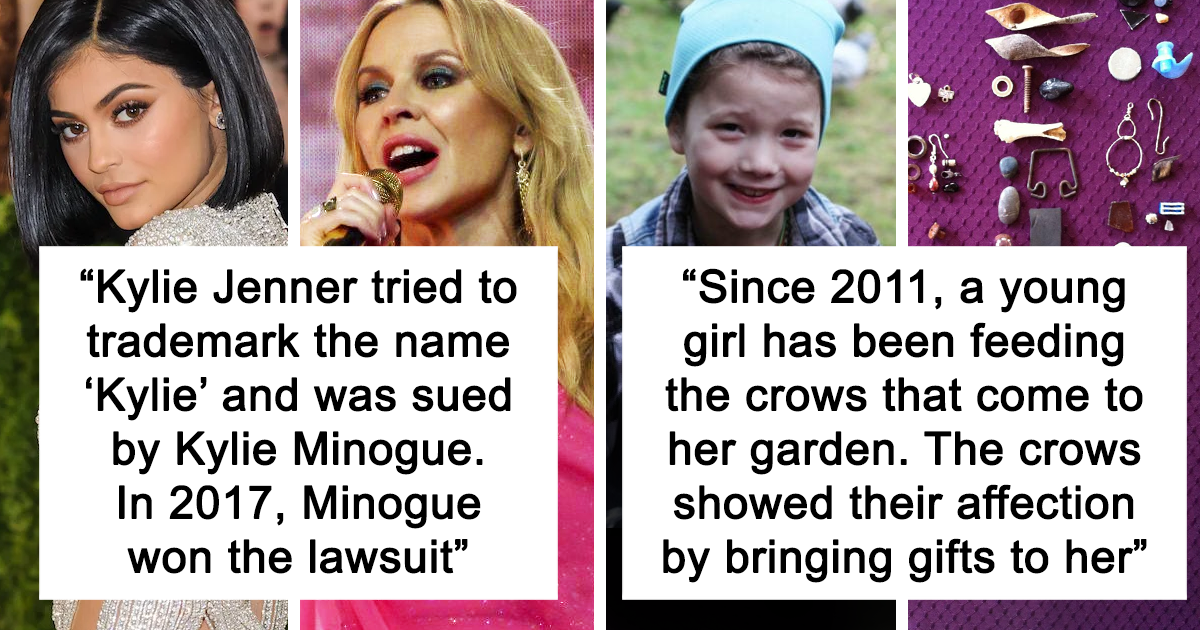
- Crows recognize individual human faces. They can associate a particular face with danger or a positive experience and remember it for years.
- Crows can teach others which humans are dangerous. Research indicates that threat information may spread socially, even reaching birds that never encountered the original person.
- A mantis shrimp delivers a two-part punch. Its club strikes so rapidly that collapsing cavitation bubbles create an additional shock wave capable of damaging prey.
Verification references: Smithsonian Magazine, National Park Service, National Institutes of Health, University of Washington, Monterey Bay Aquarium, and National Geographic.
Historical and Technological Facts That Distort Time
- Oxford University is older than the Aztec Empire. Teaching existed at Oxford by 1096, while the alliance commonly identified as the Aztec Empire emerged in 1428.
- The first computer mouse was made from wood. Built during the 1960s, the prototype had metal wheels and only one buttonno glowing logo or gaming mode included.
- Woolly mammoths were alive after the Great Pyramid was built. An isolated population survived on Wrangel Island until roughly 4,000 years ago.
- Tyrannosaurus rex lived closer to humans than to Stegosaurus. About 83 million years separated those dinosaurs, compared with roughly 66 million years between T. rex and today.
- The Statue of Liberty was originally reddish brown. Her copper exterior gradually developed the green protective patina now recognized around the world.
- Lady Liberty’s copper skin is only 3/32 of an inch thick. That is approximately the thickness of two pennies placed together.
- The Statue of Liberty moves in strong winds. The body can sway by several inches, while the torch may move as much as six inches.
- Cleopatra lived closer to the Moon landing than to the Great Pyramid’s construction. The pyramid was already about 2,500 years old when she was born.
- France used the guillotine in the same year the first “Star Wars” movie opened. The country’s final guillotine execution occurred in September 1977.
- The shortest recorded war lasted less than an hour. Britain’s conflict with Zanzibar on August 27, 1896, continued for approximately 38 to 45 minutes.
Verification references: University of Oxford, HISTORY, DARPA, American Chemical Society, and Guinness World Records.
Why Unbelievable Facts Spread So Quickly on Facebook
Surprising trivia works because it creates a gap between expectation and reality. A reader sees “a cloud weighs a million pounds,” predicts nonsense, and then discovers that the calculation is reasonable. Resolving that mental conflict feels rewarding, which makes the information memorable and shareable.
Facebook groups add a social element. Members challenge claims, supply context, post supporting research, and sometimes expose recycled myths. That process can turn a simple fun-fact group into an informal classroomalbeit one where the students occasionally communicate through reaction GIFs.
Still, a popular post is not evidence. Numbers may be rounded, definitions may be omitted, and captions can mutate as they travel. The safest approach is to check an original scientific institution, museum, university, or government agency before sharing a claim as fact.
Experiences That Make Exploring These 50 Facts More Rewarding
The First Scroll: Enjoying the Moment of Disbelief
The most entertaining experience begins when a claim produces an immediate “That cannot possibly be true.” Venus having a day longer than its year is a perfect example. Daily experience teaches us that days fit neatly inside years, so the statement initially sounds broken. Learning that “day” refers to planetary rotation and “year” refers to an orbit makes the contradiction disappear. The delight comes from watching a familiar assumption fail without the underlying fact being deceptive.
That sensation repeats throughout the list. A million-pound cloud seems ready to fall from the sky, yet its droplets are spread throughout an enormous volume. Antarctica does not resemble the sandy landscape many people picture when hearing “desert,” but its tiny amount of precipitation satisfies the definition. Good surprising trivia does more than provide an answer; it exposes the shortcut the brain used to reach the wrong conclusion.
The Fact-Checking Detour
Searching for confirmation can become more satisfying than the original post. A short Facebook caption about the Moon drifting away leads to NASA’s explanation of lunar laser ranging. A joke about frozen frogs opens a National Park Service account of glucose, ice formation, and suspended heart function. What begins as five seconds of entertainment can turn into half an hour of useful reading.
This experience also teaches healthy skepticism. Exact figures often differ because measurements are updated or sources use different definitions. The Anglo-Zanzibar War, for instance, is described as lasting 38, 40, or 45 minutes depending on how its beginning and end are recorded. Rather than making the broader fact false, that variation provides valuable context. Responsible curiosity leaves room for estimates and uncertainty.
The Group Conversation
Sharing an unbelievable fact is more enjoyable when it starts a conversation instead of ending one. Someone may know why octopus blood uses copper. Another person may explain the difference between elevation and base-to-peak mountain height. A third may contribute a related fact that sends everyone into another research tunnel.
The best discussions also correct errors without turning the comment section into a gladiator arena. Asking for a source is not an insult, and updating a claim is not losing. It is how reliable knowledge improves. Humor helps: “My source was a meme wearing glasses” is a respectable way to admit that further verification may be required.
Building a Better Curiosity Habit
After exploring enough mind-blowing facts, readers often begin noticing the hidden questions inside ordinary things. Why does a cloud float? Why is copper green on old buildings? How can an animal survive without a heartbeat? Curiosity becomes less about collecting trivia and more about understanding mechanisms.
A useful personal routine is simple: pause, predict, verify, and explain. First decide whether a claim sounds plausible. Next identify what would make it possible. Then consult a credible source. Finally, restate the explanation in plain language. That last step matters because understanding something well enough to explain it is far more valuable than memorizing a dramatic headline.
Conclusion
These 50 unbelievable facts show that reality has no shortage of excellent plot twists. Planets break our expectations about time, frogs return from a frozen state, crows remember faces, and historical timelines overlap in ways that feel almost illegal.
Facebook can be a wonderful doorway to surprising trivia, provided curiosity travels with verification. Enjoy the shock, follow the evidence, and share the explanationnot merely the headline. The truth is usually strange enough without giving it additional decorations.