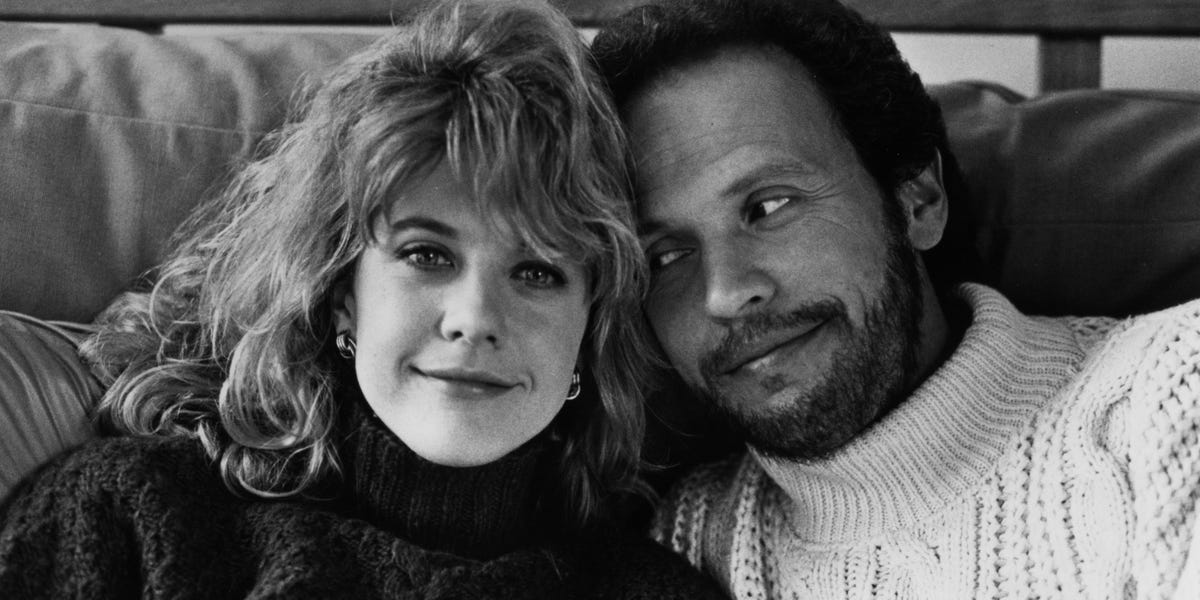
When Harry Met Sally… is the kind of romantic comedy that makes people argue about friendship, love, timing, sandwiches, and whether anyone should ever order sauce “on the side” without issuing a formal apology to the waiter. Released in 1989, directed by Rob Reiner, and written by Nora Ephron, the film became one of the most beloved rom-coms in American movie history because it does something deceptively simple: it lets two funny, flawed people talk until they accidentally fall in love.
But behind the cozy sweaters, autumn walks, New Year’s Eve confessions, and the world’s most famous deli order, there are plenty of surprising stories. Some involve rejected casting ideas. Some involve real-life heartbreak. Some involve Billy Crystal being so funny that the script practically had to leave room for him. And yes, some involve Rob Reiner’s mother casually stealing one of the biggest laughs in cinema.
Here are 30 surprising When Harry Met Sally movie facts that make the classic romantic comedy even more fun to revisit.
Behind-the-Scenes Facts About When Harry Met Sally…
1. The movie grew out of Rob Reiner’s real dating life
The central question of the filmcan men and women be friends without romance complicating everything?was not cooked up in a Hollywood laboratory by people wearing lab coats and holding cappuccinos. It came from Rob Reiner’s own life after his divorce from Penny Marshall. Reiner had been single for years and was trying to understand dating again. That confusion became emotional fuel for Harry Burns, who often sounds like a man who has turned pessimism into a cardio routine.
2. Nora Ephron helped turn pain into comedy
Nora Ephron did not simply write jokes around Reiner’s idea. She gave the movie its shape, intelligence, rhythm, and emotional precision. Ephron was brilliant at taking awkward truths and polishing them until they sparkled. The film’s conversations feel natural because they are built from recognizable anxieties: jealousy, timing, loneliness, sexual honesty, and the terrible discovery that your ex may be thriving without you.
3. Harry and Sally were partly based on Reiner and Ephron
Harry’s gloomy wit was inspired by Reiner’s post-divorce mindset, while Sally’s habits drew heavily from Ephron’s own personality. That does not mean Harry and Sally are literal portraits, but they are autobiographical in spirit. The result is why the characters feel lived-in rather than manufactured. Harry is not just “the cynical guy,” and Sally is not just “the organized woman.” They are exaggerated, edited, movie-ready versions of real emotional instincts.
4. Sally’s famous ordering style came from Nora Ephron
Sally’s elaborate restaurant orderingespecially her need to have things “on the side”was inspired by Ephron herself. During a meal, Reiner noticed Ephron making a detailed order and immediately recognized comic gold. Sally’s food precision became one of her defining traits. It is funny because it is specific, and it is lovable because the movie never treats it as a cheap gag. Sally knows what she wants. Honestly, that is more than most of us can say before coffee.
5. Billy Crystal was not the first actor considered for Harry
It is now hard to imagine anyone but Billy Crystal as Harry Burns, but other actors were considered or approached before he took the role. Names associated with the part include Tom Hanks, Richard Dreyfuss, and Albert Brooks. Crystal ultimately gave Harry the perfect mix of sharpness, vulnerability, and nervous charm. In another actor’s hands, Harry might have seemed too smug. Crystal makes him prickly but human.
6. Crystal accepted the role unusually fast
Billy Crystal reportedly said yes to Harry without the usual long consultation process with agents and managers. That quick decision matters because his friendship with Reiner helped the film feel unusually personal. Crystal understood the emotional tone Reiner wanted, and he brought not only acting skill but also comic authorship. In many scenes, you can feel the movie trusting him to land the joke without crushing the feeling underneath it.
7. Billy Crystal contributed one of the film’s most famous lines
The immortal line “I’ll have what she’s having” came from Billy Crystal. It is one of those jokes that seems inevitable only after someone writes it. Before that, it is just a blank space where a lesser movie might have put a nervous reaction shot. Crystal found the perfect button: short, dry, and devastatingly funny.
8. Rob Reiner’s mother delivered the line
The woman who says “I’ll have what she’s having” is Estelle Reiner, Rob Reiner’s real mother. Her delivery is flawless because she plays it completely straight. She does not wink at the audience. She does not overdo it. She simply orders lunch as if she has just witnessed useful consumer information. It is a tiny performance with gigantic comic timing.
9. Meg Ryan helped shape the Katz’s Deli scene
The famous Katz’s Deli moment became legendary because Meg Ryan suggested that Sally should actually demonstrate a fake orgasm instead of merely discussing it. That choice changed the scene from clever dialogue into unforgettable physical comedy. It also gave Sally control of the conversation. Harry thinks he understands women; Sally calmly proves he may need continuing education.
10. Rob Reiner demonstrated the scene himself
Ryan was nervous about performing the deli scene at full volume in front of cast, crew, extras, and Reiner’s mother. So Reiner demonstrated the moment himself. The absurdity of a director acting out that scene in front of his own mom is almost a bonus scene hiding inside the movie’s production history. Somehow, Hollywood professionalism survived.
11. Katz’s Delicatessen became a rom-com landmark
Katz’s Delicatessen on Manhattan’s Lower East Side was already famous before the movie, but When Harry Met Sally… turned one table into a pop-culture shrine. Fans still associate the deli with the scene, proving that a restaurant can become a tourist destination through pastrami, timing, and one perfectly placed punchline.
12. The film was not originally designed as a simple happy-ending romance
One surprising fact is that Reiner originally imagined a more melancholy ending, with Harry and Sally not ending up together. That made sense for the emotional place he was in when the idea began. But during production, Reiner met Michele Singer, who later became his wife. His real-life romance helped shift the film toward its hopeful New Year’s Eve ending.
13. The ending works because it does not erase the messiness
Harry’s final declaration is romantic, but it is not magical in a fairy-tale way. The movie has spent years showing the characters annoying, misunderstanding, and hurting each other. The ending works because it feels earned by time. Harry is not saying love is easy. He is saying he has finally stopped pretending he can live without Sally’s exact brand of difficulty.
14. The movie’s working titles were different
Before becoming When Harry Met Sally…, the project went through other title ideas, including Boy Meets Girl. That title would have been accurate but bland, like calling Jaws “Large Fish Problem.” The final title is better because it suggests a story being told after the fact, as if the entire movie is a memory someone keeps retelling at dinner.
15. The documentary-style couple interviews were part of the magic
Throughout the film, older couples appear in interview-style segments telling stories about how they met. These scenes make the movie feel bigger than Harry and Sally. They suggest that every relationship has its own strange origin story, whether it begins with love at first sight, stubborn persistence, or someone noticing someone else across a crowded room and making a bold prediction.
16. Sol Horn helped inspire one of the love stories
The film’s credits include thanks to Sol Horn, whose real-life anecdote helped inspire one of the romantic stories in the film. His tale about seeing his future wife across a room and knowing he would marry her fits perfectly with the movie’s fascination with destiny, timing, and the odd confidence people sometimes have before love has introduced itself properly.
17. Carrie Fisher nearly steals every scene she is in
Carrie Fisher plays Marie, Sally’s sharp, dryly funny friend. Fisher was already famous worldwide because of Star Wars, but in this film she shows a different comic gear. Marie’s romantic life, especially her relationship with Jess, gives the movie a second love story that is less argumentative but equally charming.
18. Bruno Kirby gives the movie a grounded counterweight
Bruno Kirby’s Jess is not as flashy as Harry, but he is essential. His scenes with Crystal make Harry’s neuroses funnier, while his romance with Marie gives the movie another example of connection happening when people are not trying too hard. Jess and Marie also remind viewers that sometimes the side characters figure things out faster than the leads. This is common in rom-coms and also in real life, annoyingly.
19. The film uses New York like a romantic weather system
New York City is not just a backdrop. Central Park, the Puck Building, Katz’s Deli, the Loeb Boathouse, and cozy apartments help create the movie’s seasonal emotional rhythm. The city looks especially beautiful in fall, which is why the film has become comfort viewing for people who enjoy sweaters, leaves, and conversations that begin as arguments but somehow become flirting.
20. The production also used studio locations
Although the movie feels deeply New York, it was not shot only on city streets. Production included studio work at Silvercup Studios in New York and Hollywood Centre Studios in Los Angeles. That blend of real locations and controlled interiors helps the movie feel authentic without losing the crisp timing of a classic studio comedy.
21. Barry Sonnenfeld was the cinematographer
Before becoming a director known for films such as The Addams Family and Men in Black, Barry Sonnenfeld shot When Harry Met Sally…. His cinematography gives the movie a warm, polished look without calling too much attention to itself. The camera lets the actors and dialogue lead, which is exactly what this story needs.
22. The soundtrack helped define the mood
Harry Connick Jr.’s performances of classic standards gave the film a timeless musical identity. Songs like “It Had to Be You” connect the modern characters to an older romantic tradition. The movie came out in 1989, but the music makes it feel as if Harry and Sally are arguing inside a classic love song that refuses to end until they admit the obvious.
23. The movie was a strong box office success
With a production budget often reported around $16 million, When Harry Met Sally… became a major commercial success. Its domestic box office passed $90 million, a terrific result for a dialogue-driven romantic comedy released in a summer crowded with louder movies. No explosions, no capes, no dinosaursjust two people talking themselves into love. Imagine the studio notes today.
24. It opened against huge summer competition
The summer of 1989 was packed with major releases, including action and franchise films. That makes the success of When Harry Met Sally… even more impressive. It did not dominate by spectacle. It grew through word of mouth, charm, and repeat viewingthe old-fashioned algorithm known as “tell your friends this is really good.”
25. Nora Ephron earned an Oscar nomination
Ephron’s screenplay received an Academy Award nomination for original screenplay. That recognition was well deserved because the script is not just quotable; it is structurally elegant. The movie moves across years without feeling rushed, lets conversations evolve, and turns recurring character traits into emotional payoffs.
26. The film earned five Golden Globe nominations
When Harry Met Sally… received five Golden Globe nominations: Best Motion Picture – Musical or Comedy, Best Director for Rob Reiner, Best Screenplay for Nora Ephron, Best Actor for Billy Crystal, and Best Actress for Meg Ryan. That spread of nominations shows how balanced the achievement was. The writing, direction, and performances were all part of the same carefully tuned machine.
27. The Writers Guild ranked it among the funniest screenplays
The Writers Guild of America placed When Harry Met Sally… high on its list of the 101 funniest screenplays. That honor makes sense because the comedy comes from character rather than random punchlines. Harry and Sally are funny because they are sincere, defensive, intelligent, and frequently wrong at full volume.
28. AFI ranks it as one of the great romantic comedies
The American Film Institute ranked When Harry Met Sally… at number six among its top romantic comedies. The film also appears on several AFI lists celebrating comedy, passion, movie quotes, and songs. In other words, the movie did not just win over audiences; it became part of the official American film conversation.
29. The Library of Congress selected it for preservation
In 2022, When Harry Met Sally… was added to the National Film Registry, which preserves films considered culturally, historically, or aesthetically significant. That honor confirms what fans already knew: this is not just a cute date-night movie. It is a lasting piece of American popular culture.
30. Its real subject is timing, not just friendship
The famous question is whether men and women can be friends, but the deeper subject is timing. Harry and Sally meet too early, reconnect awkwardly, become friends slowly, make mistakes, and only later understand what they mean to each other. The movie suggests love is not always lightning. Sometimes it is a calendar full of missed appointments, bad dates, late-night phone calls, and one New Year’s Eve realization that arrives wearing a tuxedo of panic.
Why These When Harry Met Sally Facts Still Matter
The reason these When Harry Met Sally trivia details remain fascinating is that they reveal how carefully the movie balances truth and performance. Many romantic comedies are built from fantasy: perfect apartments, perfect timing, perfect hair in the rain. This one has fantasy tooespecially if we are discussing New York real estatebut its emotional engine runs on recognizable behavior.
Harry and Sally talk like people who are trying to protect themselves. Harry hides disappointment under jokes. Sally hides vulnerability under control. That dynamic gives the film a long shelf life because viewers can recognize themselves in both characters, sometimes within the same scene. You may be Sally when ordering lunch and Harry when pretending not to care. The movie politely exposes everybody.
The behind-the-scenes facts also show why collaboration mattered. Reiner brought emotional experience. Ephron brought structure and language. Crystal brought comic instinct. Ryan brought fearless physical comedy and precise emotional intelligence. Fisher and Kirby added texture. Even Estelle Reiner, with one line, helped turn a scene into legend. A classic movie often looks effortless because many people worked hard enough to make it seem inevitable.
Experience Section: Watching When Harry Met Sally… Today
Watching When Harry Met Sally… today feels a little like opening a time capsule and finding that the sweater still fits. The phones are old, the hair has volume, and the dating culture belongs to a pre-app world where people had to meet through friends, flights, bookstores, parties, and the dangerous wilderness known as “conversation.” Yet the emotional experience remains surprisingly modern. People still debate whether friendship can survive attraction. People still perform confidence when they are lonely. People still give speeches too late, too early, or exactly when the clock is about to hit midnight.
One of the best ways to experience the movie is to watch it with someone who has a completely different romantic history from yours. The film almost invites debate. Some viewers side with Sally and see Harry as arrogant in the beginning. Others find Harry’s honesty refreshing, even when it arrives wrapped in unnecessary bluntness. Some people think the ending is perfect. Others wonder whether Harry and Sally would need couples therapy by February. That is part of the fun. The movie is not a museum piece. It is a conversation starter that happens to include excellent coats.
The movie also rewards seasonal viewing. In autumn, it feels like a love letter to New York: golden leaves, soft light, bookshop wandering, and sidewalks made for emotionally significant walking. Around New Year’s Eve, it becomes a ritual about second chances. The final party scene works because almost everyone understands the strange pressure of that holidaythe feeling that life should become meaningful before the countdown ends. Harry’s run to Sally is romantic, yes, but it is also a man finally losing an argument with himself.
Another enjoyable experience is paying attention to the food. This is not just because of Katz’s Deli, though that scene deserves its own sandwich-shaped trophy. Food in the movie often reveals character. Sally’s orders show control and specificity. Harry’s reactions show impatience, then affection. By the end, even wedding cake becomes a personality test. The coconut cake with chocolate sauce “on the side” is funny because Sally has not stopped being Sally. Love has not magically made her low-maintenance. It has simply given Harry the patience to appreciate the maintenance manual.
For writers, the film is a masterclass in dialogue. Notice how the conversations rarely exist only to deliver plot. They reveal worldview. Harry and Sally are always discussing one topic while accidentally revealing another. They talk about sex but reveal fear. They talk about friendship but reveal longing. They talk about food but reveal control, comfort, and compatibility. This is why the screenplay remains so admired: the dialogue sparkles, but it also does structural work.
For modern viewers, the most refreshing part may be the slow pace of the romance. Harry and Sally do not fall in love because the plot demands it after ninety minutes. They grow into each other over years. The movie respects the idea that intimacy can be built through repetition: phone calls, jokes, shared references, awkward reunions, and the gradual discovery that someone’s annoying habits have become part of your emotional furniture.
That is the real viewing experience of When Harry Met Sally…: it makes romance feel funny, inconvenient, intelligent, and human. It does not promise that love will arrive neatly. It suggests love may show up after years of bad timing, carrying baggage, making jokes, and ordering everything on the side.
Conclusion
When Harry Met Sally… remains one of the greatest romantic comedies because its surprises are not only behind the camera. They are built into the way the story understands people. The film knows that attraction can be confusing, friendship can be fragile, and timing can be ridiculous. It also knows that the best love stories are often not about perfect people finding perfect happiness. They are about imperfect people finally recognizing that someone else’s quirks have become home.
From Nora Ephron’s sharp screenplay and Rob Reiner’s personal inspiration to Meg Ryan’s fearless Katz’s Deli performance and Billy Crystal’s unforgettable comic contributions, these 30 surprising When Harry Met Sally movie facts show why the film still feels alive. It is witty without being cold, romantic without being mushy, and nostalgic without feeling dusty. Like the best New Year’s Eve confession, it arrives with laughter firstand then quietly breaks your heart in the nicest possible way.
Note: This article was written from verified public film records, archival production notes, reputable entertainment reporting, awards databases, box office references, and established film-history sources. No external source links or citation placeholders are included in the article body, as requested.