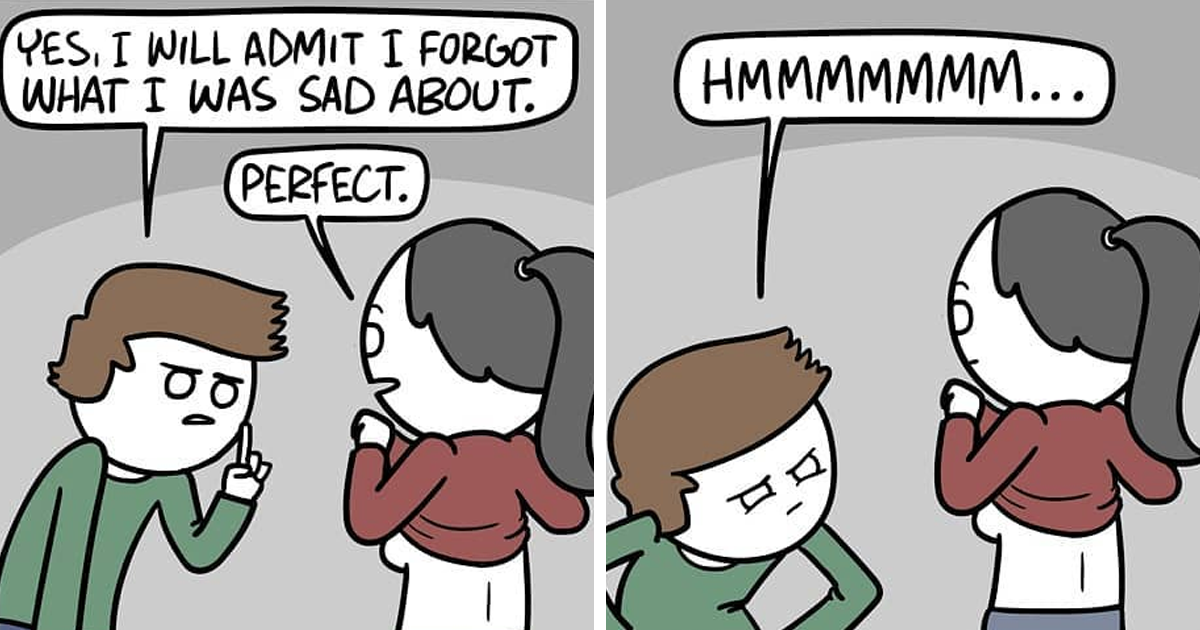
There is a special kind of laugh that escapes before your conscience has finished reviewing the evidence. It begins as a harmless chuckle, turns into a suspicious snort, and ends with you staring at the screen as though it personally exposed your moral weaknesses. That is the natural habitat of Channelate comics.
Created by cartoonist and animator Ryan Hudson, Channelate has been entertaining readers since 2008 with a combination of simple artwork, strange characters, ordinary conversations, and endings that frequently take a sharp left turn into darkness. Hudson does not merely pull the rug out from under readers. He rolls it up, sells it online, and leaves everyone standing over a trapdoor.
This collection of 30 comics with dark endings captures what makes the series so addictive. The drawings appear approachable, the setups feel familiar, and the dialogue often sounds like something overheard at home, work, school, or an unusually awkward family gathering. Then the final panel arrives and politely ruins everything.
Meet Channelate, Where Innocent Setups Go to Die
Channelate belongs to a rich tradition of dark and absurd webcomics, but its personality is easy to recognize. Hudson has cited influences including The Perry Bible Fellowship, Cyanide & Happiness, South Park, and other comedy built around surprise, irreverence, and carefully timed discomfort.
Those influences are visible without making Channelate feel like a copy. Hudson’s characters have their own loose, expressive appearance. Their wide eyes and casual smiles are perfect for delivering terrible information with the confidence of someone explaining a rewards program.
The uncomplicated visual style also supports the writing. Readers are not distracted by elaborate scenery or pages of exposition. Every expression, object, and line of dialogue moves the joke toward its final destination. Unfortunately for the characters, that destination is often a shallow grave.
Short Comics With Efficient Storytelling
Most Channelate strips do not need much room. A few panels can establish a relationship, create an expectation, and destroy it. This compact structure makes the comics ideal for online reading, where the audience may be scrolling quickly and expecting an immediate payoff.
It also makes the punchlines more powerful. There is no long warning period. One moment, a character is having a normal conversation. The next, the reader discovers that the situation involves betrayal, supernatural danger, an alarming misunderstanding, or a person whose emotional settings appear to have been installed backward.
Why Channelate’s Dark Endings Work So Well
The Final Panel Changes the Entire Story
A strong twist does more than add a surprising detail. It changes how the audience interprets everything that came before it. An affectionate conversation may suddenly become sinister. A heroic promise may reveal selfish motives. A seemingly threatening character may turn out to be the only reasonable person in the room.
This form of comedy rewards readers twice. First, they experience the immediate shock of the punchline. Then their minds race backward through the previous panels, reinterpreting clues that seemed harmless seconds earlier. It is comedy with a built-in replay button.
The Art Looks Friendlier Than the Joke
Visual contrast is one of Channelate’s most useful weapons. The characters often look cheerful even when discussing disasters, death, broken relationships, or ethically questionable plans. The friendly presentation lowers the reader’s defenses.
That gap between appearance and meaning creates additional humor. A terrifying statement delivered by a horrifying monster is merely expected. The same statement delivered by a smiling cartoon person holding a coffee mug becomes delightfully unsettling.
The Darkness Is Usually Wrapped in Absurdity
Dark comedy can become exhausting when every joke feels relentlessly cruel. Channelate frequently avoids that problem by making its situations ridiculous. The audience is not being asked to celebrate realistic suffering. Instead, it is invited into a distorted cartoon universe where logic has been placed on unpaid leave.
That absurd distance gives readers permission to laugh. The consequences may be grim, but the circumstances are so exaggerated that they feel more like a mischievous thought experiment than a report from the real world.
30 Reasons These Channelate Comics Make Readers Laugh and Feel Guilty
The individual stories vary, but the following comic devices and reading experiences explain why a gallery of 30 Channelate comics can be finished much faster than anyone planned.
-
1. Ordinary Conversations Become Evidence
A casual exchange between friends, relatives, or romantic partners may look completely harmless until the final panel reveals that someone has been hiding a deeply disturbing motive.
-
2. Helpful Advice Has Dangerous Fine Print
A character offers encouragement or practical guidance. Unfortunately, the advice is either catastrophically misguided or designed to benefit the adviser in a way no ethical committee would approve.
-
3. Childhood Innocence Meets Adult Horror
Children may ask sweet questions or make innocent observations, only for an adult answer to expose a much darker reality. The contrast produces laughter followed by immediate spiritual paperwork.
-
4. Romance Takes an Unexpectedly Sinister Turn
Declarations of love are rarely safe in this universe. A thoughtful gesture can conceal obsession, manipulation, supernatural activity, or a relationship problem that cannot be solved with better communication.
-
5. Monsters Are Sometimes the Normal Ones
Ghosts, creatures, and other frightening beings may appear dangerous at first. Then a human character enters and demonstrates behavior so alarming that the monster deserves sympathy.
-
6. Heroes Have Suspicious Priorities
A brave rescue or noble promise may be motivated by vanity, money, revenge, or the opportunity to say something impressive before making the situation considerably worse.
-
7. Villains Occasionally Make Excellent Points
The apparent villain sometimes delivers the most sensible argument in the strip. Readers are left wondering when their moral compass began accepting directions from cartoon criminals.
-
8. Family Bonds Become Psychological Traps
Parents, siblings, and extended relatives provide unlimited material. Affection mixes with resentment, competition, emotional manipulation, and secrets that should never be discussed during dinner.
-
9. Workplace Humor Gets Uncomfortably Accurate
Bosses misunderstand employees, coworkers behave strangely, and corporate language disguises terrible decisions. The exaggeration is funny because parts of it feel suspiciously close to Monday morning.
-
10. Animals Understand More Than Expected
Pets and wild creatures may possess hidden knowledge, complicated motives, or a better understanding of human foolishness than the people who believe they are in charge.
-
11. Technology Creates Brand-New Nightmares
Phones, online services, artificial intelligence, and digital communication can solve problems. In Channelate, they can also misunderstand instructions with impressive efficiency and devastating enthusiasm.
-
12. The Grim Reaper Has Customer-Service Problems
Death and the afterlife become bureaucratic workplaces filled with mistakes, policies, and exhausted supernatural employees. Apparently, eternity still requires forms to be completed in triplicate.
-
13. Wishes Are Granted Far Too Literally
Characters receive exactly what they requested but not what they intended. This classic comic structure becomes darker when the misunderstanding involves bodies, relationships, or irreversible supernatural contracts.
-
14. Kindness Conceals a Second Agenda
A generous act creates a warm emotional setup. The final panel then exposes the selfish calculation behind it, transforming sweetness into a tiny documentary about human nature.
-
15. Bad People Receive Creative Consequences
Some strips offer a twisted form of justice. A cruel, dishonest, or arrogant character is punished, although the punishment may be wildly disproportionate and administered by forces with no appeals department.
-
16. Good People Are Not Guaranteed Protection
Other comics reject the comforting idea that decency produces safety. A sympathetic character may encounter disaster simply because the joke requires it. Comedy can be a ruthless landlord.
-
17. The Narrator Cannot Always Be Trusted
A character presents a reasonable version of events, but a visual clue or final revelation proves that the story has been edited with the enthusiasm of a public-relations department.
-
18. Motivational Language Becomes Threatening
Positive phrases about following dreams, overcoming fear, or never giving up can sound inspiring. Place them in the wrong context, however, and they become the slogan on a supervillain’s office wall.
-
19. Simple Misunderstandings Escalate Rapidly
A misplaced word or incorrect assumption creates a chain reaction. Instead of correcting the mistake, characters continue with the confidence of people constructing furniture without reading the instructions.
-
20. Politeness Survives Completely Inappropriate Situations
Characters remain calm and courteous during circumstances that should inspire screaming. Their emotional restraint makes each bizarre revelation even funnier and considerably more suspicious.
-
21. Supernatural Beings Have Everyday Problems
Demons, ghosts, gods, and monsters may struggle with dating, employment, self-esteem, or social etiquette. Immortality apparently does not protect anyone from awkward conversations.
-
22. Everyday Objects Become Part of the Threat
A household item may appear in the background as harmless decoration. By the final panel, it becomes the key to understanding a terrible event that was hiding in plain sight.
-
23. The Punchline Arrives One Beat Later Than Expected
Readers think they have already identified the joke. Then one extra detail appears and reveals that the apparent punchline was merely a small waiting room before the real disaster.
-
24. Silence Does Half the Work
Not every reaction needs dialogue. A blank stare, frozen smile, or uncomfortable pause can communicate horror more efficiently than a paragraph of screaming written in capital letters.
-
25. Familiar Sayings Receive Disturbing Interpretations
Common expressions and clichés become literal events. A harmless phrase can suddenly involve physical danger, supernatural consequences, or a character who understands metaphors but chooses violence anyway.
-
26. Emotional Honesty Becomes Socially Hazardous
Characters say what people are normally expected to keep private. Their honesty may be refreshing for approximately half a second, after which everyone realizes why filters were invented.
-
27. Expectations Are Built With Tiny Details
The setup may include carefully chosen expressions, objects, or wording that guide readers toward one conclusion. The ending uses those same details to support something completely different.
-
28. The Joke Continues After the Initial Laugh
The best dark endings create delayed reactions. Readers laugh, scroll away, understand an additional implication, and return with the facial expression of someone who just discovered a second basement.
-
29. The Comic Trusts the Audience to Connect the Dots
Channelate rarely needs to explain every consequence. Much of the humor exists between panels, where readers imagine what happened and accidentally become unpaid collaborators in the darkness.
-
30. The Ending Makes You Question Your Own Reaction
The final joke is sometimes not what happens to the character. It is the realization that you laughed immediately, enthusiastically, and without requesting any additional moral context.
The Psychology Behind Laughing at Dark Comics
Dark humor often depends on incongruity: two ideas that normally do not belong together are suddenly combined. A cheerful visual style may be paired with a grim subject. A frightening event may be discussed with professional politeness. The mind detects the contradiction, reinterprets the setup, and produces a laugh.
Understanding this kind of joke can require both cognitive and emotional work. Readers must recognize the literal situation, identify the social expectation being violated, and determine that the cartoon context is distant enough to be treated as playful rather than threatening.
That explains why the same Channelate comic can make one reader laugh loudly and leave another staring in disapproval. Humor depends on personal taste, cultural expectations, mood, experience, and tolerance for uncomfortable subjects. There is no universal darkness setting.
Feeling slightly guilty does not necessarily mean the reader supports the behavior shown in a comic. Often, the guilt comes from recognizing how efficiently the joke bypassed normal emotional defenses. You know the situation is wrong. You also know the timing was excellent. The internal argument may continue long after the laughter has already submitted its vote.
How Channelate Stands Out in the Webcomic World
Dark webcomics are common online, but lasting success requires more than shocking imagery. Surprise loses its power when readers can predict the formula. Channelate remains entertaining because the darkness is only one ingredient.
The strips also use wordplay, irony, character comedy, social observation, fantasy, relationship humor, and absurd logic. Some endings are violent or morbid, while others are simply strange, emotionally uncomfortable, or unexpectedly honest.
Hudson’s work has also expanded beyond static comics into animated shorts. Animation changes the timing of a joke by adding voices, pauses, movement, and sound. However, the central appeal remains recognizable: ordinary people enter ordinary situations and discover that the universe has been writing a much less ordinary conclusion.
A Reader’s Experience: Bingeing 30 Channelate Comics
Reading one Channelate comic feels like opening a small box marked “probably safe.” Reading 30 in a row feels like repeatedly opening that box despite growing evidence that it contains emotional fireworks.
The first few comics establish the rhythm. You study the setup, identify the likely misunderstanding, and prepare for the punchline. At this stage, you may still believe you are in control. You are not. Channelate has already placed a tiny cartoon banana peel beneath your expectations.
After several strips, the reading experience becomes more competitive. Instead of simply enjoying each comic, you begin trying to predict the ending. Is the friendly neighbor secretly dangerous? Is the monster misunderstood? Is the romantic gesture actually part of a criminal investigation? You search every panel for clues like a detective who has consumed too much coffee and not enough sunlight.
Occasionally, you guess correctly. This produces a small burst of pride. Then a comic arrives with an ending so much stranger than your prediction that your confidence quietly packs a suitcase and leaves.
The strongest strips create two separate reactions. The first is immediate laughter caused by the surprise. The second arrives a moment later, when the full implication becomes clear. Your smile slows down. Your eyebrows rise. Somewhere inside your head, a responsible adult asks whether that joke was acceptable. Unfortunately, the irresponsible adult is still laughing too loudly to hear the question.
Another enjoyable part of the experience is the variety of targets. Channelate does not rely exclusively on one type of character or subject. Parents, children, couples, employees, bosses, heroes, villains, pets, monsters, and supernatural entities are all equally capable of making terrible choices.
This equality of comic opportunity keeps a longer gallery from feeling repetitive. A joke about a relationship may be followed by one involving a strange workplace, a magical creature, or an innocent conversation that suddenly becomes evidence in a case nobody knew was being investigated.
The simple artwork also makes a 30-comic collection easy to read. Expressions are clear, dialogue is economical, and the eye moves naturally toward the final panel. There is little visual clutter, so each reveal lands quickly. The experience is closer to consuming 30 concentrated comedy shots than reading a traditional illustrated story.
Sharing the comics adds another layer of entertainment. Dark humor is an excellent test of friendship because sending the wrong comic to the wrong person can produce silence powerful enough to affect nearby electronics. Send one to a friend who shares your sense of humor, however, and the response may arrive instantly: a laughing emoji followed by a message asking what is wrong with both of you.
By the end of the collection, you may not feel morally improved. You will, however, have a better appreciation for visual timing, concise storytelling, and the ability of one small panel to overturn an entire narrative. You may also become suspicious whenever a cartoon character looks unusually happy.
That is the complete Channelate experience: surprise, laughter, reconsideration, and a tiny amount of shame served in an efficient sequence. It is comedy that makes readers feel clever for understanding the twist and questionable for enjoying it.
Final Thoughts on Channelate’s Darkly Funny Comics
Channelate demonstrates that a webcomic does not need elaborate artwork or lengthy storytelling to create a memorable reaction. It needs a clear setup, precise timing, and an ending willing to behave badly.
These 30 comics with dark endings are funny because they manipulate expectations without wasting a panel. They invite readers into familiar situations, introduce one carefully chosen disruption, and finish with a revelation that can be absurd, disturbing, clever, or all three at once.
Laughing may make you feel a little guilty, but that discomfort is part of the appeal. The joke surprises both your mind and your moral instincts. By the time either one prepares a formal objection, you have already moved to the next comic.
Editorial note: This article contains original commentary intended to accompany a properly credited gallery of Channelate artwork. All featured comic images and characters remain the property of their respective creator and rights holders.