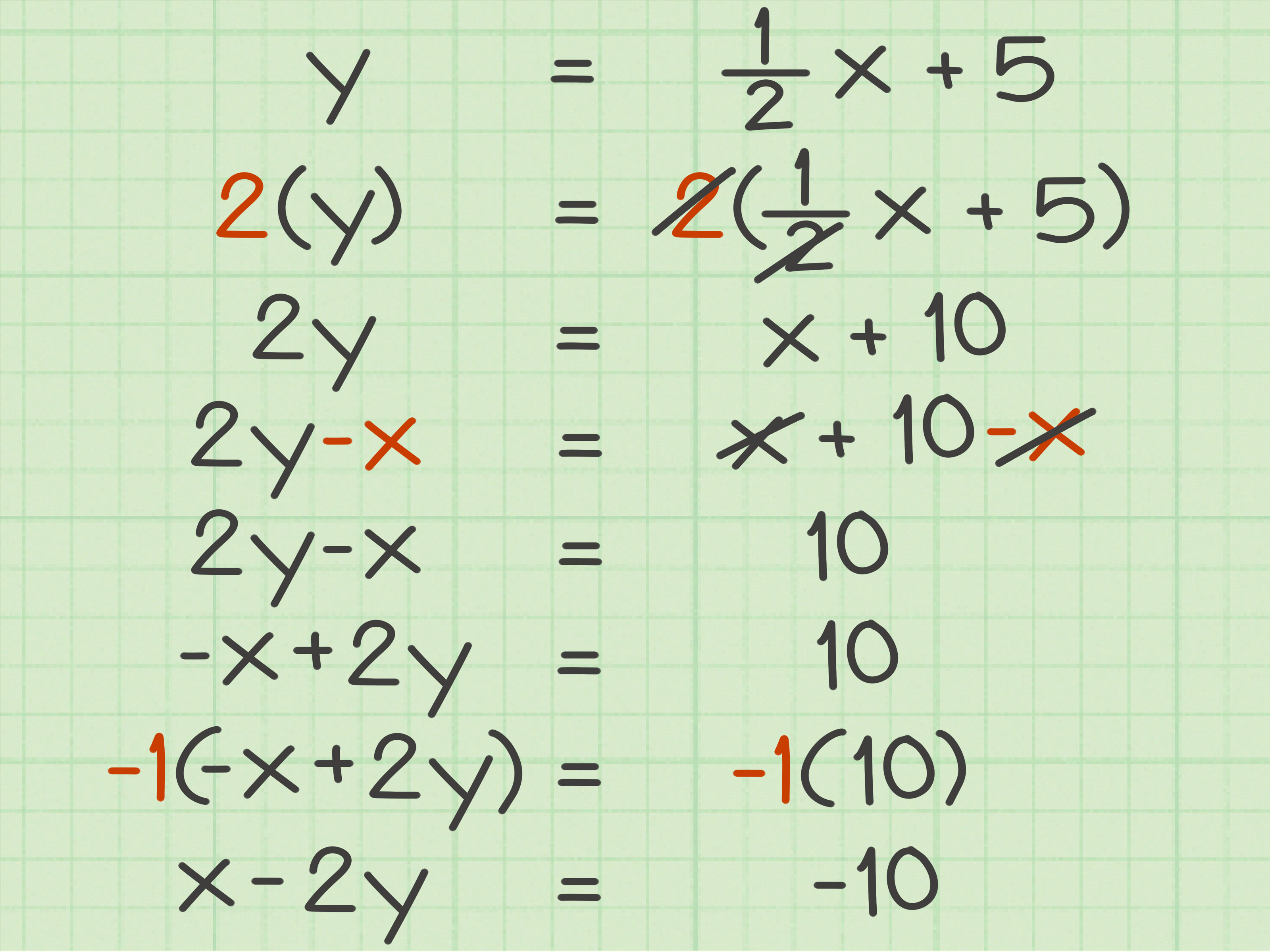
Literal equations sound like something that should come with a poetry assignment, but relax: no metaphors, no hidden symbolism, and no need to analyze why the letter x feels misunderstood. In algebra, a literal equation is simply an equation with more than one variable. Instead of solving for a number, you rearrange the equation to solve for one chosen variable in terms of the others.
That may sound fancy, but you already do this every time you use a formula. Want to solve d = rt for time? Rearrange it to t = d / r. Want to solve A = lw for width? Rearrange it to w = A / l. Literal equations are the algebraic version of moving furniture around the room until the chair you care about is sitting proudly in the middle.
This guide explains 3 ways to solve literal equations: using inverse operations, clearing fractions first, and factoring when the target variable appears more than once. Along the way, you will see examples, common mistakes, and practical tips that make literal equations much less dramatic than they look.
What Is a Literal Equation?
A literal equation is an equation made mostly or entirely of letters. These letters represent variables, constants, or quantities in a formula. The goal is usually to solve for a specific variable, meaning you isolate that variable on one side of the equation.
For example:
- A = lw is the formula for the area of a rectangle.
- d = rt is the distance formula.
- V = IR is Ohm’s law.
- y = mx + b is slope-intercept form.
- P = 2l + 2w is the perimeter formula for a rectangle.
These are all literal equations because they contain multiple letters. The word “literal” refers to the letters themselves. So when a teacher says, “Solve the literal equation for w,” they are not asking for a speech about honesty. They mean: get w alone.
Why Solving Literal Equations Matters
Solving literal equations is useful because formulas are everywhere. Science, geometry, finance, engineering, statistics, and everyday problem-solving all depend on rearranging formulas. If you know how to solve a formula for a different variable, you can use one equation in several ways.
For example, the distance formula is:
d = rt
If you know rate and time, you can find distance. But what if you already know distance and time, and you need rate? Rearrange the formula:
r = d / t
Now the same formula answers a different question. That is the power of literal equations: they let you customize a formula for the quantity you actually need.
Way 1: Use Inverse Operations to Isolate the Variable
The most common way to solve literal equations is to use inverse operations. Inverse operations undo each other. Addition is undone by subtraction. Multiplication is undone by division. Squaring is undone by taking a square root. The goal is to peel away everything attached to the target variable until that variable is alone.
Example 1: Solve A = lw for w
Start with the formula:
A = lw
You want to solve for w. The variable w is being multiplied by l. To undo multiplication by l, divide both sides by l:
A / l = lw / l
The l on the right cancels:
w = A / l
That is the answer. Width equals area divided by length. The equation has been rearranged so w is alone.
Example 2: Solve V = IR for R
Ohm’s law is:
V = IR
Solve for R. Since R is multiplied by I, divide both sides by I:
V / I = IR / I
So:
R = V / I
This is a clean example of solving a literal equation with one inverse operation. No algebraic fireworks. Just divide and move on with your day.
Example 3: Solve y = mx + b for x
This one takes two inverse operations:
y = mx + b
You want x alone. First subtract b from both sides:
y – b = mx
Now x is multiplied by m. Divide both sides by m:
x = (y – b) / m
The key is to work backward from the order of operations. If the expression is “multiply by m, then add b,” undo it in reverse: subtract b, then divide by m.
Way 2: Clear Fractions or Denominators First
Fractions can make literal equations look like they woke up on the wrong side of the math book. Fortunately, there is a reliable strategy: clear the fractions first. This means multiplying both sides of the equation by the denominator or by the least common denominator.
This method is especially helpful when the target variable is trapped inside a fraction.
Example 1: Solve d = rt for t
Start with:
d = rt
This one does not show a fraction at first, but solving for t requires division. Since t is multiplied by r, divide both sides by r:
t = d / r
Simple enough. But now let’s look at a formula where the fraction is already present.
Example 2: Solve A = 1/2 bh for h
The area of a triangle is:
A = 1/2 bh
You want to solve for h. The fraction 1/2 is multiplying bh. To clear it, multiply both sides by 2:
2A = bh
Now divide both sides by b:
h = 2A / b
Clearing the fraction first makes the rest of the equation easier to manage.
Example 3: Solve A = (1/2)h(b1 + b2) for h
The area formula for a trapezoid is:
A = (1/2)h(b1 + b2)
Solve for h. First multiply both sides by 2:
2A = h(b1 + b2)
Now divide both sides by (b1 + b2):
h = 2A / (b1 + b2)
Notice the parentheses around b1 + b2. They matter. Without parentheses, the expression could be misunderstood. In literal equations, parentheses are like seat belts: not always glamorous, but extremely good at preventing disasters.
A Quick Warning About Restrictions
When you divide by a variable or expression, remember that the denominator cannot equal zero. For example, in h = 2A / b, b cannot be zero. In h = 2A / (b1 + b2), the expression b1 + b2 cannot be zero. Algebra does not enjoy dividing by zero, and honestly, neither should anyone.
Way 3: Factor When the Target Variable Appears More Than Once
Sometimes the variable you are solving for appears in more than one term. When that happens, you usually need to collect the terms with the target variable, then factor that variable out.
This is the step that makes many students groan, but it is actually a very predictable pattern.
Example 1: Solve k = am + 3mx for m
Start with:
k = am + 3mx
You want to solve for m. The variable m appears in both terms on the right side:
am and 3mx
Factor out m:
k = m(a + 3x)
Now divide both sides by (a + 3x):
m = k / (a + 3x)
That is the solution. The magic move was factoring out the target variable.
Example 2: Solve ax + bx = c for x
Start with:
ax + bx = c
The target variable x appears twice. Factor it out:
x(a + b) = c
Now divide by (a + b):
x = c / (a + b)
This same pattern appears in many algebra problems. When the target variable is repeated, gather it, factor it, and divide.
Example 3: Solve P = 2l + 2w for w
The perimeter formula for a rectangle is:
P = 2l + 2w
Solve for w. First subtract 2l from both sides:
P – 2l = 2w
Now divide both sides by 2:
w = (P – 2l) / 2
You could also write this as:
w = P/2 – l
Both forms are equivalent. The first form shows the solving process more clearly, while the second form is simplified. Unless your teacher or assignment asks for a specific format, either can be acceptable.
How to Solve Literal Equations Step by Step
Here is a reliable process you can use for almost any literal equation:
- Identify the target variable. Circle it mentally. Do not solve for the wrong letter.
- Use inverse operations. Undo addition, subtraction, multiplication, division, powers, or roots as needed.
- Clear fractions early. Multiply by denominators when fractions make the equation messy.
- Collect target-variable terms. If the variable appears more than once, move those terms to the same side.
- Factor if needed. Pull out the target variable as a common factor.
- Divide to isolate. Get the variable completely alone.
- Check your result. Substitute the rearranged expression back mentally or test it with simple numbers.
Common Mistakes When Solving Literal Equations
Mistake 1: Combining Unlike Terms
You can combine 3x and 5x because they are like terms. But you cannot combine 3x and 5y. They represent different quantities. Trying to combine unlike terms is like trying to add apples and staplers. You technically can put them in the same basket, but nobody should call it fruit salad.
Mistake 2: Forgetting Parentheses
Parentheses are essential when dividing by an expression with more than one term. For example:
x = c / (a + b)
This is not the same as:
x = c / a + b
The parentheses show that the entire expression a + b is in the denominator.
Mistake 3: Solving for the Wrong Variable
Literal equations often contain several letters, so it is easy to chase the wrong one. Before you begin, identify the target variable. If the problem says “solve for h,” your final answer should begin with h =. Not b =, not A =, and definitely not “I need a snack,” even if that is also true.
Mistake 4: Dividing Only One Term
If you divide one side of an equation by something, every term on that side must be handled correctly. For example:
P – 2l = 2w
Dividing by 2 gives:
w = (P – 2l) / 2
Do not divide only the 2l and forget the P. The entire left side is being divided by 2.
Practice Problems
Try these before looking at the answers:
- Solve C = 2πr for r.
- Solve F = ma for a.
- Solve ax – b = c for x.
- Solve y = mx + b for m.
- Solve p = qx + rx for x.
Answers
- r = C / 2π
- a = F / m
- x = (c + b) / a
- m = (y – b) / x
- x = p / (q + r)
Real-Life Uses of Literal Equations
Literal equations are not just classroom decorations. They appear in real situations where formulas need to be rearranged.
In science, formulas often connect several quantities. A physics student might use F = ma to solve for force, mass, or acceleration depending on the information given. In geometry, area and perimeter formulas can be rearranged to find missing lengths. In finance, interest formulas can be adjusted to solve for time, principal, or rate. In engineering, formulas are rearranged constantly because one measurement may be easier to obtain than another.
Even cooking can involve literal thinking. If a recipe ratio tells you how much flour to use for a certain number of servings, you may rearrange the relationship to scale the recipe. That is algebra wearing an apron.
Experience-Based Tips for Learning Literal Equations
After working with literal equations, one thing becomes clear: most mistakes happen before the algebra gets difficult. Students often rush into moving symbols around before they fully understand which variable they are solving for. A helpful habit is to pause for five seconds and say, “My final answer must be target variable equals something.” If the problem asks for r, write r = on a separate line before you begin. That little move gives your brain a finish line.
Another useful experience is to treat every literal equation like a regular equation with “weird-looking numbers.” For example, in a + bx = c, the letters a, b, and c may feel distracting. But if you imagine a as 5, b as 2, and c as 11, the equation becomes 5 + 2x = 11. You would subtract 5, then divide by 2. So with the letters, you do the same thing: subtract a, then divide by b, giving x = (c – a) / b. The method stays the same; the alphabet just shows up wearing sunglasses.
A third tip is to write more steps than you think you need. Many students try to solve literal equations mentally because the operations seem familiar. That works until a negative sign, fraction, or parenthesis sneaks into the problem like a raccoon in the garage. Writing each step keeps the structure visible. It also makes it easier to find exactly where a mistake happened.
When equations contain fractions, clearing the denominator early can reduce stress. For example, A = 1/2 bh looks more manageable after multiplying both sides by 2. The equation becomes 2A = bh, and now solving for h is just one division away. This habit is especially helpful on tests because it prevents tiny fraction errors from becoming full-grown algebra monsters.
When the target variable appears more than once, do not panic. That is your signal to factor. If you see ax + bx, think: both terms have x. Pull it out. The expression becomes x(a + b). Factoring is not an extra trick; it is the doorway that lets the variable stand alone.
Finally, checking your answer with simple numbers is underrated. Choose easy values for the other variables and see whether the rearranged formula makes sense. If both versions of the equation produce the same result, your rearrangement is probably correct. This quick check builds confidence and catches errors that might otherwise hide until grading time.
Learning literal equations is less about memorizing every possible formula and more about mastering a few dependable moves: undo operations, clear fractions, collect like terms, factor, and isolate. Once those moves feel natural, literal equations stop looking like alphabet soup and start looking like flexible tools.
Conclusion
Solving literal equations means rearranging a formula to isolate one chosen variable. The three best methods are using inverse operations, clearing fractions or denominators first, and factoring when the target variable appears more than once. These strategies work because literal equations follow the same rules as ordinary equations: whatever you do to one side, you must do to the other.
The secret is to stay organized. Identify the target variable, move step by step, protect parentheses, avoid combining unlike terms, and check your answer when possible. With practice, solving literal equations becomes less like decoding a secret government file and more like rearranging a sentence: same meaning, better focus.
Whether you are working with geometry formulas, physics equations, slope-intercept form, or test-prep algebra, knowing how to solve literal equations gives you control over the formula. And in math, control is a beautiful thingright up there with clean notebooks and calculators that still have batteries.