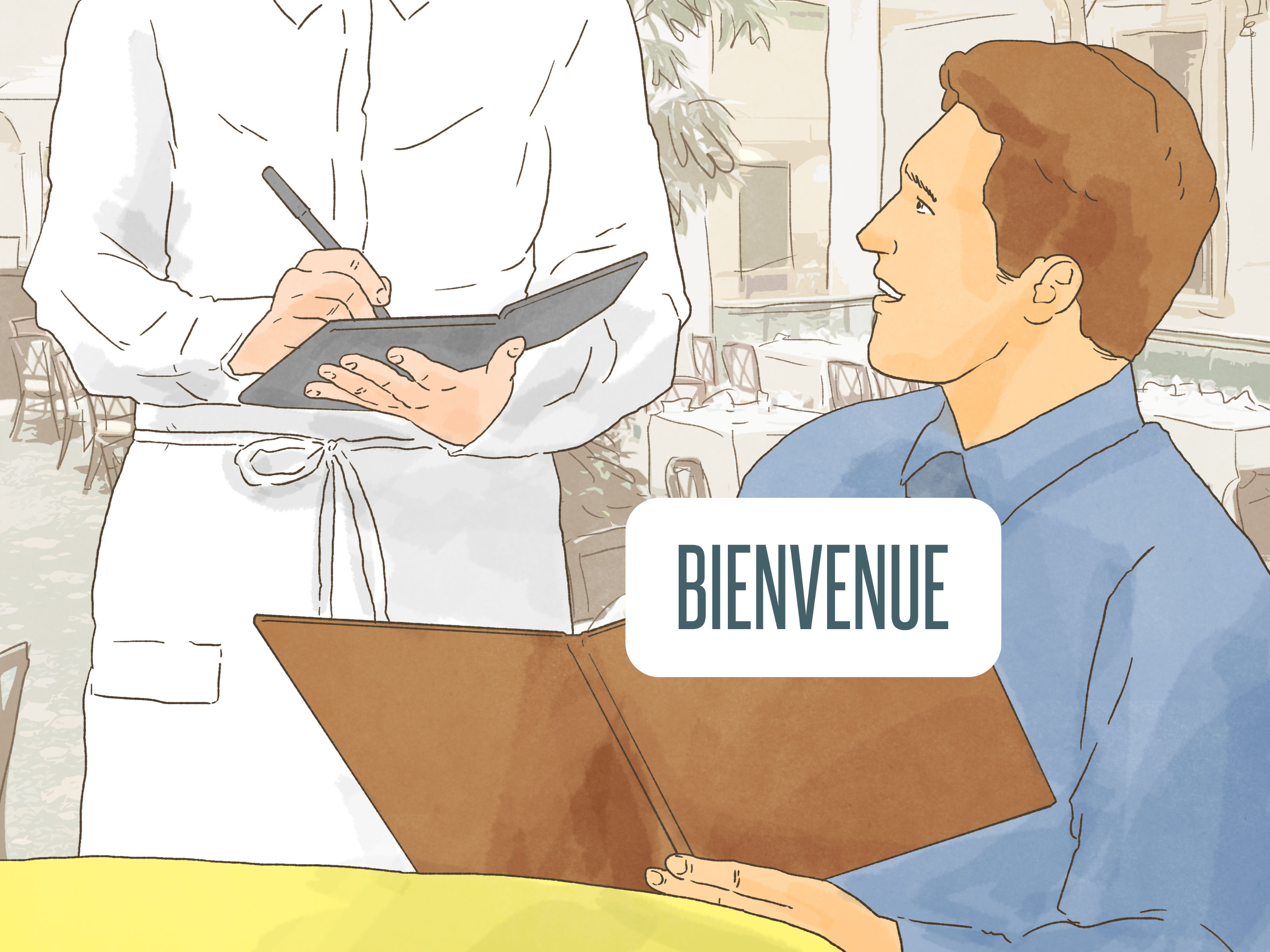
Learning how to say thank you in French is one of those tiny language skills that punches far above its weight. It is short, polite, useful in restaurants, shops, hotels, emails, classrooms, train stations, and those deeply dramatic moments when someone saves you from ordering the wrong pastry. And in French, the good news is this: you do not need a suitcase full of complicated phrases to sound kind, respectful, and reasonably human.
The main keyword here is simple: thank you in French. The most famous answer is merci, but French gratitude has layers. There is the quick everyday thank-you, the warmer thank-you, and the formal thank-you that wears a nice jacket and probably knows which fork to use at dinner. This guide explains three practical ways to say thank you in French, how to pronounce them, when to use them, and how to avoid sounding like a translation app that just had too much coffee.
Why Learning “Thank You” in French Matters
In French-speaking places, politeness is not just decoration. It is part of the rhythm of everyday interaction. Saying bonjour before asking a question, adding s’il vous plaît when making a request, and using merci after receiving help can make an ordinary exchange feel smoother and more respectful. You do not need perfect grammar to make a good impression. A sincere merci can do plenty of heavy lifting.
French also pays attention to social distance. English uses “you” for almost everyone, but French has tu for informal situations and vous for formal situations, strangers, groups, elders, teachers, clients, and people you do not know well. This matters when your thank-you becomes a full sentence, such as je vous remercie. Choose the right phrase, and you sound thoughtful. Choose wildly wrong, and you may still be understood, but the sentence might wobble like a chair with one short leg.
Quick Overview: 3 Ways to Say Thank You in French
| French Phrase | English Meaning | Best Used For | Simple Pronunciation Guide |
|---|---|---|---|
| Merci | Thank you / Thanks | Almost any everyday situation | mehr-see |
| Merci beaucoup | Thank you very much / Thanks a lot | Warm, stronger appreciation | mehr-see bo-koo |
| Je vous remercie | I thank you | Formal, professional, respectful situations | zhuh voo ruh-mehr-see |
1. Merci: The Everyday Way to Say Thank You in French
Merci is the essential French word for “thank you.” It is short, flexible, easy to remember, and useful in nearly every situation. If you learn only one French thank-you phrase before a trip, learn this one. It works when someone holds a door, hands you your coffee, answers a question, gives directions, or rescues you from staring at a ticket machine like it is an ancient alien artifact.
How to Use “Merci” Naturally
You can use merci by itself:
- Merci. Thank you.
- Merci ! Thanks!
- Merci, madame. Thank you, ma’am.
- Merci, monsieur. Thank you, sir.
The beauty of merci is that it does not force you to decide between formal and informal grammar. Whether you are speaking to a friend, a server, a shopkeeper, a hotel receptionist, or a stranger, merci is appropriate. It is the Swiss Army knife of French gratitude, except less sharp and more socially useful.
Examples in Everyday Situations
Imagine you are at a bakery in Paris, Montréal, or New Orleans at a French café. The person behind the counter gives you your croissant. You say:
Merci.
That is enough. No speech, no dramatic bow, no need to recite French poetry. Just one clean word. If someone gives you directions, you can say:
Merci pour votre aide. Thank you for your help.
If a friend lends you a pen, you can say:
Merci pour le stylo. Thanks for the pen.
A helpful pattern is merci pour + noun. This means “thank you for” something specific:
- Merci pour votre temps. Thank you for your time.
- Merci pour le cadeau. Thank you for the gift.
- Merci pour votre patience. Thank you for your patience.
Common Mistake to Avoid
Do not overcomplicate merci. Beginners sometimes think they need a bigger, fancier phrase to sound polite. Usually, they do not. In French, a clear bonjour, a simple request, and a sincere merci can sound more natural than a long sentence stitched together from a dictionary and hope.
2. Merci Beaucoup: Thank You Very Much in French
Merci beaucoup means “thank you very much” or “thanks a lot.” It is the phrase you use when plain merci feels a little too small. Maybe someone helped you carry a heavy bag, gave you a thoughtful gift, explained something patiently, or saved you from accidentally buying cheese when you meant to buy butter. In these moments, merci beaucoup adds warmth and emphasis.
How to Pronounce “Merci Beaucoup”
A simple pronunciation guide is mehr-see bo-koo. The final “p” in beaucoup is silent. English speakers often want to pronounce every letter because English spelling has trained us to expect chaos. French spelling has its own chaos, but here the rule is friendly: do not say the “p.”
When to Use “Merci Beaucoup”
Use merci beaucoup when you want to sound more appreciative than usual. It is suitable in both casual and polite situations. You can say it to friends, teachers, coworkers, servers, hotel staff, neighbors, or anyone who has done something helpful.
- Merci beaucoup pour votre aide. Thank you very much for your help.
- Merci beaucoup pour le dîner. Thank you very much for dinner.
- Merci beaucoup pour votre réponse. Thank you very much for your reply.
- Merci beaucoup, c’est très gentil. Thank you very much, that’s very kind.
Do Not Say “Merci Très Beaucoup”
One common beginner mistake is saying merci très beaucoup because “very” is très in French. Unfortunately, this does not work. Beaucoup already carries the meaning of “a lot” or “very much.” The correct phrase is simply merci beaucoup. Think of it as a complete package. No extra glitter required.
Other Warm Variations
Once you are comfortable with merci beaucoup, you may hear or use related expressions:
- Merci mille fois. Thanks a thousand times.
- Mille mercis. A thousand thanks.
- Un grand merci. A big thank-you.
- Merci du fond du cœur. Thank you from the bottom of my heart.
These are more emotional or expressive. They are excellent for personal notes, heartfelt messages, and situations where someone has truly gone out of their way. However, for daily use, merci beaucoup is the safest warm expression. It is friendly without sounding like you are accepting an award on live television.
3. Je Vous Remercie: The Formal Way to Say Thank You in French
Je vous remercie means “I thank you.” It is more formal and complete than merci. You will often see it in professional emails, customer service exchanges, official messages, academic communication, and respectful conversations. If merci is a friendly handshake, je vous remercie is the handshake plus good posture.
Understanding “Vous” in the Phrase
The word vous can mean “you” in a formal singular sense or “you” when speaking to more than one person. That makes je vous remercie useful when addressing someone respectfully or thanking a group.
- Je vous remercie pour votre temps. I thank you for your time.
- Je vous remercie pour votre réponse rapide. I thank you for your quick reply.
- Je vous remercie de votre compréhension. I thank you for your understanding.
- Je vous remercie pour votre aide précieuse. I thank you for your valuable help.
If you are speaking to a close friend, family member, or someone you address with tu, the informal version is je te remercie. It means “I thank you” as well, but it is less formal:
Je te remercie pour ton aide. I thank you for your help.
When “Je Vous Remercie” Sounds Best
Use je vous remercie when writing a formal email, thanking a professor, addressing a client, speaking to an older person you do not know well, or communicating in a professional setting. For example, at the end of an email, you might write:
Je vous remercie pour votre attention. Thank you for your attention.
Or after receiving help from an office, school, hotel, or company:
Je vous remercie pour votre assistance. I thank you for your assistance.
This phrase can sound too formal for a quick coffee order, though. If the barista hands you a cappuccino, merci or merci beaucoup is better. Saying je vous remercie pour votre assistance dans cette transaction caféinée may be grammatically impressive, but everyone involved just wanted caffeine.
How to Respond When Someone Says Thank You in French
Knowing how to say thank you in French is helpful. Knowing how to respond is the next step. When someone says merci, you can answer with one of these common phrases:
- De rien. You’re welcome / It’s nothing.
- Je vous en prie. You’re welcome. Formal or polite.
- Je t’en prie. You’re welcome. Informal.
- Avec plaisir. With pleasure.
- Pas de problème. No problem.
De rien is common and easy. Je vous en prie sounds more polished and is useful in formal settings. Avec plaisir feels warm and friendly. In many everyday conversations, any of these will work, but matching the tone is smart. If your boss thanks you in a formal meeting, je vous en prie is safer than a breezy pas de problème.
Merci Pour vs. Merci De: A Helpful Grammar Note
Two small words often follow merci: pour and de. They can confuse learners, but the basic pattern is manageable.
Use “Merci Pour” Before a Noun
Use merci pour when thanking someone for a thing, idea, quality, or action expressed as a noun:
- Merci pour votre aide. Thank you for your help.
- Merci pour le message. Thank you for the message.
- Merci pour votre gentillesse. Thank you for your kindness.
Use “Merci De” or “Merci D’Avoir” With Verbs
When thanking someone for something they did, you may see merci de or merci d’avoir followed by a verb:
- Merci de m’aider. Thank you for helping me.
- Merci d’avoir répondu. Thank you for replying.
- Merci d’avoir pris le temps. Thank you for taking the time.
Be careful with merci de plus an infinitive in instructions. A phrase like merci de fermer la porte may function as “please close the door” or “thank you for closing the door,” depending on context. It can sound like a polite instruction rather than gratitude. For beginners, merci pour plus a noun is often easier and safer.
Which French Thank-You Phrase Should You Choose?
Here is the simplest rule: when in doubt, say merci. If you feel extra grateful, say merci beaucoup. If the situation is formal, professional, or written, use je vous remercie. That three-step system covers most real-life situations without forcing you to perform grammar gymnastics in public.
For Travel
Use merci for daily travel moments: buying tickets, ordering food, asking for directions, checking into a hotel, or thanking someone who points you toward the right platform. Use merci beaucoup when someone gives extra help, such as explaining a confusing route or calling a taxi.
For Work and Email
Use je vous remercie in formal emails, especially when writing to someone you do not know well. A polished line like je vous remercie pour votre réponse sounds respectful and professional. For coworkers you know well, merci beaucoup may feel warmer and less stiff.
For Friends and Family
With friends, merci, merci beaucoup, and je te remercie can all work. The full phrase je te remercie sounds more intentional, so use it when you want to emphasize sincerity. For example, if a friend helped you move apartments, je te remercie vraiment feels more heartfelt than a quick merci.
Pronunciation Tips for Sounding More Natural
You do not need a perfect French accent to be understood. Still, a few pronunciation habits can help. In merci, keep the first sound close to “mehr,” not “mercy” exactly like English. In beaucoup, remember that the final “p” is silent. In je vous remercie, the first word je sounds like “zhuh,” with a soft “zh” sound like the middle of “measure.”
Also, avoid over-stressing every syllable. French rhythm is smoother than English. Instead of punching the phrase like a gym coach yelling “THANK. YOU. VERY. MUCH,” let it flow: merci beaucoup. Elegant, calm, and unlikely to frighten the croissants.
Cultural Tips for Saying Thank You in French
French politeness often works as a complete package. Saying merci is important, but it pairs best with other polite words. In shops and cafés, start with bonjour. When asking for something, add s’il vous plaît. After receiving help, say merci. These small steps can make your French sound more natural even if your vocabulary is still under construction.
Tone matters, too. A rushed merci tossed over your shoulder may sound less appreciative than a calm one with eye contact. You do not have to be theatrical. Just be present. Language is not only vocabulary; it is timing, attitude, and the tiny human signals that say, “I recognize that you helped me, and I am not a walking suitcase with Wi-Fi.”
Experience Section: Real-Life Lessons From Using “Thank You” in French
One of the most useful experiences related to learning how to say thank you in French is discovering that the smallest phrase can change the mood of an entire interaction. Many learners begin with the idea that fluency means long sentences, complicated verb tenses, and the ability to debate philosophy before breakfast. In real life, fluency often begins with simple social survival: hello, please, thank you, excuse me, and goodbye. Merci may be short, but it helps open doors both literally and socially.
Picture a traveler entering a small bakery. The room smells like butter, sugar, and excellent life choices. The traveler knows only a handful of French words. Instead of rushing straight into English, they say bonjour, point politely, say s’il vous plaît, and finish with merci. That tiny exchange may not win a grammar prize, but it shows effort. It tells the person behind the counter, “I know I am a guest in this language, and I am trying.” That effort matters.
Another common experience happens in restaurants. A server brings water, bread, or the bill. Saying merci every single time may feel repetitive to English speakers, but in French-speaking environments, polite acknowledgment is normal. When the server gives extra help, such as explaining a menu item, merci beaucoup feels more appropriate. It adds warmth without becoming dramatic. It is the verbal equivalent of leaving the chair neatly pushed in.
In professional settings, the experience changes. A student writing to a French teacher, a job applicant contacting a company, or a customer emailing support may benefit from je vous remercie. It sounds respectful and complete. For example, je vous remercie pour votre temps is a strong closing line because it recognizes the other person’s effort. It is not overly emotional, but it is polished. This is especially helpful when you are unsure how formal to be. In French, starting a little more formal is usually safer than sounding too casual too soon.
There is also a confidence lesson here. Many learners hesitate because they fear mispronouncing merci beaucoup or choosing the wrong phrase. But gratitude is forgiving. If your accent is imperfect but your intention is clear, people usually understand. In fact, using the phrase consistently helps train your ear. After saying merci dozens of times in real situations, the word stops feeling like vocabulary and starts feeling like a reflex.
The best experience-based advice is to build a gratitude ladder. Step one: use merci everywhere. Step two: use merci beaucoup when someone gives extra help. Step three: use je vous remercie in emails, formal requests, and respectful conversations. This ladder keeps things simple. You do not need twenty ways to say thank you in French on day one. You need three that work beautifully.
And finally, remember that saying thank you in French is not about sounding fancy. It is about sounding aware. A well-placed merci can soften a request, close an interaction gracefully, and make your French feel more human. That is a lot of value from one small word. Not bad for five letters.
Conclusion
There are many ways to express gratitude in French, but these three phrases will carry you through most situations: merci, merci beaucoup, and je vous remercie. Use merci for everyday thanks, merci beaucoup when you want to add warmth, and je vous remercie when the situation calls for formality or respect. Add useful patterns like merci pour votre aide and merci d’avoir répondu, and you will sound more natural, polite, and confident.
French gratitude does not have to be complicated. Learn the phrase, match the tone, say it sincerely, and let the conversation continue. The croissant, the cab driver, the professor, and the very patient person giving you directions will all appreciate it.
Note: This article is original, web-ready HTML content written in standard American English and synthesized from widely accepted French-learning guidance on pronunciation, grammar, etiquette, formal and informal usage, and real-life examples.